
1 Kings 7:30
in 1 Kings 7Each stand had four bronze wheels with bronze axles and a basin resting on four supports, with wreaths at each side.
BSB
The same verse in ASV and KJV ▾
ASV
And every base had four brazen wheels, and axles of brass; and the four feet thereof had undersetters: beneath the laver were the undersetters molten, with wreaths at the side of each.
KJV
And every base had four brasen wheels, and plates of brass: and the four corners thereof had undersetters: under the laver were undersetters molten, at the side of every addition.
⋯
This verse in 1 Kings 7
Commentary
7 notes on this verseThe four wheels are the four books of the Gospels, which are very aptly compared with wheels because, just as the wheel's whirling motion can travel with the greatest rapidity wherever it is steered, so with the Lord's help through the instrumentality of the apostles …
This site's exposition
ten movable stands of bronze
on 1 Kings 7:27-37
The ten wheeled stands are carved with “lions, oxen, and cherubim” and palm trees, and their wheels are “made like chariot wheels”. Cherubim and wheels together recall what Ezekiel later sees in motion. The washing stands of the house roll on wheels, built to move to their work.
This site's exposition
four bronze wheels with bronze axles
The four supports are shoulders in the Hebrew, and Albert Barnes reads them as brackets rising from the corners to the rim of the basin. John Wesley notes that they held the basin firm when the stand was moved. Each bracket met a wreath.
The record, by era
The Puritans and the Awakening2 voices
Wheels - Whereby the bases and lavers might be removed from place to place as need required. Under-setters - Hebrew. shoulders; fitly so called, because they supported the lavers, that they should not fall from their bases, when the bases were removed together with the lavers.
And every base had four brasen wheels, and plates of brass,....
The Nineteenth Century2 voices
A commentator
Albert Barnes1798–1870
Notes, Explanatory and Practical, on the Old and New Testaments (1832-1869)
Plates of brass - Rather, “brazen axletrees.” The “undersetters” (literally, “shoulders”) are conjectured to have been four brackets, or bars, proceeding from the four upper corners of the bases, and stretching upward to the outer rim of the laver, which thus rested partly upon them. At the side of every addition - Rather, “each opposite garlands.” The laver was ornamented with a garland at the place where the support reached it.
A commentator
Jamieson, Fausset & Brown1802–1910
Commentary Critical and Explanatory on the Whole Bible (1871)
proposed
he made ten bases of brass--These were trucks or four-wheeled carriages, for the support and conveyance of the lavers. The description of their structure shows that they were elegantly fitted up and skilfully adapted to their purpose. They stood, not on the axles, but on four rests attached to the axles, so that the figured sides were considerably raised above the wheels.
quarantine:debris (2026-07-29) — starts-lowercase
The words behind it
18 Hebrew wordsEvery Hebrew word of this verse in the order it stands, with what it means and the door to its own study. The last column counts the times a word stands in the whole Bible: the rarer the word, the more the places it appears belong together.
| Hebrew | Sound | Meaning | Word study | In the Bible |
|---|---|---|---|---|
| וְאַרְבָּעָה֩ | vearbaah | and four | H702 → | 318 times |
| אוֹפַנֵּ֨י | ʾofanei | wheels of | H212 → | 35 times |
| נְחֹ֜שֶׁת | nechoshet | bronze | H5178 → | 140 times |
| לַמְּכוֹנָ֤ה | lamekhonah | [belonged] to the stand | H4350 → | 24 times |
| הָֽאַחַת֙ | haachat | <the> one | H259 → | 971 times |
| וְסַרְנֵ֣י | vesarnei | and axles of | H5633 → | |
| נְחֹ֔שֶׁת | nechoshet | bronze | H5178 → | 140 times |
| וְאַרְבָּעָ֥ה | vearbaah | and four | H702 → | 318 times |
| פַעֲמֹתָ֖יו | faamotav | feet its | H6471 → | 118 times |
| כְּתֵפֹ֣ת | ketefot | supports | H3802 → | 67 times |
| לָהֶ֑ם | lahem | [belonged] to <the> them | ||
| מִתַּ֤חַת | mitachat | from under | H8478 → | 505 times |
| לַכִּיֹּר֙ | lakiyor | to the laver | H3595 → | 23 times |
| הַכְּתֵפֹ֣ת | haketefot | the supports | H3802 → | 67 times |
| יְצֻק֔וֹת | yetzukot | [were] cast | H3333 → | |
| מֵעֵ֥בֶר | meever | [were] from [the] side of | H5676 → | 90 times |
| אִ֖ישׁ | ʾish | each | H376 → | 1663 times |
| לֹיֽוֹת׃ | loyot | garlands | H3914 → | 3 times |
וְאַרְבָּעָה֩and four
vearbaahH702 →318 times
אוֹפַנֵּ֨יwheels of
ʾofaneiH212 →35 times
נְחֹ֜שֶׁתbronze
nechoshetH5178 →140 times
לַמְּכוֹנָ֤ה[belonged] to the stand
lamekhonahH4350 →24 times
הָֽאַחַת֙<the> one
haachatH259 →971 times
וְסַרְנֵ֣יand axles of
vesarneiH5633 →
נְחֹ֔שֶׁתbronze
nechoshetH5178 →140 times
וְאַרְבָּעָ֥הand four
vearbaahH702 →318 times
פַעֲמֹתָ֖יוfeet its
faamotavH6471 →118 times
כְּתֵפֹ֣תsupports
ketefotH3802 →67 times
לָהֶ֑ם[belonged] to <the> them
lahem
מִתַּ֤חַתfrom under
mitachatH8478 →505 times
לַכִּיֹּר֙to the laver
lakiyorH3595 →23 times
הַכְּתֵפֹ֣תthe supports
haketefotH3802 →67 times
יְצֻק֔וֹת[were] cast
yetzukotH3333 →
מֵעֵ֥בֶר[were] from [the] side of
meeverH5676 →90 times
אִ֖ישׁeach
ʾishH376 →1663 times
לֹיֽוֹת׃garlands
loyotH3914 →3 times
A shaded row is a word that stands 400 times or fewer in the Bible.
The walk
5 stopsEach card is a verse this one points to, and under it the verses that one points to in turn. Where several paths arrive at the same place, that place is listed first: the text keeps returning to it.
Through
Ezekiel 3:13It was the sound of the wings of the living creatures brushing against one another and the sound of the wheels beside them, a great rumbling sound.
it leads to
- Ezekiel 1:24
When the creatures moved, I heard the sound of their wings like the roar of many waters, like the voice of the Almighty, like the tumult of an army. When they stood still, they…
- Ezekiel 10:16–17
When the cherubim moved, the wheels moved beside them, and even when they spread their wings to rise from the ground, the wheels did not veer away from their side.
- Ezekiel 10:5
The sound of the wings of the cherubim could be heard as far as the outer court, like the voice of God Almighty when He speaks.
- 2 Samuel 5:24
As soon as you hear the sound of marching in the tops of the balsam trees, move quickly, because this will mean that the LORD has marched out before you to strike the camp…
- Ezekiel 1:15
When I looked at the living creatures, I saw a wheel on the ground beside each creature with its four faces.
- Ezekiel 1:24
Where this verse is studied
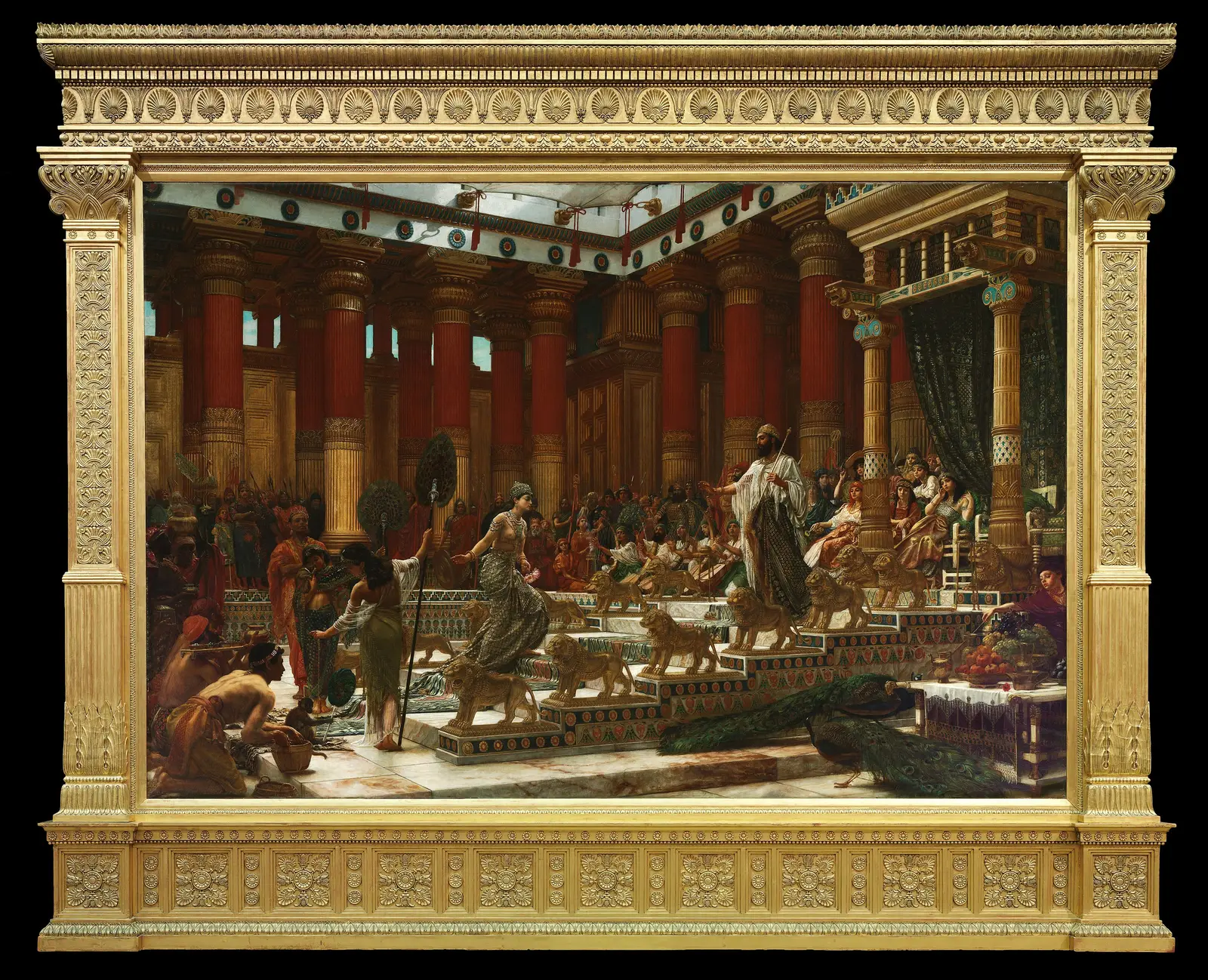
About 1 Kings
This page draws on Albert Barnes, Notes, Explanatory and Practical, on the Old and New Testaments (1832-1869); Bede, Of the Temple of Solomon 2.20.7; F. W. Farrar, The First Book of Kings (Expositor's Bible); Jamieson, Fausset & Brown, Commentary Critical and Explanatory on the Whole Bible; John Gill, Exposition of the Old Testament (1748-1763); John Wesley, Explanatory Notes upon the Old Testament and Keil, The Books of the Kings.