
1 Kings 7:50
in 1 Kings 7the pure gold basins, wick trimmers, sprinkling bowls, ladles, and censers; and the gold hinges for the doors of the inner temple (that is, the Most Holy Place) as well as for the doors of the main hall of the temple.
BSB
The same verse in ASV and KJV ▾
ASV
and the cups, and the snuffers, and the basins, and the spoons, and the firepans, of pure gold; and the hinges, both for the doors of the inner house, the most holy place, and for the doors of the house, to wit, of the temple, of gold.
KJV
And the bowls, and the snuffers, and the basons, and the spoons, and the censers of pure gold; and the hinges of gold, both for the doors of the inner house, the most holy place, and for the doors of the house, to wit, of the temple.
⋯
This verse in 1 Kings 7
Commentary
3 notes on this verseThe record, by era
The Medieval Church1 voice
If the doors of the inner house of the Holy of Holies are the ministries of angels that unlock the entrance to celestial life for us when we have left the body, and [if] the doors of the house of the temple are the holy …
The Puritans and the Awakening2 voices
), that every thing might be alike magnificent, and bespeak Solomon's generosity. Some suggest that every thing was made thus splendid in God's temple to keep the people from idolatry, for none of the idol-temples were so rich and fine as this: but how little the expedient availed the event showed.
quarantine:debris (2026-07-29) — leading-punctuation+unbalanced-parens
And the bowls,....
The words behind it
17 Hebrew wordsEvery Hebrew word of this verse in the order it stands, with what it means and the door to its own study. The last column counts the times a word stands in the whole Bible: the rarer the word, the more the places it appears belong together.
| Hebrew | Sound | Meaning | Word study | In the Bible |
|---|---|---|---|---|
| וְ֠הַסִּפּוֹת | vehassipot | and the basins | H5592 → | |
| וְהַֽמְזַמְּר֧וֹת | vehamzamerot | and the snuffers | H4212 → | |
| וְהַמִּזְרָק֛וֹת | vehamizrakot | and the bowls | H4219 → | 32 times |
| וְהַכַּפּ֥וֹת | vehakkapot | and the pans | H3709 → | 192 times |
| וְהַמַּחְתּ֖וֹת | vehamachtot | and the fire-pans | H4289 → | |
| זָהָ֣ב | zahav | gold | H2091 → | 389 times |
| סָג֑וּר | sagur | pure gold | H5462 → | 91 times |
| וְהַפֹּת֡וֹת | vehapotot | and the sockets | H6596 → | |
| לְדַלְתוֹת֩ | ledaltot | for [the] doors of | H1817 → | 88 times |
| הַבַּ֨יִת | habayit | the house | H1004 → | 2046 times |
| הַפְּנִימִ֜י | hapenimi | <the> inner | H6442 → | 32 times |
| לְקֹ֣דֶשׁ | lekodesh | to [the] holy place of | H6944 → | 469 times |
| הַקֳּדָשִׁ֗ים | hakodashim | the holy places | H6944 → | 469 times |
| לְדַלְתֵ֥י | ledaltei | for [the] doors of | H1817 → | 88 times |
| הַבַּ֛יִת | habayit | the house | H1004 → | 2046 times |
| לַהֵיכָ֖ל | laheikhal | of the temple | H1964 → | 80 times |
| זָהָֽב׃ פ | zahav | gold | H2091 → | 389 times |
וְ֠הַסִּפּוֹתand the basins
vehassipotH5592 →
וְהַֽמְזַמְּר֧וֹתand the snuffers
vehamzamerotH4212 →
וְהַמִּזְרָק֛וֹתand the bowls
vehamizrakotH4219 →32 times
וְהַכַּפּ֥וֹתand the pans
vehakkapotH3709 →192 times
וְהַמַּחְתּ֖וֹתand the fire-pans
vehamachtotH4289 →
זָהָ֣בgold
zahavH2091 →389 times
סָג֑וּרpure gold
sagurH5462 →91 times
וְהַפֹּת֡וֹתand the sockets
vehapototH6596 →
לְדַלְתוֹת֩for [the] doors of
ledaltotH1817 →88 times
הַבַּ֨יִתthe house
habayitH1004 →2046 times
הַפְּנִימִ֜י<the> inner
hapenimiH6442 →32 times
לְקֹ֣דֶשׁto [the] holy place of
lekodeshH6944 →469 times
הַקֳּדָשִׁ֗יםthe holy places
hakodashimH6944 →469 times
לְדַלְתֵ֥יfor [the] doors of
ledalteiH1817 →88 times
הַבַּ֛יִתthe house
habayitH1004 →2046 times
לַהֵיכָ֖לof the temple
laheikhalH1964 →80 times
זָהָֽב׃ פgold
zahavH2091 →389 times
A shaded row is a word that stands 400 times or fewer in the Bible.
The walk
8 stopsEach card is a verse this one points to, and under it the verses that one points to in turn. Where several paths arrive at the same place, that place is listed first: the text keeps returning to it.
Through
Leviticus 16:12Then he must take a censer full of burning coals from the altar before the LORD, and two handfuls of finely ground fragrant incense, and take them inside the veil.
it leads to
- Exodus 30:34–38
The LORD also said to Moses, “Take fragrant spices—gum resin, onycha, galbanum, and pure frankincense—in equal measures,
- Leviticus 10:1
Now Aaron’s sons Nadab and Abihu took their censers, put fire in them and added incense, and offered unauthorized fire before the LORD, contrary to His command.
- Revelation 8:3–4
Then another angel, who had a golden censer, came and stood at the altar. He was given much incense to offer, along with the prayers of all the saints, on the golden altar before…
- Numbers 16:46
Moses said to Aaron, “Take your censer, place fire from the altar in it, and add incense. Go quickly to the congregation and make atonement for them, because wrath has come out from the…
- Isaiah 6:6–7
Then one of the seraphim flew to me, and in his hand was a glowing coal that he had taken with tongs from the altar.
- Exodus 30:34–38
Through
Exodus 25:29You are also to make the plates and dishes, as well as the pitchers and bowls for pouring drink offerings. Make them out of pure gold.
it leads to
- Numbers 4:7
Over the table of the Presence they are to spread a blue cloth and place the plates and cups on it, along with the bowls and pitchers for the drink offering. The regular bread…
- Exodus 37:16
He also made the utensils for the table out of pure gold: its plates and dishes, as well as its bowls and pitchers for pouring drink offerings.
- Numbers 4:7
Through
Exodus 27:3Make all its utensils of bronze—its pots for removing ashes, its shovels, its sprinkling bowls, its meat forks, and its firepans.
it leads to
- 1 Kings 7:45
and the pots, shovels, and sprinkling bowls. All the articles that Huram made for King Solomon in the house of the LORD were made of burnished bronze.
- 1 Kings 7:45
Where this verse is studied
About 1 Kings
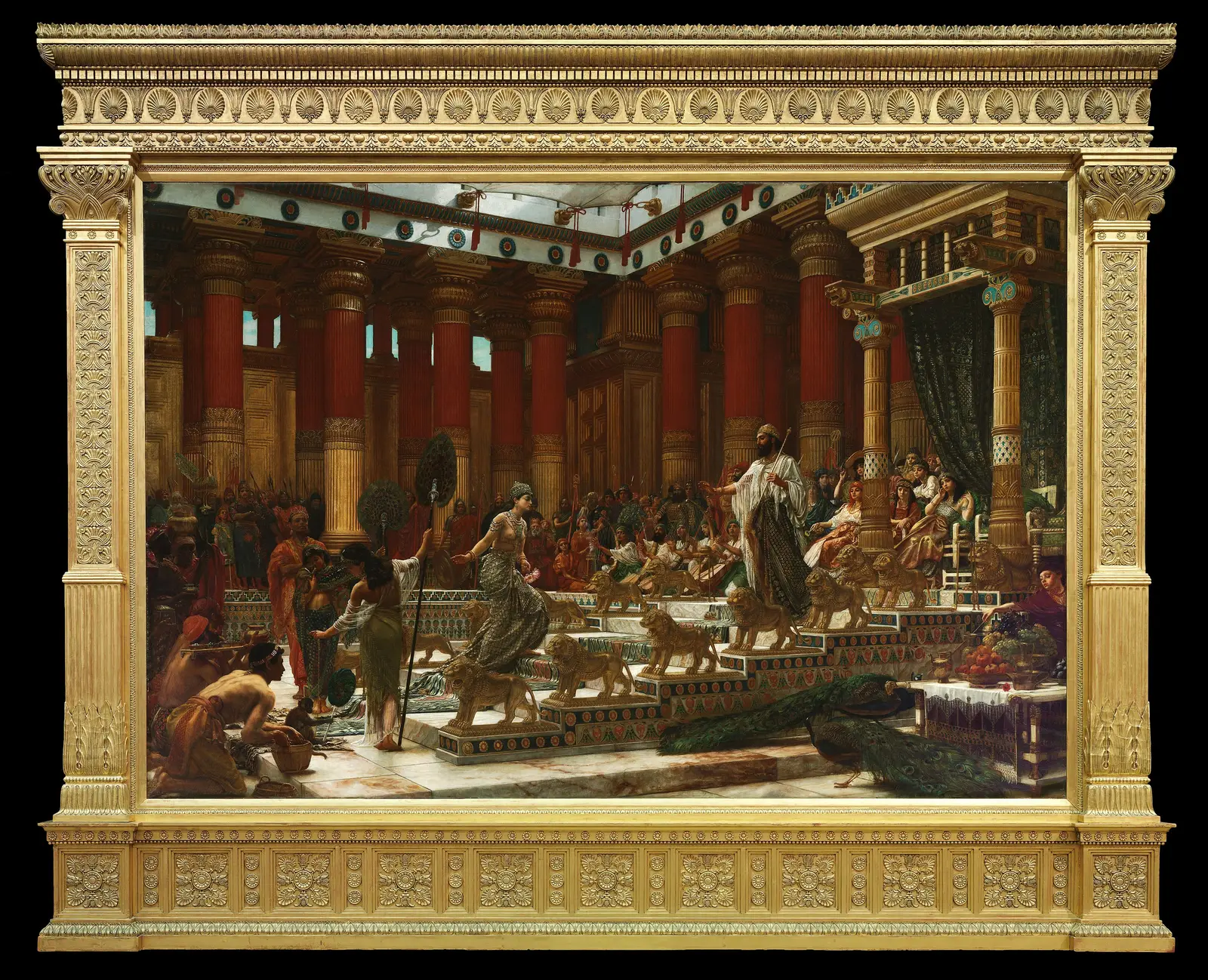
This page draws on Bede, Of the Temple of Solomon 2.25.1; John Gill, Exposition of the Old Testament (1748-1763) and Matthew Henry, Commentary on the Whole Bible.