
Psalm 139
24 verses · Wisdom psalm
For You formed my inmost being; You knit me together in my mother’s womb.
Introduction
David, the God Who Searches, Book 5: The return and the great Hallelujah, Poetry, Psalms Overview.
David wrote this for the sanctuary's singers, and it reads as a man thinking aloud before God about how completely he is known. It moves through four movements: God's knowledge of him, God's presence wherever he could go, God's work in forming him before birth, and a closing plea. Listen for the turn from wonder to anger at the wicked, and then for the prayer that turns the same searching back on the one who prays. Its lines about the womb have shaped how believers think about unborn life.
Context
- Who
- Israelites who worshipped a God without an image and wondered how near He really was
- Where
- A man alone, working out how far he would have to travel to get away from God
- When
- The united monarchy under David. The heading reads To the Overseer, a Psalm by David, which places it in his reign, about 1010 to 970 BC, and hands it to the director of music
Historical context
The heading gives the author and the destination: David, and the overseer of the music, which means the psalm was written for the sanctuary's singers. No event is named. The first section uses words from ordinary trades; to search out is what a man does digging through a house for something lost or boring into the ground for water. The escape attempt is a survey of the known world: up to the sky, down to the place of the dead, east on the wings of the dawn, then west to the far side of the Mediterranean, the edge of the map. The section on the womb uses a weaver's word, and being woven together in the depths of the earth pictures embroidery worked by hand in a hidden place. The hard turn at the end is the courtroom loyalty found across the Psalms. It ends by putting the knife the other way round: search me, and see if there is any offensive way in me.
Significance
Israelites had neighbours whose gods were local, tied to a river, a mountain or a city. This psalm says there is nowhere outside the jurisdiction, and turns that from a threat into comfort. The one who knits a person together in secret is the one who has already written that person's days.
This chapter in Jewish lifeWhat this chapter is in Jewish life and reading.
What is done
Psalm 139 stands in the third Davidic collection, which the book's structure file gives as Psalms 108 to 110 and 138 to 145. It is the psalm of God's knowledge of a man, and the corpus for it is the heaviest of any chapter in this range for Rashi, with sixteen comments carrying English text. The corpus holds no liturgical locator for the chapter, so this site records the collection and the reading rather than a custom.
How it is read
Rashi reads the psalm's opening as attraction rather than surveillance. God understands from afar how "to attract me to Your friendship and to Your love" (Rashi on Psalms 139:2:1, the Judaica Press complete Tanach with Rashi, translated by A. J. Rosenberg, CC-BY). On the third verse he gives the plain reading, that God has walled about a man's going and lying down so that nothing is done without His knowledge, and then names a second reading he found in the Sages, at Niddah 31a and Midrash Tehillim 139:3, which takes the verb as the winnowing of grain and applies it to conception. He reads the flight from God through the following verses in the same way: the wings of dawn shine at once from one end of the world to the other, and even in darkness there is no asylum. On the sixteenth verse he takes God's sight of the unformed body back to creation, and says that from the time God made the world His eyes saw all the forms of the coming generations. He reads the verse about God's precious thoughts as the voice of the congregation of Israel esteeming the righteous of every generation. Ibn Ezra comments on eight verses with no English version in the corpus and stands as a citation, at Ibn Ezra on Psalms 139:1:1. Radak, Metzudat David and Malbim carry no entry at all for this chapter in the corpus.
What the rabbis say
The corpus records forty locators on this chapter, thirty-three Midrash and seven Talmud. The whole psalm is taken up at Midrash Tehillim 139:1. The third verse, on the forming of a man, is taken up at Vayikra Rabbah 14:6 and Niddah 31a:18, which is the passage Rashi names. The flight to heaven and to Sheol is taken up at Pesikta DeRav Kahana 16:1, and the wings of dawn at Ruth Rabbah 5:4. The darkness that shines as the day is taken up at Bereshit Rabbah 11:2 and 12:6 and Bamidbar Rabbah 15:2 and 15:8. The unformed body of the sixteenth verse is taken up at Bereshit Rabbah 24:2 and Avot DeRabbi Natan 31:3, and the closing verses about hating those who hate God at Ein Yaakov, Shabbat 16:6 and Avot DeRabbi Natan 16:4. Each is a locator without text in the corpus.
Sources: Rashi, Rashi on Psalms 139:2:1, 139:3:1, 139:9:1, 139:12:1, 139:16:1, 139:17:1 and 139:18:1, the Judaica Press complete Tanach with Rashi, translated by A. J. Rosenberg, CC-BY; Ibn Ezra, Ibn Ezra on Psalms 139:1:1, cited only, no English version in the corpus; Babylonian Talmud, Niddah 31a, as Rashi cites it; Niddah 31a:18, Avot DeRabbi Natan 31:3 and 16:4, Bava Batra 7b:14, Avodah Zarah 5a:9; Midrash, Midrash Tehillim 139:1 and 139:3, as Rashi cites the second; Vayikra Rabbah 14:6, Pesikta DeRav Kahana 16:1, Ruth Rabbah 5:4, Bereshit Rabbah 11:2, 12:6 and 24:2, Bamidbar Rabbah 15:2 and 15:8; MannaFest, the collections of the Psalter, src/components/book/dossier-content/psalms-structure.ts, 2026.
Psalms 139:1-2
You have searched me and known me: The verb is chaqar, to penetrate a thing and examine it closely. What is examined is when the man sits and when he rises, and his thoughts while they are still at a distance. The LORD has searched and known him.
Psalms 139:1
“O Lord, thou hast searched me, and known me. He invokes in adoration Jehovah the all knowing God, and he proceeds to adore him by proclaiming one of his peculiar attributes. If we would praise God aright we must draw the matter of our praise from himself—"O Jehovah, thou hast." No pretended god knows aught of us; but the true God, Jehovah, understands us, and is most intimately acquainted with our persons, nature, and character. How well it is for us to know the God who knows us!”
Charles Spurgeon · The Treasury of David, Vol. 7 (1885)Particular Baptist
1 more voice on this verseWhat preachers and commentators have said about this verse, in their own words.
Psalms 139:1
“The reference would then be very appropriately to the fact that the most distant objects are contemplated as near by God. Some for afar off read beforehand, in which signification the Hebrew word is elsewhere taken, as if he had said -- O Lord, every thought which I conceive in my heart is already known to thee beforehand.”
John Calvin · Commentaries (1554)reformed
ConnectionsGenesis 16:13
You know when I sit: To sit and to rise is a Hebrew pair for the whole round of a day, as in Deuteronomy 6:7. The word for thoughts, rea, appears only here and in verse 17, where the thoughts are God's own. The psalm sets the man's thoughts beside God's thoughts.
Psalms 139:2
“Thou knowest my downsitting and mine uprising. Me thou knowest, and all that comes of me. I am observed when I quietly sit down, and marked when I resolutely rise up. My most common and casual acts, my most needful and necessary movements, are noted by time, and thou knowest the inward thoughts which regulate them. Whether I sink in lowly self renunciation, or ascend in pride, thou seest the motions of my mind, as well as those of my body.”
Charles Spurgeon · The Treasury of David, Vol. 7 (1885)Particular Baptist
Psalms 139:3-6
You search out my path and my lying down: A word is known before it is on the tongue. Verse 5 draws the picture of a man hemmed in with a hand laid on him, so the knowing is close enough to touch. The man's answer is that such knowledge is too high to reach.
Psalms 139:3
“Thou compassest my path and my lying down,.... The Targum adds, "to study in the law.'' His walk in the daytime, and every step he took, and his lying down at night. It denotes his perfect knowledge of all his actions, day and night; he surrounds every path of man, that they cannot escape his knowledge. Or, "thou winnowest", as some render the word (c); he distinguishes actions; he discerns and separates the good from the bad, or the goodness of an action from the evil and imperfection of it, as in winnowing the wheat is separated from the chaff.”
1 more voice on this verse
Psalms 139:3
“Thou compassest my path and my lying down. My path and my pallet, my running and my resting, are alike within the circle of thine observation. Thou dost surround me even as the air continually surrounds all creatures that live. I am shut up within the wall of thy being; I am encircled within the bounds of thy knowledge. Waking or sleeping I am still observed of thee. I may leave thy path, but you never leave mine. I may sleep and forget thee, but thou dost never slumber, nor fall into oblivion concerning thy creature.”
Charles Spurgeon · The Treasury of David, Vol. 7 (1885)Particular Baptist
before a word is on my tongue: The knowing moves inward in order, from when he sits and rises to his path, then to a word before it reaches the tongue. The Hebrew for word here is millah, a term found most often in Job. Matthew 12:36 holds men to account for every careless word.
Psalms 139:4
“For there is not a word in my tongue,.... Expressed by it or upon it, just ready to be spoken; or, as the Targum, "when there is no word in my tongue:'' so Aben Ezra, "before it was perfect in my tongue:'' before it is formed there; while it is in the mind, and not expressed, and even before that; but, lo, O Lord, thou knowest it altogether; the whole of it, from whence it springs; the reason of it, what is designed, or the ends to be answered by it.”
1 more voice on this verse
Psalms 139:4
“For there is not a word in my tongue, but lo, O Lord, thou knowest it altogether. The unformed word, which lies within the tongue like a seed in the soil, is certainly and completely known to the Great Searcher of hearts. A negative expression is used to make the positive statement all the stronger: not a word is unknown is a forcible way of saying that every word is well known. Divine knowledge is perfect, since not a single word is unknown, nay, not even an unspoken word, and each one is "altogether" or wholly known.”
Charles Spurgeon · The Treasury of David, Vol. 7 (1885)Particular Baptist
You hem me in behind: The verb for hem in, tsur, is the word for laying siege to a city, as in Deuteronomy 20:12. The same hand returns in verse 10 to guide and to hold fast. What reads as confinement here becomes safety there.
Psalms 139:5
“Thou hast beset me behind and before. As though we were caught in an ambush, or besieged by an army which has wholly beleaguered the city walls, we are surrounded by the Lord. God has set us where we be, and beset us wherever we be. Behind us there is God recording our sins, or in grace blotting out the remembrance of them; and before us there is God foreknowing all our deeds, and providing for all our wants.”
Charles Spurgeon · The Treasury of David, Vol. 7 (1885)Particular Baptist
Such knowledge is too wonderful for me: The first stanza closes here, verses 1 to 5 gathered into one confession of limit. The word for wonderful, pele, is used of what only God can do, and the same root returns in verse 14. Job 42:3 makes a like confession.
Psalms 139:6
“Such knowledge is too wonderful for me. I cannot grasp it. I can hardly endure to think of it. The theme overwhelms me. I am amazed and astounded at it. Such knowledge not only surpasses my comprehension, but even my imagination. It is high, I cannot attain unto it. Mount as I may, this truth is too lofty for my mind. It seems to be always above me, even when I soar into the loftiest regions of spiritual thought. Is it not so with every attribute of God?”
Charles Spurgeon · The Treasury of David, Vol. 7 (1885)Particular Baptist
1 more voice on this verse
Psalms 139:6
“And so, when you have gone over all these points with suitable reflections on each, when you have, in addition, studied the process of breathing, the manner in which the heart conserves its warmth, the organs of digestion and the veins, you will discern in all of these wonders the inscrutable wisdom of the Creator; so that you will be able to say with the prophet: "Your knowledge is become wonderful" from the study of myself. "Give heed, therefore, to yourself," that you may give heed to God, to whom be glory and power forever and ever. Amen.”
Basil of Caesarea · written before 379 · Homily on the Words 'give Heed to Thyself.'patristic
Psalms 139:7-10
Where can I go to escape Your Spirit?: Four places are tried, the heavens above and Sheol below, the wings of the dawn and the farthest sea. Sheol is the place of the dead, so the first pair runs from the top of creation to the bottom. Each route ends at the right hand that holds him fast.
Psalms 139:7
“Here omnipresence is the theme, —a truth to which omniscience naturally leads up. Whither shall I go from thy spirit? Not that the Psalmist wished to go from God, or to avoid the power of the divine life; but he asks this question to set forth the fact that no one can escape from the all pervading being and observation of the Great Invisible Spirit. Observe how the writer makes the matter personal to himself—"Whither shall I go?" It were well if we all thus applied truth to our own cases.”
Charles Spurgeon · The Treasury of David, Vol. 7 (1885)Particular Baptist
2 more voices on this verse
Psalms 139:7
“Whither shall I go from thy spirit?.... Or, "from thy wind?" which some interpret literally, the wind being God's creature; which he brings out of his treasures, and holds in his fists, and disposes of as he pleases; this takes its circuit through all the points of the heavens, and blows everywhere, more or less.”
Psalms 139:7
“In devout thoughts such as these my soul, engrossed in the pursuit of truth, took its delight. For it seemed that the greatness of God so far surpassed the mental powers of His handiwork, that however far the limited mind of man might strain in the hazardous effort to define Him, the gap was not lessened between the finite nature which struggled and the boundless infinity that lay beyond its ken.”
Hilary of Poitiers · written before 367 · On the Trinity 1:6patristic
If I ascend to the heavens: Amos 9:2 uses the same two limits, heaven and Sheol, to warn that the guilty cannot hide from judgment. Here the heavens and Sheol carry comfort instead. Making a bed in Sheol pictures lying down among the dead.
Psalms 139:8
“If I ascend up into heaven, thou art there. Filling the loftiest region with his yet loftier presence, Jehovah is in the heavenly place, at home, upon his throne. The ascent, if it were possible, would be unavailing for purposes of escape; it would, in fact, be a flying into the centre of the fire to avoid the heat. There would he be immediately confronted by the terrible personality of God. Note the abrupt words—"Thou, there." If I make my bed in hell, behold, thou art there.”
Charles Spurgeon · The Treasury of David, Vol. 7 (1885)Particular Baptist
the wings of the dawn: The dawn has wings because its light spreads across the sky from the east in a moment. The farthest sea is the Mediterranean to the west, so the verse runs from sunrise to sunset. East and west follow the heights and depths of verse 8.
Psalms 139:9
“If I take the wings of the morning, and dwell in the uttermost parts of the sea. If I could fly with all swiftness, and find a habitation where the mariner has not yet ploughed the deep, yet I could not reach the boundaries of the divine presence. Light flies with inconceivable rapidity, and it flashes far afield beyond all human ken; it illuminates the great and wide sea, and sets its waves gleaming afar; but its speed would utterly fail if employed in flying from the Lord.”
Charles Spurgeon · The Treasury of David, Vol. 7 (1885)Particular Baptist
1 more voice on this verse
Psalms 139:9
“The wings - If I should flee from east to west: for the sea being the western border of Canaan, is often put for the west in scripture. And wings are poetically ascribed to the morning here, as they are elsewhere to the sun, and to the winds.”
John Wesley · Explanatory Notes upon the Old Testament (1765)evangelical
even there Your hand will guide: The flight of verses 7 to 9 ends in guidance. The verb for guide, nachah, is used in Psalm 23:3 of the shepherd leading in right paths. The right hand is the hand of strength, and it holds fast.
Psalms 139:10
“Even there shall thy hand lead me. We could only fly from God by his own power. The Lord would be leading, covering, preserving, sustaining us even when we were fugitives from him. And thy right hand shall hold me. In the uttermost parts of the sea my arrest would be as certain as at home: God's right hand would there seize and detain the runaway. Should we be commanded on the most distant errand, we may assuredly depend upon the upholding right hand of God as with us in all mercy, wisdom, and power.”
Charles Spurgeon · The Treasury of David, Vol. 7 (1885)Particular Baptist
Psalms 139:11-12
The final hiding place is the night. The psalm answers that darkness is as light to God, and that the night shines for Him like the day. Turning out the light hides nothing from Him.
Psalms 139:11
“If I say, Surely the darkness shall cover me. Dense darkness may oppress me, but it cannot shut me out from thee, or thee from me. Thou seest as well without the light as with it, since thou art not dependent upon light which is thine own creature, for the full exercise of thy perceptions. Moreover, thou art present with me whatever may be the hour; and being present you discover all that I think, or feel, or do.”
Charles Spurgeon · The Treasury of David, Vol. 7 (1885)Particular Baptist
1 more voice on this verse
Psalms 139:11
"The darkness darkeneth not from thee, for there is no darkness nor shadow of death where the workers of iniquity may hide themselves." No hypocritical mask or disguise, how specious soever, can save any person or action from appearing in a true light before God. Secret haunts of sin are as open before God as the most open and barefaced villanies.
Matthew Henry · Commentary on the Whole Bible (1707-1721)puritan
even the darkness is not dark: Job 34:22 says there is no darkness where evildoers can hide, and this verse carries that truth from judgment to care. The Creator who separated light from darkness in Genesis 1:4 sees through both alike. Night is a thing He made.
Psalms 139:12
“Yea, of a surety, beyond all denial. The darkness hideth not from thee; it veils nothing, it is not the medium of concealment in any degree what ever. It hides from men, but not from God. But the night shineth as the day: it is but another form of day: it shines, revealing all; it "shineth as the day, "—quite as clearly and distinctly manifesting all that is done. The darkness and the light are both alike to thee.”
Charles Spurgeon · The Treasury of David, Vol. 7 (1885)Particular Baptist
Psalms 139:13-14
You formed my inmost being: The word behind the inmost being is kilyah, the kidneys, used of the organ and of the interior self it stands for. The next verb is sakak, to entwine, so the knitting the psalm names is weaving done inside the mother. The praise follows the making, fearfully and wonderfully made.
Psalms 139:13
“Therefore the Lord supported us when he fashioned us; he supports us also when he bids us to be born. Consequently, the just person says, "You have supported me from my mother's womb." Whose mother's? "Before I formed you in the womb, I knew you." Those, whom the Lord forms, he also supports; he supports them even in their coming forth: "And before you came forth from your mother's womb, I sanctified you." He is our supporter, for he has supported us with his hands. He is called a supporter as the Creator of the human race.”
Ambrose of Milan · written before 397 · Interrogation of Job and David, Book 2, Chapter 5patristic
2 more voices on this verse
Psalms 139:13
“For thou hast possessed my reins. Thou art the owner of my inmost parts and passions: not the indweller and observer only, but the acknowledged lord and possessor of my most secret self.”
Charles Spurgeon · The Treasury of David, Vol. 7 (1885)Particular Baptist
Psalms 139:13
“But it was God himself that thus covered us, and therefore he can, when he pleases, discover us; when he hid us from all the world he did not intend to hide us from himself. Concerning the formation of man, of each of us, 1. The glory of it is here given to God, entirely to him; for it is he that has made us and not we ourselves.”
Matthew Henry · Commentary on the Whole Bible (1707-1721)puritan
I am fearfully and wonderfully made: The Hebrew for wonderfully made is spelled from palah, the verb of Exodus 9:4 where the LORD made a distinction between Israel and Egypt. Fearfully names works that draw awe. Knowledge of the body leads to praise of its Maker.
Psalms 139:14
“I will praise thee: a good resolve, and one which he was even now carrying out. Those who are praising God are the very men who will praise him. Those who wish to praise have subjects for adoration ready to hand. We too seldom remember our creation, and all the skill and kindness bestowed upon our frame: but the sweet singer of Israel was better instructed, and therefore he prepares for the chief musician a song concerning our nativity and all the fashioning which precedes it.”
Charles Spurgeon · The Treasury of David, Vol. 7 (1885)Particular Baptist
Psalms 139:15-16
when I was made in secret: Verse 15 puts the making in secret, and the word for the unformed body is golem, a wrapped and unformed mass, the embryo. What the book holds is days, all of them written and ordained before any of them began. The eyes that saw that mass had the days already.
Psalms 139:15
“My substance was not hid from thee. The substantial part of my being was before thine all seeing eye; the bones which make my frame were put together by thine hand. The essential materials of my being before they were arranged were all within the range of thine eye. I was hidden from all human knowledge, but not from thee: thou hast ever been intimately acquainted with me. When I was made in secret. Most chastely and beautifully is here described the formation of our being before the time of our birth.”
Charles Spurgeon · The Treasury of David, Vol. 7 (1885)Particular Baptist
1 more voice on this verse
Psalms 139:15
“It is said also by those who treat of the nature and generation of animals, that the change of the blood into bone is something invisible and intangible, although in the case of other parts, I mean the flesh and nerves, the mode of their formation may be seen. And the Scripture also, in Ecclesiastes, adduces this, saying, As you know not the bones in the womb of her that is with child, so you shall not know the works of God.”
Hippolytus of Rome · written before 235 · Fragments from Commentaries on Various Books of Scripture - On the Words in Psalm CXXXIX. 15patristic
Your eyes saw my unformed body: The verb behind ordained is yatsar, the potter's word used in Genesis 2:7 when the LORD formed the man from dust. The days are shaped as the body was shaped. God's book appears also in Exodus 32:32 and Malachi 3:16.
Psalms 139:16
“Thine eyes did see my substance, yet being unperfect. While as yet the vessel was upon the wheel the Potter saw it all. The Lord knows not only our shape, but our substance: this is substantial knowledge indeed. The Lord's observation of us is intent and intentional, —"Thine eyes did see." Moreover, the divine mind discerns all things as clearly and certainly as men perceive by actual eye sight. His is not hearsay acquaintance, but the knowledge which comes of sight.”
Charles Spurgeon · The Treasury of David, Vol. 7 (1885)Particular Baptist
1 more voice on this verse
Psalms 139:16
“Imperfect - When I was first conceived. Book - In thy counsel and providence, by which thou didst contrive and effect this great work, according to that model which thou hadst appointed.”
John Wesley · Explanatory Notes upon the Old Testament (1765)evangelical
Psalms 139:17-18
How precious to me are Your thoughts: The psalm turns from being known to weighing what God thinks. To count His thoughts would run past the grains of sand, a sum no one reaches the end of. He awakes and is still with God.
Psalms 139:17
“How precious also are thy thoughts unto me, O God! He is not alarmed at the fact that God knows all about him; on the contrary, he is comforted, and even feels himself to be enriched, as with a casket of precious jewels. That God should think upon him is the believer's treasure and pleasure. He cries, "How costly, how valued are thy thoughts, how dear to me is thy perpetual attention!" He thinks upon God's thoughts with delight; the more of them the better is he pleased.”
Charles Spurgeon · The Treasury of David, Vol. 7 (1885)Particular Baptist
1 more voice on this verse
Psalms 139:17
"I will no longer call you servants, because the servant does not know what his master does. But I have called you friends, because all things whatsoever I have heard from my Father, I have made known to you." What are all these things which He heard from His Father, which He wished to make known to His servants, that He might make them His friends, except the joys of interior charity, except those festivals of the heavenly homeland, which He daily imprints on our minds through the inspiration of His love?
Gregory the Dialogist · written before 604 · Forty Gospel Homilies, Homily 27patristic
If I were to count them: Grains of sand are the measure of God's promise to Abraham in Genesis 22:17, a number past counting. To awake and find God still near echoes Psalm 3:5 and Psalm 17:15. The stanza on making closes with presence, the theme of verses 7 to 12.
Psalms 139:18
“If I should count them, they are more in number than the sand. This figure shows the thoughts of God to be altogether innumerable; for nothing can surpass in number the grains of sand which belt the main ocean and all the minor seas. The task of counting God's thoughts of love would be a never ending one. If we should attempt the reckoning we must necessarily fail, for the infinite falls not within the line of our feeble intellect.”
Charles Spurgeon · The Treasury of David, Vol. 7 (1885)Particular Baptist
Psalms 139:19-22
that You would slay the wicked—: The psalm asks God to slay the wicked and tells the bloodthirsty to keep away. The charge is that they speak deceitfully and take His name in vain, and the man who asked to be searched calls his hatred perfect. He counts them his enemies.
Psalms 139:19
“Surely thou wilt slay the wicked, O God,.... Since he is God omniscient, and knows where they are, what they have done, are doing, and design to do; and God omnipresent, at hand to lay hold upon them; and God omnipotent, to hold them and inflict due punishment on them; this is a consequence rightly drawn from the above perfections of God.”
1 more voice on this verse
Psalms 139:19
“Surely thou wilt slay the wicked, O God. There can be no doubt upon that head, for thou hast seen all their transgressions, which indeed have been done in thy presence; and thou hast long enough endured their provocations, which have been so openly manifest before thee. Crimes committed before the face of the Judge are not likely to go unpunished. If the eye of God is grieved with the presence of evil, it is but natural to expect that he will remove the offending object. God who sees all evil will slay all evil.”
Charles Spurgeon · The Treasury of David, Vol. 7 (1885)Particular Baptist
who speak of You deceitfully: The charge echoes the third commandment in Exodus 20:7, which forbids taking the name of the LORD in vain. The quarrel is with God's enemies first, and only then with the psalmist's. Their sin is speech about God.
Psalms 139:20
“For they speak against thee wickedly,.... Against his being, his perfections, his purposes, his providences, his doctrines, ordinances, ministers, and people; or "they speak of thee for wickedness" (b), they made mention of the name of God to cover their wickedness, pretending to fear God and love him, to have a reverence of him and serve him, putting on a form of godliness, but denying the power thereof; and thine enemies take thy name in vain: either by profane swearing, or by false swearing.”
1 more voice on this verse
Psalms 139:20
“For they speak against thee wickedly. Why should I bear their company when their talk sickens me? They vent their treasons and blasphemies as often as they please, doing so without the slightest excuse or provocation; let them therefore be gone, where they may find a more congenial associate than I can be. When men speak against God they will be sure to speak against us, if they find it serve their turn; hence godless men are not the stuff out of which true friends can ever be made.”
Charles Spurgeon · The Treasury of David, Vol. 7 (1885)Particular Baptist
Do I not hate those: The question expects yes, and the answer comes in verse 22. The measure is God's cause, since those hated are the ones who hate the LORD and rise against Him. Psalm 119:158 speaks of the same loathing for the faithless who ignore God's word.
Psalms 139:21
Yet, it is not hard for us, if we wish it, to take up a love for justice and a hatred for iniquity. God has advantageously given all power to the rational soul, as that of loving, so also that of hating, in order that, guided by reason, we may love virtue but hate vice. It is possible at times to use hatred even praiseworthily. "Have I not hated them, O Lord, that hated you and pined away because of your enemies? I have hated them with a perfect hatred."
Basil of Caesarea · written before 379 · Homilies on the Psalms 17:8patristic
1 more voice on this verse
Psalms 139:21
“Do not I hate them, O Lord, that hate thee? He was a good hater, for he hated only those who hated good. Of this hatred he is not ashamed, but he sets it forth as a virtue to which he would have the Lord bear testimony. To love all men with benevolence is our duty; but to love any wicked man with complacency would be a crime.”
Charles Spurgeon · The Treasury of David, Vol. 7 (1885)Particular Baptist
I hate them with perfect hatred: Perfect translates taklit, completeness, the hatred carried to its end with no reserve. The next verse turns straight to self-examination, asking God to search the heart that holds this hatred. Matthew 5:44 later adds the command to love enemies.
Psalms 139:22
“I hate them with perfect hatred,.... Heartily and really; not in word only, but in deed and in truth; "odio vatiniano", with consummate hatred: this is an answer to his own question; I count them mine enemies; being the enemies of God: the friends of God were David's friends, as angels and good men, and God's enemies were his; their friends and enemies, were common; so closely allied and attached were they to each other, as God and all good men are.”
1 more voice on this verse
Psalms 139:22
“I hate them with perfect hatred. He does not leave it a matter of question. He does not occupy a neutral position. His hatred to bad, vicious, blasphemous men is intense, complete, energetic. He is as whole hearted in his hate of wickedness as in his love of goodness. I count them mine enemies. He makes a personal matter of it. They may have done him no ill, but if they are doing despite to God, to his laws, and to the great principles of truth and righteousness, David proclaims war against them.”
Charles Spurgeon · The Treasury of David, Vol. 7 (1885)Particular Baptist
Psalms 139:23-24
Search me, O God, and know my heart: The search of the first verse comes back as a request. He asks God to know his heart, to test him, and to see whether any offensive way is in him. The last words ask to be led in the way everlasting.
Psalms 139:23
“Search me, O God, and know my heart. David is no accomplice with traitors. He has disowned them in set form, and now he appeals to God that he does not harbour a trace of fellowship with them. He will have God himself search him, and search him thoroughly, till every point of his being is known, and read, and understood; for he is sure that even by such an investigation there will be found in him no complicity with wicked men.”
Charles Spurgeon · The Treasury of David, Vol. 7 (1885)Particular Baptist
1 more voice on this verse
Psalms 139:23
“They used to say about Poemen that when he was ready to go out to the meeting for prayer, he first sat by himself for an hour in self-examination, and then went.”
Desert Fathers · written before 500 · The Desert Fathers, Sayings of the Early Christian Monkspatristic
See if there is any offensive way: Two ways stand side by side in one verse. The Hebrew behind offensive is otseb, which can mean pain or an idol, so the way may be one of grief or of false gods. The way everlasting echoes the ancient paths of Jeremiah 6:16.
Psalms 139:24
“And see if there be any wicked way in me. See whether there be in my heart, or in my life, any evil habit unknown to myself. If there be such an evil way, take me from it, take it from me. No matter how dear the wrong may have become, nor how deeply prejudiced I may have been in its favour, be pleased to deliver me therefrom altogether, effectually, and at once, that I may tolerate nothing which is contrary to thy mind.”
Charles Spurgeon · The Treasury of David, Vol. 7 (1885)Particular Baptist
How this psalm is built
The form: A psalm on the omniscience of God that leads naturally up to His omnipresence, as Spurgeon classes it.
The patterns in this chapter
| Device | What it does | Where to see it |
|---|---|---|
| Searched at the start, searched at the close | Verse 1 states that the LORD has searched the singer and known him. Verse 23 asks Him to search and know his heart. The psalm spends twenty two verses proving that the searching has already happened and then asks for it anyway, which is the whole argument turned into a request.Charles Spurgeon, The Treasury of David, Vol. 7, 1885, on Psalm 139:23. | Psalm 139:1, Psalm 139:23 |
| Four movements, taken in order | The psalm has four sections of six verses each. Verses 1 to 6 are what God knows and verses 7 to 12 are where God is. Verses 13 to 18 are how the singer was made, and verses 19 to 24 are what he asks God to do about the wicked and about himself. Each section ends by handing the subject back to God rather than resolving it.Charles Spurgeon, The Treasury of David, Vol. 7, 1885, on Psalm 139:7. | Psalm 139:6, Psalm 139:12, Psalm 139:18, Psalm 139:24 |
| If I go there, You are there | Verses 8 to 12 are a series of conditions with the same answer. The heavens, Sheol, the wings of the dawn, the farthest sea and the darkness are each proposed and each answered by the presence of God. Augustine reads the sequence as a runaway learning that there is no place to run to.Augustine of Hippo, Expositions on the Psalms, on Psalm 139:8. | Psalm 139:8, Psalm 139:9, Psalm 139:11 |
| The verbs of a trade | The words for God's knowing are taken from work a man could watch being done. Barnes notes that the word rendered searched at verse 1 refers first to searching the ground by boring or digging, as for water or metal. Clarke reads the verb at verse 3 as winnowing, the sifting of grain until only what is real is left. Verse 13 uses the language of weaving and knitting for the making of a body.Albert Barnes, Notes, Explanatory and Practical, on the Old and New Testaments, 1832 to 1869, on Psalm 139:1. | Psalm 139:1, Psalm 139:3, Psalm 139:13 |
The structure
11 more paragraphs on the patterns
Verse 1 states that the LORD has searched the singer and known him, and verse 23 asks Him to search and know his heart. The psalm spends twenty two verses proving that the searching has already happened and then asks for it anyway. The four verbs of verses 23 and 24, search, know, test, lead, are the four things the first half said God had already done, asked for again as a favour.
The verbs for God's knowing are taken from work a man could watch being done. Barnes notes that the word rendered searched at verse 1 refers first to searching the ground by boring or digging, as for water or metal. Clarke reads the verb at verse 3 as winnowing, the sifting of grain until only what is real is left. Verse 13 uses the language of weaving and knitting.
The prophecy and the New Testament's use
No New Testament writer quotes Psalm 139, and the psalm reaches the New Testament as doctrine rather than as citation. Hebrews 4:13 says that nothing in all creation is hidden from God's sight, and that everything is uncovered and exposed before the eyes of Him to whom we must give account. That is verses 1 to 12 stated as a conclusion. Acts 17:27 and 28 say that God is not far from each one of us, and that in Him we live and move and have our being. That is the answer verses 7 to 12 keep giving.
The insight
Verses 13 to 16 describe the forming of a person before birth, and they say four things. God formed the inmost being. The frame was made in secret and woven together. His eyes saw the unformed body, and the days were written before one of them came to be.
The claim the text makes is about God's knowledge and God's work rather than about embryology, and it should be read at that level.
What is fair to say is that the psalm treats an unborn human being as a person already known and already under God's hand. It does so in an age that had no instrument for looking at one. Clarke, writing in 1832 with the anatomy of his own day, calls the texture of the human body the most complicated and curious that can be conceived. Whether being woven together in the depths of the earth describes the womb or figures hiddenness is contested. The psalm's argument does not depend on which it is.
The debate
Verses 19 to 22 are the psalm's difficulty.
Clarke holds that the section has no visible connection with what comes before and reads it as a fragment of another psalm. Spurgeon holds the opposite, that the section is the point of the psalm's ending. The singer disowns the company of the violent in set form, and then asks God to check whether any of it is left in him. Barnes reads the hatred as directed at conduct rather than at persons, hatred with no approval of what they do and no sympathy for the evil in it. The verses stand where they stand, and the psalm's last request reads differently depending on which position a reader takes.
Keep studying
Sources for this chapter
The summary
Jamieson, Fausset & Brown, Commentary Critical and Explanatory; John Calvin, Commentaries; John Wesley, Notes on the Old Testament and Matthew Henry, Complete Commentary.
The form and classifications
Adam Clarke, Commentary on the Bible, 1832, on Psalm 139:19; Charles Spurgeon, The Treasury of David, Vol. 7, 1885, on Psalm 139:7 and John Calvin, Commentaries, 1554, on Psalm 139:1.
The exposition
Adam Clarke, Commentary on the Bible; Albert Barnes, Notes on the Book of Psalms; Alexander Maclaren, Expositions of Holy Scripture; Charles Spurgeon, The Treasury of David; Franz Delitzsch, Biblical Commentary on the Psalms; Jamieson, Fausset and Brown, Commentary Critical and Explanatory on the Whole Bible; John Calvin; John Gill, Exposition of the Old Testament; Keil and Delitzsch, Biblical Commentary on the Old Testament and Matthew Henry, Commentary on the Whole Bible.
The painting
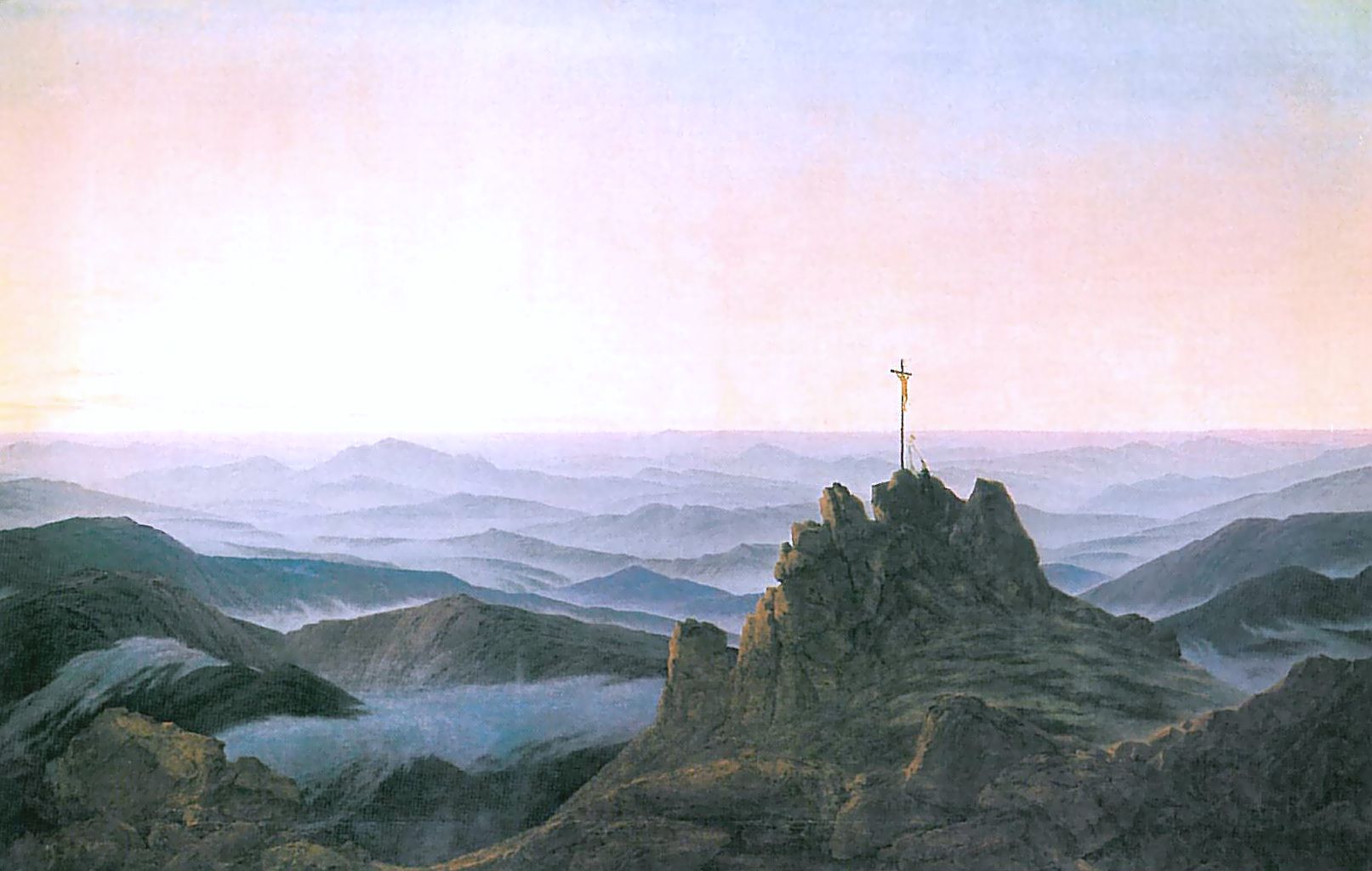
Morning in the Riesengebirge. Caspar David Friedrich, from 1810 until 1811. Wikimedia Commons. Public domain.