
Psalms 139:9
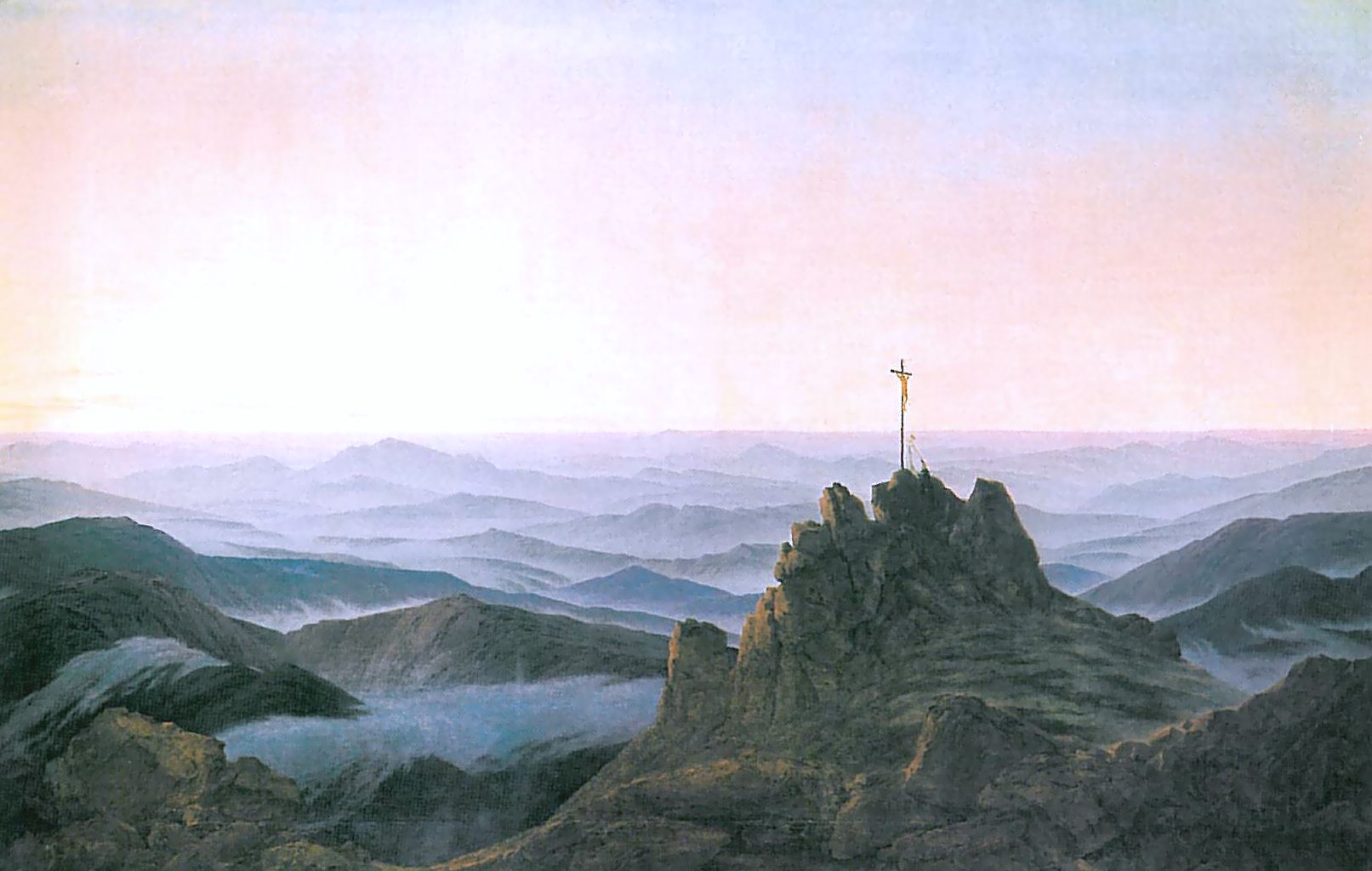
in Psalms 139If I rise on the wings of the dawn, if I settle by the farthest sea,
BSB
The same verse in ASV and KJV ▾
ASV
If I take the wings of the morning, And dwell in the uttermost parts of the sea;
KJV
If I take the wings of the morning, and dwell in the uttermost parts of the sea;
⋯
This verse in Psalms 139
Commentary
13 notes on this verseIn devout thoughts such as these my soul, engrossed in the pursuit of truth, took its delight. For it seemed that the greatness of God so far surpassed the mental powers of His handiwork, that however far the limited mind of man might strain in the hazardous effort to define Him, the gap was not lessened between the finite nature which struggled and the boundless infinity that lay beyond its ken.
This site's exposition
Where can I go to escape Your Spirit
on Psalms 139:7-10
Four places are tried, the heavens above and Sheol below, the wings of the dawn and the farthest sea. Sheol is the place of the dead, so the first pair runs from the top of creation to the bottom. Each route ends at the right hand that holds him fast.
This site's exposition
the wings of the dawn
The dawn has wings because its light spreads across the sky from the east in a moment. The farthest sea is the Mediterranean to the west, so the verse runs from sunrise to sunset. East and west follow the heights and depths of verse 8.
The record, by era
The Church Fathers4 voices
This plan he found: So will I flee, saith he, from Thy Face, so will I flee from Thy Spirit; from Thy avenging Spirit, Thy avenging Face thus will I flee. How? "If I take again my wings right forward, and abide in the utmost parts of the sea" [Psalm 139:9]. So can I flee from Thy Face. If he will flee to the utmost part of the sea from the Face of God, will not He from whom he fleeth be there? ...For what are "the utmost parts of the sea," but the end of the world? Thither let us now flee in hope and longing, with the wings of twofold love; let us have no rest, save in "the utmost parts of the sea." For if elsewhere we wish for rest, we shall be hurled headlong into the sea. Let us fly even to the ends of the sea, let us bear ourselves aloft on the wings of twofold love; meanwhile let us flee to God in hope, and in faithful hope let us meditate on that "end of the sea."
For Deity alone is uncircumscribed, existing everywhere, and as the same and in the same manner. For if I ascend, saith David, into heaven, thou art there; if I descend into Hades thou art present there; if I should take to myself wings at morning—that …
Since, therefore, all things are seen and heard, let us fear him and abandon the abominable lusts that spawn evil works, in order that we may be shielded by his mercy from the coming judgments. For where can any of us escape from his mighty hand? For the Scripture says somewhere, "Where shall I go, and where shall I be hidden from your presence? If I ascend to heaven, you are there; if I depart to the ends of the earth, there is your right hand; if I take my bed in the depths, there is your Spirit." Where, then, can one go, or where can one flee from him who embraces the universe?
"I have sinned against heaven and before you. I am no longer worthy to be called your son." The son set out abroad and fled into a far country; but he did not escape from those accusing witnesses, the eyes of the heavenly Father. David …
The Medieval Church1 voice
A commentator
BonaventureCollationes de Septem Donis, Collation 2 · Written in the 13th century.
proposed
Job says: "I always feared God as though waves were swelling over me." And why? I cannot flee on account of the sublimity of divine power, because "if I ascend into heaven, thou art there; if I descend into hell, thou art present; if I …
5 more voices on this verse
The Puritans and the Awakening2 voices
The wings - If I should flee from east to west: for the sea being the western border of Canaan, is often put for the west in scripture. And wings are poetically ascribed to the morning here, as they are elsewhere to the sun, and to the winds.
If I take the wings of the morning,....
The Nineteenth Century3 voices
If I take the wings of the morning, and dwell in the uttermost parts of the sea. If I could fly with all swiftness, and find a habitation where the mariner has not yet ploughed the deep, yet I could not reach the boundaries of the divine presence. Light flies with inconceivable rapidity, and it flashes far afield beyond all human ken; it illuminates the great and wide sea, and sets its waves gleaming afar; but its speed would utterly fail if employed in flying from the Lord.
If I take the wings of the morning, and dwell in the uttermost parts of the sea. If I could fly with all swiftness, and find a habitation where the mariner has not yet ploughed the deep, yet I could not reach the boundaries of the divine presence. Light flies with inconceivable rapidity, and it flashes far afield beyond all human ken; it illuminates the great and wide sea, and sets its waves gleaming afar; but its speed would utterly fail if employed in flying from the Lord. Were we to speed on the wings of the morning breeze, and break into oceans unknown to chart and map, yet there we should find the Lord already present. He who saves to the uttermost would be with us in the uttermost parts of the sea.
A commentator
Albert Barnes1798–1870
Notes, Explanatory and Practical, on the Old and New Testaments (1832-1869)
proposed
If I take the wings of the morning - literally, “I will take the wings of the morning.” That is, I will take this as a supposable case; I will imagine what would occur, should I be able to take to myself the wings of the morning, and endeavor to escape “by flight” from the presence of God, or go where he could not pursue me, or where he would not be. The “wings of the morning” evidently mean that by which the light of the morning “seems to fly” - the most rapid object known to us. It is not to be supposed that the psalmist had an idea of the exact velocity of light, but to him that was the most rapid object known; and his language is not the “less” striking because the laws of its flight have become accurately known. The word rendered “morning” refers to the dawn - the daybreak - the Aurora - the “first” beams of the morning light. The beams of light are in fact no swifter then than at any other time of the day, but they seem to be swifter, as they so quickly penetrate the darkness. And dwell in the uttermost parts of the sea - The end of the sea; that is, the “west,” as the sea referred to undoubtedly is the Mediterranean, which was west of Palestine, and which became another name for the west. The idea is, that if he could fly with the rapidity of light, and could be in an instant over the sea, even beyond its remotest border, still God would be there before him. He could not escape from the divine presence.
The words behind it
6 Hebrew wordsEvery Hebrew word of this verse in the order it stands, with what it means and the door to its own study. The last column counts the times a word stands in the whole Bible: the rarer the word, the more the places it appears belong together.
| Hebrew | Sound | Meaning | Word study | In the Bible |
|---|---|---|---|---|
| אֶשָּׂ֥א | ʾesa' | I will rise up | H5375 → | 656 times |
| כַנְפֵי־ | khanfei- | [the] wings of | H3671 → | 109 times |
| שָׁ֑חַר | shachar | dawn | H7837 → | 23 times |
| אֶ֝שְׁכְּנָ֗ה | ʾeshkenah | I dwell | H7931 → | 129 times |
| בְּאַחֲרִ֥ית | beacharit | at [the] end of | H319 → | 61 times |
| יָֽם׃ | yam | [the] sea | H3220 → | 396 times |
אֶשָּׂ֥אI will rise up
ʾesa'H5375 →656 times
כַנְפֵי־[the] wings of
khanfei-H3671 →109 times
שָׁ֑חַרdawn
shacharH7837 →23 times
אֶ֝שְׁכְּנָ֗הI dwell
ʾeshkenahH7931 →129 times
בְּאַחֲרִ֥יתat [the] end of
beacharitH319 →61 times
יָֽם׃[the] sea
yamH3220 →396 times
A shaded row is a word that stands 400 times or fewer in the Bible.
The walk
8 stopsEach card is a verse this one points to, and under it the verses that one points to in turn. Where several paths arrive at the same place, that place is listed first: the text keeps returning to it.
Through
Malachi 4:2“But for you who fear My name, the sun of righteousness will rise with healing in its wings, and you will go out and leap like calves from the stall.
it leads to
- Jeremiah 33:6
Nevertheless, I will bring to it health and healing, and I will heal its people and reveal to them the abundance of peace and truth.
- Psalms 84:11
For the LORD God is a sun and a shield; the LORD gives grace and glory; He withholds no good thing from those who walk with integrity.
- Isaiah 30:26
The light of the moon will be as bright as the sun, and the light of the sun will be seven times brighter—like the light of seven days—on the day that the LORD binds…
- Luke 1:78
because of the tender mercy of our God, by which the Dawn will visit us from on high,
- John 8:12
Once again, Jesus spoke to the people and said, “I am the light of the world. Whoever follows Me will never walk in the darkness, but will have the light of life.”
- Jeremiah 33:6
Through
Psalms 18:10He mounted a cherub and flew; He soared on the wings of the wind.
it leads to
- Psalms 104:3
laying the beams of His chambers in the waters above, making the clouds His chariot, walking on the wings of the wind.
- Psalms 104:3
Through
Psalms 19:6it rises at one end of the heavens and runs its circuit to the other; nothing is deprived of its warmth.
it leads to
- Ecclesiastes 1:5
The sun rises and the sun sets; it hurries back to where it rises.
- Job 22:14
Thick clouds veil Him so He does not see us as He traverses the vault of heaven.’
- Ecclesiastes 1:5
Where this verse is studied
On this page
About Psalms
This page draws on 13 works. Open the list of works
This page draws on Adam Clarke, Commentary on the Bible; Albert Barnes, Notes on the Book of Psalms; Albert Barnes, Notes, Explanatory and Practical, on the Old and New Testaments (1832-1869); Augustine of Hippo, Exposition on Psalm 139; Bonaventure, Collationes de Septem Donis, Collation 2; Charles Spurgeon, The Treasury of David, Vol. 7; Clement of Rome, 1 CLEMENT 28; Cosmas Indicopleustes, The Christian Topography, Book 2; Hilary of Poitiers, ON THE TRINITY 1:6; John Gill, Exposition of the Old Testament; John Gill, Exposition of the Old Testament (1748-1763); John Wesley, Explanatory Notes upon the Old Testament and Peter Chrysologus, SERMON 2.