
Psalms 139:8
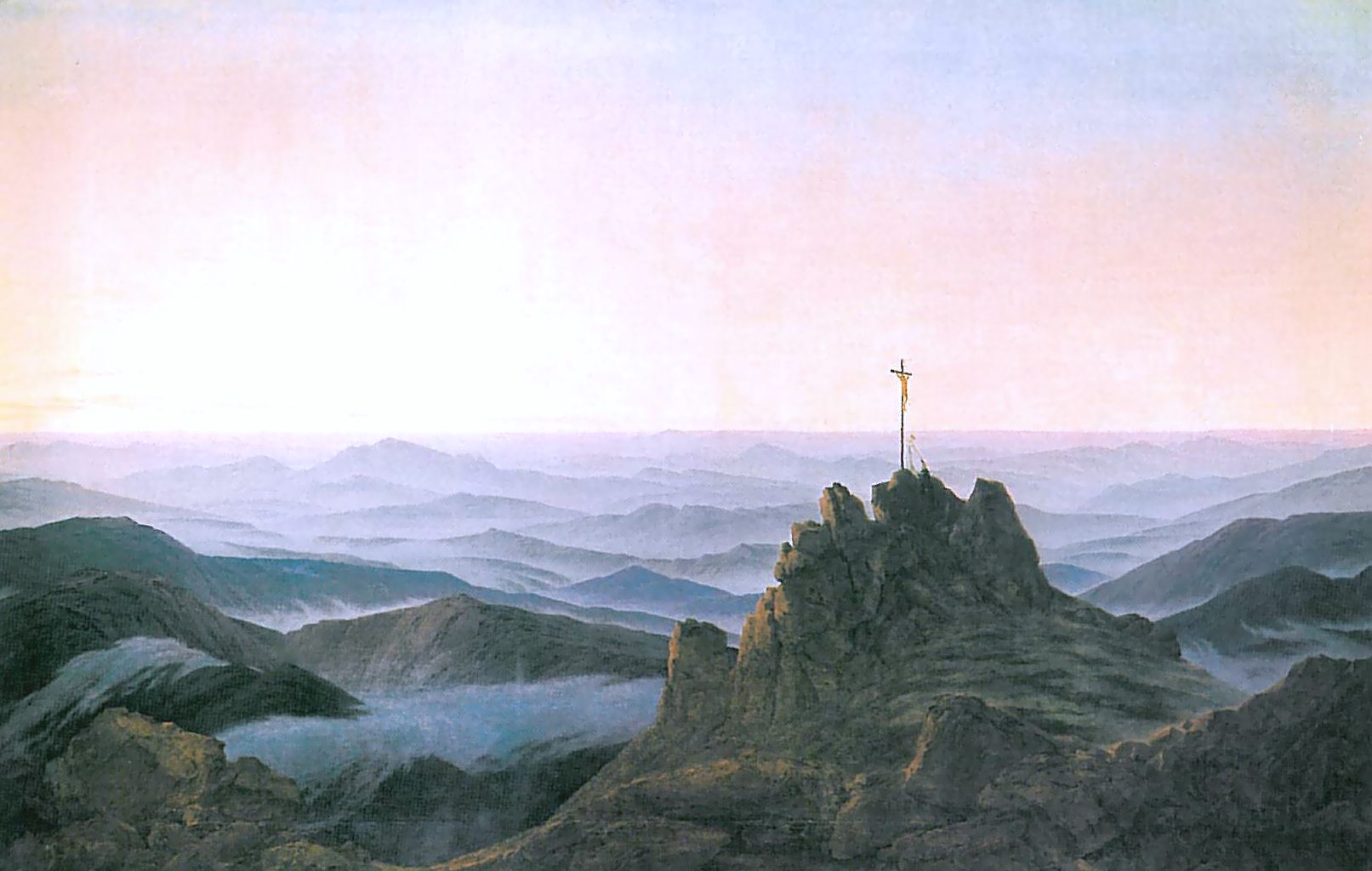
in Psalms 139If I ascend to the heavens, You are there; if I make my bed in Sheol, You are there.
BSB
The same verse in ASV and KJV ▾
ASV
If I ascend up into heaven, thou art there: If I make my bed in Sheol, behold, thou art there.
KJV
If I ascend up into heaven, thou art there: if I make my bed in hell, behold, thou art there.
⋯
This verse in Psalms 139
Commentary
19 notes on this verseIn devout thoughts such as these my soul, engrossed in the pursuit of truth, took its delight. For it seemed that the greatness of God so far surpassed the mental powers of His handiwork, that however far the limited mind of man might strain in the hazardous effort to define Him, the gap was not lessened between the finite nature which struggled and the boundless infinity that lay beyond its ken.
This site's exposition
Where can I go to escape Your Spirit
on Psalms 139:7-10
Four places are tried, the heavens above and Sheol below, the wings of the dawn and the farthest sea. Sheol is the place of the dead, so the first pair runs from the top of creation to the bottom. Each route ends at the right hand that holds him fast.
This site's exposition
If I ascend to the heavens
Amos 9:2 uses the same two limits, heaven and Sheol, to warn that the guilty cannot hide from judgment. Here the heavens and Sheol carry comfort instead. Making a bed in Sheol pictures lying down among the dead.
The record, by era
The Church Fathers5 voices
A commentator
Augustine of HippoTen Homilies on the First Epistle of John, Homily 6 · Written before 430.
proposed
"...if our heart think ill of us," i.e. accuse us within, that we do not the thing with that mind it ought to be done withal, "greater is God than our heart, and knoweth all things." Thou hidest thine heart from man: hide it from God if thou canst! How shalt thou hide it from Him, to whom it is said by a sinner, fearing and confessing, "Whither shall I go from Thy Spirit? and from Thy face whither shall I flee?" He sought a way to flee, to escape the judgment of God, and found none. For where is God not? "If I shall ascend," saith he, "into heaven, Thou art there: if I shall descend into hell, Thou art there." Whither wilt thou go? whither wilt thou flee? Wilt thou hear counsel? If thou wouldest flee from Him, flee to Him. Flee to Him by confessing, not from Him by hiding: hide thou canst not, but confess thou canst. Say unto Him, "Thou art my place to flee unto," and let love be nourished in thee, which alone leadeth unto life. Let thy conscience bear thee witness that thy love is of God. If it be of God, do not wish to display it before men; because neither men's praises lift thee unto heaven, nor their censures put thee down from thence. Let Him see, who crowneth thee: be He thy witness, by whom as judge thou art crowned. "Greater is God than our heart, and knoweth all things."
...whither was He sent except to the place where He already was? For He who says, "I fill heaven and earth," was everywhere. But if it is said of the Father, where could He be without His own word and without His own wisdom, which "reacheth from one end to another mightily, and sweetly ordereth all things?" But He cannot be anywhere without His own Spirit. Therefore, if God is everywhere, His Spirit also is everywhere. Therefore, the Holy Spirit, too, was sent thither, where He already was. For he, too, who finds no place to which he might go from the presence of God, and who says, "If I ascend up into heaven, Thou art there; if I shall go down into hell, behold, Thou art there;" wishing it to be understood that God is present everywhere, named in the previous verse His Spirit; for He says, "Whither shall I go from Thy Spirit? or whither shall I flee from Thy presence?"
"If I go up," says he, "to heaven, You are there: if I go down to Hades, You are present" [Psalm 139:8]. At length, miserable runaway, you have learned, that by no means can you make yourself far from Him, from whom you have wished to remove far away. Behold, He is everywhere; thou, whither will you go? He has found counsel, and that inspired by Him, who now deigns to recall him....If by sinning I go down to the depths of wickednesses, and spurn to confess, saying, "Who sees me" (for "in Hades who shall confess to You?" ) there also You are present, to punish. Whither then shall I go that I may flee from Your presence, that is, not find You angry? This plan he found: So will I flee, says he, from Your Face, so will I flee from Your Spirit; from Your avenging Spirit, Your avenging Face thus will I flee.
A commentator
Augustine of HippoTRACTATES ON THE GOSPEL OF JOHN 111:2.3 · Written before 430.
proposed
For this reason, of course, it was not enough for Jesus to say, "I will that where I am they also may be," but he added, "with me." For to be with him is a great good. For even the wretched can be where he is because wherever anybody at all may be [there] he also is; but the blessed alone are with him, because they will be unable to be blessed except by his action. Or has it not been truly said to God, "If I ascend into heaven, you are there; and if I descend into hell, you are present"? Or on the other hand is Christ not God's Wisdom, which "reaches everywhere by reason of its purity"?
A commentator
Augustine of Hippo354–430
TRACTATES ON THE GOSPEL OF JOHN 111:2.3 · Written before 430.
proposed
For this reason, of course, it was not enough for Jesus to say, "I will that where I am they also may be," but he added, "with me." For to be with him is a great good. For even the wretched can be where he is because wherever anybody at all may be [there] he also is; but the blessed alone are with him, because they will be unable to be blessed except by his action. Or has it not been truly said to God, "If I ascend into heaven, you are there; and if I descend into hell, you are present"? Or on the other hand is Christ not God's Wisdom, which "reaches everywhere by reason of its purity"?
11 more voices on this verse
The Church Fathers5 voices
For Deity alone is uncircumscribed, existing everywhere, and as the same and in the same manner. For if I ascend, saith David, into heaven, thou art there; if I descend into Hades thou art present there; if I should take to myself wings at morning—that …
Hold most firmly and never doubt that God the Trinity is unbounded in power, not in mass; and that every creature, spiritual and bodily, is bound by his power and his presence. For God the Father says, "I fill the heavens and the earth." For …
Since, therefore, all things are seen and heard, let us fear him and abandon the abominable lusts that spawn evil works, in order that we may be shielded by his mercy from the coming judgments. For where can any of us escape from his mighty hand? For the Scripture says somewhere, "Where shall I go, and where shall I be hidden from your presence? If I ascend to heaven, you are there; if I depart to the ends of the earth, there is your right hand; if I take my bed in the depths, there is your Spirit." Where, then, can one go, or where can one flee from him who embraces the universe?
If they really conceive of a kind of degradation of the Son in relation to the Father, as though He were in a lower place, so that the Father sits above, and the Son is thrust off to the next seat below, let them confess what they mean. We shall have no more to say. A plain statement of the view will at once expose its absurdity. They who refuse to allow that the Father pervades all things do not so much as maintain the logical sequence of thought in their argument.
"I have sinned against heaven and before you. I am no longer worthy to be called your son." The son set out abroad and fled into a far country; but he did not escape from those accusing witnesses, the eyes of the heavenly Father. David …
The Medieval Church1 voice
A commentator
BonaventureCollationes de Septem Donis, Collation 2 · Written in the 13th century.
proposed
Job says: "I always feared God as though waves were swelling over me." And why? I cannot flee on account of the sublimity of divine power, because "if I ascend into heaven, thou art there; if I descend into hell, thou art present; if I …
The Puritans and the Awakening1 voice
If I ascend up into heaven, thou art there,....
The Nineteenth Century4 voices
If I ascend up into heaven, thou art there. Filling the loftiest region with his yet loftier presence, Jehovah is in the heavenly place, at home, upon his throne. The ascent, if it were possible, would be unavailing for purposes of escape; it would, in fact, be a flying into the centre of the fire to avoid the heat. There would he be immediately confronted by the terrible personality of God. Note the abrupt words—"Thou, there." If I make my bed in hell, behold, thou art there.
If I ascend up into heaven, thou art there. Filling the loftiest region with his yet loftier presence, Jehovah is in the heavenly place, at home, upon his throne. The ascent, if it were possible, would be unavailing for purposes of escape; it would, in fact, be a flying into the centre of the fire to avoid the heat. There would he be immediately confronted by the terrible personality of God. Note the abrupt words—"Thou, there." If I make my bed in hell, behold, thou art there. Descending into the lowest imaginable depths among the dead, there should we find the Lord. Thou! says the Psalmist, as if he felt that God was the one great Existence in all places. Whatever Hades may be, or whoever may be there, one thing is certain, Thou, O Jehovah, art there. Two regions, the one of glory and the other of darkness, are set in contrast, and this one fact is asserted of both—"thou art there." Whether we rise up or lie down, take our wing or make our bed, we shall find God near us. A "behold" is added to the second clause, since it seems more a wonder to meet with God in hell than in heaven, in Hades than in Paradise. Of course the presence of God produces very different effects in these places, but it is unquestionably in each; the bliss of one, the terror of the other. What an awful thought, that some men seem resolved to take up their night's abode in hell, a night which shall know no morning.
If I ascend - Thou art in heaven, in thy glory; in hell, in thy vindictive justice; and in all parts or earth, water, space, place, or vacuity, by thy omnipresence. Wherever I am, there art thou; and where I cannot be, thou art there. Thou fillest the heavens and the earth.
A commentator
Albert Barnes1798–1870
Notes, Explanatory and Practical, on the Old and New Testaments (1832-1869)
proposed
If I ascend up into heaven - The word “heaven” here, in the original is in the plural number - “heavens,” - and includes all that there is above the earth - the highest worlds. If I make my bed - Properly, “If I strew or spread my couch.” If I should seek that as the place where to lie down. In hell - Hebrew, “Sheol.” See the notes at Isa 14:9, where the word is fully explained. The word here refers to the under-world - the abodes of the dead; and, in the apprehension of the psalmist, corresponds in depth with the word “heaven” in height. The two represent all worlds, above and below; and the idea is, that in neither direction, above or below, could he go where God would not be. Thou art there - Or, more emphatically and impressively in the original, “Thou!” That is, the psalmist imagines himself in the highest heaven, or in the deepest abodes of the dead - and lo! God is there also! he has not gone from “him”! he is still in the presence of the same God!
The words behind it
8 Hebrew wordsEvery Hebrew word of this verse in the order it stands, with what it means and the door to its own study. The last column counts the times a word stands in the whole Bible: the rarer the word, the more the places it appears belong together.
| Hebrew | Sound | Meaning | Word study | In the Bible |
|---|---|---|---|---|
| אִם־ | ʾim- | if | H518 → | 1069 times |
| אֶסַּ֣ק | ʾesak | I will ascend | H5266 → | |
| שָׁ֭מַיִם | shamayim | heavens | H8064 → | 421 times |
| שָׁ֣ם | sham | [are] there | H8033 → | 834 times |
| אָ֑תָּה | ʾatah | you | H859 → | 1094 times |
| וְאַצִּ֖יעָה | veatziah | and I will spread as a bed | H3331 → | |
| שְּׁא֣וֹל | sheol | Sheol | H7585 → | 66 times |
| הִנֶּֽךָּ׃ | hineka | there [are] you | H2005 → | 316 times |
אִם־if
ʾim-H518 →1069 times
אֶסַּ֣קI will ascend
ʾesakH5266 →
שָׁ֭מַיִםheavens
shamayimH8064 →421 times
שָׁ֣ם[are] there
shamH8033 →834 times
אָ֑תָּהyou
ʾatahH859 →1094 times
וְאַצִּ֖יעָהand I will spread as a bed
veatziahH3331 →
שְּׁא֣וֹלSheol
sheolH7585 →66 times
הִנֶּֽךָּ׃there [are] you
hinekaH2005 →316 times
A shaded row is a word that stands 400 times or fewer in the Bible.
The walk
8 stopsEach card is a verse this one points to, and under it the verses that one points to in turn. Where several paths arrive at the same place, that place is listed first: the text keeps returning to it.
Through
Jonah 2:2saying: “In my distress I called to the LORD, and He answered me. From the belly of Sheol I called for help, and You heard my voice.
it leads to
- Psalms 18:4–6
The cords of death encompassed me; the torrents of chaos overwhelmed me.
- Psalms 120:1
In my distress I cried to the LORD, and He answered me.
- Psalms 34:6
This poor man called out, and the LORD heard him; He saved him from all his troubles.
- Psalms 86:13
For great is Your loving devotion to me; You have delivered me from the depths of Sheol.
- Psalms 18:4–6
Through
Proverbs 15:11Sheol and Abaddon lie open before the LORD—how much more the hearts of men!
it leads to
- Psalms 44:21
would not God have discovered, since He knows the secrets of the heart?
- Hebrews 4:13
Nothing in all creation is hidden from God’s sight; everything is uncovered and exposed before the eyes of Him to whom we must give account.
- 2 Chronicles 6:30
be heard by You from heaven, Your dwelling place. And may You forgive and repay each man according to all his ways, since You know his heart—for You alone know the hearts of men—
- Job 26:6
Sheol is naked before God, and Abaddon has no covering.
- Psalms 44:21
Where this verse is studied
On this page
About Psalms
This page draws on 18 works. Open the list of works
This page draws on Adam Clarke, Commentary on the Bible; Albert Barnes, Notes on the Book of Psalms; Albert Barnes, Notes, Explanatory and Practical, on the Old and New Testaments (1832-1869); Alexander Maclaren, Expositions of Holy Scripture; Augustine of Hippo, Ten Homilies on the First Epistle of John, Homily 6; Augustine of Hippo, On The Trinity 2:5.7; Augustine of Hippo, Exposition on Psalm 139; Augustine of Hippo, TRACTATES ON THE GOSPEL OF JOHN 111:2.3; Basil of Caesarea, ON THE SPIRIT 6:15; Bonaventure, Collationes de Septem Donis, Collation 2; Charles Spurgeon, The Treasury of David, Vol. 7; Clement of Rome, 1 CLEMENT 28; Cosmas Indicopleustes, The Christian Topography, Book 2; Fulgentius of Ruspe, TO PETER ON THE FAITH 12:55; Hilary of Poitiers, ON THE TRINITY 1:6; John Gill, Exposition of the Old Testament; John Gill, Exposition of the Old Testament (1748-1763) and Peter Chrysologus, SERMON 2.