
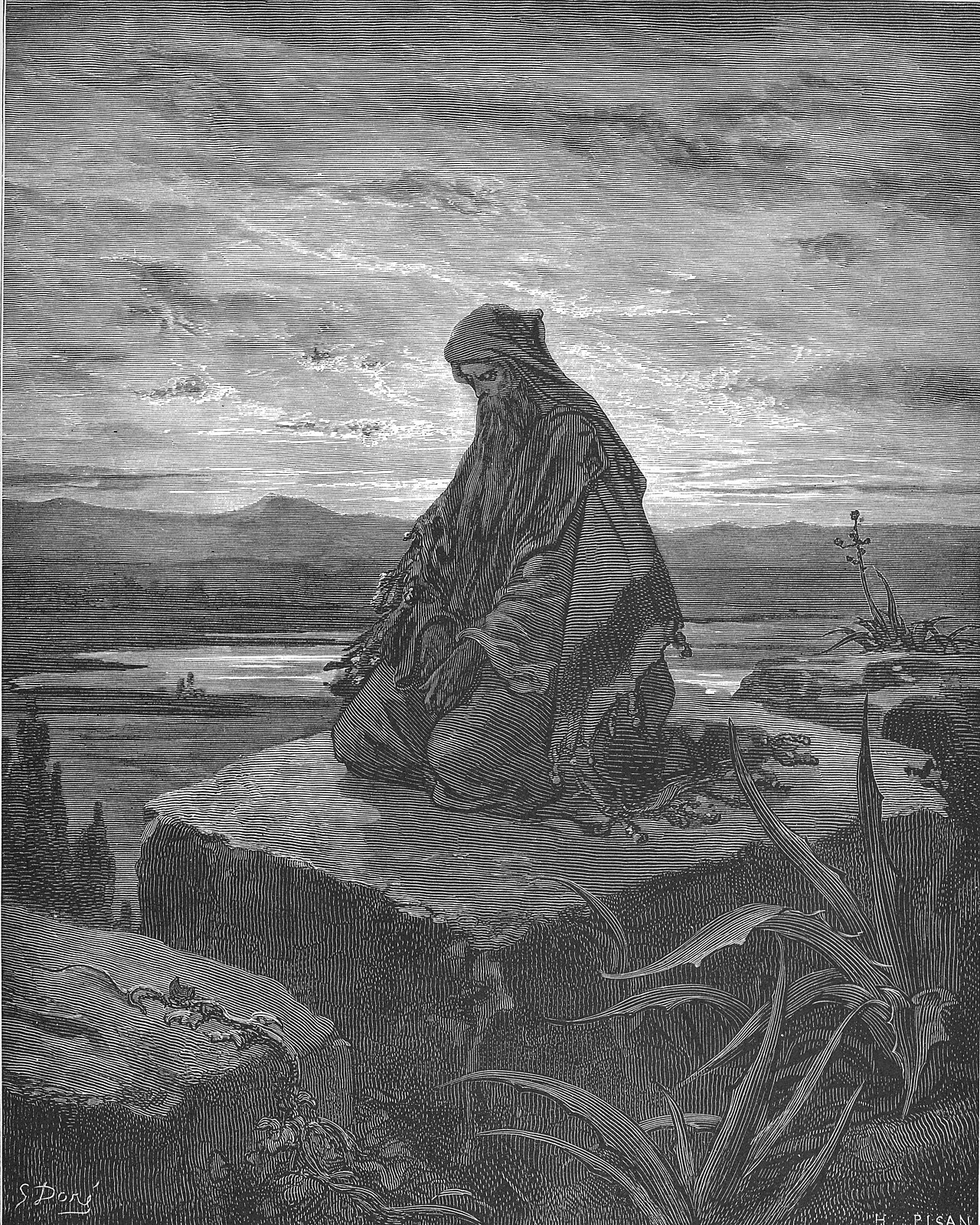
Isaiahchapter 39
8 verses · Isaiah · 8th century BC · The Prophets
The time will surely come when everything in your palace and all that your fathers have stored up until this day will be carried off to Babylon. Nothing will be left, says the LORD.
Introduction
Isaiah, The Prophets, Isaiah Overview.
This short chapter closes the first half of Isaiah and opens the door to the second. Envoys come from Babylon, a far city that Judah did not yet fear, in the season after Hezekiah's recovery. The account also stands in 2 Kings 20. The chapter is placed here, out of the order of events, so that the book turns from Assyria toward Babylon. Listen for the prophet's questions to the king, and for how far ahead the king is willing to look. Chapter 40 speaks to the people this chapter warns about.
Context
- Who
- Judeans who thought Assyria was the only empire that mattered
- What
- The visit of envoys from Merodach-baladan of Babylon, Hezekiah's display of his treasures, and Isaiah's word that all of it will go to Babylon.
- Where
- Hezekiah's palace, treasury and armoury in Jerusalem.
- When
- About 703 BC, soon after Hezekiah's recovery, while Merodach-baladan was seeking allies against Assyria.
- Why
- To show the danger of pride and of trust in foreign powers, and to announce the Babylonian exile that the rest of the book addresses.
Historical context
Merodach-baladan is a documented figure with a long record. A Chaldean chief from the marshes of southern Babylonia, he seized Babylon's throne twice and spent decades organizing revolts against Assyria, and Assyrian records complain about him at length. His embassy to Jerusalem, carrying letters and a gift with a get-well message as the cover story, is exactly what an anti-Assyrian recruiter would do. He was not asking about Hezekiah's health. He was asking what Judah could contribute.
Show the rest of the historical context, 4 more paragraphs
Hezekiah's answer is the tour. He shows them the treasure house, silver, gold, spices, precious ointment, and the whole armory, and everything in his storehouses. Spices and fine oils were high-value trade goods; the armory was the war-making capacity. There was nothing in his house or his realm, the text says, that he did not show them. That is a prospective ally displaying his assets.
Isaiah's questions to the king are those of an investigator: what did those men say, and where did they come from? Hezekiah answers honestly and misses the point entirely, they came from a far country, from Babylon, as if distance made them harmless.
The verdict names the exile a century before it happened: all that is in your house, and what your fathers have stored up until this day, shall be carried to Babylon. And your sons who come from you shall be taken to be eunuchs in the palace of the king of Babylon. That last detail was fulfilled with awful precision when Judah's noble youths were taken into Babylonian court service.
The chapter is placed here, out of chronological order, for a reason. Chapters 1 to 39 end with Babylon in the doorway. Chapters 40 to 66 speak to a people already in Babylon's hands.
Significance
The king who prayed so well under Assyrian threat handles Babylonian flattery badly. Prosperity and attention undid what a siege could not.
Show the rest of the significance, 1 more paragraph
And his last recorded line is the uncomfortable one: good is the word of the LORD which you have spoken, for there shall be peace and truth in my days. A relieved man, thinking only as far as his own lifetime. The first hearers were his grandchildren's generation.
This chapter in Jewish lifeWhat this chapter is in Jewish life and reading.
What is done
No part of this chapter is read aloud in the synagogue. The site's own table in src/lib/hebraic/readings.ts printed parashot 0 and haftarah uses 0 for Isaiah 39, and no festival reading for the book. The table records Isaiah only as a source of Haftarot, and none of the Haftarot it records reaches this chapter.
The chapter is met instead in the study of the weekly portions, and the corpus names the doors. Under the fourth verse it carries Midrash Tanchuma, Vaera 13:5. Each of those locators is named for the Torah portion whose study it belongs to.
How it is read
Rashi is quoted here from The Judaica Press complete Tanach with Rashi, translated by A. J. Rosenberg, which Sefaria reports as CC-BY. The corpus carries no English for any other commentator on this chapter. Rashi explains why the king of Babylon sent envoys by a story he takes from Tanhuma and the Pesikta. The king slept through the day that the sun went back, woke to find it morning, and asked who had turned the sun. His servants answered that it was the God of Hezekiah (Rashi on Isaiah 39:1:1).
What Hezekiah showed the envoys Rashi names item by item. The treasure house held spices, and the good oil was either the anointing oil or balsam, which he identifies from the book of Josephon as the balsam of Jericho (Rashi on Isaiah 39:2:1 and 39:2:2). Nothing was left unshown, "Even the Scroll of the Law" (Rashi on Isaiah 39:2:3). At the third verse Rashi reports a teaching from Tanhuma that sets Hezekiah with Cain and Balaam. Each was asked a question by God or His prophet whose answer was already known, and each answered with pride (Rashi on Isaiah 39:3:1).
The sentence is measure for measure. Hezekiah showed everything, and nothing will remain (Rashi on Isaiah 39:6:1). The sons taken to Babylon are "Hananiah, Mishael, and Azariah" (Rashi on Isaiah 39:7:1). Hezekiah calls the word good "since there will be peace in my days" (Rashi on Isaiah 39:8:1).
The corpus carries thirteen further notes on this chapter without an English text, each marked linked because Sefaria holds no English version of the ref. Six stand cited and unquoted at Malbim on Isaiah 39:1:1, 39:2:1, 39:3:1, 39:4:1, 39:6:1 and 39:8:1, and five at Metzudat David on Isaiah 39:1:1, 39:2:1, 39:6:1, 39:7:1 and 39:8:1. One each stands at Ibn Ezra and at Radak on Isaiah 39:1:1.
What the rabbis say
The corpus carries twenty-three rabbinic locators on this chapter and the text of none, so each is cited by ref here and none is quoted or paraphrased. On the first verse it holds Bamidbar Rabbah 20:6, Bereshit Rabbati, Parashat Miketz 55, Ein Yaakov (Glick Edition), Sanhedrin 11:37, Esther Rabbah 3:1, Jerusalem Talmud Yevamot 2:6:3, Pesikta DeRav Kahana 2:5 and Sanhedrin 96a:10. The same verse also carries Shir HaShirim Rabbah 3:4:2 and Tractate Soferim 8:2. On the second verse it holds Pirkei DeRabbi Eliezer 52:10 and Sanhedrin 104a:11. On the third verse it holds Avot DeRabbi Natan, Recension B 45:4, Bereshit Rabbah 19:11, Vayikra Rabbah 1:13 and Vayikra Rabbah 29:2. On the fourth verse it holds Midrash Tanchuma, Vaera 13:5. On the sixth verse it holds Otzar Midrashim, Baraita of Melechet HaMishkan 1:32 and Yoma 53b:15.
On the seventh verse it holds Otzar Midrashim, Midrash on the Ten Kings 1:10, Otzar Midrashim, Midrashim of Rabbi Shimon bar Yochai, Prayer of Rabbi Shimon Bar Yochai 6, Sanhedrin 104a:10 and Sanhedrin 93b:12.
The corpus files one further locator under a verse number this chapter does not reach. The site's table in src/data/bible/chapter-verse-counts.json counts the chapter at 8 verses in the Berean Standard Bible. The corpus files Ein Yaakov (Glick Edition), Sanhedrin 11:85 at the number 18. It is cited as the corpus files it, and the anchor is left for a check against the source. What each of them teaches is a saying of the rabbis, and it is reported as theirs wherever this site quotes one. The quotations wait on a fetch that carries the text.
Sources: Rashi, Rashi on Isaiah 39:1:1 to 39:8:1, The Judaica Press complete Tanach with Rashi, translated by A. J. Rosenberg, reported CC-BY; Ibn Ezra, Ibn Ezra on Isaiah 39:1:1, cited by ref because the corpus carries no English text; Malbim, Malbim on Isaiah 39:1:1, 39:2:1, 39:3:1, 39:4:1, 39:6:1 and 39:8:1, cited by ref because the corpus carries no English text; Metzudat David, Metzudat David on Isaiah 39:1:1, 39:2:1, 39:6:1, 39:7:1 and 39:8:1, cited by ref because the corpus carries no English text; Radak, Radak on Isaiah 39:1:1, cited by ref because the corpus carries no English text; The Sefaria corpus, scripts/data/sources/sefaria/isaiah/39.json, the 23 Talmud and Midrash locators of this chapter; The site's own files, src/lib/hebraic/readings.ts, printing no portion, no Haftarah and no festival reading for this chapter, and src/data/bible/chapter-verse-counts.json for the verse count.
The heads below are this chapter's scenes. The numbered points under each are its verses.
Envoys from Babylon Shown Everything in the House
Isaiah 39:1-2
sent letters and a gift to Hezekiah: Merodach-baladan of Babylon sent letters and a gift to Hezekiah, an overture against the Assyrian rival both courts shared. Hezekiah went past courtesy into display and showed the envoys the silver, as well as his entire armory. There was nothing in his palace that Hezekiah did not show them.
Isaiah 39:1
“At that time - That is, soon after his recovery; or after he had amassed great wealth, and was surrounded with the evidences of prosperity 2Ch 32:27-31. Merodach-baladan, the son of Balddan, king of Babylon - In the parallel place in 2Ki 20:12, this name is written Berodach-baladan, by a change of a single letter. Probably the name was written and pronounced both ways. Merodach was an idol of the Babylonians Jer 50:2: ‘Babylon is taken, Bel is confounded, Merodach is confounded.’ This idol, according to Gesenius, was probably the planet Mars, or Mars the god of war.”
2 more voices on this verseWhat preachers and commentators have said about this verse, in their own words.
Isaiah 39:1
At that time Merodachbaladan, the son of Baladan, king of Babylon,.... The same is called Berodach, 2Ki 20:12 which, according to Hillerus (z), is the same with Barmerodach, the son of Merodach; though it is generally took to be a slip of the scribe's there, or a change of letter, as is common in names; he was either afterwards made a god of, or he had his name from an idol of the Babylonians so called, Jer 50:1, which signifies "a pure lord."
Isaiah 39:1
“Merodach-baladan--For a hundred fifty years before the overthrow of Nineveh by Cyaxares the Mede, a succession of rulers, mostly viceroys of Assyria, ruled Babylon, from the time of Nabonassar, 747 B.C. That date is called "the Era of Nabonassar." Pul or Phallukha was then expelled, and a new dynasty set up at Nineveh, under Tiglath-pileser.”
Jamieson, Fausset & Brown · Commentary Critical and Explanatory on the Whole Bible (1871)reformed
Hezekiah welcomed the envoys gladly: Albert Barnes reads the gladness of Hezekiah as a king flattered by envoys from a city as distant and famous as Babylon. Second Chronicles 32:31 says that God left him alone in this to test him and to know all that was in his heart. The treasure house revealed it.
Isaiah 39:2
“And Hezekiah was glad of them - Possibly he regarded himself as flattered by an embassage from so great a distance, and so celebrated a place as Babylon. It is certain that he erred in some way in regard to the manner in which he received them, and especially in the ostentatious display which he made of his treasures 2Ch 32:31. And showed them the house of his precious things - The Septuagint renders this, Νεχωθᾶ Nechōtha - ‘The house of Nechotha,’ retaining the Hebrew word.”
Isaiah 39:3-4
Isaiah arrives after the fact and questions the king, Where did those men come from? Hezekiah answers plainly, from Babylon, and then, They have seen everything in my palace. His answers keep returning to the whole, There is nothing among my treasures that I did not show them.
Isaiah 39:3
“Then came Isaiah - Isaiah was accustomed to declare the will of God most freely to monarchs (see Isa. 7) What said these men? - What proposition have they made? What is the design of their coming? It is implied in the question that there had been some improper communication from them. To this question Hezekiah returned no answer. And from whence came they? - It was doubtless known in Jerusalem that ambassadors had come, but it would not be likely to be known from what country they had come.”
1 more voice on this verse
Isaiah 39:3
Reliance on Babylon, rather than on God, was a similar sin to the previous reliance on Egypt (Isa 30:1-31:9). far country--implying that he had done nothing more than was proper in showing attention to strangers "from a far country."
Jamieson, Fausset & Brown · Commentary Critical and Explanatory on the Whole Bible (1871)reformed
Jamieson, Fausset and Brown hear a frank confession in the answer of Hezekiah, a king submitting his conduct to a prophet sent by God. King Asa had jailed the seer Hanani for a rebuke at Second Chronicles 16:7-10. Hezekiah hides nothing in his palace.
Isaiah 39:4
“What have they seen? - It is probable that the fact that Hezekiah had showed them the treasures of his kingdom was known in Jerusalem. Such a fact would be likely to attract attention, and to produce inquiry among the people into the cause. All that is in mine house - Here was the confessions of a frank, an honest, and a pious man. There was no concealment; no disguise. Hezekiah knew that he was dealing with a man of God - a man too to whom he had been under great obligations.”
1 more voice on this verse
Isaiah 39:4
“All--a frank confession of his whole fault; the king submits his conduct to the scrutiny of a subject, because that subject was accredited by God. Contrast Asa (2Ch 16:7-10).”
Jamieson, Fausset & Brown · Commentary Critical and Explanatory on the Whole Bible (1871)reformed
All Shall Be Carried to Babylon, Nothing Left
Isaiah 39:5-6
Isaiah answers the display with a sentence that turns each treasure into plunder, everything in your palace will be carried off to Babylon. Nothing will be left, says the LORD. The oracle names Babylon, the power that had just sent a friendly letter, where Assyria had just besieged Jerusalem.
Isaiah 39:5
“Hear the word of the Lord of hosts - Hear what the mighty God that rules in heaven says of this. This is an instance of great fidelity on the part of the prophet. He felt himself sent from God in a solemn manner to rebuke sin in a monarch, and a pious monarch. It is an instance that strikingly resembles the boldness and faithfulness of Nathan when he went to David, and said, ‘Thou art the man’ 2Sa 12:7.”
will be carried off to Babylon: Adam Clarke counts about one hundred and fifty years from this word to its fulfilment, and he points to Daniel 1:2, where Nebuchadnezzar carries articles. Everything the fathers stored up went the same road. The LORD has spoken it.
Isaiah 39:6
“To Babylon - בבלה babelah, so two MSS., (one ancient); rightly, without doubt as the other copy (2Ki 20:17) has it. This prediction was fulfilled about one hundred and fifty years after it was spoken: see Dan 1:2, Dan 1:3-7. What a proof of Divine omniscience!”
Adam Clarke · Commentary on the Bible (1810-1826)evangelical
The oracle names Hezekiah's own line as the exiles: some of your descendants, your own flesh and blood, will be taken away to be eunuchs. From here the book carries Babylon's shadow as the chapters before carried Assyria's. The sentence was fulfilled in the exile of Judah's royal line.
Hezekiah answers: The word of the LORD that you have spoken is good. The narrator adds his thought: At least there will be peace and security in my lifetime. The judgment falls on his sons after his reign, and the text records his words and thought without settling between them.
Isaiah 39:8
“Hezekiah reckoned that word of the Lord good which discovered sin to him, and made him sensible that he had done amiss, which before he was not aware of. The language of true penitents is, Let the righteous smite me; it shall be a kindness; and the law is therefore good, because, being spiritual, in it sin appears sin, and exceedingly sinful.”
Matthew Henry · Commentary on the Whole Bible (1707-1721)puritan
1 more voice on this verse
Isaiah 39:8
“Then said Hezekiah - The nature of Hezekiah’s crime, and his humiliation on the message of God to him by the prophet, is more expressly declared by the author of the book of the Chronicles: “But Hezekiah rendered not again according to the benefit done unto him; for his heart was lifted up; therefore there was wrath upon him, and upon Judah and Jerusalem. Notwithstanding, Hezekiah humbled himself for the pride of his heart, both he and the inhabitants of Jerusalem, so that the wrath of the Lord came not upon them in the days of Hezekiah.”
Adam Clarke · Commentary on the Bible (1810-1826)evangelical
Keep studying
Sources for this chapter
The summary
Jamieson, Fausset & Brown, Commentary Critical and Explanatory; John Calvin, Commentaries; John Wesley, Notes on the Old Testament and Matthew Henry, Complete Commentary.
The exposition
Adam Clarke, Commentary on the Bible; Albert Barnes; Franz Delitzsch, Biblical Commentary on the Prophecies of Isaiah; Jamieson, Fausset & Brown, Commentary Critical and Explanatory on the Whole Bible; John Gill, Exposition of the Old Testament and Matthew Henry, Commentary on the Whole Bible.