
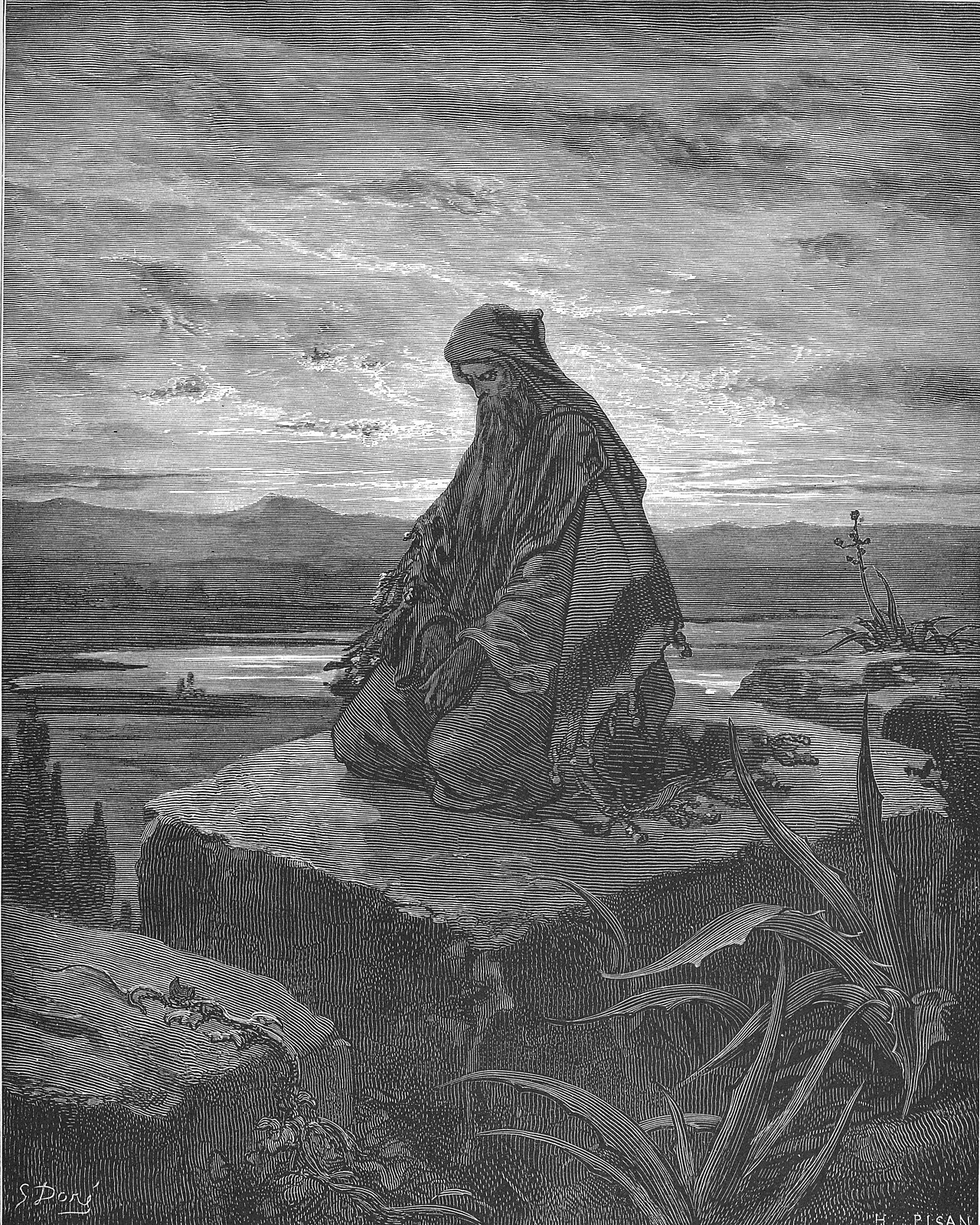
Isaiahchapter 31
9 verses · Isaiah · 8th century BC · The Prophets
Woe to those who go down to Egypt for help, who rely on horses, who trust in their abundance of chariots and in their multitude of horsemen. They do not look to the Holy One of Israel; they do not seek the LORD.
Introduction
Isaiah, The Prophets, Isaiah Overview.
This short chapter is Isaiah's word to officials who were counting on Egyptian horses and chariots. It is the fourth woe in this part of the book, and it weighs two kinds of help against each other in plain terms. Its first hearers knew the price of a chariot force and the habits of a lion over its kill. Listen for the two animal pictures, one fierce and one gentle, and for the call to turn back that sits between the threat and the promise. It closes with a word about Assyria's fall.
Context
- Who
- Officials counting Egyptian chariots and horsemen
- What
- A woe on those who rely on Egypt's horses and chariots, with a promise that the LORD Himself will defend Jerusalem.
- Where
- Jerusalem, looking south to Egypt and its horse trade.
- When
- About 705 to 701 BC, before Sennacherib's invasion.
- Why
- To call Judah to turn back to God, who alone could protect the city, and away from military help bought from Egypt.
Historical context
The arms trade is the subject. Egypt bred and sold horses and built chariots, and a chariot corps was the heavy armor of the age: fast, expensive, and useless in hill country. Judah had no cavalry tradition of its own and had to buy. Isaiah's one-line audit is devastating and unarguable: the Egyptians are men, not God, and their horses are flesh, not spirit.
Show the rest of the historical context, 3 more paragraphs
The lion image is drawn from shepherd life. When a lion or a young lion stands over its kill and a whole company of shepherds turns out shouting and banging to drive it off, the lion is not afraid of the noise and does not give up the carcass. Isaiah applies it to God coming down to fight on Mount Zion, not driven off by an army's noise.
The second image is smaller and gentler: birds hovering, so the LORD of hosts will defend Jerusalem, defending, and passing over, and preserving it. The word for passing over is the Passover word. It is the same protective hovering, the same night, the same God.
The chapter ends with a promise that is easy to skip past and was in fact fulfilled within a few years: then shall the Assyrian fall by a sword, not of man; and the sword, not of a mean man, shall devour him. His officers panic at the standard, and his strongholds pass away for fear.
Significance
The demand at the center is repentance in political terms: turn to him from whom you have deeply revolted. On that day every man will throw away the silver and gold idols his own hands made for himself, as sin.
Show the rest of the significance, 1 more paragraph
For hearers who thought faith was a private matter and defense was a professional one, the chapter refuses the split. Where you buy your horses is a theological statement.
This chapter in Jewish lifeWhat this chapter is in Jewish life and reading.
What is done
No part of this chapter is read aloud in the synagogue. The site's own table in src/lib/hebraic/readings.ts printed parashot 0 and haftarah uses 0 for Isaiah 31, and no festival reading for the book. The table records Isaiah only as a source of Haftarot, and none of the Haftarot it records reaches this chapter.
How it is read
Rashi is quoted here from The Judaica Press complete Tanach with Rashi, translated by A. J. Rosenberg, which Sefaria reports as CC-BY, and Ibn Ezra from the Commentary of Ibn Ezra on Isaiah translated by M. Friedlander in 1873, which Sefaria reports as public domain. Rashi reads the woe on those who go down to Egypt as the woe on Hoshea and the ten tribes. They sent to So, king of Egypt, and did not rely on the Holy One of Israel "as Hezekiah did" (Rashi on Isaiah 31:1:1 and 31:1:3). The punishment matches the sin. Deuteronomy 28:68 promised that the Lord would bring them back to Egypt in ships. Rashi reads it as payment in kind. They went of their own will, and they would go into exile against it (Rashi on Isaiah 31:2:1).
Ibn Ezra reads the third verse through the deliverance of Jerusalem from Assyria. The Egyptians are men and "not a spirit", which he takes to mean not an angel (Ibn Ezra on Isaiah 31:3:1). The sword of the eighth verse is "the drawn sword of an angel", and he calls the sword a figure of speech (Ibn Ezra on Isaiah 31:8:1). Rashi reads the turning of God's hand through the Mekhilta on Exodus 15:12: God holds all things in His hand, and when He turns it they fall (Rashi on Isaiah 31:3:1).
At the fifth verse Rashi glosses the verb as "passing over" and adds that it may also mean sparing (Rashi on Isaiah 31:5:1). Under the same verse the corpus sets Mekhilta DeRabbi Yishmael, Tractate Pischa 7:22 and 11:19, with Mekhilta DeRabbi Shimon Ben Yochai 12:27. The call of the sixth verse is plain in both commentators: return to the One you turned from (Rashi and Ibn Ezra on Isaiah 31:6:1).
The corpus carries one further note on this chapter without an English text, marked linked because Sefaria holds no English version of the ref. It stands cited and unquoted at Radak on Isaiah 31:6:1.
What the rabbis say
The corpus carries forty rabbinic locators on this chapter and the text of none, so each is cited by ref here and none is quoted or paraphrased. On the first verse it holds Esther Rabbah, Petichta 3, Jerusalem Talmud Sukkah 5:1:5, Mekhilta DeRabbi Yishmael, Tractate Vayehi Beshalach 3:26, Midrash Lekach Tov on Lamentations 5:6:1 and Midrash Lekach Tov, Exodus 14:13:5. The same verse also carries Midrash Sekhel Tov, Shemot 14:13:3 and Yalkut Shimoni on Torah 233:1. On the second verse it holds Bamidbar Rabbah 9:8, Jerusalem Talmud Kiddushin 4:1:13, Jerusalem Talmud Yevamot 8:3:9, Vayikra Rabbah 32:6 and Yalkut Shimoni on Torah 488:3. On the third verse it holds Mekhilta DeRabbi Yishmael, Tractate Shirah 9:5, Midrash Sekhel Tov, Shemot 15:12:1, Midrash Tehillim 114:3, Pesikta Rabbati, Supplement A 2:11 and Yalkut Shimoni on Torah 251:3. On the fourth verse it holds Aggadat Bereshit 56:1, Bereshit Rabbah 74:11, Midrash Lekach Tov, Exodus 3:8:2, Midrash Sekhel Tov, Bereshit 32:3:9 and Yalkut Shimoni on Torah 130:13. On the fifth verse it holds Berakhot 56b:8, Mekhilta DeRabbi Shimon Ben Yochai 12:27, Mekhilta DeRabbi Yishmael, Tractate Pischa 11:19, Mekhilta DeRabbi Yishmael, Tractate Pischa 7:22 and Midrash Sekhel Tov, Shemot 12:13:4. The same verse also carries Midrash Tannaim on Deuteronomy 23:16:1 and Otzar Midrashim, Chuppah of Eliyahu, Chuppat Eliyahu Rabbah 86.
On the ninth verse it holds Bamidbar Rabbah 1:2, Bereshit Rabbah 26:6, Bereshit Rabbah 6:6, Ein Yaakov (Glick Edition), Eiruvin 2:3, Ein Yaakov, Eiruvin 2:5 and Eruvin 19a:14. The same verse also carries Introductions to Amoraic Literature, Part II (Notes and Interpretations for Chapters of the Talmud), Pesachim, Chapter II 109.
The corpus files four further locators under a verse number this chapter does not reach. The site's table in src/data/bible/chapter-verse-counts.json counts the chapter at 9 verses in the Berean Standard Bible. The corpus files Bamidbar Rabbah 23:14 at the number 11, Midrash Tanchuma, Masei 13:1 at the number 11 and Midrash Lekach Tov, Genesis 25:21:2 at the number 14. It also files Mekhilta DeRabbi Shimon Ben Yochai 15:12 at the number 50. They are cited as the corpus files them, and the anchor is left for a check against the source. What each of them teaches is a saying of the rabbis, and it is reported as theirs wherever this site quotes one. The quotations wait on a fetch that carries the text.
Sources: Rashi, Rashi on Isaiah 31:1:1 to 31:9:2, The Judaica Press complete Tanach with Rashi, translated by A. J. Rosenberg, reported CC-BY; Ibn Ezra, Ibn Ezra on Isaiah 31:2:1 to 31:8:2, Commentary of Ibn Ezra on Isaiah, translated by M. Friedlander, 1873, reported public domain; Radak, Radak on Isaiah 31:6:1, cited by ref because the corpus carries no English text; The Sefaria corpus, scripts/data/sources/sefaria/isaiah/31.json, the 40 Talmud and Midrash locators of this chapter; The site's own files, src/lib/hebraic/readings.ts, printing no portion, no Haftarah and no festival reading for this chapter, and src/data/bible/chapter-verse-counts.json for the verse count.
The heads below are this chapter's scenes. The numbered points under each are its verses.
Woe to Those Who Go Down to Egypt for Horses
Isaiah 31:1-3
go down to Egypt for help: The woe names its cause: they "rely on horses", yet "They do not look to the Holy One of Israel". The LORD "too is wise and brings disaster". Its center is one line, "the Egyptians are men, not God; their horses are flesh, not spirit", so helper and helped fall.
Isaiah 31:1
“Wo - (see the note at Isa 30:1). To them that go down to Egypt - (see the note at Isa 30:2). And stay on horses - (see the note at Isa 30:16). And trust in chariots - (see the note at Isa 21:7). That they were often used in war, is apparent from the following places Jos 11:4; Jdg 1:19; 1Sa 13:5; 2Sa 8:4. Because they are many - Because they hope to secure the aid of many. See the references above.”
1 more voice on this verseWhat preachers and commentators have said about this verse, in their own words.
Isaiah 31:1
“Slighting the God of Israel: They look not to the Holy One of Israel, as if he were not worth taking notice of in this distress. They advise not with him, seek not his favour, nor are in any care to make him their friend. The gross absurdity and folly of this sin.”
Matthew Henry · Commentary on the Whole Bible (1707-1721)puritan
Yet He too is wise: He too is wise answers the counsellors of Judah who thought their Egyptian treaty clever. Matthew Henry records the view that Egypt required its allies to worship the gods of Egypt, which made Judah one of the allies of evildoers. The words the LORD has spoken stand.
Isaiah 31:2
“His words “His word” - דברו debaro, singular, without י yod, two MSS. of Dr. Kennicott’s the Septuagint, and Targ. Hieros. דרכיו derachaiv, his ways, is found in one MS.”
Adam Clarke · Commentary on the Bible (1810-1826)evangelical
1 more voice on this verse
Isaiah 31:2
“Some think the Egyptians made it one condition of their coming into an alliance with him that they should worship the gods of Egypt, and they consented to it, and therefore they are both called evil-doers and workers of iniquity.”
Matthew Henry · Commentary on the Whole Bible (1707-1721)puritan
the helper will stumble: The helper who will stumble is Egypt, and the one he helps is Judah. Matthew Henry ties their common fall to the burden of Egypt in chapter 19, where judgment had already been pronounced on the helper. Both perish under one hand.
Isaiah 31:3
“Now the Egyptians are men - They are nothing but people; they have no power but such as other people possess. The idea here is, that the case in reference to which they sought aid was one in which “divine” help was indispensable, and that, therefore, they relied on the aid of the Egyptians in vain. And their horses flesh, and not spirit - There is need, not merely of “physical” strength, but of wisdom, and intelligence, and it is in vain to look for that in mere brutes. Both he that helpeth - Egypt, whose aid is sought.”
1 more voice on this verse
Isaiah 31:3
“The Egyptians were shortly to be reckoned with, as appears by the burden of Egypt ( ch. xix. ), and then those who fled to them for shelter and succour should fall with them; for there is no escaping the judgments of God. Evil pursues sinners, and it is just with God to make that creature a scourge to us which we make an idol of.”
Matthew Henry · Commentary on the Whole Bible (1707-1721)puritan
As Birds Hovering, So Will the LORD Defend Jerusalem
Isaiah 31:4-5
The LORD of Hosts comes down "to do battle on Mount Zion" like a lion over its prey that "is not terrified by their shouting". "Like birds hovering overhead", He will "protect Jerusalem". Franz Delitzsch noted the pairing of fierceness toward the enemy and gentleness toward the city.
Isaiah 31:4
“When the lion comes out to seize his prey a multitude of shepherds come out against him; for it becomes neighbours to help one another when persons or goods are in danger. These shepherds dare not come near the lion; all they can do is to make a noise, and with that they think to frighten him off.”
Matthew Henry · Commentary on the Whole Bible (1707-1721)puritan
1 more voice on this verse
Isaiah 31:4
“For - Although you have done evil in sending to Egypt for help, yet the Lord himself will, of his own grace, give you that help which you do not deserve.”
John Wesley · Explanatory Notes upon the Old Testament (1765)evangelical
He will pass over it: recalls the Passover night of Exodus 12. John Wesley reads it of the destroying angel passing over Jerusalem to preserve it while the Assyrian camp fell. Like birds hovering over their young, the LORD of Hosts will shield and deliver the city.
Isaiah 31:5
“As birds flying - This is another comparison indicating substantially the same thing as the former, that Yahweh would protect Jerusalem. The idea here is, that He would do it in the same manner as birds defend their young by hovering over them, securing them under their wings, and leaping forward, if they are suddenly attacked, to defend them. Our Saviour has used a similar figure to indicate his readiness to have defended and saved the same city Mat 23:27, and it is possible that he may have had this passage in his eye.”
2 more voices on this verse
Isaiah 31:5
“As birds - Which come from above, and so cannot be kept off; which fly swiftly, and engage resolutely, when their young ones are in danger. Passing over - The destroying angel shall pass over Jerusalem.”
John Wesley · Explanatory Notes upon the Old Testament (1765)evangelical
Isaiah 31:5
“As in the image of "the lion," the point of comparison is the fearless might of Jehovah; so in that of the birds, it is His solicitous affection (De 32:11; Mt 23:37). flying--Rather, "which defend" their young with their wings; "to fly" is a secondary meaning of the Hebrew word [MAURER].”
Jamieson, Fausset & Brown · Commentary Critical and Explanatory on the Whole Bible (1871)reformed
Isaiah 31:6-7
so blatantly rebelled: The oracle turns to Israel’s own heart: "Return to the One against whom you have so blatantly rebelled". The alliance is named a revolt against the LORD. The answer is plain: "every one of you will reject the idols of silver and gold that your own hands have sinfully made".
Isaiah 31:6
“Turn ye unto him,.... From the Egyptians, to whom they sought for help, unto the Lord, they had neglected; from evil ways and practices, idolatry and impiety, by repentance and reformation; to the true worship of God, to his word and ordinances, statutes and commands. The Targum is, "turn to the law;'' which they had rejected and broken.”
1 more voice on this verse
Isaiah 31:6
“Have deeply revolted “Have so deeply engaged in revolt” - All the ancient Versions read תעמיקו taamiku, in the second person, instead of העמיקו heemiku, they have deeply revolted, etc.”
Adam Clarke · Commentary on the Bible (1810-1826)evangelical
reject the idols of silver and gold: That day is the invasion of Sennacherib, when the idols of silver and gold gave no help. Albert Barnes reads sinfully made as the sin itself, the making of idols with their own hands counted as the chief guilt of the nation. Isaiah 30:22 promised the same casting away.
Isaiah 31:7
“For in that day - That is, in the invasion of Sennacherib, and the events that shalt be consequent thereon. Every man shall cast away his idols - (see the note at Isa 30:22; compare the note at Isa 2:20). For a sin - Or rather, the sin which your own hands have made. The sense is, that the making of those idols had been a sin, or sin itself. It had been “the” sin, by way of eminence, which was chargeable upon them.”
1 more voice on this verse
Isaiah 31:7
“In the day of trial the idols will be found to render no help and will therefore be cast away. Compare as to the future restoration and conversion of Israel simultaneously with the interposition of Jehovah in its defense, Zec 12:9-14; 13:1, 2. for a sin--that is, whereby especially you contracted guilt (1Ki 12:30).”
Jamieson, Fausset & Brown · Commentary Critical and Explanatory on the Whole Bible (1871)reformed
Isaiah 31:8-9
Assyria will fall "not by the sword of man", the same deliverance the histories record when Sennacherib’s army was struck in one night. Their "princes will panic at the sight of the battle standard", says the LORD, "whose fire is in Zion, whose furnace is in Jerusalem".
Isaiah 31:8
“Then shall the Assyrian fall, etc. - Because he was to be discomfited by the angel of the Lord, destroying in his camp, in one night, upwards of one hundred and eighty thousand men; and Sennacherib himself fell by the hands of the princes, his own sons. Not mighty men, for they were not soldiers; not mean men, for they were princes.”
Adam Clarke · Commentary on the Bible (1810-1826)evangelical
1 more voice on this verse
Isaiah 31:8
“The sword - Not of any man, but of an angel. Discomfited - Hebrew. shall melt away, a great part of them being destroyed by the angel; and the hearts of the rest melting for fear.”
John Wesley · Explanatory Notes upon the Old Testament (1765)evangelical
Their rock will pass away for fear: Their rock is the stronghold the Assyrian king trusted, and Albert Barnes reads it as the fortresses along his march toward Judah. The rock itself passes away in fear. His princes panic at the battle standard of the LORD, whose fire is in Zion.
Isaiah 31:9
“Of this love that is begun here to be perfected from the sight of the Lord in the eternal kingdom Isaiah rightly speaks, saying, "The Lord lives, whose fire is in Zion, and his furnace in Jerusalem." It is, however, greater to be a furnace than a fire because a fire can also be small, but a larger flame is kindled in a furnace. Zion truly is said to be speculation but Jerusalem the vision of peace. Truly we sometimes catch a glimpse of our peace here in order there later to see it fully.”
Gregory the Dialogist · written before 604 · Homilies on Ezekiel 2.9.10patristic
3 more voices on this verse
Isaiah 31:9
“Rather, "shall pass beyond his strongholds"; he Shall not stop to take refuge in it through fear (Jud 20:47; Jer 48:28) [GESENIUS]. ensign--the banner of Jehovah protecting the Jews [MAURER]. fire . . . furnace--"light" and "fire," namely, of Jehovah's altar at Jerusalem (Isa 29:1).”
Jamieson, Fausset & Brown · Commentary Critical and Explanatory on the Whole Bible (1871)reformed
Isaiah 31:9
“And he shall pass over to his strong hold for fear,.... This is said of the king of Assyria, departing in haste from the siege of Jerusalem, to some strong hold in his own country, particularly his strong city Nineveh, for fear of the angel, and destruction following him; nor could he think himself safe, until he had got there.”
Isaiah 31:9
“And he shall pass over - Margin, ‘His rock shall pass away for fear.’ The Hebrew would bear this, but it does not convey a clear idea. The sense seems to be this. The word rendered ‘stronghold’ (Hebrew, ‘His rock’) denotes his fortifications, or the places of strength in which he trusted. Probably the Assyrian monarch had many such places which he regarded as perfectly secure, both in the limits of his own kingdom, and on the line of his march toward Judea.”
Keep studying
Sources for this chapter
The summary
Jamieson, Fausset & Brown, Commentary Critical and Explanatory; John Calvin, Commentaries; John Wesley, Notes on the Old Testament and Matthew Henry, Complete Commentary.
The exposition
Adam Clarke, Commentary on the Bible; Albert Barnes; Franz Delitzsch, Biblical Commentary on the Prophecies of Isaiah; John Gill, Exposition of the Old Testament; John Wesley, Explanatory Notes upon the Old Testament and Matthew Henry, Commentary on the Whole Bible.