
2 Corinthians 6:14-7:1 · Featured Study
Unequally Yoked
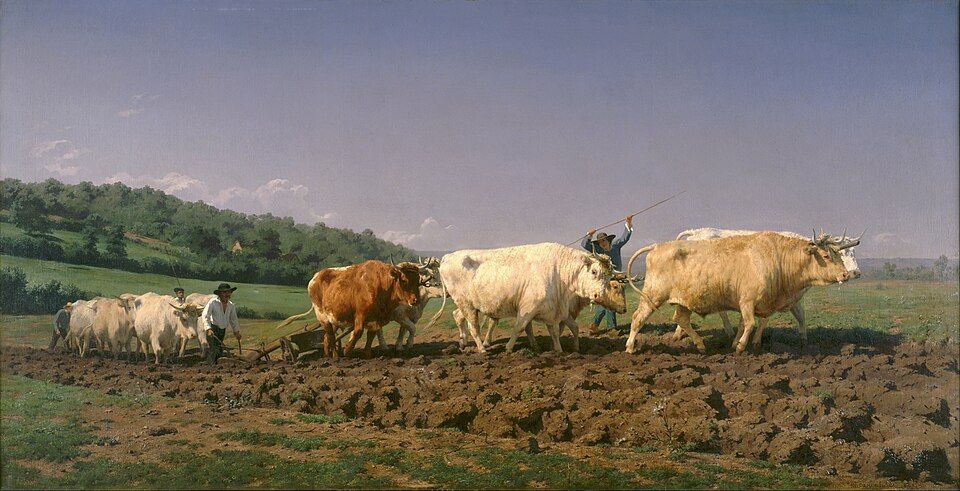
Paul borrows a farm law: no plowing with an ox and an ass under one beam. Then he asks five questions in a row that admit no answer, and grounds them all in one identity: “we are a temple of the living God.” This page walks the passage in order: the command and its image, the five pairs, the temple, the chain of Old Testament promises, and the therefore of 7:1, perfecting holiness in the fear of God.
Summary
Paul commands believers not to be unequally yoked with unbelievers, asks five questions that admit no answer, and grounds the command in what believers are: a temple of the living God. A chain of Old Testament promises follows, and 7:1 draws the conclusion, cleansing and perfecting holiness.
- The image is Deuteronomy 22:10's farm law: an ox and an ass do not pull one plow
- Five pairs that share no yoke: righteousness and iniquity, light and darkness, Christ and Belial, believer and unbeliever, the temple of God and idols (6:14-16)
- The promises are quoted from Leviticus 26, Isaiah 52, Ezekiel 20 and 2 Samuel 7, each source named on this page
- The commentators apply the yoke to marriage, to pagan worship, and to binding partnerships; the page presents each with its holders
- The conclusion is 7:1: "perfecting holiness in the fear of God"
The Command and the Image
6:14a: a farm law becomes a life rule
“Do not be unequally yoked with unbelievers. For what partnership can righteousness have with wickedness? Or what fellowship does light have with darkness?” 2 Corinthians 6:14
“Do not plow with an ox and a donkey yoked together.” Deuteronomy 22:10
The picture behind Paul’s word is this Torah law. An ox and an ass differ in height, stride and strength; bound to one beam, each animal is chafed and the furrow runs crooked. The Greek verb Paul coins from it, heterozygeo, means yoked with one of a different kind, and its word family stands in the Greek Old Testament at Leviticus 19:19, the law against mismatched pairings. The command governs the yoke: the binding arrangements a believer chooses, in which two pull as one. Paul had already closed off the reading that believers should quit the world’s company altogether, “In that case you would have to leave this world” (1 Corinthians 5:9-10).
Five Questions, One Answer
6:14b-16a: five pairs that share no yoke
“What harmony is there between Christ and Belial? Or what does a believer have in common with an unbeliever?” 2 Corinthians 6:15
Five questions, and every one expects the answer none. Paul names the pairs in a rising order: two qualities (righteousness and iniquity), two kingdoms (light and darkness), two persons (Christ and Belial), two people (believer and unbeliever), two houses (the temple of God and idols). Each question uses a different Greek word for sharing: fellowship, communion, concord, portion, agreement. The vocabulary itself is the argument. There is no word for partnership that can hold both sides of any pair.
“And what concord - (συμφώνησις sumphōnēsis). Sympathy, unison. This word refers properly to the unison or harmony produced by musical instruments, where there is a chord. What accordance, what unison is there; what strings are there which being struck will produce a chord or harmony? The idea is, then, there is as much that is discordant between Christ and Belial as there is between instruments of music that produce only discordant and jarring sounds.”
Albert Barnes · Notes, Explanatory and Practical, on the Old and New Testaments, 1832-1869Presbyterian
2 Cor 6:15
“Belial--Hebrew, ‘worthlessness, unprofitableness, wickedness.’ As Satan is opposed to God, and Antichrist to Christ; Belial being here opposed to Christ, must denounce all manner of Antichristian uncleanness [BENGEL].”
Jamieson, Fausset & Brown · Commentary Critical and Explanatory on the Whole Bible, 1871Reformed
2 Cor 6:15
Jerome: the yoke question is a heart questionHomily 73 on the Psalms, c. 420
Preaching on the Psalms, Jerome reached for this verse to describe the affections underneath every partnership:
“There cannot be two contradictory loves in one man. Just as there is no harmony between Christ and Belial, between justice and iniquity, so it is impossible for one soul to love both good and evil.”
Jerome · Homily 73 on the Psalms, 420
2 Cor 6:15
Before the yoke is a marriage or a contract, it is a love. The outward pairings Paul forbids are forbidden because of what they do to the inward one.
A Temple of the Living God
6:16: the fifth question grounded in what believers are
“What agreement can exist between the temple of God and idols? For we are the temple of the living God. As God has said: ‘I will dwell with them and walk among them, and I will be their God, and they will be My people.’” 2 Corinthians 6:16
The fifth question is the one Paul stops to answer, because it carries the reason for all five. The church is the temple itself, the place the living God dwells. In Corinth this was no abstraction. The city’s social life ran through temple dining rooms, and Paul’s first letter had already fought the idol-feast question at length (1 Corinthians 8-10). An idol in God’s house is the one thing the whole Old Testament agrees cannot stand, and Gill reaches for its sharpest picture.
“And what agreement hath the temple of God with idols?.... That is, what association, confederation, or covenant agreement can the saints, who are the temple of God, have with idols, or their worshippers? no more than the ark of the Lord had with Dagon, or Dagon with the ark; which when brought into his temple, and set by him, the idol fell down, and part of him was broke to pieces”
John Gill · Exposition of the New Testament, 1746-1748Particular Baptist
2 Cor 6:16
“As God hath said - To his ancient church, and in them to all the Israel of God. I will dwell in them, and walk in them - The former signifying his perpetual presence; the latter, his operation. And I will be to them a God, and they shall be to me a people - The sum of the whole gospel covenant.”
John Wesley · Explanatory Notes upon the New Testament, 1755Evangelical
2 Cor 6:16
The Promises Behind the Call
6:16b-18: Paul strings four Old Testament passages into one voice
“Therefore come out from among them and be separate, says the Lord. Touch no unclean thing, and I will receive you. And: I will be a Father to you, and you will be My sons and daughters, says the Lord Almighty.” 2 Corinthians 6:17-18
Paul is not quoting one passage but braiding several, in the manner of a synagogue chain of texts. This page names each source honestly, with its own text, so a reader can see exactly what Paul gathered and how he widened it.
“I will make My dwelling place among you” · Leviticus 26:11-12
“And I will make My dwelling place among you, and My soul will not despise you. I will walk among you and be your God, and you will be My people.” Leviticus 26:11-12
The covenant blessing at the end of Leviticus, with Ezekiel 37:27’s restatement close behind it. Paul turns “among you” into “in them”: the dwelling promised beside Israel’s camp now happens inside God’s people.
“Depart, depart, go out from there” · Isaiah 52:11
“Depart, depart, go out from there! Touch no unclean thing; come out from it, purify yourselves, you who carry the vessels of the LORD.” Isaiah 52:11
The call to leave Babylon, addressed first to the priests carrying the temple vessels home. The separation Paul commands is priestly in origin: clean hands for holy service, not contempt for the world outside.
“And I will receive you” · Ezekiel 20:34
“With a strong hand, an outstretched arm, and outpoured wrath I will bring you out from the peoples and gather you from the lands to which you have been scattered.” Ezekiel 20:34
“I will receive you” follows the Greek Old Testament’s wording of this verse: the God who calls his people out is the God who gathers them in.
“A Father unto you” · 2 Samuel 7:14
“I will be his Father, and he will be My son” 2 Samuel 7:14
The Davidic promise, spoken of one royal son, and Paul widens it twice: to “you” plural, and to “sons and daughters,” with Isaiah 43:6’s “my daughters” standing behind the widening. What God said to David’s heir he now says to every believer in David’s greater Son.
“Wherefore come out from among them,.... Since they were the temple of the living God, built up an habitation for the Most High; since he resided among them, took his walks in the midst of them, was their God, and they were his people. These words are taken out of Isa 52:11 where the several phrases here used may be observed.”
John Gill · Exposition of the New Testament, 1746-1748Particular Baptist
2 Cor 6:17
“And will be a father unto you,.... The same is promised to Solomon, 2Sa 7:14 and said of Israel, Jer 31:9 which is thought to be referred unto.”
John Gill · Exposition of the New Testament, 1746-1748Particular Baptist
2 Cor 6:18
“God has promised to be a Father to them, and that they shall be his sons and his daughters; and is there a greater honour or happiness than this? How ungrateful a thing then must it be if those who have this dignity and felicity should degrade and debase themselves by mingling with unbelievers!”
Matthew Henry · Commentary on the Whole Bible, 1710Presbyterian
2 Cor 6:18
Perfecting Holiness
7:1: the therefore the promises were given for
The chapter division falls in the middle of Paul’s sentence of thought. The promises of 6:16-18 exist to produce the cleansing of 7:1: because God has said he will dwell, receive and father, therefore his people cleanse themselves. Grace runs first, and the demand stands on the promise.
2 Corinthians 7:1 (BSB)
“Therefore, beloved, since we have these promises, let us cleanse ourselves from everything that defiles body and spirit, perfecting holiness in the fear of God.” 2 Corinthians 7:1
“From all pollution of the flesh - All outward sin. And of the spirit - All inward. Yet let us not rest in negative religion, but perfect holiness - Carrying it to the height in all its branches, and enduring to the end in the loving fear of God, the sure foundation of all holiness.”
John Wesley · Explanatory Notes upon the New Testament, 1755Evangelical
2 Cor 7:1
“The promises of God are strong inducements to sanctification, in both the branches thereof; namely, 1. The dying unto sin, or mortifying our lusts and corruptions: we must cleanse ourselves from all filthiness of flesh and spirit. Sin is filthiness, and there are defilements of body and mind.”
Matthew Henry · Commentary on the Whole Bible, 1710Presbyterian
2 Cor 7:1
What the Yoke Reaches
the applications, each with its holders, none crowned
Paul names no single arrangement, and the commentators have applied the yoke in several directions. This page presents the applications with the voices who hold each, and does not narrow the text to one of them.
MarriageWesley · Matthew Henry
“Be not unequally yoked with unbelievers - Christians with Jews or heathens. The apostle particularly speaks of marriage. But the reasons he urges equally hold against any needless intimacy with them.”
John Wesley · Explanatory Notes upon the New Testament, 1755
2 Cor 6:14
“Those relations that are our choice must be chosen by rule; and it is good for those who are themselves the children of God to join with those who are so likewise; for there is more danger that the bad will damage the good than hope that the good will benefit the bad.”
Matthew Henry · Commentary on the Whole Bible, 1710
2 Cor 6:14
Henry’s phrase “relations that are our choice” is the application’s own boundary: the rule governs yokes not yet taken up. Scripture itself draws that line, for a believer already married to a willing unbeliever: “he must not divorce her” (1 Corinthians 7:12-13). The yoke command and the stay command are the same apostle, to the same church, in back-to-back letters.
Pagan worship and the idol feastsAdam Clarke
“What agreement hath the temple of God with idols - Nothing could appear more abominable to a Jew than an idol in the temple of God: here, then, could be no agreement; the worship of the two is wholly incompatible. An idolater never worships the true God; a Christian never worships an idol. If ye join in idolatrous rites, it is impossible that ye should be Christians. Ye are the temple of the living God - God intends to make the heart of every believer his own house.”
Adam Clarke · Commentary on the Bible, 1832
2 Cor 6:16
Read against Corinth’s temple dining rooms and the idol-feast dispute of 1 Corinthians 8-10, the paragraph is first of all about worship: the yoke a believer must never share is a shared altar.
Community, ranks and binding partnershipAdam Clarke · Wesley's widening
“Be ye not unequally yoked together with unbelievers - This is a military term: keep in your own ranks; do not leave the Christian community to join in that of the heathens.”
Adam Clarke · Commentary on the Bible, 1832
2 Cor 6:14
Wesley’s note above widens the marriage reading to “any needless intimacy,” and that widening is where later teachers ground the common application to business partnership: any freely chosen bond in which two pull one load and one partner’s master is not Christ. The text does not name commerce; the principle reaches it.
The boundary: what the yoke does not meanClement of Alexandria, c. 215
“Paul is prophetic in telling us to put up a barrier, not between ourselves and the married but between ourselves and the Gentiles who are still living immorally, and also from those heresies which believe neither in chastity nor in God.”
Clement of Alexandria · The Stromata, Book 3, 215
2 Cor 6:14
Clement was answering teachers who used verses like this one to forbid marriage itself. His boundary still serves: separation is from sin’s pull, never from people as such, and never a warrant for contempt. The same Paul who wrote this passage ate with unbelievers freely and expected believers to keep doing so (1 Corinthians 10:27).
None of these readings is stamped as this site’s verdict. Each is held by named voices citing real work, and the passage’s own weight falls where its grammar falls: on what believers are, a temple of the living God, and on the holiness that follows from it.
The Words Underneath
the yoke and the adversary, in the text's own Greek
The words underneath
heterozygeo: to yoke a mismatch
Greek · G2086Strong's entry: to yoke up differently, i.e. (figuratively) to associate discordantly
Heterozygeo, to be unequally yoked: 2 Corinthians 6:14 is its only New Testament occurrence, coined from the mismatched-pair laws of Leviticus 19:19 and Deuteronomy 22:10.
1 times in the New Testament · heterozygeo, in full →
Belial: Belial
Greek · G955Strong's entry: worthlessness; Belial, as an epithet of Satan
Belial (Beliar), worthlessness: the Old Testament's word for the lawless ("sons of Belial") become, by Paul's day, a name for the adversary himself, set here against Christ.
1 times in the New Testament · Belial, in full →
The Voices
with the work named
Explanatory Notes upon the New Testament (1755) · public domain
Reads the yoke of marriage first, then widens the same reasons to any needless intimacy, and calls 6:16's promise the sum of the whole gospel covenant.
Commentary on the Whole Bible (1710) · public domain
States the rule for chosen relations: there is more danger that the bad will damage the good than hope that the good will benefit the bad.
Commentary on the Bible (1832) · public domain
Hears a military term in the command, keep your own ranks, and reads the temple question against Corinth's idolatrous rites.
Notes, Explanatory and Practical, on the Old and New Testaments (1832-1869) · public domain
Unpacks the music inside 6:15's concord (symphonesis): Christ and Belial strike no chord.
Exposition of the New Testament (1746-1748) · public domain
Names the catena's sources honestly (Isaiah 52:11; 2 Samuel 7:14; Jeremiah 31:9) and gives the temple question its picture, the ark beside Dagon.
Commentary Critical and Explanatory on the Whole Bible (1871) · public domain
Carries Bengel's note on Belial, worthlessness itself set against Christ.
Homily 73 on the Psalms (c. 420) · cite-only, modern English translation
Grounds the passage in the heart: two contradictory loves cannot live in one man.
The Stromata, Book 3 (c. 215) · cite-only, modern English translation
Marks the application's boundary early: the barrier is not between believers and the married, but against company that pulls toward sin.
Marcus Brown's own commentary leads above all; within a tier, all voices are equal. No modern (living-copyright) roster voice appears in the site's quote pool for these chapters; the relevance gate is honored by carrying none rather than reaching for one.
Word studies
The Hebrew and Greek under this study, each word in its own room.
Keep Studying
Read it1
On this page
Doctrines6