
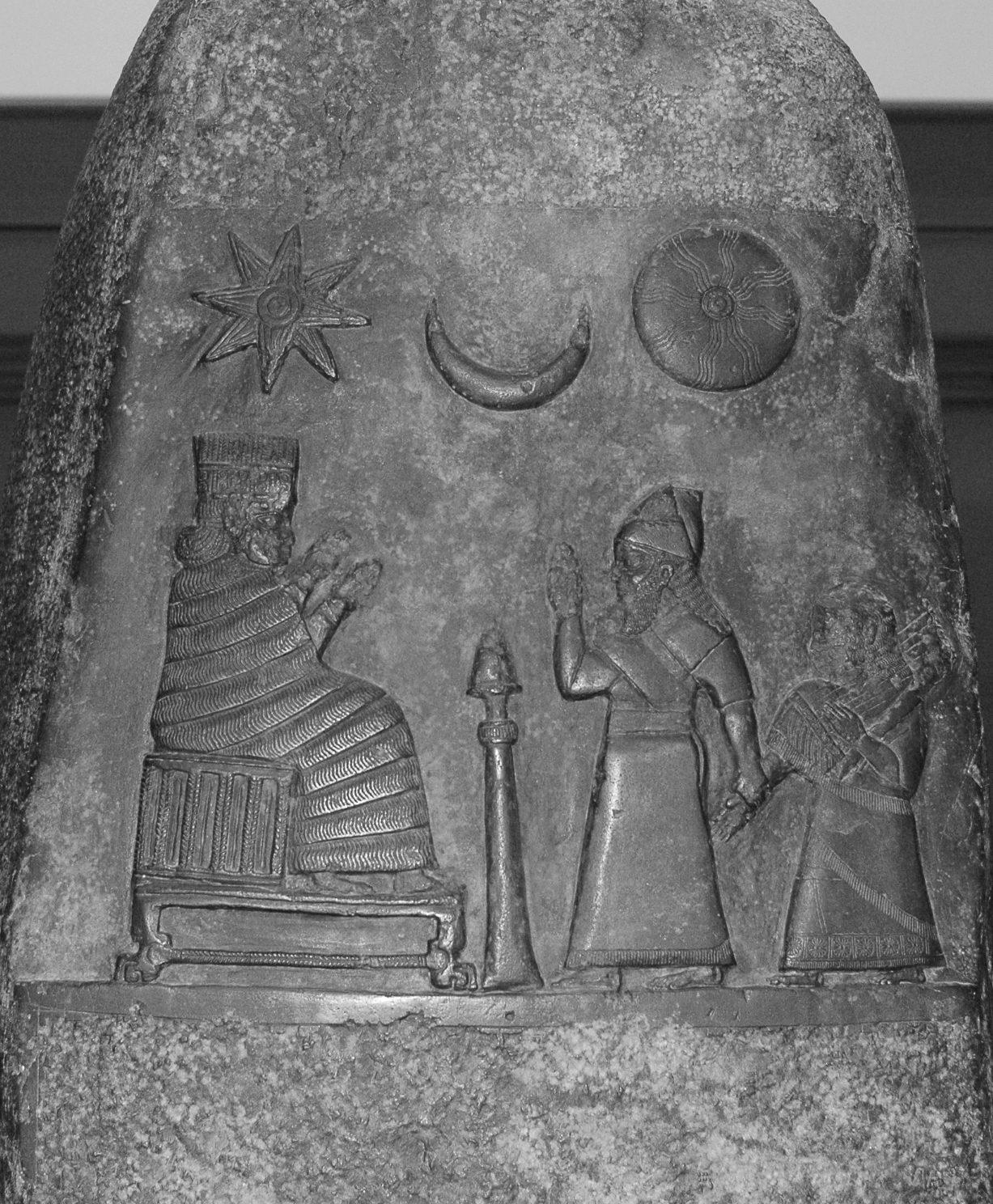
Kudurru of King Melishipak, about 1186 to 1172 BC. Public domain.
Isaiah 14:4 to 23 · Subject · Featured Study
The Shining One, Son of the Dawn
Isaiah 14:4 to 23 is a song of contempt over the fallen king of Babylon, whom it calls the day star, son of the dawn.
Albert Barnes calls it a taunting speech, and the Septuagint, the old Greek translation, names it a lament.
How you have fallen from heaven, O day star, son of the dawn! You have been cut down to the ground, O destroyer of nations.
- Books
- Isaiah, Ezekiel
- Hold in memory
- Isaiah 14:15
Summary
The song follows one king of Babylon from his throne down to the world of the dead. He boasts that he will climb above the stars of God, and his body is left in the open. The Cambridge Bible counts the song among the finest pieces of Hebrew poetry in the Old Testament.
- Its picture of the dead rising to greet a fallen ruler returns in Ezekiel's dirge over Pharaoh.
- The song never names its king, and its readers have given him several names.
- An epilogue in Isaiah 14:22 to 23 turns from the king to his city.
The Song for the Day of Rest
Isaiah 14:1 to 2 set the song after the LORD settles Israel again in its own land.
On the day that the LORD gives you rest from your pain and torment, and from the hard labor into which you were forced, you will sing this song of contempt against the king of Babylon: How the oppressor has ceased, and how his fury has ended!How is the song of Isaiah 14 built, and which king does it mock? The song proper runs to Isaiah 14:21, after an introduction that ties it to the oracle against Babylon in Isaiah 13.
The strophes and their voices come first, and then the song beside Ezekiel 32. The commentators follow on the mount of assembly, the cedars of Lebanon and the lost grave. Four answers to the question of the king close the study, each with its holders and the objection it meets.
The Oracles Against the Nations: the ten burdens of Isaiah 13 to 23
The Song in Five Strophes
The Cambridge Bible finds seven long lines in each strophe.
Each strophe stands in its own place and has its own voices, and the LORD speaks only in the epilogue.
| Strophe | Where the song stands | Who speaks |
|---|---|---|
| 1 Isaiah 14:4 to 8 | The earth | The whole earth, at peace and at rest |
| 2 Isaiah 14:9 to 11 | Sheol | The dead, over his pomp brought down to Sheol |
| 3 Isaiah 14:12 to 15 | Heaven, then the Pit | The king, in his heart, and then the singer |
| 4 Isaiah 14:16 to 19 | The battlefield | Onlookers who recall that he turned the world into a desert |
| 5 Isaiah 14:20 to 21 | The king's line | The singer, who calls for a place to slaughter his sons |
| Epilogue Isaiah 14:22 to 23 | Babylon | The LORD of Hosts, who will rise up against them |
The epilogue stands apart from the strophes, and its lines are much more irregular than theirs. The fifth strophe falls short of its length by about two lines.
The Shades in Sheol
The second strophe of the song is set among the dead in Sheol.
Sheol beneath is eager to meet you upon your arrival. It stirs the spirits of the dead to greet you—all the rulers of the earth. It makes all the kings of the nations rise from their thrones. They will all respond to you, saying, “You too have become weak, as we are; you have become like us!”The spirits of the dead in Isaiah 14:9 are the rephaim, the shades, a word usually explained as the feeble ones.
Isaiah 14 and Ezekiel 32 share the Pit, the terror once spread among the living, and a burial refused.
| What the song tells | Isaiah 14 | Ezekiel 32 |
|---|---|---|
| The Pit | But you will be brought down to Sheol, to the lowest depths of the Pit (Isaiah 14:15). | Consign her and the daughters of the mighty nations to the depths of the earth (Ezekiel 32:18). |
| The terror he once spread | Is this the man who shook the earth and made the kingdoms tremble (Isaiah 14:16)? | Those who once spread terror in the land of the living (Ezekiel 32:23). |
| The grave refused | You will not join them in burial (Isaiah 14:20). | They do not lie down with the fallen warriors of old (Ezekiel 32:27). |
The Day Star and the Mount of Assembly
Commentators read the king's titles and his boast against the gods of Babylon.
The Babylonians worshipped the morning star under the name Istar, and an Assyrian title for it means the shining star.
You said in your heart: “I will ascend to the heavens; I will raise my throne above the stars of God. I will sit on the mount of assembly, in the far reaches of the north.Keil and Delitzsch hold that the mount of assembly cannot be Zion. In their reading the king speaks as his own people did, who set the seat of the gods on the summit of the northern mountains.
The Cambridge Bible adds that Assyrian inscriptions speak of the chief gods as born on the mountain of Aralu.
Jamieson, Fausset and Brown read the mount as the temple at Jerusalem, on Mount Moriah to the north of Zion. They set Psalm 48:2 beside it.
Beautiful in loftiness, the joy of all the earth, like the peaks of Zaphon is Mount Zion, the city of the great King.The Cedars of Lebanon
Assyrian kings list the cutting of trees in Lebanon and Amanus among their exploits.
Even the cypresses and cedars of Lebanon exult over you: “Since you have been laid low, no woodcutter comes against us.”Inscriptions of Nebuchadnezzar have also been found on Lebanon.
Keil and Delitzsch write that the Chaldean used the cypress and the cedar for his buildings, his siege engines and his fleets.
Jerome took the trees as the chiefs of the nations. Keil and Delitzsch answer that such allegory destroys both the reality of the scene and the spirit of the poetry.
The King Without a Name
Jewish tradition gave the song a king and a story.
Jerome records the Hebrews' account that Evil-merodach reigned while his father Nebuchadnezzar lived among the beasts. The Seder Olam adds that Evil-merodach took his father's body out of its grave.
Cast Out of His Grave
The Pulpit Commentary notes that each king prepared his own tomb as his final house.
All the kings of the nations lie in state, each in his own tomb. But you are cast out of your grave like a rejected branch, covered by those slain with the sword, and dumped into a rocky pit like a carcass trampled underfoot.Keil and Delitzsch explain the rocky pit: the slain were thrown into a hole and covered with stones.
The Berean text gives the creatures of the city as owls, and Keil and Delitzsch read hedgehogs with the Septuagint.
“I will make her a place for owls and for swamplands; I will sweep her away with the broom of destruction,” declares the LORD of Hosts.Keil and Delitzsch read the broom as the LORD treating Babylon as rubbish. In their reading the Euphrates, left without its dams, floods the land, and marshes stand where the palaces stood.
Voices on the Fallen King
Two teachers of the third and fourth centuries cite Isaiah by name.
Hippolytus of Rome (died 235)
“We will show in what follows that these things are not said of someone else but of that tyrant, the one without shame, the enemy of God, as Isaiah says.”
Hippolytus of Rome · On the Antichrist 15 · on Isaiah 14:4Patristic
Aphrahat the Persian Sage (died 345)
“Now Nebuchadnezzar said, ‘I will ascend to heaven and exalt my throne above the stars of God and sit in the lofty mountains that are in the borders of the north.’ Isaiah said concerning him: ‘Because your heart has thus exalted you, therefore you shall be brought down to Sheol, and all that look upon you shall be astonished at you.’”
Aphrahat the Persian Sage · DEMONSTRATION 5:4 · on Isaiah 14:13 to 14Patristic
Which King the Song Mocks
Readers since the third century have answered the question in four ways.
Three readings look for one king of Babylon, and the fourth looks past Babylon to the last tyrant.
| Reading | Held by | The objection in the sources |
|---|---|---|
| Nebuchadnezzar | Aphrahat; Thomas Aquinas, Commentary on Isaiah | Keil and Delitzsch judge the Seder Olam's story of his corpse a conclusion drawn from this passage. |
| Belshazzar, slain on the night Babylon fell | The Pulpit Commentary; John Wesley, Explanatory Notes upon the Old Testament, on Isaiah 14:11 | Barnes judges it uncertain that any one king of Babylon is meant. |
| The king as the head of the Babylonian empire | Albert Barnes and Jamieson, Fausset and Brown, each on the opening of the song | The Pulpit Commentary reads the unburied body as one monarch's, probably Belshazzar's. |
| The type of the last tyrant | Hippolytus; Keil and Delitzsch, on Isaiah 14:12 | Jamieson, Fausset and Brown grant that the words apply to the Babylonian king first. |
Keil and Delitzsch call the self-deifying king the type of antichrist and cite 2 Thessalonians 2:4. Barnes thought Paul probably had Isaiah 14:14 in mind when he described the man of lawlessness.
He will oppose and exalt himself above every so-called god or object of worship. So he will seat himself in the temple of God, proclaiming himself to be God.Books to Read Next
Two older commentaries give the song verse by verse.
Notes, Explanatory and Practical, on the Old and New Testaments
Albert Barnes · 1832 to 1869
Barnes explains the royal tombs of Isaiah 14:18 and why the king's burial is refused.
Read it free at BibleHubCommentary Critical and Explanatory on the Whole Bible
Jamieson, Fausset and Brown · 1871
It reads the command of Isaiah 14:21 as given to the Medes and the Persians.
Read it free at BibleHubThe Bright Morning Star
Revelation 22:16 gives the title bright Morning Star to Jesus.
Sources
Scripture is the Berean Standard Bible.
- C. F. Keil and F. Delitzsch, Biblical Commentary on the Old Testament, on Isaiah 14; public domain.
- The Cambridge Bible for Schools and Colleges, on Isaiah 14; public domain.
- The Pulpit Commentary, on Isaiah 14; public domain.
- Pull quotations on Isaiah 14 from Hippolytus, On the Antichrist; Aphrahat, Demonstrations; Jerome, Commentary on Isaiah; Thomas Aquinas, Commentary on Isaiah; John Wesley, Explanatory Notes upon the Old Testament; Albert Barnes, Notes, Explanatory and Practical, on the Old and New Testaments; and Jamieson, Fausset and Brown, Commentary Critical and Explanatory on the Whole Bible.
Keep Studying
People and groups2