
Zechariah 12:6
in Zechariah 12On that day I will make the clans of Judah like a firepot in a woodpile, like a flaming torch among the sheaves; they will consume all the peoples around them on the right and on the left, while the people of Jerusalem remain secure there.
BSB
The same verse in ASV and KJV ▾
ASV
In that day will I make the chieftains of Judah like a pan of fire among wood, and like a flaming torch among sheaves; and they shall devour all the peoples round about, on the right hand and on the left; and they of Jerusalem shall yet again dwell in their own place, even in Jerusalem.
KJV
In that day will I make the governors of Judah like an hearth of fire among the wood, and like a torch of fire in a sheaf; and they shall devour all the people round about, on the right hand and on the left: and Jerusalem shall be inhabited again in her own place, even in Jerusalem.
⋯
This verse in Zechariah 12
Commentary
9 notes on this verseJerusalem shall be inhabited again - This seems to refer to the future conversion of the Jews, and their “return to their own land.”
This site's exposition
smite every horse with astonishment
on Zechariah 12:4-6
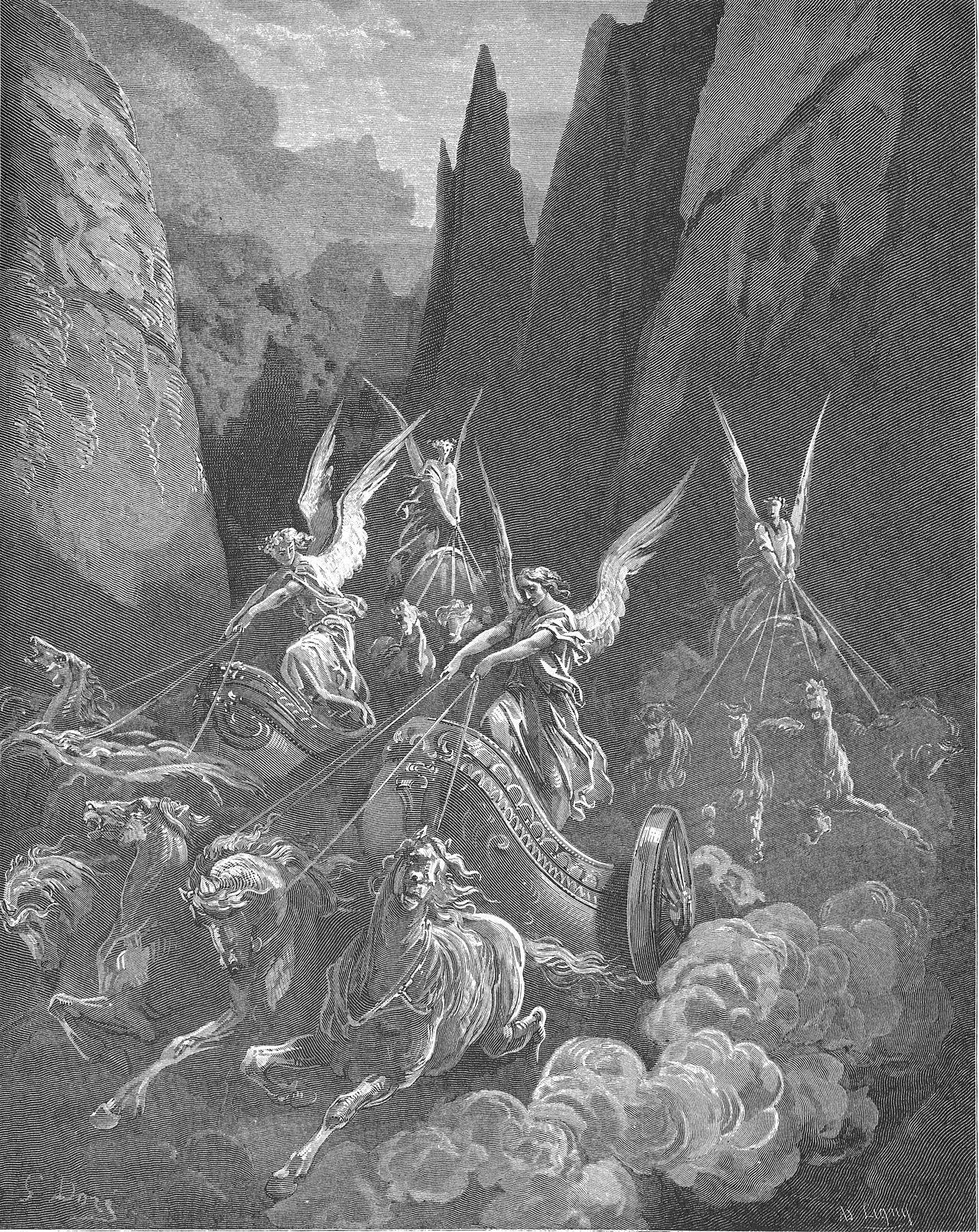
The Lord promises to smite every horse of the besieging nations with astonishment and its rider with madness, striking the cavalry blind while keeping his own eyes open upon the house of Judah. Judah's governors become in that day like a hearth of fire in the wood and a torch in a sheaf, devouring the surrounding peoples on the right hand and the left, and Jerusalem is inhabited again in her own place. Gill and Barnes read the reversal, panic falling on the strong horses of the nations while the weak governors of Judah turn to fire, as the pattern the whole chapter repeats, human strength undone and human weakness armed.
The record, by era
The Church Fathers1 voice
(Vers. 6, 7.) On that day, I will make the leaders of Judah like a fiery furnace among wood, and like a burning torch among hay. They will consume all the surrounding peoples to the right and to the left, and Jerusalem will be inhabited again in its own place, in Jerusalem. And the Lord will save the dwellings of Judah, just as in the beginning, so that the glory of the house of David and the pride of the inhabitants of Jerusalem may not be exalted over Judah.
The Puritans and the Awakening4 voices
Like a hearth - A hearth on which fire is thoroughly kindled. In her own place - Not built as Nineveh, Babylon, or Rome, in some place near old cities, but in the very same place where old Jerusalem stood.
The church's motto may be, Nemo me impune lacesset--He that assails me does it at his peril. If you are weary of your life, persecute the Christians, was once a proverb. It is promised that God will infatuate the counsels and enfeeble the courage of the church's enemies (
quarantine:debris (2026-07-29) — unbalanced-parens
In that day will I make the governors of Judah like a hearth of fire among the wood,.... As a large hearth of fire, with wood all about it, devours and consumes it; so shall the governors of Judah be to the nations that shall come up against Jerusalem.
They had so after their return out of captivity, but this was to have its full accomplishment in the gospel-church, which is a Jerusalem inhabited in its own place; for, the gospel being to be preached to all the world, it may call every place its own. It is promised that the inhabitants of Jerusalem shall be enabled to defend themselves, and yet shall be taken under the divine protection,
2 more voices on this verse
The Nineteenth Century2 voices
A commentator
Jamieson, Fausset & Brown1802–1910
Commentary Critical and Explanatory on the Whole Bible (1871)
proposed
Daniel dwells on his worldly conquests as a king; St. John, more on his spiritual tyranny, whence he adds a second beast, the false prophet coming in a semblance of spirituality. What is briefly described by one is more fully prophesied by the other [ROOS].
A commentator
Albert Barnes1798–1870
Notes, Explanatory and Practical, on the Old and New Testaments (1832-1869)
proposed
I will make the governors of Judah like a hearth - or “cauldron” of fire large, broad, deep, and full of fire, among the wood which is prepared for burning, and like a torch of fire in a sheaf The fire could not kindle the wood or the sheaf, of itself, unless applied to it. All is of the agency of God: “I will make.” Ribera: “He foretells the increase of the Church, which by such persecutions shall not be diminished, but shall be marvelously increased. The preachers of the Church shall raise up all the peoples round about, shall destroy all unbelief, and shall kindle the hearts of hearers with the fire of the divine word.” “On the right hand and on the left.” Ribera: “He indicates the strength and success of the preachers, whom no one can resist nor hinder,” as our Lord says, “I will give you a mouth and wisdom, which all your adversaries shall not be able to gainsay nor resist” Luk 21:15. And Jerusalem shall again - Rather, “yet, be inhabited.” “Yet” is a sort of burden in Zechariah’s prophecies . Osorius: “They at once burned up by the flame all the defilement of vices, and kindled the minds of people with the torch of divine love; at once consumed the enemy and cast a heavenly fire into the human heart: ‘yet;’ in despite of all appearances, of all which is against her. ‘She shall yet dwell in her own place in Jerusalem;’ for, however the waves of this world chafe and lash themselves into foam against her, they break themselves, not her; as soon as they have reached their utmost height, they fall back; if they toss themselves, and, for a moment, hide her light, they fall down at all sides, and the ray shines out, steady as before; for she is ‘founded on a rock,’ against which ‘the gates of hell’ should not ‘prevail’ Mat 16:18.
The words behind it
26 Hebrew wordsEvery Hebrew word of this verse in the order it stands, with what it means and the door to its own study. The last column counts the times a word stands in the whole Bible: the rarer the word, the more the places it appears belong together.
| Hebrew | Sound | Meaning | Word study | In the Bible |
|---|---|---|---|---|
| בַּיּ֣וֹם | baiyom | on the day | H3117 → | 2304 times |
| הַה֡וּא | hahu' | <the> that | H1931 → | 1879 times |
| אָשִׂים֩ | ʾasim | I will make | H7760 → | 584 times |
| אֶת־ | ʾet- | <obj.> | H853 → | 10935 times |
| אַלֻּפֵ֨י | ʾalufei | [the] chiefs of | H441 → | 69 times |
| יְהוּדָ֜ה | yehudah | Judah | H3063 → | 819 times |
| כְּֽכִיּ֧וֹר | kekhiyor | like a pot of | H3595 → | |
| אֵ֣שׁ | ʾesh | fire | H784 → | 378 times |
| בְּעֵצִ֗ים | beetzim | among wood<s> | H6086 → | |
| וּכְלַפִּ֥יד | ukhelapid | and like a torch of | H3940 → | |
| אֵשׁ֙ | ʾesh | fire | H784 → | 378 times |
| בְּעָמִ֔יר | beamir | among cut grain | H5995 → | |
| וְאָ֨כְל֜וּ | veakhelu | and they will consume | H398 → | 810 times |
| עַל־ | ʾal- | on | H5921 → | 5755 times |
| יָמִ֧ין | yamin | [the] right [side] | H3225 → | 140 times |
| וְעַל־ | veal- | and on | H5921 → | 5755 times |
| שְׂמֹ֛אול | semol | [the] left [side] | H8040 → | 54 times |
| אֶת־ | ʾet- | <obj.> | H853 → | 10935 times |
| כָּל־ | kol- | all | H3605 → | 5413 times |
| הָעַמִּ֖ים | haamim | the peoples | H5971 → | 1873 times |
| סָבִ֑יב | saviv | all around | H5439 → | 336 times |
| וְיָשְׁבָ֨ה | veyashevah | and it will remain | H3427 → | 1079 times |
| יְרוּשָׁלִַ֥ם | yerushalim | Jerusalem | H3389 → | 643 times |
| ע֛וֹד | od | again | H5750 → | 490 times |
| תַּחְתֶּ֖יהָ | tachteiha | in place its | H8478 → | 505 times |
| בִּירוּשָׁלִָֽם׃ פ | birushalim | in Jerusalem | H3389 → | 643 times |
בַּיּ֣וֹםon the day
baiyomH3117 →2304 times
הַה֡וּא<the> that
hahu'H1931 →1879 times
אָשִׂים֩I will make
ʾasimH7760 →584 times
אֶת־<obj.>
ʾet-H853 →10935 times
אַלֻּפֵ֨י[the] chiefs of
ʾalufeiH441 →69 times
יְהוּדָ֜הJudah
yehudahH3063 →819 times
כְּֽכִיּ֧וֹרlike a pot of
kekhiyorH3595 →
אֵ֣שׁfire
ʾeshH784 →378 times
בְּעֵצִ֗יםamong wood<s>
beetzimH6086 →
וּכְלַפִּ֥ידand like a torch of
ukhelapidH3940 →
אֵשׁ֙fire
ʾeshH784 →378 times
בְּעָמִ֔ירamong cut grain
beamirH5995 →
וְאָ֨כְל֜וּand they will consume
veakheluH398 →810 times
עַל־on
ʾal-H5921 →5755 times
יָמִ֧ין[the] right [side]
yaminH3225 →140 times
וְעַל־and on
veal-H5921 →5755 times
שְׂמֹ֛אול[the] left [side]
semolH8040 →54 times
אֶת־<obj.>
ʾet-H853 →10935 times
כָּל־all
kol-H3605 →5413 times
הָעַמִּ֖יםthe peoples
haamimH5971 →1873 times
סָבִ֑יבall around
savivH5439 →336 times
וְיָשְׁבָ֨הand it will remain
veyashevahH3427 →1079 times
יְרוּשָׁלִַ֥םJerusalem
yerushalimH3389 →643 times
ע֛וֹדagain
odH5750 →490 times
תַּחְתֶּ֖יהָin place its
tachteihaH8478 →505 times
בִּירוּשָׁלִָֽם׃ פin Jerusalem
birushalimH3389 →643 times
A shaded row is a word that stands 400 times or fewer in the Bible.
The walk
8 stopsEach card is a verse this one points to, and under it the verses that one points to in turn. Where several paths arrive at the same place, that place is listed first: the text keeps returning to it.
Through
Zechariah 2:4and said to him, “Run and tell that young man: ‘Jerusalem will be a city without walls because of the multitude of men and livestock within it.
it leads to
- Zechariah 1:17
Proclaim further that this is what the LORD of Hosts says: ‘My cities will again overflow with prosperity; the LORD will again comfort Zion and choose Jerusalem.’”
- Micah 7:11
The day for rebuilding your walls will come—the day for extending your boundary.
- Ezekiel 38:11
You will say, ‘I will go up against a land of unwalled villages; I will come against a tranquil people who dwell securely, all of them living without walls or bars or gates—
- Jeremiah 33:22
As the hosts of heaven cannot be counted and as the sand on the seashore cannot be measured, so too will I multiply the descendants of My servant David and the Levites who minister…
- Zechariah 1:17
Through
Obadiah 1:18Then the house of Jacob will be a blazing fire, and the house of Joseph a burning flame; but the house of Esau will be stubble—Jacob will set it ablaze and consume it. Therefore…
it leads to
- Isaiah 10:17
And the Light of Israel will become a fire, and its Holy One a flame. In a single day it will burn and devour Assyria’s thorns and thistles.
- Ezekiel 37:19
you are to tell them that this is what the Lord GOD says: ‘I will take the stick of Joseph, which is in the hand of Ephraim, and the tribes of Israel associated with…
- Micah 5:8
Then the remnant of Jacob will be among the nations, in the midst of many peoples, like a lion among the beasts of the forest, like a young lion among flocks of sheep, which…
- Isaiah 5:24
Therefore, as a tongue of fire consumes the straw, and as dry grass shrivels in the flame, so their roots will decay and their blossoms will blow away like dust; for they have rejected…
- Isaiah 10:17
Where this verse is studied
About Zechariah
Who and where
2 names in this verse with a page on the site.
- PersonPatriarchsJudahJacob's fourth son who pledges himself for Benjamin; the tribe that carries the scepter to Shiloh (49:10) and the line to Christ (…
- PlaceJerusalemJerusalemThe city David took from the Jebusites and made his capital, where Solomon built the temple, where Christ was crucified and rose,…
This page draws on 9 works. Open the list of works
This page draws on Adam Clarke, Commentary on the Bible; Albert Barnes, Notes on the Old Testament; Albert Barnes, Notes, Explanatory and Practical, on the Old and New Testaments (1832-1869); Jamieson, Fausset & Brown, Commentary Critical and Explanatory on the Whole Bible; Jerome, Commentary on Zechariah; John Gill, Exposition of the Old Testament; John Gill, Exposition of the Old Testament (1748-1763); John Wesley, Explanatory Notes upon the Old Testament and Matthew Henry, Commentary on the Whole Bible.