
Ruth 1:17
in Ruth 1Where you die, I will die, and there I will be buried. May the LORD punish me, and ever so severely, if anything but death separates you and me.”
BSB
The same verse in ASV and KJV ▾
ASV
where thou diest, will I die, and there will I be buried: Jehovah do so to me, and more also, if aught but death part thee and me.
KJV
Where thou diest, will I die, and there will I be buried: the Lord do so to me, and more also, if ought but death part thee and me.
⋯
This verse in Ruth 1
Commentary
6 notes on this verseThe Lord do so to me, and more - May he inflict any of those punishments on me, and any worse punishment, if I part from thee till death. And it appears that she was true to her engagement; for Naomi was nourished in the house of Boaz in her old age, and became the fosterer and nurse of their son Obed, Rth 4:15, Rth 4:16.
This site's exposition
Do not urge me to leave you
on Ruth 1:16-17
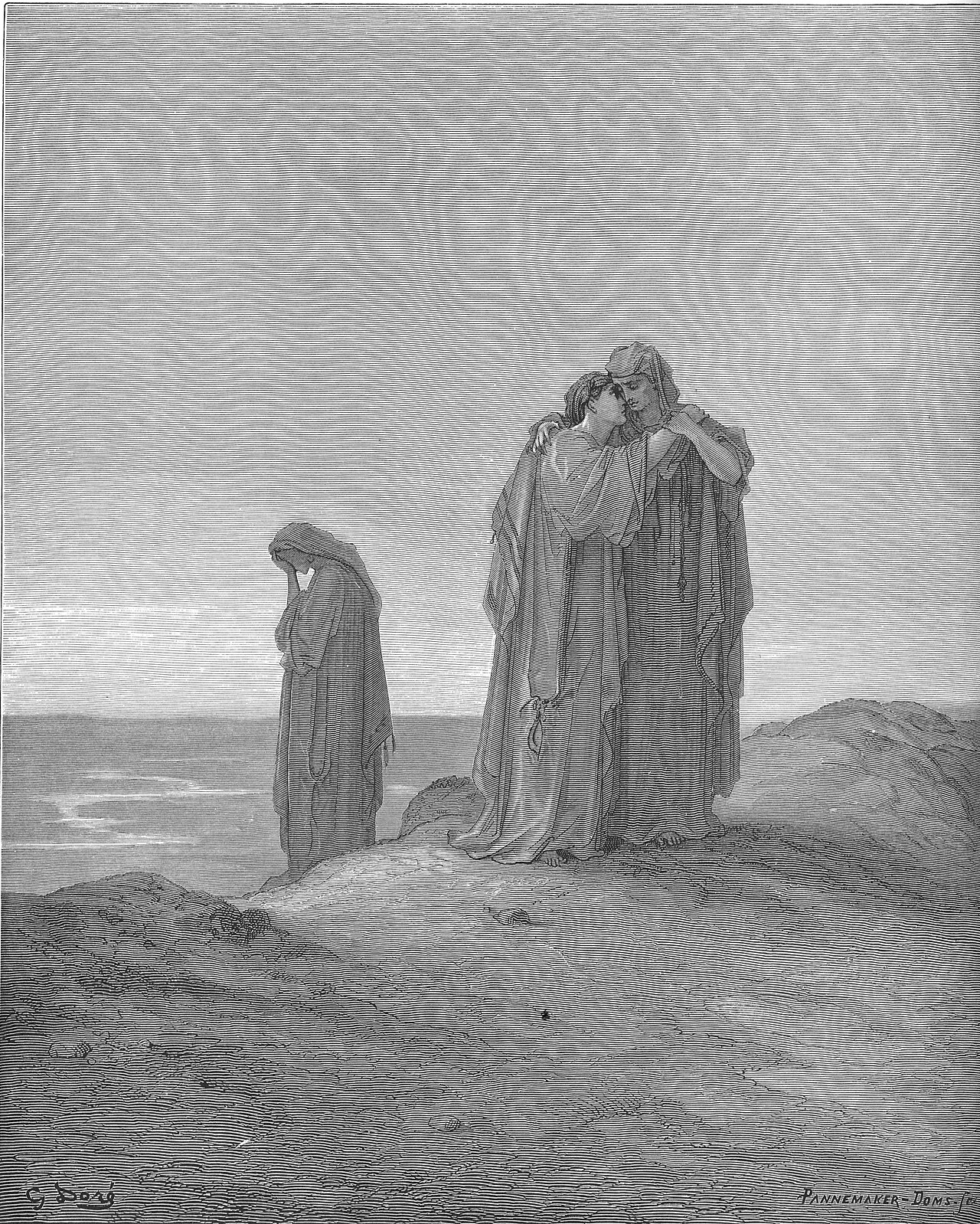
Her vow climbs through six clauses, from where she walks to where she is buried, and its hinge is "your people will be my people, and your God will be my God". She closes with the oath "May the LORD punish me, and ever so severely", sworn by the God she adopts rather than by Chemosh. Here a widow speaks it on a road with nothing to gain.
This site's exposition
May the LORD punish me, and ever so severely
This is the oath formula of 1 Samuel 3:17 and 2 Samuel 3:9, and Ruth swears it by the LORD's own name. Adam Clarke notes that she kept it, since 4:15 and 4:16 show Naomi cared for in her old age. Only death may part them.
The record, by era
The Puritans and the Awakening3 voices
There will I be buried - Not desiring to have so much as her dead body carried back into the land of Moab: but Naomi and she having joined souls, she desires they may mingle dust, in hopes of rising together, and remaining together forver. Left speaking unto her - See the power of resolution! Those who are half- resolved, are like a door a-jar, which invites a thief.
Where thou diest will I die, and there will I be buried,.... She was determined to abide with her unto death, and not only was desirous to die as she did, but where she should die; in the same country, cottage, and bed, and be laid in the same grave, in hope of rising together at the resurrection of the just; having no regard at all to the sepulchres of her fathers, which people in all ages and countries have been fond of being laid in, as an honour and happiness.
An oath for confirmation was an end of this strife, and would leave a lasting obligation upon her never to forsake that good way she was now making choice of. First, It is implied that death would separate between them for a time.
The words behind it
16 Hebrew wordsEvery Hebrew word of this verse in the order it stands, with what it means and the door to its own study. The last column counts the times a word stands in the whole Bible: the rarer the word, the more the places it appears belong together.
| Hebrew | Sound | Meaning | Word study | In the Bible |
|---|---|---|---|---|
| בַּאֲשֶׁ֤ר | baasher | at where | H834 → | 5497 times |
| תָּמ֙וּתִי֙ | tamuti | you will die | H4191 → | 839 times |
| אָמ֔וּת | ʾamut | I will die | H4191 → | 839 times |
| וְשָׁ֖ם | vesham | and there | H8033 → | 834 times |
| אֶקָּבֵ֑ר | ʾekaver | I will be buried | H6912 → | |
| כֹּה֩ | koh | thus | H3541 → | 577 times |
| יַעֲשֶׂ֨ה | yaaseh | may he do | H6213 → | 2628 times |
| יְהוָ֥ה | yahweh | Yahweh | H3068 → | 6520 times |
| לִי֙ | li | to <the> me | ||
| וְכֹ֣ה | vekhoh | and thus | H3541 → | 577 times |
| יֹסִ֔יף | yosif | may he add | H3254 → | |
| כִּ֣י | ki | if | H3588 → | 4482 times |
| הַמָּ֔וֶת | hamavet | <the> death | H4194 → | |
| יַפְרִ֖יד | yafrid | it will separate | H6504 → | |
| בֵּינִ֥י | beini | between me | H996 → | 407 times |
| וּבֵינֵֽךְ׃ | uveinekh | and between you | H996 → | 407 times |
בַּאֲשֶׁ֤רat where
baasherH834 →5497 times
תָּמ֙וּתִי֙you will die
tamutiH4191 →839 times
אָמ֔וּתI will die
ʾamutH4191 →839 times
וְשָׁ֖םand there
veshamH8033 →834 times
אֶקָּבֵ֑רI will be buried
ʾekaverH6912 →
כֹּה֩thus
kohH3541 →577 times
יַעֲשֶׂ֨הmay he do
yaasehH6213 →2628 times
יְהוָ֥הYahweh
yahwehH3068 →6520 times
לִי֙to <the> me
li
וְכֹ֣הand thus
vekhohH3541 →577 times
יֹסִ֔יףmay he add
yosifH3254 →
כִּ֣יif
kiH3588 →4482 times
הַמָּ֔וֶת<the> death
hamavetH4194 →
יַפְרִ֖ידit will separate
yafridH6504 →
בֵּינִ֥יbetween me
beiniH996 →407 times
וּבֵינֵֽךְ׃and between you
uveinekhH996 →407 times
A shaded row is a word that stands 400 times or fewer in the Bible.
The walk
8 stopsEach card is a verse this one points to, and under it the verses that one points to in turn. Where several paths arrive at the same place, that place is listed first: the text keeps returning to it.
Through
1 Samuel 3:17“What was the message He gave you?” Eli asked. “Do not hide it from me. May God punish you, and ever so severely, if you hide from me anything He said to you.”
it leads to
- 2 Samuel 3:35
Then all the people came and urged David to eat something while it was still day, but David took an oath, saying, “May God punish me, and ever so severely, if I taste bread…
Reached by 3 separate paths from here.
- 2 Samuel 3:35
Through
2 Kings 6:31He announced, “May God punish me, and ever so severely, if the head of Elisha son of Shaphat remains on his shoulders through this day!”
it leads to
- 1 Kings 19:2
So Jezebel sent a messenger to Elijah, saying, “May the gods deal with me, and ever so severely, if by this time tomorrow I do not make your life like the lives of those…
Reached by 2 separate paths from here.
- 1 Kings 19:2
Through
1 Samuel 25:22May God punish David, and ever so severely, if I let one of Nabal’s men survive until morning.”
it leads to
- 1 Samuel 20:13
But if my father intends to bring evil on you, then may the LORD punish me, and ever so severely, if I do not tell you and send you on your way in safety.…
Reached by 2 separate paths from here.
- 1 Kings 14:10
Because of all this, behold, I am bringing disaster on the house of Jeroboam: I will cut off from Jeroboam every male, both slave and free, in Israel; I will burn up the house…
- 1 Samuel 3:17
“What was the message He gave you?” Eli asked. “Do not hide it from me. May God punish you, and ever so severely, if you hide from me anything He said to you.”
- 1 Kings 21:21
This is what the LORD says: ‘I will bring calamity on you and consume your descendants; I will cut off from Ahab every male in Israel, both slave and free.
- 1 Samuel 20:13
Through
2 Samuel 19:13And say to Amasa, ‘Aren’t you my flesh and blood? May God punish me, and ever so severely, if from this time you are not the commander of my army in place of Joab!’”
it leads to
- 2 Samuel 17:25
Absalom had appointed Amasa over the army in place of Joab. Amasa was the son of a man named Ithra, the Ishmaelite who had married Abigail, the daughter of Nahash and sister of Zeruiah…
- 2 Samuel 8:16
Joab son of Zeruiah was over the army; Jehoshaphat son of Ahilud was the recorder;
- 2 Samuel 17:25
Where this verse is studied
On this page
Studies3
On this verse
On this chapter
About Ruth
This page draws on Adam Clarke, Commentary on the Bible; John Gill, Exposition of the Old Testament (1748-1763); John Wesley, Explanatory Notes upon the Old Testament; Keil and Delitzsch, Biblical Commentary on the Old Testament: Joshua, Judges, Ruth and Matthew Henry, Commentary on the Whole Bible.