
Psalms 92:15
in Psalms 92to proclaim, “The LORD is upright; He is my Rock, and in Him there is no unrighteousness.”
BSB
The same verse in ASV and KJV ▾
ASV
To show that Jehovah is upright; He is my rock, and there is no unrighteousness in him.
KJV
To shew that the Lord is upright: he is my rock, and there is no unrighteousness in him.
⋯
This verse in Psalms 92
Commentary
13 notes on this verseThis mercy to the aged proves the faithfulness of their God, and leads them to shew that the Lord is upright, by their cheerful testimony to his ceaseless goodness. We do not serve a Master who will run back from his promise. Whoever else may defraud us, he never will. Every aged Christian is a letter of commendation to the immutable fidelity of Jehovah. He is my rock, and there is no unrighteousness in him.
This site's exposition
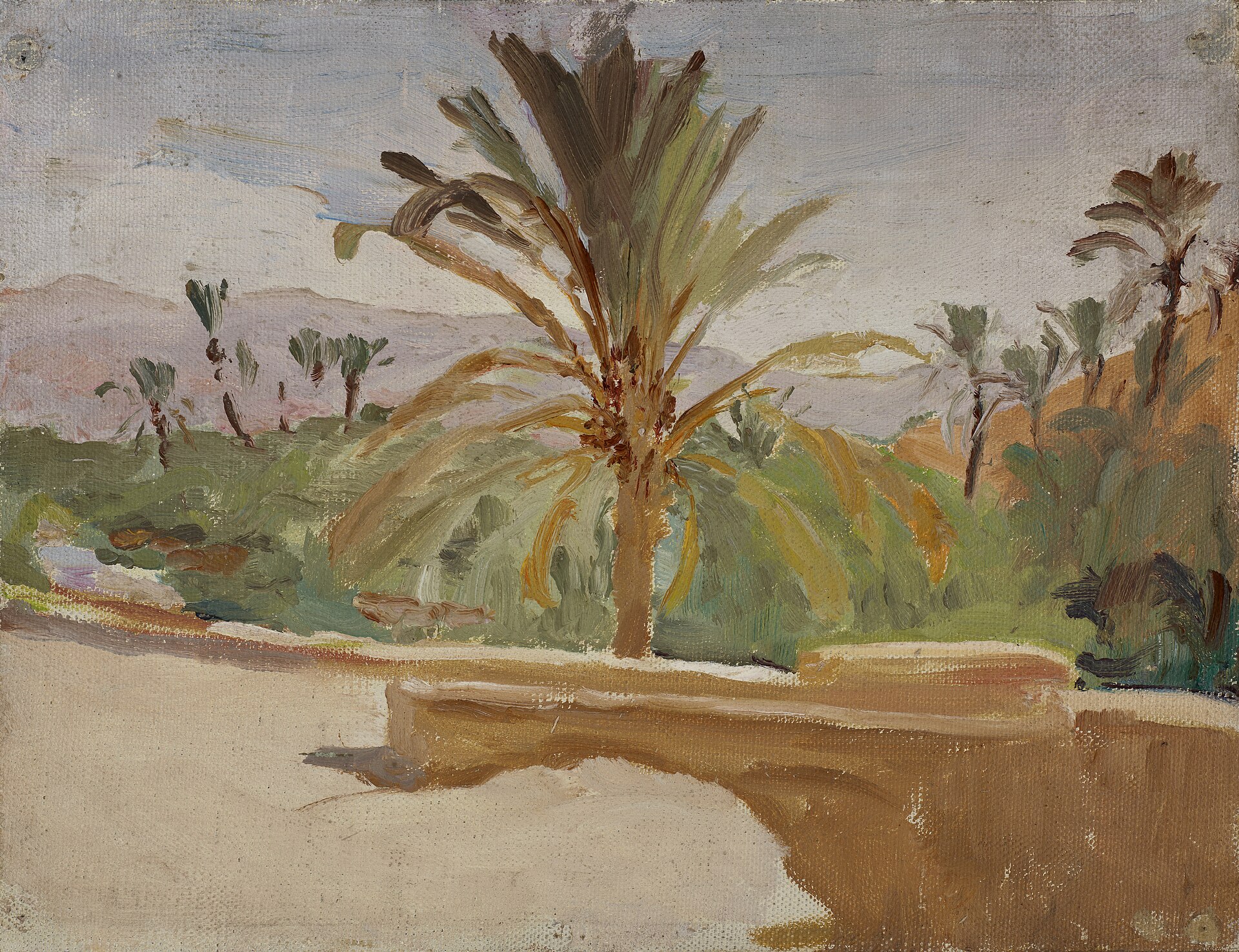
flourish like a palm tree
on Psalms 92:12-15
Two trees answer the grass of verse 7, a palm and a cedar of Lebanon. Verse 13 has them planted in the house of the LORD, and verse 14 keeps them fruitful in old age, healthy and green. The last words call the LORD upright, and a Rock.
This site's exposition
He is my Rock
The fruit of verse 14 turns out to be speech, the righteous in old age proclaiming: The LORD is upright. Rock names a God who stays where He is. In Him there is no unrighteousness, and the whole psalm has argued it.
The record, by era
The Medieval Church1 voice
A commentator
Bernard of ClairvauxSermons on the Song of Songs, Sermon 80 · Written before 1153.
proposed
You have indeed concerning him who is the image, that "being in the form of God, he did not consider it robbery to be equal with God." Where certainly both his rectitude in the form of God, and his majesty in the equality, are indicated …
The Puritans and the Awakening3 voices
The proper work of the sabbath is praising God; every sabbath day must be a thanksgiving-day; and the other services of the day must be in order to this, and therefore must by no means thrust this into a corner. One of the Jewish writers refers it to the kingdom of the Messiah, and calls it, A psalm or song for the age to come, which shall be all sabbath.
As it is by the promises that believers first partake of a divine nature, so it is by the promises that that divine nature is preserved and kept up; and therefore the power it exerts is an evidence that the Lord is upright, and so he will show himself with an upright man, Ps. xviii. This the psalmist triumphs in: " He is my rock and there is no unrighteousness in him.
quarantine:debris (2026-07-29) — odd-straight-quotes
To show that the Lord is upright,....
The Nineteenth Century1 voice
A commentator
Jamieson, Fausset & Brown1802–1910
Commentary Critical and Explanatory on the Whole Bible (1871)
proposed
and they thus declare God's glory as their strong and righteous ruler.
quarantine:debris (2026-07-29) — starts-lowercase
5 more voices on this verse
The Nineteenth Century5 voices
This mercy to the aged proves the faithfulness of their God, and leads them to shew that the Lord is upright, by their cheerful testimony to his ceaseless goodness. We do not serve a Master who will run back from his promise. Whoever else may defraud us, he never will. Every aged Christian is a letter of commendation to the immutable fidelity of Jehovah. He is my rock, and there is no unrighteousness in him. Here is the psalmist's own seal and sign manual; still was he building upon his God, and still was the Lord a firm foundation for his trust. For shelter, for defence, for indwelling, for foundation, God is our rock; hitherto he has been to us all that he said he would be, and we may be doubly sure that he will abide the same even unto the end. He has tried us, but he has never allowed us to be tempted above what we are able to bear: he has delayed our reward, but he has never been unrighteous to forget our work of faith and labour of love. He is a friend without fault, a helper without fail. Whatever he may do with us, he is always in the right; his dispensations have no flaw in them, no, not the most minute. He is true and righteous altogether, and so we weave the end of the psalm with its beginning, and make a coronet of it, for the head of our Beloved. It is a good thing to sing praises unto the Lord, for "he is my rock, and there is no unrighteousness in him."
THESE verses occur at the close of a Psalm for the Sabbath over which there rests a Sabbatic glory of perfect calm, of hallowed peace. Amidst the business and bustle of daily life the great trouble of the Psalmist was the prosperity of the wicked, but it does not trouble him at all when he enters the sanctuary to keep the holy day. He then looks upon the ungodly who prosper in the world as so much flowering grass in their beauty and he beholds them cut down and utterly destroyed. And it is meet that a Psalm for the Sabbath should be calm and peaceful, cloudless and far-seeing. If on any day we see things in their right light and our views extend farther than at other times, surely it should be on the day of sacred rest. I know a friend who wished to take a house in Newcastle. It stood on an elevated position and the landlord, who wished to have him for a tenant, took him to the attic of the house and said, "What a view there is from this window! Do you know," he asked, "that on Sundays you can see Durham Cathedral?" "On Sundays!" said my friend, with a look of surprise, "And why not on other days?" "Well," said the landlord, "on Sundays there is less smoke and so you can see farther." And, as it is in the natural world, so it should always be in the spiritual—less of the smoke of this world—less of the dust and the care of life and, therefore, a clearer vision of the things which are beyond—things which God reveals to spiritual eyes! Read and sing this Psalm often and may your heart constantly be in that sweet restful state.
THESE verses occur at the close of a Psalm for the Sabbath over which there rests a Sabbatic glory of perfect calm, of hallowed peace. Amidst the business and bustle of daily life the great trouble of the Psalmist was the prosperity of the wicked, but it does not trouble him at all when he enters the sanctuary to keep the holy day. He then looks upon the ungodly who prosper in the world as so much flowering grass in their beauty and he beholds them cut down and utterly destroyed.
To show that the Lord is upright - Such persons show how faithful God is to his promises, how true to his word, how kind to them who trust in him. He is the Rock, the Fountain, whence all good comes. There is no unrighteousness in him - He does nothing evil, nothing unwise, nothing unkind. He is both just and merciful.
A commentator
Albert Barnes1798–1870
Notes, Explanatory and Practical, on the Old and New Testaments (1832-1869)
proposed
To shew that the Lord is upright - That is, This will be a proof that God is faithful to his promises; that he is the true friend of his people. The fact that they live long - that they are happy and useful even in old age, will be a demonstration that God is the friend of virtue, and that he deals with people according to their character. He is my rock - He is my defense; that which constitutes my security. See the notes at Psa 18:2. This is language of strong confidence in view of all that is said in the psalm. And there is no unrighteousness in him - This is said in the most absolute form - implying the most entire confidence. God is altogether to be trusted. There is no evil or wrong in his character or in his dealings. In all respects he is worthy of confidence: “worthy” to be loved, trusted, adored, obeyed, by the inhabitants of all worlds. What a sublime thought is this! What a consolatory truth! What would the universe be if God, a Being of infinite POWER, were not a Being of perfect RIGHTEOUSNESS, and could not be trusted by the creatures which he has made!
How the passage was read
What the Jewish commentators add
On the verses either side of this one
Planted The righteous will be [planted] in the house of the Lord.
This section is reception history: how the passage was read and kept in the Jewish tradition. Where a reading parts from an essential of the Christian faith, the section says so at that point.
Texts and citation data: Sefaria; each excerpt follows its version’s licence. 6 further sources are cited on this chapter that carry no English text this site may quote or only restate the verse.
The words behind it
8 Hebrew wordsEvery Hebrew word of this verse in the order it stands, with what it means and the door to its own study. The last column counts the times a word stands in the whole Bible: the rarer the word, the more the places it appears belong together.
| Hebrew | Sound | Meaning | Word study | In the Bible |
|---|---|---|---|---|
| לְ֭הַגִּיד | lehagid | to declare | H5046 → | 370 times |
| כִּֽי־ | ki- | that | H3588 → | 4482 times |
| יָשָׁ֣ר | yashar | [is] upright | H3477 → | 119 times |
| יְהוָ֑ה | yahweh | Yahweh | H3068 → | 6520 times |
| צ֝וּרִ֗י | tzuri | rock my | H6697 → | 78 times |
| וְֽלֹא־ | velo'- | and not | H3808 → | 5168 times |
| עַוְלָ֥תָה | avlatah | injustice | H5766 → | 54 times |
| בּֽוֹ׃ | bo | [is] in him |
לְ֭הַגִּידto declare
lehagidH5046 →370 times
כִּֽי־that
ki-H3588 →4482 times
יָשָׁ֣ר[is] upright
yasharH3477 →119 times
יְהוָ֑הYahweh
yahwehH3068 →6520 times
צ֝וּרִ֗יrock my
tzuriH6697 →78 times
וְֽלֹא־and not
velo'-H3808 →5168 times
עַוְלָ֥תָהinjustice
avlatahH5766 →54 times
בּֽוֹ׃[is] in him
bo
A shaded row is a word that stands 400 times or fewer in the Bible.
The walk
8 stopsEach card is a verse this one points to, and under it the verses that one points to in turn. Where several paths arrive at the same place, that place is listed first: the text keeps returning to it.
Through
Psalms 18:2The LORD is my rock, my fortress, and my deliverer. My God is my rock, in whom I take refuge, my shield, and the horn of my salvation, my stronghold.
it leads to
- Psalms 144:2
He is my steadfast love and my fortress, my stronghold and my deliverer. He is my shield, in whom I take refuge, who subdues peoples under me.
- Psalms 62:7
My salvation and my honor rest on God, my strong rock; my refuge is in God.
- Psalms 19:14
May the words of my mouth and the meditation of my heart be pleasing in Your sight, O LORD, my Rock and my Redeemer.
- Proverbs 18:10
The name of the LORD is a strong tower; the righteous run to it and are safe.
- Psalms 91:2
I will say to the LORD, “You are my refuge and my fortress, my God, in whom I trust.”
- Psalms 144:2
Through
Psalms 145:17The LORD is righteous in all His ways and kind in all His deeds.
it leads to
- Deuteronomy 32:4
He is the Rock, His work is perfect; all His ways are just. A God of faithfulness without injustice, righteous and upright is He.
Reached by 3 separate paths from here.
- Deuteronomy 32:4
Through
Romans 9:14What then shall we say? Is God unjust? Certainly not!
it leads to
- 2 Chronicles 19:7
And now, may the fear of the LORD be upon you. Be careful what you do, for with the LORD our God there is no injustice or partiality or bribery.”
Reached by 2 separate paths from here.
- 2 Chronicles 19:7
Through
Psalms 62:6He alone is my rock and my salvation; He is my fortress; I will not be shaken.
it leads to
- Psalms 112:6
Surely he will never be shaken; the righteous man will be remembered forever.
- Psalms 112:6
Where this verse is studied
On this page
About Psalms
This page draws on 10 works. Open the list of works
This page draws on Adam Clarke, Commentary on the Bible; Albert Barnes, Notes, Explanatory and Practical, on the Old and New Testaments (1832-1869); Bernard of Clairvaux, Sermons on the Song of Songs, Sermon 80; Charles Spurgeon, The Treasury of David, Vol. 4; Charles Spurgeon, The Treasury of David; Charles Spurgeon, The Metropolitan Tabernacle Pulpit, Sermon No. 1365: “The Trees in God's Courts” (lightly modernized text, CCEL edition); Jamieson, Fausset & Brown, Commentary Critical and Explanatory on the Whole Bible; John Gill, Exposition of the Old Testament; John Gill, Exposition of the Old Testament (1748-1763) and Matthew Henry, Commentary on the Whole Bible.