
Psalms 92:12
in Psalms 92The righteous will flourish like a palm tree, and grow like a cedar in Lebanon.
BSB
The same verse in ASV and KJV ▾
ASV
The righteous shall flourish like the palm-tree: He shall grow like a cedar in Lebanon.
KJV
The righteous shall flourish like the palm tree: he shall grow like a cedar in Lebanon.
⋯
This verse in Psalms 92
Commentary
13 notes on this verseThe song now contrasts the condition of the righteous with that of the graceless. The wicked "spring as the grass", but The righteous shall flourish like a palm tree, whose growth may not be so rapid, but whose endurance for centuries is in fine contrast with the transitory verdure of the meadow.
This site's exposition
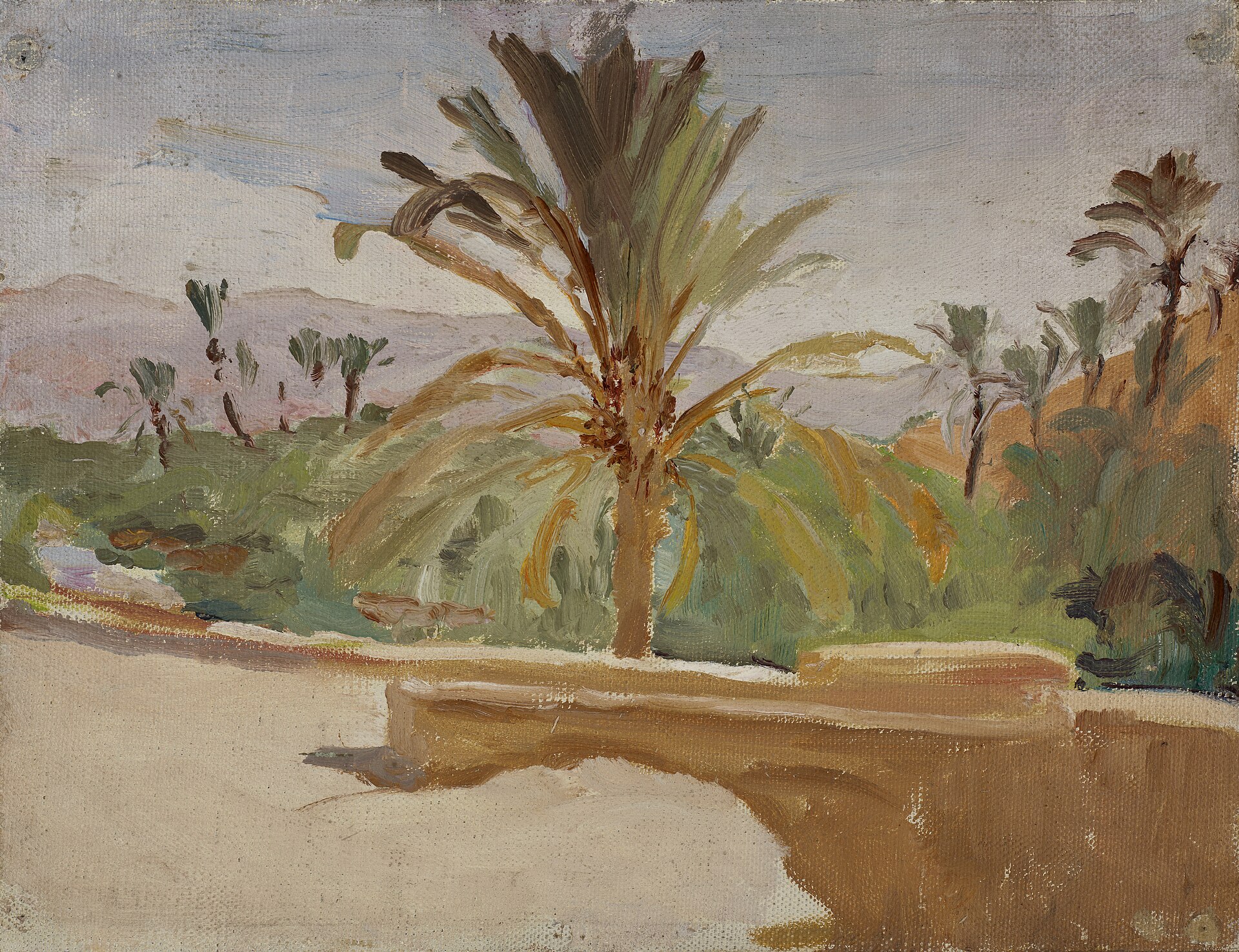
flourish like a palm tree
on Psalms 92:12-15
Two trees answer the grass of verse 7, a palm and a cedar of Lebanon. Verse 13 has them planted in the house of the LORD, and verse 14 keeps them fruitful in old age, healthy and green. The last words call the LORD upright, and a Rock.
The record, by era
The Church Fathers5 voices
The grass withers, the flower of sinners dies away: what of the righteous? "The righteous shall flourish like a palm tree" [Psalm 92:12]. The ungodly are green as grass; "The righteous shall flourish like a palm tree." By the palm tree he signifies height. Possibly he had also this meaning in the palm, that in its extremities it is beautiful: so that you may trace its beginning from the earth, its end in its topmost branches, wherein its whole beauty dwells. The rough root appears in the earth, the beautiful foliage toward the sky. Your beauty too, then, shall be in the end. Your root is fixed fast: but our root is upward. For our root is Christ, who has ascended into heaven. Humbled, he shall be exalted; "he shall spread abroad like a cedar in Libanus." See what trees he spoke of: the righteous shall flourish like a palm-tree: and shall spread abroad like a cedar in Libanus. When the sun has gone forth, does the palm-tree wither? Does the cedar die? But when the sun has been glowing for some hours, the grass dries up. The judgment, therefore, shall come, that sinners may wither, and the faithful flourish.
An old man used to say, "It is written, 'The righteous one shall blossom like the palm tree.' " Now these words make known that the soul acquires height, and straightness of stature and sweetness from beautiful deeds. But there is another quality that is …
"Such as are planted in the house of the Lord, shall flourish in the courts of the house of our God" [Psalm 92:12]. "They shall be yet more increased in fruitful old age, and shall be quiet, that they may show it forth" [Psalm 92:13]. Such is the Sabbath, which but a little while ago I commended unto you, whence the Psalm hath its title. "They shall be quiet, that they may show it forth." Wherefore are they quiet that show it forth? The grass of sinners moveth them not: the cedar and palm-tree not even in tempests are bent. They are therefore quiet, that they may show it forth: and with reason, since at present they must show it forth even unto men who mock at it. O wretched men, who are lovers of the world! Those who are planted in the house of the Lord, show it to you: those who praise the Lord with song and lute, in word and deed, show it forth to you, and tell you. Be not seduced by the prosperity of the wicked, admire not the flower of grass: admire not those who are happy only for a season, but miserable unto eternity. ...If ye wish to flourish like a palm-tree, and to spread abroad like a cedar in Libanus, and not to wither like grass when the sun is hot; as those who appear to flourish when the sun is absent. If then ye wish not to be as grass, but as the palm-tree and the cedar, what will ye show forth? "How true the Lord my strength is: and that there is no unrighteousness in Him." How is it there is no unrighteousness? A man committeth so great crimes; he is well, he hath sons, a plentiful house, he is full of pride, is exalted by his honours, is revenged on his enemies, and doeth every evil deed; another man, innocent, attending to his own affairs, not robbing another's goods, doing nothing against any one, suffereth in chains, in prison, tosseth and sigheth in poverty. How is it that there is no unrighteousness in Him? […]
Like the cedar of Lebanon he shall be multiplied: a sweet-smelling wood, the wood with which the roofs of the temple are covered. Like the cedar of Lebanon he shall be multiplied: a wood that does not rot.
Accordingly, it is not proper to adore God outside of this holy court, but only within it, lest anyone who is outside of it and is attracted by those outside of it might lose the right to be in the court of the Lord. Many assume an attitude of prayer, but they are not in the court because of the wandering of their mind and the distraction of their thoughts coming from vain solicitude. It is possible to consider the court in a still loftier sense as the heavenly way of life.
6 more voices on this verse
The Puritans and the Awakening3 voices
The proper work of the sabbath is praising God; every sabbath day must be a thanksgiving-day; and the other services of the day must be in order to this, and therefore must by no means thrust this into a corner. One of the Jewish writers refers it to the kingdom of the Messiah, and calls it, A psalm or song for the age to come, which shall be all sabbath.
Where God gives true grace he will give more grace. God's trees shall grow higher, like the cedars, the tall cedars in Lebanon; they shall grow nearer heaven, and with a holy ambition shall aspire towards the upper world; they shall grow stronger, like the cedars, and fitter for use.
The righteous shall flourish like the palm tree,....
The Nineteenth Century3 voices
The song now contrasts the condition of the righteous with that of the graceless. The wicked "spring as the grass", but The righteous shall flourish like a palm tree, whose growth may not be so rapid, but whose endurance for centuries is in fine contrast with the transitory verdure of the meadow. When we see a noble palm standing erect, sending all its strength upward in one bold column, and growing amid the dearth and drought of the desert, we have a fine picture of the godly man, who in his uprightness aims alone at the glory of God; and, independent of outward circumstances, is made by divine grace to live and thrive where all things else perish. The text tells us not only what the righteous is, but what he shall be; come what may, the good man shall flourish, and flourish after the noblest manner. He shall grow like a cedar in Lebanon. This is another noble and long lived tree. "As the days of a tree are the days of my people", saith the Lord. On the summit of the mountain, unsheltered from the blast, the cedar waves its mighty branches in perpetual verdure, and so the truly godly man under all adversities retains the joy of his soul, and continues to make progress in the divine life. Grass, which makes hay for oxen, is a good enough emblem of the unregenerate; but cedars, which build the temple of the Lord, are none too excellent to set forth the heirs of heaven.
The righteous shall flourish like the palm-tree - Very different from the wicked, Psa 92:7, who are likened to grass. These shall have a short duration; but those shall have a long and useful life. They are compared also to the cedar of Lebanon, an incorruptible wood, and extremely long-lived. Mr. Maundrell, who visited those trees in 1697, describes them thus: “These noble trees grow among the snow, near the highest part of Lebanon. Some are very old, and of prodigious bulk. I measured one of the largest, and found it twelve yards six inches in girt, and yet sound; and thirty-seven yards in the spread of its boughs. At about five or six yards from the ground, it was divided into live limbs, each of which was equal to a large tree.” Some of these trees are supposed to have lived upwards of one thousand years! The figure of the palm-tree gives us the idea of grandeur and usefulness. The fruit of the palm-tree makes a great part of the diet of the people of Arabia, part of Persia, and Upper Egypt. The stones are ground down for the camels; the leaves are made into baskets; the hard boughs, or rather strong leaves, some being six or eight feet in length, make fences; the juice makes arrack, the threads of the web-like integument between the leaves make ropes, and the rigging of small vessels; and the wood serves for slighter buildings and fire-wood. In short, the palm or date tree, and the olive, are two of the most excellent and useful productions of the forest or the field. The cedar gives us the idea of majesty, stability. durableness, and incorruptibility. To these two trees, for the most obvious reasons, are the righteous compared. William Lithgow, who traveled through the holy land about a.d. […]
A commentator
Albert Barnes1798–1870
Notes, Explanatory and Practical, on the Old and New Testaments (1832-1869)
proposed
The righteous shall flourish like the palm-tree - That is, the beauty, the erectness, the stateliness, the growth of the palm-tree - all this is an emblem of the condition, the prosperity, the happiness of a righteous man. The wicked shall be cut down; but the righteous shall flourish. This image - the comparison of a righteous man to a flourishing, majestic, green, and beautiful tree - is not uncommon in the Scriptures. See the notes at Psa 1:3; compare Jer 17:8. On the “palm-tree,” see the notes at Mat 21:8. “The stem,” says Dr. Thomson (“land and the Book,” vol. i. p. 65)” tall, slender, and erect as Rectitude herself, suggests to the Arab poets many a symbol for their lady-love; and Solomon, long before them, has sung, ‘How fair and how pleasant art thou, O love! for delights; this thy stature is like the palm-tree.” Son 7:6-7. The following remarks of Dr. Thomson (“land and the Book,” vol. i. pp. 65, 66) will illustrate the passage before us; - “The palm grows slowly, but steadily, from century to century, uninfluenced by those alternations of the seasons which affect other trees. It does not rejoice overmuch in winter’s copious rain, nor does it droop under the drought and the burning sun of summer. Neither heavy weights which people place upon its head, nor the importunate urgency of the wind, can sway it aside from perfect uprightness. There it stands, looking calmly down upon the world below, and patiently yielding its large clusters of golden fruit from generation to generation. […]
How the passage was read
What the Jewish commentators add
On the verses either side of this one
The righteous one flourishes like the palm, etc. Like the palm that produces fruit, and like the cedar insofar as its trunk renews itself.
This section is reception history: how the passage was read and kept in the Jewish tradition. Where a reading parts from an essential of the Christian faith, the section says so at that point.
Texts and citation data: Sefaria; each excerpt follows its version’s licence. 6 further sources are cited on this chapter that carry no English text this site may quote or only restate the verse.
The words behind it
6 Hebrew wordsEvery Hebrew word of this verse in the order it stands, with what it means and the door to its own study. The last column counts the times a word stands in the whole Bible: the rarer the word, the more the places it appears belong together.
| Hebrew | Sound | Meaning | Word study | In the Bible |
|---|---|---|---|---|
| צַ֭דִּיק | tzadik | [the] righteous | H6662 → | 206 times |
| כַּתָּמָ֣ר | katamar | like <the> palm tree | H8558 → | |
| יִפְרָ֑ח | yifrach | he will flourish | H6524 → | 36 times |
| כְּאֶ֖רֶז | keerez | like a cedar | H730 → | 73 times |
| בַּלְּבָנ֣וֹן | balevanon | in <the> Lebanon | H3844 → | 71 times |
| יִשְׂגֶּֽה׃ | yisgeh | he will grow | H7685 → |
צַ֭דִּיק[the] righteous
tzadikH6662 →206 times
כַּתָּמָ֣רlike <the> palm tree
katamarH8558 →
יִפְרָ֑חhe will flourish
yifrachH6524 →36 times
כְּאֶ֖רֶזlike a cedar
keerezH730 →73 times
בַּלְּבָנ֣וֹןin <the> Lebanon
balevanonH3844 →71 times
יִשְׂגֶּֽה׃he will grow
yisgehH7685 →
A shaded row is a word that stands 400 times or fewer in the Bible.
The walk
8 stopsEach card is a verse this one points to, and under it the verses that one points to in turn. Where several paths arrive at the same place, that place is listed first: the text keeps returning to it.
Through
Psalms 1:3He is like a tree planted by streams of water, yielding its fruit in season, whose leaf does not wither, and who prospers in all he does.
it leads to
- Jeremiah 17:8
He is like a tree planted by the waters that sends out its roots toward the stream. It does not fear when the heat comes, and its leaves are always green. It does not…
- Ezekiel 47:12
Along both banks of the river, fruit trees of all kinds will grow. Their leaves will not wither, and their fruit will not fail. Each month they will bear fruit, because the water from…
Reached by 2 separate paths from here.
- Psalms 92:14
In old age they will still bear fruit; healthy and green they will remain,
- John 15:6
If anyone does not remain in Me, he is like a branch that is thrown away and withers. Such branches are gathered up, thrown into the fire, and burned.
- Ezekiel 19:10
Your mother was like a vine in your vineyard, planted by the water; it was fruitful and full of branches because of the abundant waters.
- Jeremiah 17:8
Through
Jeremiah 17:8He is like a tree planted by the waters that sends out its roots toward the stream. It does not fear when the heat comes, and its leaves are always green. It does not…
it leads to
- Psalms 1:3
He is like a tree planted by streams of water, yielding its fruit in season, whose leaf does not wither, and who prospers in all he does.
Reached by 2 separate paths from here.
- Isaiah 58:11
The LORD will always guide you; He will satisfy you in a sun-scorched land and strengthen your frame. You will be like a well-watered garden, like a spring whose waters never fail.
- Ezekiel 31:4–10
The waters made it grow; the deep springs made it tall, directing their streams all around its base and sending their channels to all the trees of the field.
- Psalms 1:3
Where this verse is studied
On this page
About Psalms
This page draws on 10 works. Open the list of works
This page draws on Adam Clarke, Commentary on the Bible; Albert Barnes, Notes, Explanatory and Practical, on the Old and New Testaments (1832-1869); Augustine of Hippo, Exposition on Psalm 92; Basil of Caesarea, HOMILIES ON THE PSALMS 13:3; Charles Spurgeon, The Treasury of David, Vol. 4; Charles Spurgeon, The Treasury of David; Desert Fathers, SAYINGS OF THE FATHERS 186; Jerome, Homily 21, on Psalm 91; John Gill, Exposition of the Old Testament (1748-1763) and Matthew Henry, Commentary on the Whole Bible.