
Psalms 128:2
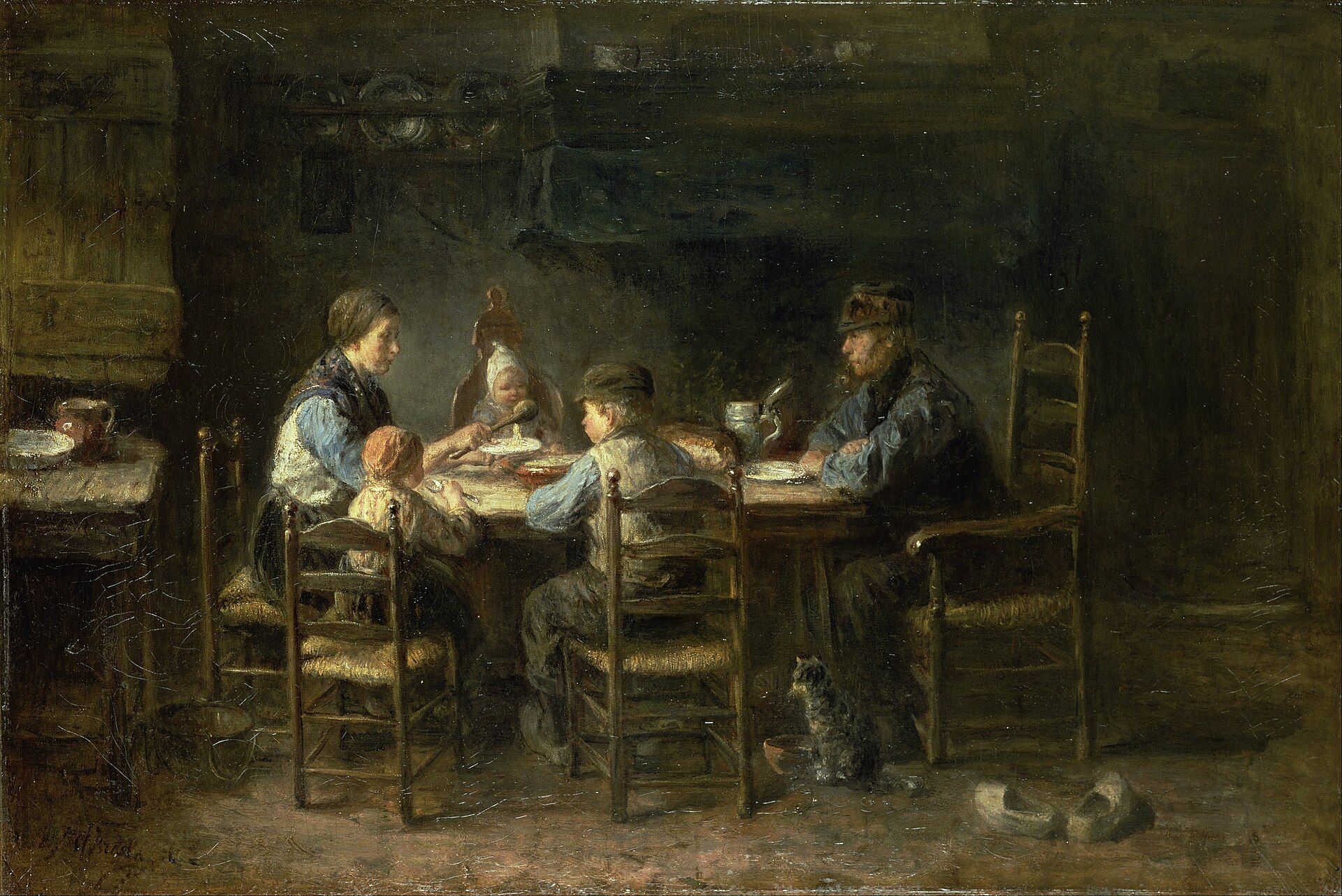
in Psalms 128For when you eat the fruit of your labor, blessings and prosperity will be yours.
BSB
The same verse in ASV and KJV ▾
ASV
For thou shalt eat the labor of thy hands: Happy shalt thou be, and it shall be well with thee.
KJV
For thou shalt eat the labour of thine hands: happy shalt thou be, and it shall be well with thee.
⋯
This verse in Psalms 128
Commentary
11 notes on this verseYou will eat the labors of your hands. Many, not understanding, have interpreted this passage otherwise: 'You will eat the labors of your fruits.' Indeed the Latin copies have it thus: You will eat the labors of your fruits. But we read it written thus in the Hebrew: You will eat the labors of your hands. For who eats the labors of fruits? Surely it ought to be understood the other way around, that someone eats the fruit of his labors, and not the labors of his hands. For it is understood the other way around.
This site's exposition
all who fear the LORD
on Psalms 128:1-2
The same Hebrew word closes Psalm 127 and opens this one, and Spurgeon called it the catch word joining the two songs. The blessing rests on those who fear the LORD and walk in His ways. A man eats the fruit of his own labor.
This site's exposition
when you eat the fruit of your labor
Verse 1 is said of all who fear the LORD, and verse 2 turns to you. Spurgeon called it the general doctrine given a personal application. Deuteronomy 28:33 uses the same word for labor in its curse, where a people Israel did not know eat the produce of its toil.
The record, by era
The Church Fathers2 voices
"You shall eat the labours of your fruits" [Psalm 128:2]. And ye, O thou, you many who are One, "You shall eat of the labours of your fruits." He seems to speak perversely to those who understand not: for he should have said, you shall eat the fruit of your labours. For many eat the fruit of their labours. They labour in the vineyard; they eat not the toil itself; but what arises from their labour they eat. They labour about trees that bear fruit: who would eat labours? But the fruit of these labours, the produce of these trees; it is this that delights the husbandman. What means, "You shall eat the labours of your fruits"? At present we have toils: the fruits will come afterwards. But since their labours themselves are not without joy, on account of the hope whereof we have a little before spoken, "Rejoicing in hope, patient in tribulation;" [Romans 12:12] at present those very labours delight us, and make us joyful in hope. If therefore our toil has been what could be eaten, and could also delight us; what will be the fruit of our labour when eaten? "They who went weeping on their way, scattering their seed," did eat their labours; with how much greater pleasure will they eat the fruits of their labours, who "shall come again with joy, bearing their sheaves with them"?..."Blessed are you, and well shall it be with you." "Blessed are you," is of the present: "well shall it be with you," is of the future. When you eat the labours of your fruits, "blessed are you;" when you have reached the fruit of your labours, "well shall it be with you." What has he said? For if it be well with you, you will be happy: and if you will be happy, you will also have all well with you. But there is a difference between hope and attainment. If hope be so sweet, how much sweeter will reality be?
Blessed are all who fear the Lord. Those who fear the Lord, what reward do they have? What crown? Let us see what praise they have, what reward. Blessed are you, and it shall be well with you. I have already spoken about blessedness; I am asking what this blessedness is: the one who fears the Lord, what blessedness does he have? Your wife like a fruitful vine on the sides of your house; your sons like young olive shoots around your table. I think that, with Christ favoring us, we all fear the Lord. Then do we not have this blessedness? For it is written that whoever fears the Lord has this blessedness: Your wife like a fruitful vine on the sides of your house, your sons like young olive shoots around your table. So then, is the man who has one son, and the man who has two, not blessed? For what does it say? Your sons like young olive shoots around your table. Unless we have so many sons that they encircle our table, will we not have the blessedness of the one who fears the Lord? Isaac did not have this blessedness: for he had two sons, one of them utterly wicked, Esau, for whom it would have been far better had he never been born. But he had one son, Jacob: so then did he not have the blessedness? because one son could not encircle the table. Virgins, then, do not fear the Lord? For what is said, that the one who fears the Lord should understand blessedness? Your wife like a fruitful vine on the sides of your house; your sons like young olive shoots around your table. John did not have this blessedness, both Johns, the evangelist as much as the baptist: for each of them was a virgin. Paul did not have this blessedness, who says: 'I wish, moreover, that all were as I am.' You see, then, that wife and sons must be understood spiritually; otherwise, unless we understand them spiritually, the angels do not have this blessedness, because they do not have sons. […]
The Puritans and the Awakening2 voices
Happy shalt thou be, that is, It shall be well with thee; whatever befals thee, good shall be brought out of it; it shall be well with thee while thou livest, better when thou diest, and best of all to eternity." It is asserted (
quarantine:debris (2026-07-29) — unbalanced-parens+odd-straight-quotes
For thou shall eat the labour of thine hands,.... That is, thou that fearest the Lord, and walkest in his ways.
The Nineteenth Century1 voice
For thou shalt eat the labour of thine hands. The general doctrine in Ps 128:1 here receives a personal application: note the change to the second person: "thou shalt eat", etc. This is the portion of God's saints, —to work, and to find a reward in so doing. God is the God of labourers. We are not to leave our worldly callings because the Lord has called us by grace: we are not promised a blessing upon romantic idleness or unreasonable dreaming, but upon hard work and honest industry.
3 more voices on this verse
The Nineteenth Century3 voices
For thou shalt eat the labour of thine hands. The general doctrine in Ps 128:1 here receives a personal application: note the change to the second person: "thou shalt eat", etc. This is the portion of God's saints, —to work, and to find a reward in so doing. God is the God of labourers. We are not to leave our worldly callings because the Lord has called us by grace: we are not promised a blessing upon romantic idleness or unreasonable dreaming, but upon hard work and honest industry. Though we are in God's hands we are to be supported by our own hands. He will give us daily bread, but it must be made our own by labour. All kinds of labour are here included; for if one toils by the sweat of his brow, and another does so by the sweat of his brain, there is no difference in the blessing; save that it is generally more healthy to work with the body than with the mind only. Without God it would be vain to labour; but when we are labourers together with God a promise is set before us. The promise is that labour shall be fruitful, and that he who performs it shall himself enjoy the recompense of it. It is a grievous ill for a man to slave his life away and receive no fair remuneration for his toil: as a rule, God's servants rise out of such bondage and claim their own, and receive it: at any rate, this verse may encourage them to do so. "The labourer is worthy of his hire." Under the Theocracy the chosen people could see this promise literally fulfilled; but when evil rulers oppressed them their earnings were withheld by churls, and their harvests were snatched away from them by marauders. Had they walked in the fear of the Lord they would never have known such great evils. Some men never enjoy their labour, for they give themselves no time for rest. Eagerness to get takes from them the ability to enjoy.
Those shalt eat the labor of thine hands - Thou shalt not be exempted from labor. Thou shalt work: But God will bless and prosper that work, and thou and thy family shall eat of it. Ye shall all live on the produce of your own labor, and the hand of violence shall not be permitted to deprive you of it. Thus, Happy shalt thou be, and it shall be well with thee - Thou shalt have prosperity.
A commentator
Albert Barnes1798–1870
Notes, Explanatory and Practical, on the Old and New Testaments (1832-1869)
proposed
For thou shalt eat the labor of thine hands - Thou shalt enjoy the avails of thy labor; thou shalt be secure in thy rights. See the notes at Isa 3:10. This is a general promise respecting the prosperity which religion affords. If all people were truly religious, this would be universal, so far as man is concerned. Property would be secure; and, except so far as abundant harvests might be prevented by the direct providence of God - by blight, and mildew, and storms, and drought - all people would enjoy undisturbed the avails of their labor. Slavery, whereby one man is compelled to labor for another, would come to an end; every one who is now a slave would “eat the labor of his own hands;” and property would no more be swept away by war, or become the prey of robbers and freebooters. Religion, if it prevailed universally, would produce universal security in our rights. Happy shalt thou be, and it shall be well with thee - literally, “Happy thou, and well with thee.” That is, happiness and security would be the consequence of true religion.
How the passage was read
What the Jewish commentators add
If..the toil of your hands He who benefits from the toil of his hands inherits two worlds. In Tractate Berachoth (8a).
2 more on this passage, in their own words ▾
A song of ascents. Praiseworthy is every man who fears the Lord All of these are admonitions and disciplines. Because it is written, “Praiseworthy is the man,” “Praiseworthy is a man,” it therefore says here “every,” to include a woman.
as a fruitful vine Every woman whose blood is abundant will have many children.
This section is reception history: how the passage was read and kept in the Jewish tradition. Where a reading parts from an essential of the Christian faith, the section says so at that point.
Texts and citation data: Sefaria; each excerpt follows its version’s licence. 3 further sources are cited on this chapter that carry no English text this site may quote or only restate the verse.
The words behind it
7 Hebrew wordsEvery Hebrew word of this verse in the order it stands, with what it means and the door to its own study. The last column counts the times a word stands in the whole Bible: the rarer the word, the more the places it appears belong together.
| Hebrew | Sound | Meaning | Word study | In the Bible |
|---|---|---|---|---|
| יְגִ֣יעַ | yegia' | [the] product of | H3018 → | 16 times |
| כַּ֭פֶּיךָ | kapeikha | hands your | H3709 → | 192 times |
| כִּ֣י | ki | for | H3588 → | 4482 times |
| תֹאכֵ֑ל | tokhel | you will eat | H398 → | 810 times |
| אַ֝שְׁרֶ֗יךָ | ʾashreikha | how blessed [are]! you | H835 → | 45 times |
| וְט֣וֹב | vetov | and will be good | H2895 → | 45 times |
| לָֽךְ׃ | lakh | [is] to you |
יְגִ֣יעַ[the] product of
yegia'H3018 →16 times
כַּ֭פֶּיךָhands your
kapeikhaH3709 →192 times
כִּ֣יfor
kiH3588 →4482 times
תֹאכֵ֑לyou will eat
tokhelH398 →810 times
אַ֝שְׁרֶ֗יךָhow blessed [are]! you
ʾashreikhaH835 →45 times
וְט֣וֹבand will be good
vetovH2895 →45 times
לָֽךְ׃[is] to you
lakh
A shaded row is a word that stands 400 times or fewer in the Bible.
The walk
8 stopsEach card is a verse this one points to, and under it the verses that one points to in turn. Where several paths arrive at the same place, that place is listed first: the text keeps returning to it.
Through
Isaiah 3:10Tell the righteous it will be well with them, for they will enjoy the fruit of their labor.
it leads to
- Psalms 128:1–2
Blessed are all who fear the LORD, who walk in His ways!
- Hebrews 6:10
For God is not unjust. He will not forget your work and the love you have shown for His name as you have ministered to the saints and continue to do so.
- Ecclesiastes 8:12
Although a sinner does evil a hundred times and still lives long, yet I also know that it will go well with those who fear God, who are reverent in His presence.
- Galatians 6:7–8
Do not be deceived: God is not to be mocked. Whatever a man sows, he will reap in return.
- Ezekiel 18:9–19
He follows My statutes and faithfully keeps My ordinances. That man is righteous; surely he will live, declares the Lord GOD.
- Psalms 128:1–2
Through
Deuteronomy 28:4The fruit of your womb will be blessed, as well as the produce of your land and the offspring of your livestock—the calves of your herds and the lambs of your flocks.
it leads to
- Proverbs 10:22
The blessing of the LORD enriches, and He adds no sorrow to it.
- Genesis 49:25
by the God of your father who helps you, and by the Almighty who blesses you, with blessings of the heavens above, with blessings of the depths below, with blessings of the breasts and…
- Proverbs 10:22
Through
Isaiah 62:8The LORD has sworn by His right hand and by His mighty arm: “Never again will I give your grain to your enemies for food, nor will foreigners drink the new wine for which…
it leads to
- Isaiah 65:21–23
They will build houses and dwell in them; they will plant vineyards and eat their fruit.
- Isaiah 65:21–23
About Psalms
This page draws on Adam Clarke, Commentary on the Bible; Albert Barnes, Notes, Explanatory and Practical, on the Old and New Testaments (1832-1869); Augustine of Hippo, Exposition on Psalm 128; Charles Spurgeon, The Treasury of David; Charles Spurgeon, The Treasury of David, Vol. 7; Jerome, Homily 42, on Psalm 127; John Gill, Exposition of the Old Testament (1748-1763) and Matthew Henry, Commentary on the Whole Bible.