
Psalms 128:1
in Psalms 128Blessed are all who fear the LORD, who walk in His ways!
BSB
The same verse in ASV and KJV ▾
ASV
Blessed is every one that feareth Jehovah, That walketh in his ways.
KJV
Blessed is every one that feareth the Lord; that walketh in his ways.
⋯
This verse in Psalms 128
Commentary
11 notes on this verseBlessed are all who fear the Lord. Just as no one can say 'The Lord is my portion' except the one who has no other portion in the world, so the one who fears anything else outside the Lord does not fear the Lord. Indeed, the Savior himself says: 'Do not fear those who can kill the body, but fear him who can kill both body and soul in hell.' You see, then, that whoever does not fear the Lord fears some other thing outside the Lord. The one who fears the Lord, what signs does he have?
This site's exposition
all who fear the LORD
on Psalms 128:1-2
The same Hebrew word closes Psalm 127 and opens this one, and Spurgeon called it the catch word joining the two songs. The blessing rests on those who fear the LORD and walk in His ways. A man eats the fruit of his own labor.
The record, by era
The Church Fathers5 voices
A commentator
Philoxenus of Mabbug13 Ascetic Discourses, Discourse 7 -- Second Discourse on the Fear of God · Written before 523.
proposed
And again, in another place, he [David] ascribeth blessedness to the man who feareth God, and he maketh known what good things the fear of God worketh in him that feareth [Him], saying, "Blessed is the man that feareth the Lord", and here the fearer …
"Blessed are all who fear the Lord." The inspired word declared blessed not the one from Abraham's stock or from Israel's seed but the person adorned with the fear of God. Blessed Peter also says this in the book of Acts: "In truth I grasp …
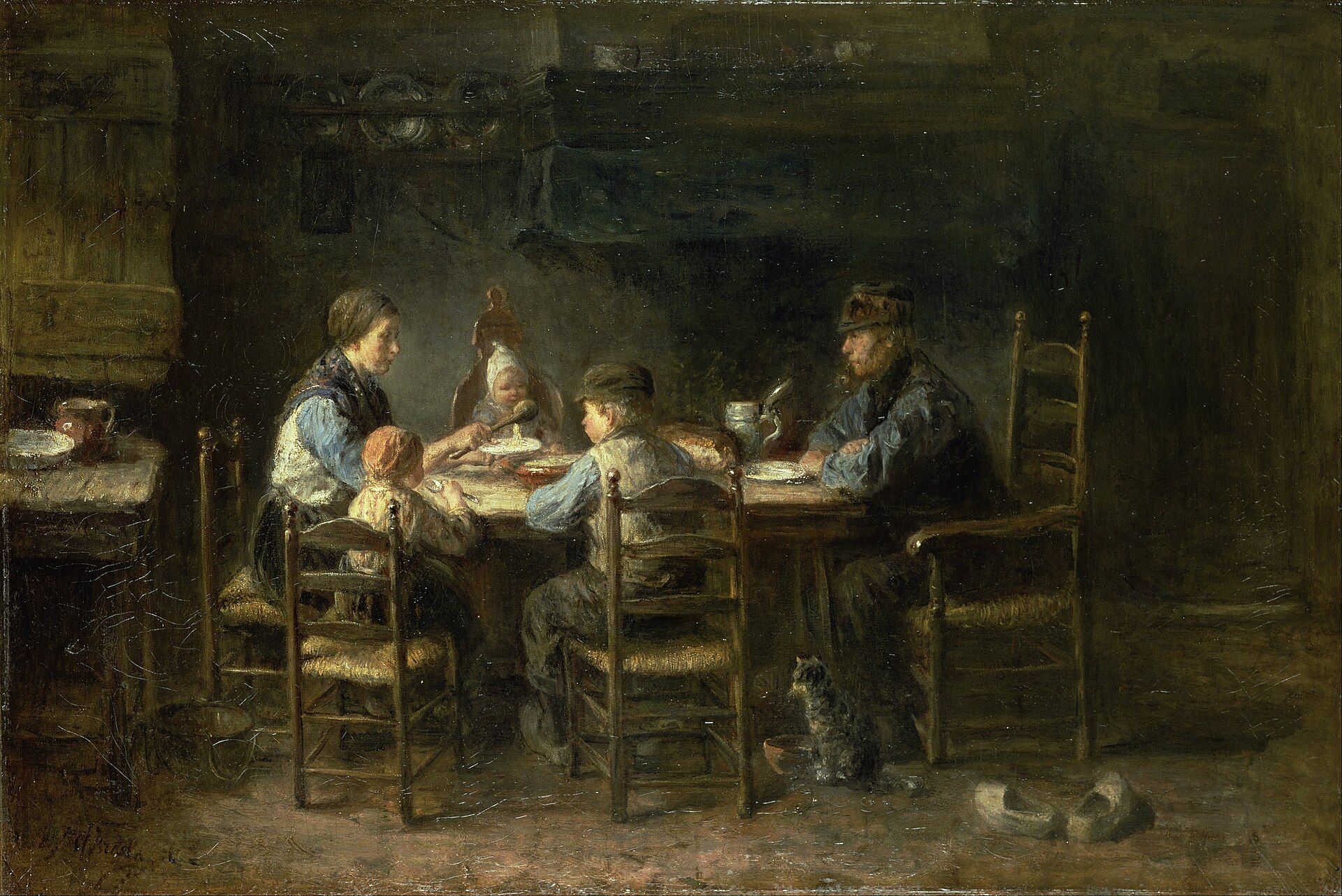
Blessed are all who fear the Lord. Those who fear the Lord, what reward do they have? What crown? Let us see what praise they have, what reward. Blessed are you, and it shall be well with you. I have already spoken about blessedness; I am asking what this blessedness is: the one who fears the Lord, what blessedness does he have? Your wife like a fruitful vine on the sides of your house; your sons like young olive shoots around your table. I think that, with Christ favoring us, we all fear the Lord. Then do we not have this blessedness? For it is written that whoever fears the Lord has this blessedness: Your wife like a fruitful vine on the sides of your house, your sons like young olive shoots around your table. So then, is the man who has one son, and the man who has two, not blessed? For what does it say? Your sons like young olive shoots around your table. Unless we have so many sons that they encircle our table, will we not have the blessedness of the one who fears the Lord? Isaac did not have this blessedness: for he had two sons, one of them utterly wicked, Esau, for whom it would have been far better had he never been born. But he had one son, Jacob: so then did he not have the blessedness? because one son could not encircle the table. Virgins, then, do not fear the Lord? For what is said, that the one who fears the Lord should understand blessedness? Your wife like a fruitful vine on the sides of your house; your sons like young olive shoots around your table. John did not have this blessedness, both Johns, the evangelist as much as the baptist: for each of them was a virgin. Paul did not have this blessedness, who says: 'I wish, moreover, that all were as I am.' You see, then, that wife and sons must be understood spiritually; otherwise, unless we understand them spiritually, the angels do not have this blessedness, because they do not have sons. […]
When he says, "Blessed are all who fear the Lord," he shows that they are not blessed who fear with troubled mind the dangers of the world when temporal property is lost. For those dangers make people wretched when they torment them with groundless fear. …
"Blessed are all they that fear the Lord, and walk in His ways" [Psalm 128:1]. He speaketh to many; but since these many are one in Christ, in the next words he speaketh in the singular: "For thou shall eat the labours of thy fruits."...When I speak of Christians in the plural, I understand one in the One Christ. Ye are therefore many, and ye are one; we are many, and we are one. How are we many, and yet one? Because we cling unto Him whose members we are; and since our Head is in heaven, that His members may follow....Let us therefore so hear this Psalm, as considering it to be spoken of Christ: and all of us who cling unto the Body of Christ, and have been made members of Christ, walk in the ways of the Lord; and let us fear the Lord with a chaste fear, with a fear that abideth for ever....
4 more voices on this verse
The Puritans and the Awakening1 voice
Blessed is everyone that feareth the Lord,....
The Nineteenth Century3 voices
Blessed is every one that feareth the Lord. The last Psalm ended with a blessing, —for the word there translated "happy" is the same as that which is here rendered "blessed": thus the two songs are joined by a catch word. There is also in them a close community of subject. The fear of God is the corner stone of all blessedness. We must reverence the ever blessed God before we can be blessed ourselves.
Blessed is every one that feareth the Lord. The last Psalm ended with a blessing, —for the word there translated "happy" is the same as that which is here rendered "blessed": thus the two songs are joined by a catch word. There is also in them a close community of subject. The fear of God is the corner stone of all blessedness. We must reverence the ever blessed God before we can be blessed ourselves. Some think that this life is an evil, an infliction, a thing upon which rests a curse; but it is not so; the God fearing man has a present blessing resting upon him. It is not true that it would be to him" something better not to be." He is happy now, for he is the child of the happy God, the ever living Jehovah; and he is even here a joint heir with Jesus Christ, whose heritage is not misery, but joy. This is true of every one of the God fearing, of all conditions, in all ages: each one and every one is blessed. Their blessedness may not always be; seen by carnal reason, but it is always a fact, for God himself declares that it is so; and we know that those whom he blesses are blessed indeed. Let us cultivate that holy filial fear of Jehovah which is the essence of all true religion;—the fear of reverence, of dread to offend, of anxiety to please, and of entire submission and obedience. This fear of the Lord is the fit fountain of holy living: we look in vain for holiness apart from it: none but those who fear the Lord will ever walk in his ways. That walketh in his ways. The religious life, which God declares to be blessed, must be practical as well as emotional. It is idle to talk of fearing the Lord if we act like those who have no care whether there be a God or no, God's ways will be our ways if we have a sincere reverence for him: if the heart is joined unto God, the feet will follow hard after him.
A commentator
Albert Barnes1798–1870
Notes, Explanatory and Practical, on the Old and New Testaments (1832-1869)
proposed
Blessed is every one that feareth the Lord - That honors God; that is truly pious. See the notes at Psa 1:1; Psa 112:1. What that blessedness is, is indicated in the following verses. That walketh in his ways - The ways which God commands or directs. On the word “walketh,” see the notes at Psa 1:1.
How the passage was read
What the Jewish commentators add
A song of ascents. Praiseworthy is every man who fears the Lord All of these are admonitions and disciplines. Because it is written, “Praiseworthy is the man,” “Praiseworthy is a man,” it therefore says here “every,” to include a woman.
1 more on this passage, in their own words ▾
If..the toil of your hands He who benefits from the toil of his hands inherits two worlds. In Tractate Berachoth (8a).
This section is reception history: how the passage was read and kept in the Jewish tradition. Where a reading parts from an essential of the Christian faith, the section says so at that point.
Texts and citation data: Sefaria; each excerpt follows its version’s licence. 3 further sources are cited on this chapter that carry no English text this site may quote or only restate the verse.
The words behind it
6 Hebrew wordsEvery Hebrew word of this verse in the order it stands, with what it means and the door to its own study. The last column counts the times a word stands in the whole Bible: the rarer the word, the more the places it appears belong together.
| Hebrew | Sound | Meaning | Word study | In the Bible |
|---|---|---|---|---|
| אַ֭שְׁרֵי | ʾashrei | how blessed! | H835 → | 45 times |
| כָּל־ | kol- | [is] every | H3605 → | 5413 times |
| יְרֵ֣א | yere' | [one] fearing | H3373 → | 64 times |
| יְהוָ֑ה | yahweh | <of> Yahweh | H3068 → | 6520 times |
| הַ֝הֹלֵ֗ךְ | haholekh | who walks | H1980 → | 1546 times |
| בִּדְרָכָֽיו׃ | bidrakhav | in ways his | H1870 → | 707 times |
אַ֭שְׁרֵיhow blessed!
ʾashreiH835 →45 times
כָּל־[is] every
kol-H3605 →5413 times
יְרֵ֣א[one] fearing
yere'H3373 →64 times
יְהוָ֑ה<of> Yahweh
yahwehH3068 →6520 times
הַ֝הֹלֵ֗ךְwho walks
haholekhH1980 →1546 times
בִּדְרָכָֽיו׃in ways his
bidrakhavH1870 →707 times
A shaded row is a word that stands 400 times or fewer in the Bible.
The walk
8 stopsEach card is a verse this one points to, and under it the verses that one points to in turn. Where several paths arrive at the same place, that place is listed first: the text keeps returning to it.
Through
Psalms 119:1Blessed are those whose way is blameless, who walk in the Law of the LORD.
it leads to
- Luke 11:28
But He replied, “Blessed rather are those who hear the word of God and obey it.”
- Ezekiel 11:20
so that they may follow My statutes, keep My ordinances, and practice them. Then they will be My people, and I will be their God.
- James 1:25
But the one who looks intently into the perfect law of freedom, and continues to do so—not being a forgetful hearer, but an effective doer—he will be blessed in what he does.
- John 13:17
If you know these things, you will be blessed if you do them.
- Luke 1:6
Both of them were righteous in the sight of God, walking blamelessly in all the commandments and decrees of the Lord.
- Luke 11:28
Through
Luke 1:50His mercy extends to those who fear Him, from generation to generation.
it leads to
- Psalms 103:17–18
But from everlasting to everlasting the loving devotion of the LORD extends to those who fear Him, and His righteousness to their children’s children—
- Exodus 20:6
but showing loving devotion to a thousand generations of those who love Me and keep My commandments.
- Psalms 103:17–18
Through
Psalms 103:13As a father has compassion on his children, so the LORD has compassion on those who fear Him.
it leads to
- Luke 11:11–12
What father among you, if his son asks for a fish, will give him a snake instead?
- Luke 11:11–12
About Psalms
This page draws on 10 works. Open the list of works
This page draws on Albert Barnes, Notes, Explanatory and Practical, on the Old and New Testaments (1832-1869); Augustine of Hippo, Exposition on Psalm 128; Cassiodorus, EXPOSITIONS OF THE PSALMS 127:1; Charles Spurgeon, The Treasury of David; Charles Spurgeon, The Treasury of David, Vol. 7; Jerome, Homily 42, on Psalm 127; John Gill, Exposition of the Old Testament (1748-1763); Matthew Henry, Commentary on the Whole Bible; Philoxenus of Mabbug, 13 Ascetic Discourses, Discourse 7 -- Second Discourse on the Fear of God and Theodoret of Cyrus, COMMENTARY ON THE PSALMS 128:2.