
Psalms 128:3
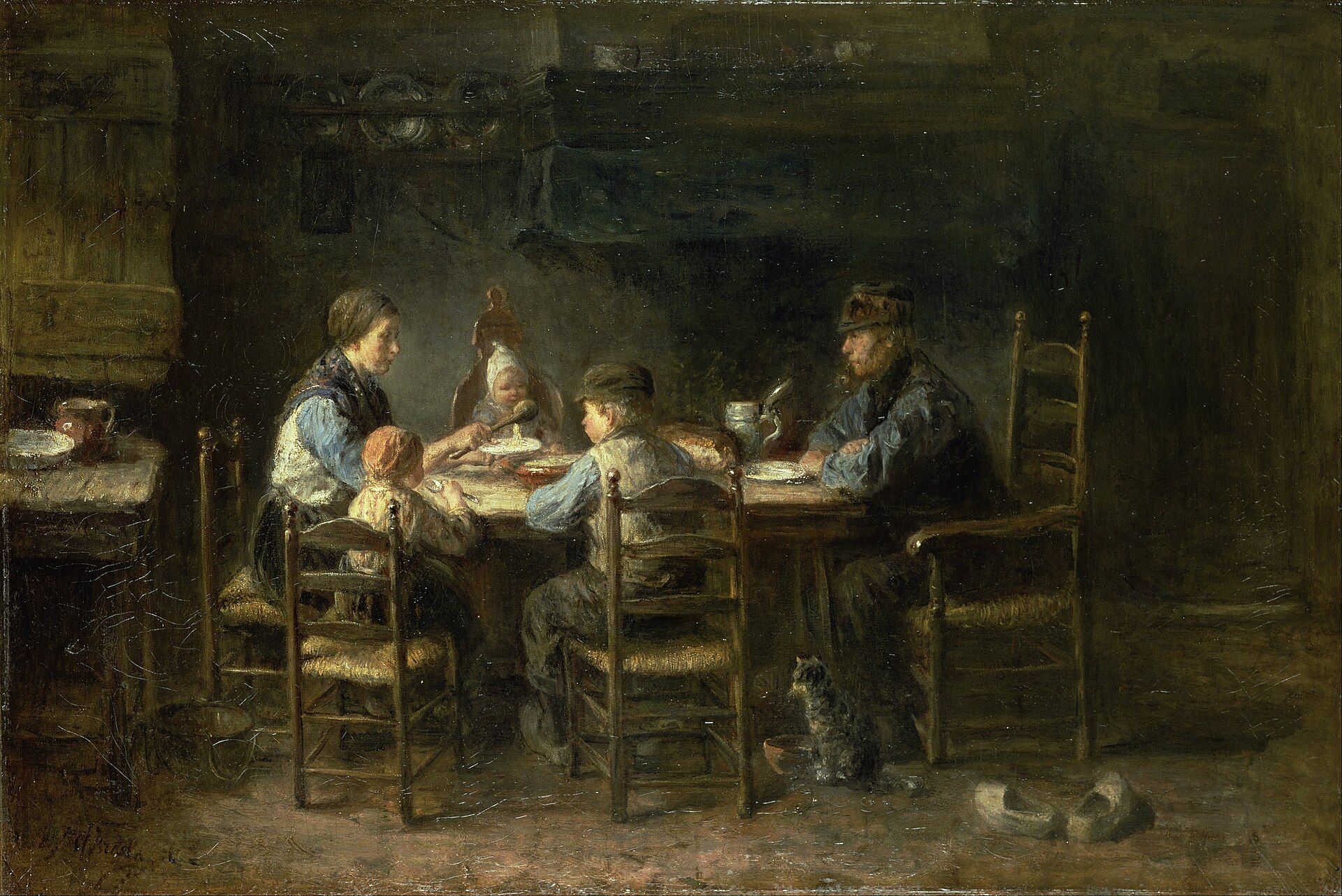
in Psalms 128Your wife will be like a fruitful vine flourishing within your house, your sons like olive shoots sitting around your table.
BSB
The same verse in ASV and KJV ▾
ASV
Thy wife shall be as a fruitful vine, In the innermost parts of thy house; Thy children like olive plants, Round about thy table.
KJV
Thy wife shall be as a fruitful vine by the sides of thine house: thy children like olive plants round about thy table.
⋯
This verse in Psalms 128
Commentary
10 notes on this verseThy wife shall be as a fruitful vine by the sides of thine house,.... The vine being a weak and tender tree, which needs propping and supporting; and often is fastened to the sides of a house, to which the allusion here is; whereunto it cleaves, and on which it runs up, and bears very agreeable fruit; it is properly used to express the weakness and tenderness of the female sex, their fruitfulness in bearing children, and their care of domestic affairs, being keepers at home; see 1Pe 3:
This site's exposition
like a fruitful vine
on Psalms 128:3-4
The vine grows in the innermost part of the house, which is what the Hebrew word marks. The word for the sons' olive shoots stands once in the Hebrew Bible and means a young sucker. Verse 4 calls this the blessing of the God fearing man.
The record, by era
The Church Fathers4 voices
Let us now come to the words, "Thy wife" [Psalm 128:3]: it is said unto Christ. His wife, therefore, is the Church: His Church, His wife, we ourselves are. "As a fruitful vineyard." But in whom is the vineyard fruitful? For we see many barren ones entering those walls; we see that many intemperate, usurious persons, slave dealers, enter these walls, and such as resort to fortune-tellers, go to enchanters and enchantresses when they have a headache. Is this the fruitfulness of the vine? Is this the fecundity of the wife? It is not. These are thorns, but the vineyard is not everywhere thorny. It hath a certain fruitfulness, and is a fruitful vine; but in whom? "Upon the sides of thy house." Not all are called the sides of the house. For I ask what are the sides. What shall I say? Are they walls, strong stones, as it were? If he were speaking of this bodily tenement, we should perhaps understand this by sides. We mean by the sides of the house, those who cling unto Christ...."Thy children." The wife and the children are the same. In these carnal marriages and wedlocks, the wife is one, the children other: in the Church, she who is the wife, is the children also. For the Apostles belonged to the Church, and were among the members of the Church. They were therefore in His wife, and were His wife according to their own portion which they held in His members. Why then is it said concerning them, "When the Bridegroom shall be taken from them, then shall the children of the Bridegroom fast"? She who is the wife, then, is the children also....
Blessed are all who fear the Lord. Those who fear the Lord, what reward do they have? What crown? Let us see what praise they have, what reward. Blessed are you, and it shall be well with you. I have already spoken about blessedness; I am asking what this blessedness is: the one who fears the Lord, what blessedness does he have? Your wife like a fruitful vine on the sides of your house; your sons like young olive shoots around your table. I think that, with Christ favoring us, we all fear the Lord. Then do we not have this blessedness? For it is written that whoever fears the Lord has this blessedness: Your wife like a fruitful vine on the sides of your house, your sons like young olive shoots around your table. So then, is the man who has one son, and the man who has two, not blessed? For what does it say? Your sons like young olive shoots around your table. Unless we have so many sons that they encircle our table, will we not have the blessedness of the one who fears the Lord? Isaac did not have this blessedness: for he had two sons, one of them utterly wicked, Esau, for whom it would have been far better had he never been born. But he had one son, Jacob: so then did he not have the blessedness? because one son could not encircle the table. Virgins, then, do not fear the Lord? For what is said, that the one who fears the Lord should understand blessedness? Your wife like a fruitful vine on the sides of your house; your sons like young olive shoots around your table. John did not have this blessedness, both Johns, the evangelist as much as the baptist: for each of them was a virgin. Paul did not have this blessedness, who says: 'I wish, moreover, that all were as I am.' You see, then, that wife and sons must be understood spiritually; otherwise, unless we understand them spiritually, the angels do not have this blessedness, because they do not have sons. […]
Next: "Your sons will be as olive shoots around your table." In regards to Wisdom, the wife, rightly are the children called "sons," not "daughters." By the male sex strength of mind is often indicated. Or it may be because whenever this sex is named, …
Your wife like a fruitful vine on the sides of your house. Solomon says that he wished to take wisdom as his bride. He says also in another place concerning wisdom: 'Love her, and she will embrace you: encompass her, and she will keep you.' Let us too, therefore, take this wife; let us hold her in our embraces, let us never let her go from our bosom, let her never flee from our hands. If this wife is always in our embrace, we will make from her sons: not daughters, but sons.
The Nineteenth Century1 voice
Thy wife. To reach the full of earthly felicity a man must not be alone. A helpmeet was needed in Paradise, and assuredly she is not less necessary out of it. He that findeth a wife findeth a good thing. It is not every man that feareth the Lord who has a wife; but if he has, she shall share in his blessedness and increase it. Shall be as a fruitful vine. To complete domestic bliss children are sent. They come as the lawful fruit of marriage, even as clusters appear upon the vine.
3 more voices on this verse
The Nineteenth Century3 voices
Thy wife. To reach the full of earthly felicity a man must not be alone. A helpmeet was needed in Paradise, and assuredly she is not less necessary out of it. He that findeth a wife findeth a good thing. It is not every man that feareth the Lord who has a wife; but if he has, she shall share in his blessedness and increase it. Shall be as a fruitful vine. To complete domestic bliss children are sent. They come as the lawful fruit of marriage, even as clusters appear upon the vine. For the grapes the vine was planted; for children was the wife provided. It is generally well with any creature when it fulfils its purpose, and it is so far well with married people when the great design of their union is brought about. They must not look upon fruitfulness as a burden, but as a blessing. Good wives are also fruitful in kindness, thrift, helpfulness, and affection: if they bear no children, they are by no means barren if they yield us the wine of consolation and the clusters of comfort. Truly blessed is the man whose wife is fruitful in those good works which are suitable to her near and dear position. By the sides of thine house. She keeps to the house: she is a home bird. Some imagine that she is like a vine which is nailed up to the house wall; but they have no such custom in Palestine, neither is it pleasant to think of a wife as growing up by a wall, and as bound to the very bricks and mortar of her husband's dwelling. No, she is a fruitful vine, and a faithful housekeeper; if you wish to find her, she is within the house: she is to be found both inside and outside the home, but her chief usefulness is in the inner side of the dwelling, which she adorns. Eastern houses usually have an open square in the centre, and the various rooms are ranged around the sides, —there shall the wife be found, busy in one room or another, as the hour of the day demands.
Thy wife shall be as a fruitful vine - Thy children, in every corner and apartment of thy house, shall be the evidences of the fruitfulness of thy wife, as bunches of grapes on every bough of the vine are the proofs of its being in a healthy thriving state. Being about the house sides, or apartments, is spoken of the wife, not the vine; being around the table is spoken of the children, not of the olive-plants. It does not appear that there were any vines planted against the walls of the houses in Jerusalem, nor any olive-trees in pots or tubs in the inside of their houses; as may be found in different parts of Europe.
A commentator
Albert Barnes1798–1870
Notes, Explanatory and Practical, on the Old and New Testaments (1832-1869)
proposed
Thy wife shall be as a fruitful vine by the sides of thine house - It is not uncommon in the East, as elsewhere, to train a vine along the sides of a house - partly to save ground; partly because it is a good exposure for fruit; partly as an ornament; and partly to protect it from thieves. Such a vine, in its beauty, and in the abundant clusters upon it, becomes a beautiful emblem of the mother of a numerous household. One of the blessings most desired and most valued in the East was a numerous posterity, and this, in the case of Abraham, Isaac, and Jacob, was among the chief blessings which God promised to them - a posterity that should resemble in number the sands of the sea or the stars of heaven. Compare Gen 15:5; Gen 22:17; Gen 32:12. These two things - the right to the avails of one’s labor Psa 128:2, and a numerous family - are the blessings which are first specified as constituting the happiness of a pious household. Thy children like olive plants round about thy table - Compare the notes at Psa 52:8. Beautiful; producing abundance; sending up young plants to take the place of the old when they decay and die. The following extract and preceding cut from “The land and Book,” vol. i., pp. 76, 77, will furnish a good illustration of this passage: “To what particular circumstance does David refer in the 128th Psalm, where he says, Thy children shall be like oliveplants round about thy table? Follow me into the grove, and I will show you what may have suggested the comparison. Here we have lilt upon a beautiful illustration. This aged and decayed tree is surrounded, as you see, by several young and thrifty shoots, which spring from the root of the venerable parent. They seem to uphold, protect, and embrace it. We may even fancy that they now bear that lead of fruit which would otherwise be demanded of the feeble parent. […]
How the passage was read
What the Jewish commentators add
as a fruitful vine Every woman whose blood is abundant will have many children.
1 more on this passage, in their own words ▾
If..the toil of your hands He who benefits from the toil of his hands inherits two worlds. In Tractate Berachoth (8a).
This section is reception history: how the passage was read and kept in the Jewish tradition. Where a reading parts from an essential of the Christian faith, the section says so at that point.
Texts and citation data: Sefaria; each excerpt follows its version’s licence. 3 further sources are cited on this chapter that carry no English text this site may quote or only restate the verse.
The words behind it
10 Hebrew wordsEvery Hebrew word of this verse in the order it stands, with what it means and the door to its own study. The last column counts the times a word stands in the whole Bible: the rarer the word, the more the places it appears belong together.
| Hebrew | Sound | Meaning | Word study | In the Bible |
|---|---|---|---|---|
| אֶשְׁתְּךָ֤׀ | ʾeshtekha | wife your | H802 → | 781 times |
| כְּגֶ֥פֶן | kegefen | [will be] like a vine | H1612 → | 55 times |
| פֹּרִיָּה֮ | poriyah | fruitful | H6509 → | |
| בְּיַרְכְּתֵ֪י | beyarketei | in [the] innermost parts of | H3411 → | |
| בֵ֫יתֶ֥ךָ | veitekha | house your | H1004 → | 2046 times |
| בָּ֭נֶיךָ | baneikha | children your | H1121 → | 4930 times |
| כִּשְׁתִלֵ֣י | kishtilei | [will be] like shoots of | H8363 → | |
| זֵיתִ֑ים | zeitim | olive trees | H2132 → | |
| סָ֝בִ֗יב | saviv | around | H5439 → | 336 times |
| לְשֻׁלְחָנֶֽךָ׃ | leshulchanekha | <to> table your | H7979 → | 71 times |
אֶשְׁתְּךָ֤׀wife your
ʾeshtekhaH802 →781 times
כְּגֶ֥פֶן[will be] like a vine
kegefenH1612 →55 times
פֹּרִיָּה֮fruitful
poriyahH6509 →
בְּיַרְכְּתֵ֪יin [the] innermost parts of
beyarketeiH3411 →
בֵ֫יתֶ֥ךָhouse your
veitekhaH1004 →2046 times
בָּ֭נֶיךָchildren your
baneikhaH1121 →4930 times
כִּשְׁתִלֵ֣י[will be] like shoots of
kishtileiH8363 →
זֵיתִ֑יםolive trees
zeitimH2132 →
סָ֝בִ֗יבaround
savivH5439 →336 times
לְשֻׁלְחָנֶֽךָ׃<to> table your
leshulchanekhaH7979 →71 times
A shaded row is a word that stands 400 times or fewer in the Bible.
The walk
8 stopsEach card is a verse this one points to, and under it the verses that one points to in turn. Where several paths arrive at the same place, that place is listed first: the text keeps returning to it.
Through
Psalms 52:8But I am like an olive tree flourishing in the house of God; I trust in the loving devotion of God forever and ever.
it leads to
- Psalms 92:12–14
The righteous will flourish like a palm tree, and grow like a cedar in Lebanon.
- Hosea 14:6–8
His shoots will sprout, and his splendor will be like the olive tree, his fragrance like the cedars of Lebanon.
- Psalms 1:3
He is like a tree planted by streams of water, yielding its fruit in season, whose leaf does not wither, and who prospers in all he does.
- Psalms 13:5
But I have trusted in Your loving devotion; my heart will rejoice in Your salvation.
- Jeremiah 11:16
The LORD once called you a flourishing olive tree, beautiful with well-formed fruit. But with a mighty roar He will set it on fire, and its branches will be consumed.
- Psalms 92:12–14
Through
Ezekiel 19:10Your mother was like a vine in your vineyard, planted by the water; it was fruitful and full of branches because of the abundant waters.
it leads to
- Psalms 80:8–11
You uprooted a vine from Egypt; You drove out the nations and transplanted it.
- Deuteronomy 8:7
For the LORD your God is bringing you into a good land, a land of brooks and fountains and springs that flow through the valleys and hills;
- Psalms 80:8–11
Through
Genesis 49:22Joseph is a fruitful vine—a fruitful vine by a spring, whose branches scale the wall.
it leads to
- Genesis 41:52
And the second son he named Ephraim, saying, “God has made me fruitful in the land of my affliction.”
- Genesis 41:52
About Psalms
This page draws on 9 works. Open the list of works
This page draws on Adam Clarke, Commentary on the Bible; Albert Barnes, Notes, Explanatory and Practical, on the Old and New Testaments (1832-1869); Augustine of Hippo, Exposition on Psalm 128; Cassiodorus, EXPOSITIONS OF THE PSALMS 127:3; Charles Spurgeon, The Treasury of David, Vol. 7; Franz Delitzsch, Biblical Commentary on the Psalms; Jerome, Homily 42, on Psalm 127; John Gill, Exposition of the Old Testament (1748-1763) and John Gill, Exposition of the Old Testament.