
Psalms 128:4
in Psalms 128In this way indeed shall blessing come to the man who fears the LORD.
BSB
The same verse in ASV and KJV ▾
ASV
Behold, thus shall the man be blessed That feareth Jehovah.
KJV
Behold, that thus shall the man be blessed that feareth the Lord.
⋯
This verse in Psalms 128
Commentary
11 notes on this verseBehold, that thus shall the man be blessed that feareth the Lord. Mark this. Put a Nota Bene against it, for it is worthy of observation. It is not to be inferred that all blessed men are married, and are fathers; but that this is the way in which the Lord favours godly people who are placed in domestic life. He makes their relationships happy and profitable. In this fashion does Jehovah bless God fearing households, for he is the God of all the families of Israel.
This site's exposition
like a fruitful vine
on Psalms 128:3-4
The vine grows in the innermost part of the house, which is what the Hebrew word marks. The word for the sons' olive shoots stands once in the Hebrew Bible and means a young sucker. Verse 4 calls this the blessing of the God fearing man.
This site's exposition
In this way indeed shall blessing come
The verse opens with behold in Hebrew, and Barnes heard a call to look at the man with his sons around him. The man is geber, the word for the blessed man with a full quiver at Psalm 127:5. Verse 5 turns the same verb for blessing into a prayer.
The record, by era
The Church Fathers2 voices
...Such children ought therefore to be "around" the Lord's "table, like olive-branches." A complete Vine it is, a great bliss: who would now refuse to be there? When thou seest any blasphemer have a wife, children, grandchildren, and thyself perchance without them, envy them not; discern that the promise hath been fulfilled in thee also, but spiritually. If therefore we have, why have we? Because we fear the Lord. "Lo, thus shall the man be blessed that feareth the Lord" [Psalm 128:4]. He is the man, who is also the men; and the men are one man; because many are one, because Christ is One.
Behold, thus shall the man be blessed who fears the Lord. We have already spoken much, let us hasten to the end.
The Puritans and the Awakening3 voices
This blessedness, arising from this blessing, is here secured, 1. To all the saints universally: Blessed is everyone that fears the Lord, whoever he be; in every nation he that fears God and works righteousness is accepted of him, and therefore is blessed whether he be high or low, rich or poor, in the world; if religion rule him, it will protect and enrich him.
Behold, that thus shall the man be blessed that feareth the Lord. In the manner before described, and in the instances already given, as well as in the following; this is said to raise attention, and fix a sense of the blessedness of such persons; and who are further addressed, and pronounced happy, in the next verses.
Particular promises are here made to godly people, which they may depend upon, as far as is for God's glory and their good; and that is enough. That, by the blessing of God, they shall get an honest livelihood and live comfortably upon it. It is not promised that they shall live at ease, without care or pains, but, Thou shalt eat the labour of thy hands.
3 more voices on this verse
The Nineteenth Century3 voices
Behold, that thus shall the man be blessed that feareth the Lord. Mark this. Put a Nota Bene against it, for it is worthy of observation. It is not to be inferred that all blessed men are married, and are fathers; but that this is the way in which the Lord favours godly people who are placed in domestic life. He makes their relationships happy and profitable. In this fashion does Jehovah bless God fearing households, for he is the God of all the families of Israel. We have seen this blessing scores of times, and we have never ceased to admire in domestic peace the sweetest of human felicity. Family blessedness comes from the Lord, and is a part of his plan for the preservation of a godly race, and for the maintenance of his worship in the land. To the Lord alone we must look for it. The possession of riches will not ensure it; the choice of a healthy and beautiful bride will not ensure it; the birth of numerous comely children will not ensure it: there must be the blessing of God, the influence of piety, the result of holy living.
Thus shall the man be blessed that feareth the Lord - A great price for a small consideration. Fear God, and thou shalt have as much domestic good as may be useful to thee.
A commentator
Albert Barnes1798–1870
Notes, Explanatory and Practical, on the Old and New Testaments (1832-1869)
proposed
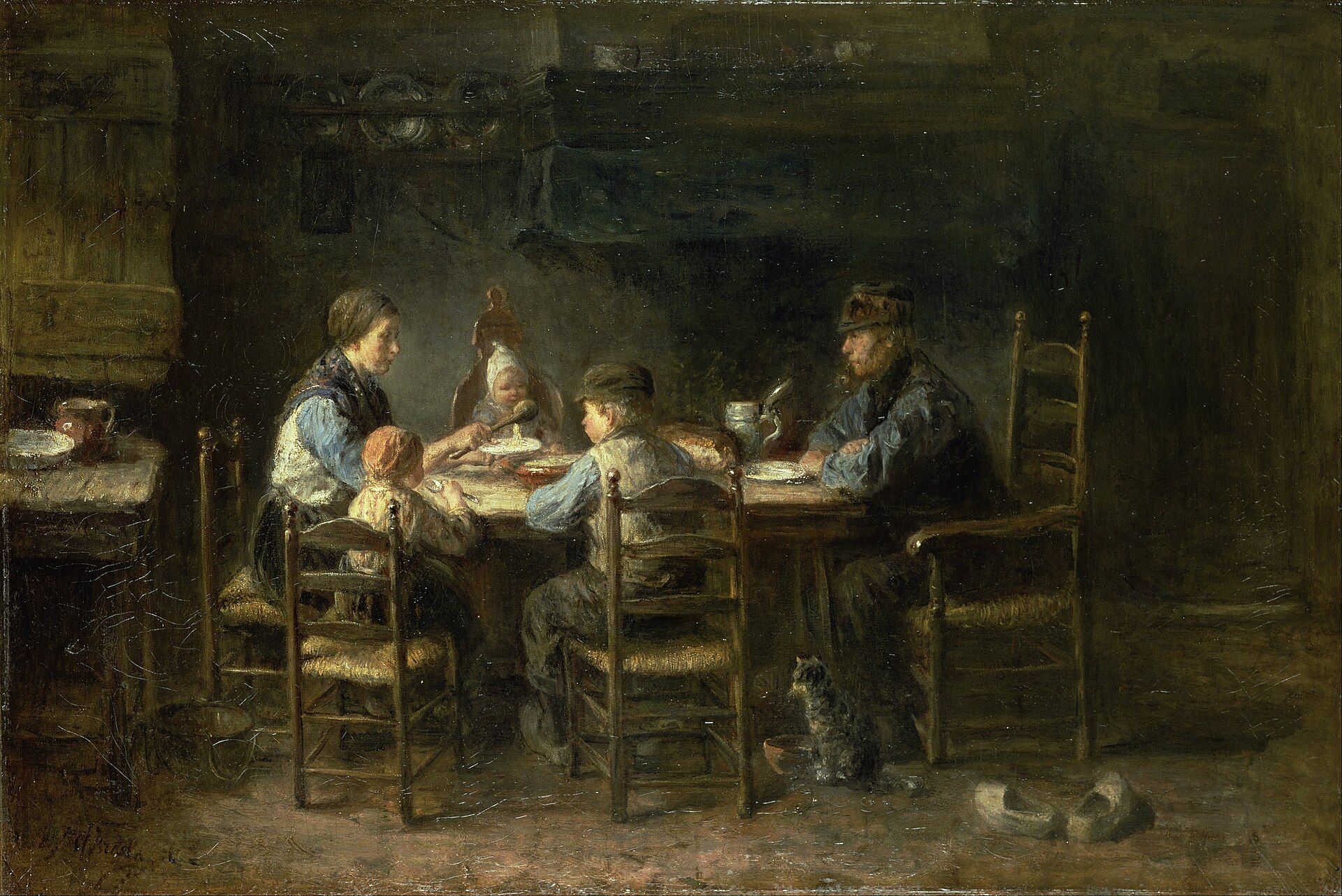
Behold, that thus shall the man be blessed ... - As if he had said, “Look upon this picture. See the farmer cultivating his fields; see him gathering in the grain; see him at his own table calmly, quietly, and gratefully enjoying the fruit of his toil. Look upon that picture of a happy family - numerous, cheerful, beloved - giving promise of upholding the name of the family in future years - and see all this as coming from the Lord - and you have an illustration of the blessedness which follows a religious life.”
How the passage was read
What the Jewish commentators add
On the verses either side of this one
as a fruitful vine Every woman whose blood is abundant will have many children.
1 more on this passage, in their own words ▾
from Zion which is the gate of heaven. Moreover, in the merit of Zion they would be fruitful and multiply, as it is written (I Kings:20): “Judah and Israel [were] many.”
This section is reception history: how the passage was read and kept in the Jewish tradition. Where a reading parts from an essential of the Christian faith, the section says so at that point.
Texts and citation data: Sefaria; each excerpt follows its version’s licence. 3 further sources are cited on this chapter that carry no English text this site may quote or only restate the verse.
The words behind it
7 Hebrew wordsEvery Hebrew word of this verse in the order it stands, with what it means and the door to its own study. The last column counts the times a word stands in the whole Bible: the rarer the word, the more the places it appears belong together.
| Hebrew | Sound | Meaning | Word study | In the Bible |
|---|---|---|---|---|
| הִנֵּ֣ה | hineh | here! | H2009 → | 843 times |
| כִי־ | khi- | for | H3588 → | 4482 times |
| כֵ֭ן | khen | thus | H3651 → | 771 times |
| יְבֹ֥רַךְ | yevorakh | he will be blessed | H1288 → | 330 times |
| גָּ֗בֶר | gaver | a man | H1397 → | 65 times |
| יְרֵ֣א | yere' | fearing | H3373 → | 64 times |
| יְהוָֽה׃ | yahweh | <of> Yahweh | H3068 → | 6520 times |
הִנֵּ֣הhere!
hinehH2009 →843 times
כִי־for
khi-H3588 →4482 times
כֵ֭ןthus
khenH3651 →771 times
יְבֹ֥רַךְhe will be blessed
yevorakhH1288 →330 times
גָּ֗בֶרa man
gaverH1397 →65 times
יְרֵ֣אfearing
yere'H3373 →64 times
יְהוָֽה׃<of> Yahweh
yahwehH3068 →6520 times
A shaded row is a word that stands 400 times or fewer in the Bible.
About Psalms
This page draws on 10 works. Open the list of works
This page draws on Adam Clarke, Commentary on the Bible; Albert Barnes, Notes on the Book of Psalms; Albert Barnes, Notes, Explanatory and Practical, on the Old and New Testaments (1832-1869); Augustine of Hippo, Exposition on Psalm 128; Charles Spurgeon, The Treasury of David, Vol. 7; Franz Delitzsch, Biblical Commentary on the Psalms; Jerome, Homily 42, on Psalm 127; John Gill, Exposition of the Old Testament; John Gill, Exposition of the Old Testament (1748-1763) and Matthew Henry, Commentary on the Whole Bible.