
Psalms 124:5
in Psalms 124then the raging waters would have swept us away.
BSB
The same verse in ASV and KJV ▾
ASV
Then the proud waters had gone over our soul.
KJV
Then the proud waters had gone over our soul.
⋯
This verse in Psalms 124
Commentary
9 notes on this verseThen the proud waters had gone over our soul. The wicked, who, through their pride, persecute the poor saints: these proud tyrants and persecutors would prevail over them, to their ruin and destruction; who, for their number, force, and strength, and especially for their pride and haughtiness, are like to the strong, boisterous, and swelling waves of the sea, were they not stopped and bounded by him who has said, Thus far shall ye go, and no farther, Job 38:11.
This site's exposition
their anger flared against us
on Psalms 124:3-5
Three clauses stack what almost happened, each opening with then. The first is being swallowed alive, and the next two turn to water, a torrent engulfing them and raging waters sweeping them away. The anger of verse 3 becomes water by verse 5.
This site's exposition
the raging waters
Raging renders zeydon, boiling water, a word used only here. Jamieson, Fausset and Brown read the proud waters of the King James as the insolent men, a flood that would have swept Israel away. Psalm 123:4 had just named contempt from the proud.
The record, by era
The Church Fathers1 voice
In the first place, what meaneth, "Perchance our soul hath passed over"? [Psalm 124:5]. Understand however the meaning to be this: "Thinkest thou our soul hath passed over?" and why do they say, "Thinkest thou"? Because the greatness of the danger maketh it hardly credible that he hath escaped. They have endured a great death: they have been in great dangers; they have been so much oppressed, that they almost gave consent while alive, and were all but swallowed up alive: now therefore that they have escaped, now that they are secure, but still remember the danger, the great danger, say, "Thinkest thou our soul hath passed over the water without substance?" What is the water without substance, save the water of sins without substance? For sins have not substance: they have destitution, not substance; they have want, not substance. In that water without substance, the younger son lost the whole of his substance. ...Dost thou wish to see how the water is without substance? Take away with thee to the world below what thou hast acquired: what wilt thou do? Thou hast acquired gold: thou hast lost thy faith: after a few days thou leavest this life; thou canst not take away with thee the gold thou hast acquired by the loss of thy good faith; thy heart, destitute of faith, goeth forth into punishment—thy heart, which if full of faith, would go forth unto a crown. Behold, what thou hast done is nothing: and thou hast offended God for nothing.
The Nineteenth Century4 voices
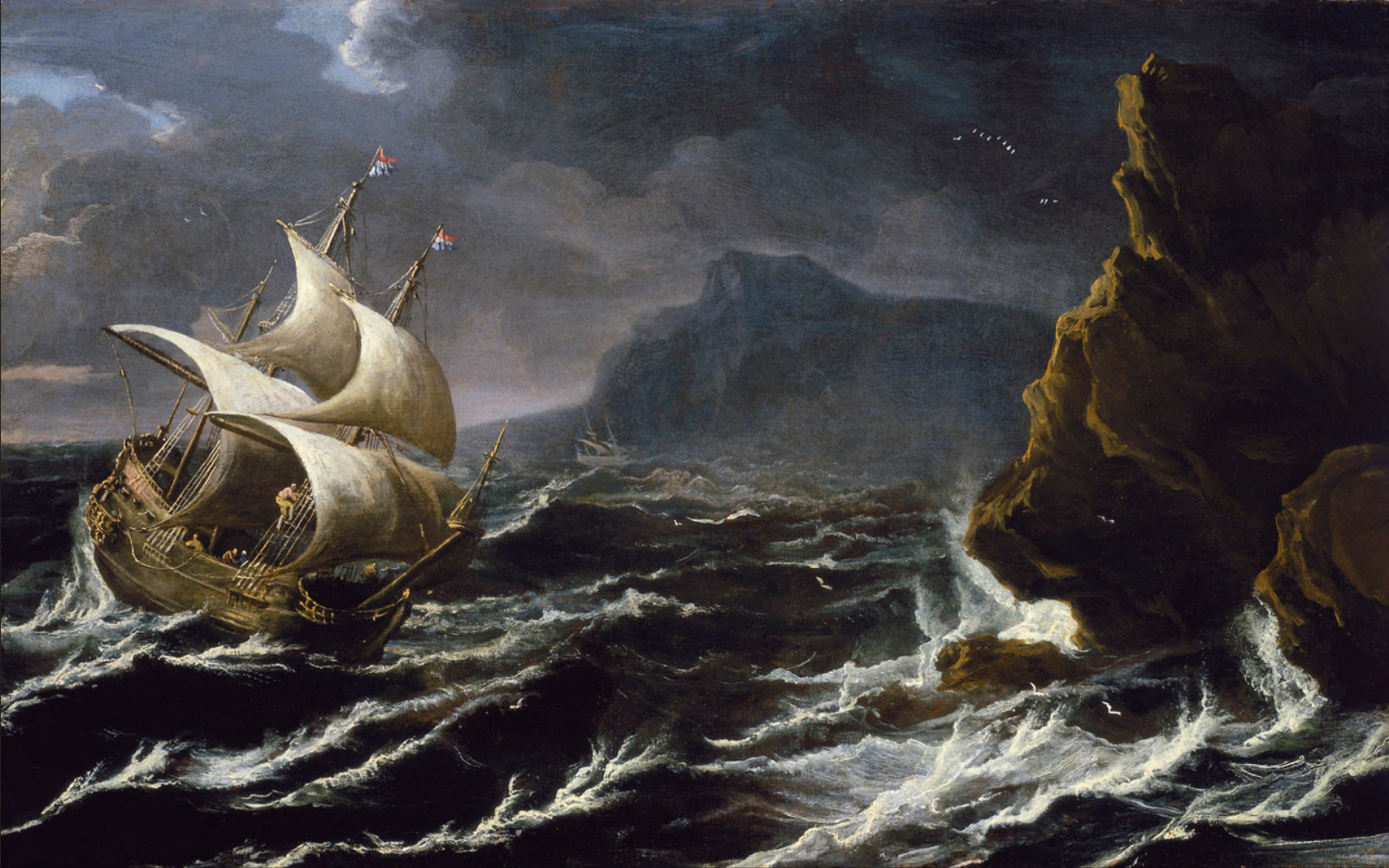
Then the proud waters had gone over our soul. The figure represents the waves as proud, and so they seem to be when they overleap the bulwarks of a frail bark, and threaten every moment to sink her. The opposition of men is usually embittered by a haughty scorn which derides all our godly efforts as mere fanaticism or obstinate ignorance. In all the persecutions of the church a cruel contempt has largely mingled with the oppression, and this is overpowering to the soul.
A commentator
Jamieson, Fausset & Brown1802–1910
Commentary Critical and Explanatory on the Whole Bible (1871)
The epithet proud added to waters denotes insolent enemies. The figure is changed to that of a rapacious wild beast (Ps 3:7), and then of a fowler (Ps 91:3), and complete escape is denoted by breaking the net.
Then the proud waters had gone over our soul. The figure represents the waves as proud, and so they seem to be when they overleap the bulwarks of a frail bark, and threaten every moment to sink her. The opposition of men is usually embittered by a haughty scorn which derides all our godly efforts as mere fanaticism or obstinate ignorance. In all the persecutions of the church a cruel contempt has largely mingled with the oppression, and this is overpowering to the soul. Had not God been with us our disdainful enemies would have made nothing of us, and dashed over us as a mountain torrent sweeps down the side of a hill, driving everything before it. Not only would our goods and possessions have been carried off, but our soul, our courage, our hope would have been borne away by the impetuous assault, and buried beneath the insults of our antagonists. Let us pause here, and as we see what might have been, let us adore the guardian power which has kept us in the flood, and yet above the flood. In our hours of dire peril we must have perished had not our Preserver prevailed for our safe keeping.
Then the proud waters - The proud Haman had nearly brought the flood of desolation over our lives.
1 more voice on this verse
The Nineteenth Century1 voice
A commentator
Albert Barnes1798–1870
Notes, Explanatory and Practical, on the Old and New Testaments (1832-1869)
proposed
Then the proud waters had gone over our soul - Over us. The word proud here is applied to the waters as if raging, swelling, rolling, tumultuous; as if they were self-confident, arrogant, haughty. Such raging billows, as they break and dash upon the shore, are a striking embIem of human passions, whether in an individual, or in a gathering of men - as an army, or a mob. Compare Psa 65:7. This is again an amplification, or an ascent of thought. See the notes at Psa 124:2. It is, however, nothing more than a poetical embellisment, adding intensity to the expression.
The words behind it
6 Hebrew wordsEvery Hebrew word of this verse in the order it stands, with what it means and the door to its own study. The last column counts the times a word stands in the whole Bible: the rarer the word, the more the places it appears belong together.
| Hebrew | Sound | Meaning | Word study | In the Bible |
|---|---|---|---|---|
| אֲ֭זַי | ʾazai | then | H233 → | 3 times |
| עָבַ֣ר | ʾavar | it had passed | H5674 → | 556 times |
| עַל־ | ʾal- | over | H5921 → | 5755 times |
| נַפְשֵׁ֑נוּ | nafshenu | self our | H5315 → | 754 times |
| הַ֝מַּ֗יִם | hamayim | the waters | H4325 → | 581 times |
| הַזֵּֽידוֹנִֽים׃ | hazeidonim | <the> raging | H2121 → |
אֲ֭זַיthen
ʾazaiH233 →3 times
עָבַ֣רit had passed
ʾavarH5674 →556 times
עַל־over
ʾal-H5921 →5755 times
נַפְשֵׁ֑נוּself our
nafshenuH5315 →754 times
הַ֝מַּ֗יִםthe waters
hamayimH4325 →581 times
הַזֵּֽידוֹנִֽים׃<the> raging
hazeidonimH2121 →
A shaded row is a word that stands 400 times or fewer in the Bible.
The walk
8 stopsEach card is a verse this one points to, and under it the verses that one points to in turn. Where several paths arrive at the same place, that place is listed first: the text keeps returning to it.
Through
Jeremiah 5:22Do you not fear Me?” declares the LORD. “Do you not tremble before Me, the One who set the sand as the boundary for the sea, an enduring barrier it cannot cross? The waves…
it leads to
- Proverbs 8:29
when He set a boundary for the sea, so that the waters would not surpass His command, when He marked out the foundations of the earth.
Reached by 2 separate paths from here.
- Job 38:10–11
when I fixed its boundaries and set in place its bars and doors,
- Psalms 104:9
You set a boundary they cannot cross, that they may never again cover the earth.
- Job 26:10
He has inscribed a horizon on the face of the waters at the boundary between light and darkness.
- Deuteronomy 28:58
If you are not careful to observe all the words of this law which are written in this book, that you may fear this glorious and awesome name—the LORD your God—
- Proverbs 8:29
Through
Job 38:11and I declared: ‘You may come this far, but no farther; here your proud waves must stop’?
it leads to
- Psalms 89:9
You rule the raging sea; when its waves mount up, You still them.
- Mark 4:39–41
Then Jesus got up and rebuked the wind and the sea. “Silence!” He commanded. “Be still!” And the wind died down, and it was perfectly calm.
- Psalms 65:6–7
You formed the mountains by Your power, having girded Yourself with might.
- Psalms 89:9
About Psalms
This page draws on Adam Clarke, Commentary on the Bible; Albert Barnes, Notes on the Book of Psalms; Albert Barnes, Notes, Explanatory and Practical, on the Old and New Testaments (1832-1869); Augustine of Hippo, Exposition on Psalm 124; Charles Spurgeon, The Treasury of David; Charles Spurgeon, The Treasury of David, Vol. 6; Jamieson, Fausset & Brown, Commentary Critical and Explanatory on the Whole Bible and John Gill, Exposition of the Old Testament (1748-1763).