
Psalms 19:1
in Psalms 19The heavens declare the glory of God; the skies proclaim the work of His hands.
BSB
The same verse in ASV and KJV ▾
ASV
The heavens declare the glory of God; And the firmament showeth his handiwork.
KJV
The heavens declare the glory of God; and the firmament sheweth his handywork.
⋯
This verse in Psalms 19
Commentary
4 notes on this verseCreation … points to God as its Maker and Artificer, who reigns over creation and over all things, even the Father of our Lord Jesus Christ; whom would-be philosophers turn from to worship and deify the creation that proceeded from him, which yet itself worships and confesses the Lord whom they deny on its account.
This site's exposition
The heavens declare the glory of God
on Psalms 19:1-2
The heavens declare God's glory without words. Day after day and night after night the telling goes on, speech poured out and knowledge revealed by the skies. Verses 1 to 6 are the sky, and verses 7 to 11 are the law.
The record, by era
The Nineteenth Century2 voices
A commentator
Albert Barnes1798–1870
Notes, Explanatory and Practical, on the Old and New Testaments (1832-1869)
The heavens declare the glory of God - They announce, proclaim, make known his glory. The word heavens here refers to the material heavens as they appear to the eye - the region of the sun, moon, and stars. The Hebrew word is used in the Scriptures uniformly in the plural number, though in our common translation the singular number is often used. Gen 1:1, Gen 1:8-9, Gen 1:14, Gen 1:17, Gen 1:20; Gen 6:17; Gen 7:11, Gen 7:19, Gen 7:23; et soepe.
"The heavens declare the glory of God." The book of nature has three leaves, heaven, earth, and sea, of which heaven is the first and the most glorious, and by its aid we are able to see the beauties of the other two. Any book without its first page would be sadly imperfect, and especially the great Natural Bible, since its first pages, the sun, moon, and stars, supply light to the rest of the volume, and are thus the keys, without which the writing which follows would be dark and undiscerned.
The words behind it
8 Hebrew wordsEvery Hebrew word of this verse in the order it stands, with what it means and the door to its own study. The last column counts the times a word stands in the whole Bible: the rarer the word, the more the places it appears belong together.
| Hebrew | Sound | Meaning | Word study | In the Bible |
|---|---|---|---|---|
| הַשָּׁמַ֗יִם | hashamayim | the heavens | H8064 → | 421 times |
| מְֽסַפְּרִ֥ים | mesaperim | [are] recounting | H5608 → | 159 times |
| כְּבֽוֹד־ | kevod- | [the] glory of | H3519 → | 200 times |
| אֵ֑ל | ʾel | God | H410 → | 241 times |
| וּֽמַעֲשֵׂ֥ה | umaaseh | and [the] work of | H4639 → | 236 times |
| יָ֝דָ֗יו | yadav | hands his | H3027 → | 1618 times |
| מַגִּ֥יד | magid | [is] telling | H5046 → | 370 times |
| הָרָקִֽיעַ׃ | harakia' | the firmament | H7549 → |
הַשָּׁמַ֗יִםthe heavens
hashamayimH8064 →421 times
מְֽסַפְּרִ֥ים[are] recounting
mesaperimH5608 →159 times
כְּבֽוֹד־[the] glory of
kevod-H3519 →200 times
אֵ֑לGod
ʾelH410 →241 times
וּֽמַעֲשֵׂ֥הand [the] work of
umaasehH4639 →236 times
יָ֝דָ֗יוhands his
yadavH3027 →1618 times
מַגִּ֥יד[is] telling
magidH5046 →370 times
הָרָקִֽיעַ׃the firmament
harakia'H7549 →
A shaded row is a word that stands 400 times or fewer in the Bible.
The walk
8 stopsEach card is a verse this one points to, and under it the verses that one points to in turn. Where several paths arrive at the same place, that place is listed first: the text keeps returning to it.
Through
Psalms 33:6By the word of the LORD the heavens were made, and all the stars by the breath of His mouth.
it leads to
- Hebrews 11:3
By faith we understand that the universe was formed at God’s command, so that what is seen was not made out of what was visible.
- Job 33:4
The Spirit of God has made me, and the breath of the Almighty gives me life.
- 2 Peter 3:5
But they deliberately overlook the fact that long ago by God’s word the heavens existed and the earth was formed out of water and by water,
- John 1:1–3
In the beginning was the Word, and the Word was with God, and the Word was God.
- Genesis 2:1
Thus the heavens and the earth were completed in all their vast array.
- Hebrews 11:3
Through
Psalms 8:3When I behold Your heavens, the work of Your fingers, the moon and the stars, which You have set in place—
it leads to
- Genesis 1:1
In the beginning God created the heavens and the earth.
- Psalms 33:6
By the word of the LORD the heavens were made, and all the stars by the breath of His mouth.
- Psalms 89:11
The heavens are Yours, and also the earth. The earth and its fullness You founded.
- Genesis 1:1
Where this verse is studied
By subject
Creation34 verses
On this page
What the record shows
2 entries◈What general revelation does and does not showcontested
General revelation shows God's everlasting power and divinity - and, per Faulkner, nothing about the way of salvation; the honest limit on what the stars reveal.
The case against it
The honest limit, and the critique is of over-reach in the other direction as much as this one. Romans 1:20 grounds general revelation in what is made - God's everlasting power and divinity - and stops there. Danny R. Faulkner's point (Answers Research Journal 6, 2013) is that nothing about the way of salvation is included, which is fatal to a theory that requires the constellations to have carried a redemption narrative legible to the patriarchs.
◈The gospel-in-the-stars thesiscontested
God — or, on most tellings, the patriarchs, with Seth and Enoch usually named — originally named the twelve zodiac constellations and their thirty-six decans to encode the plan of redemption, running from Virgo the virgin-born seed through to Leo the conquering Lion of Judah, and this primeval revelation was later corrupted into pagan astrology. The argument appeals to Job 38:32 ("Mazzaroth"), Genesis 1:14 ("for signs") and Psalm 19, and rests its weight on the etymologies of the transmitted star names.
The case against it
Refuted from inside young-earth creationism, which is what makes the critique decisive rather than merely hostile. Danny R. Faulkner holds a doctorate in astronomy and writes for Answers in Genesis: "Is There a Gospel in the Stars?", Journal of Creation 12(2):169-172 (1998), and "A Further Examination of the Gospel in the Stars," Answers Research Journal 6:285-300 (2013) — the second written after Rolleston's long-out-of-print book was republished, so that he could audit the source directly. His findings: Rolleston's star-name etymologies, which carry the entire argument, are questionable at best and most likely simply wrong, since most transmitted star names are medieval Arabic descriptive terms ("the follower," "the tail") rather than primeval Hebrew sermons; Seiss and Bullinger largely embellished Rolleston without independent verification and contradict both the standard sources and each other; and there is no ancient testimony of any kind — Jewish, Christian or pagan — that the zodiac ever carried this meaning. The documented origin of the zodiac is Babylonian, from the MUL.APIN-era catalogues, with meanings unrelated to Rolleston's. Faulkner adds a theological objection: faith comes by hearing the word of Christ (Romans 10:17), and the rulers of this age did not know the hidden wisdom (1 Corinthians 2:8), so redemption was not legibly pre-written in the constellations; the theory also lends cover to astrology, which Scripture condemns (Deuteronomy 18:9-14; Isaiah 47:13-14). His verdict is that however well-intentioned, the theory has serious problems and Christians should abandon it. What survives, and it is not small: the biblical star-texts themselves (Job 38:31-33, Psalm 19:1-6, Genesis 1:14) genuinely affirm that the heavens declare the glory of God. That is Tier A and preachable. The decoded zodiac is not.
About Psalms
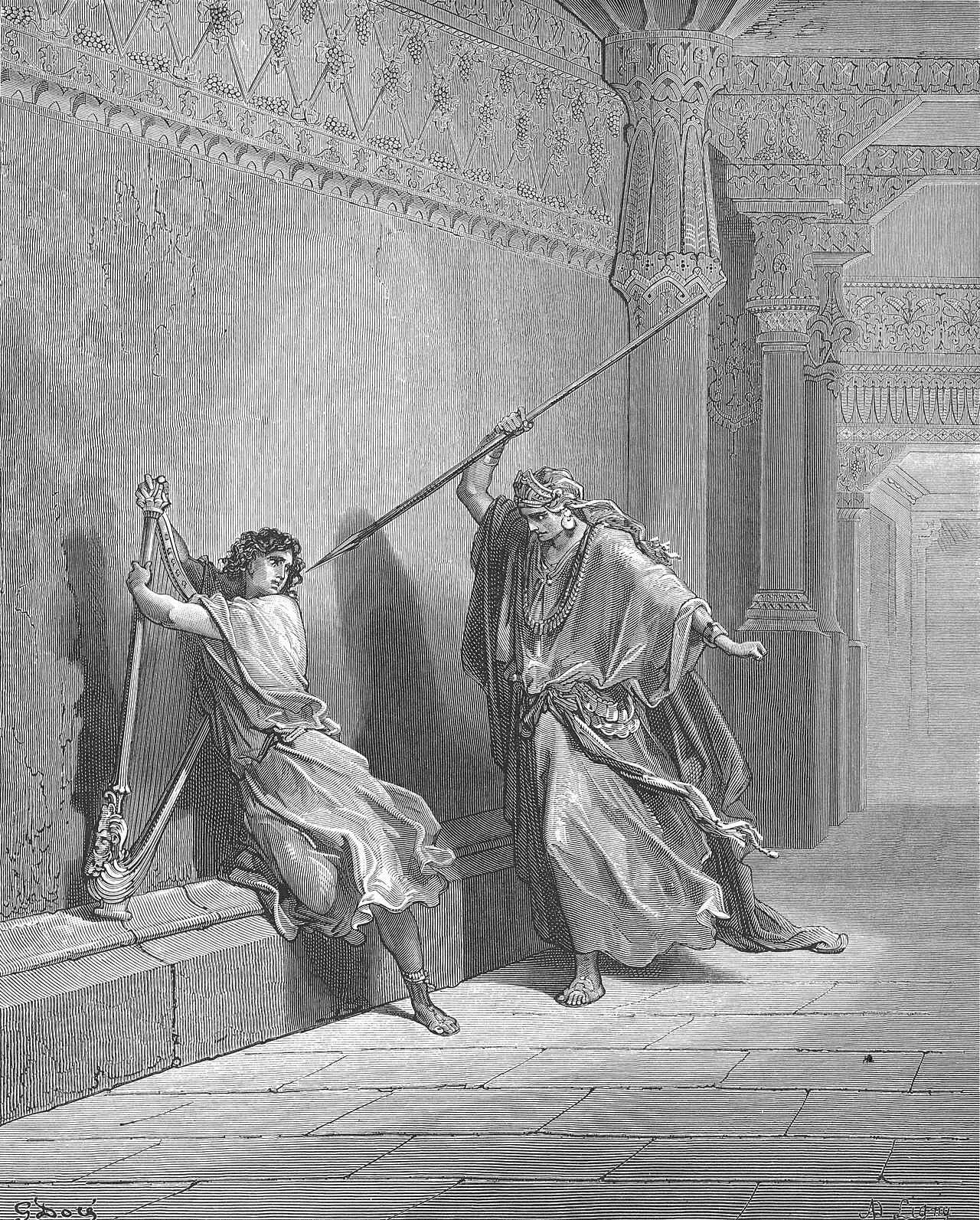
This page draws on Albert Barnes, Notes, Explanatory and Practical, on the Old and New Testaments (1832-1869); Alexander Maclaren, The Psalms, Expositor's Bible; Athanasius of Alexandria, Against the Heathen 27:3-5; Charles Spurgeon, The Treasury of David and Charles Spurgeon, The Treasury of David, Vol. 1.