
Proverbs 31:7
in Proverbs 31Let him drink and forget his poverty, and remember his misery no more.
BSB
The same verse in ASV and KJV ▾
ASV
Let him drink, and forget his poverty, And remember his misery no more.
KJV
Let him drink, and forget his poverty, and remember his misery no more.
⋯
This verse in Proverbs 31
Commentary
6 notes on this verseBut the scope of the place is to show that wine is a cordial, and therefore to be used for want and not for wantonness, by those only that need cordials, as Timothy, who is advised to drink a little wine, only for his stomach's sake and his often infirmities, 1 Tim. v. 23 .
This site's exposition
It is not for kings
on Proverbs 31:4-7
It is not for kings to drink wine, nor for princes strong drink states the counsel plainly: rulers whose task is to judge cannot afford a clouded mind, lest they drink, and forget the law, and pervert the judgment of any of the afflicted. The verses that follow give strong drink to a different use entirely, to him that is ready to perish and to those of heavy hearts, so he may forget his poverty and remember his misery no more, wine as relief for the dying rather than daily counsel for the ruling. The commentators note the contrast is deliberate: the same drink that unfits a king for justice is offered as mercy to a man with nothing left to judge.
The record, by era
The Puritans and the Awakening1 voice
Let him drink, and forget his poverty,....
The Nineteenth Century3 voices
A commentator
Jamieson, Fausset & Brown1802–1910
Commentary Critical and Explanatory on the Whole Bible (1871)
proposed
The proper use of such drinks is to restore tone to feeble bodies and depressed minds (compare Ps 104:15). Open . . . cause--Plead for those who cannot plead for themselves, as the orphan, stranger, &c. (compare Ps 72:12; Isa 1:17). appointed to destruction--who are otherwise ruined by their oppressors (compare Pr 29:14, 16).
A commentator
Charles Spurgeon1834–1892
The Metropolitan Tabernacle Pulpit, Sermon No. 3236: “The Gospel Cordial” (lightly modernized text, CCEL edition) · Written before 1892.
proposed
THESE somewhat singular sentences were spoken by the mother of Lemuel to her son, who was probably Solomon. She had already said to him, "It is not for kings, O Lemuel, it is not for kings to drink wine; nor for princes strong drink: lest they drink and forget the Law, and pervert the judgment of any of the afflicted."
A commentator
Charles Spurgeon1834–1892
The Metropolitan Tabernacle Pulpit, Sermon No. 3236: “The Gospel Cordial” (lightly modernized text, CCEL edition) · Written before 1892.
proposed
THESE somewhat singular sentences were spoken by the mother of Lemuel to her son, who was probably Solomon. She had already said to him, "It is not for kings, O Lemuel, it is not for kings to drink wine; nor for princes strong drink: lest they drink and forget the Law, and pervert the judgment of any of the afflicted." But such a king as Solomon must have had an abundant store of wine of all kinds, so his mother urged him to give it to the sick and the sad and the poor who needed it more than he did. The Jews were in the habit of giving a cup of strong drink, usually with some potent drug in it, to stupefy those who were about to be executed. Perhaps that is the meaning of the words, "Give strong drink unto him that is ready to perish." We know, too, how persons who have been very weak and ill, on the very borders of the grave, have often been medicinally relieved by wine given to them which they could not possibly purchase for themselves. I believe this is the literal meaning of the text and that if any man should be wicked enough to draw from it the inference that he would be able to forget his misery and poverty by drinking—he would soon find himself woefully mistaken, for if he had one misery before—he would have 10 miseries afterwards! And if he were previously poor, he would be in still greater poverty afterwards. Those who fly to the bottle for consolation might as soon fly to Hell to find a Heaven and, instead of helping them to forget their poverty, drunkenness would only sink them still more deeply in the mire! I am going to use my text spiritually, for I believe it has a far deeper meaning than that which glistens upon its surface.
The words behind it
7 Hebrew wordsEvery Hebrew word of this verse in the order it stands, with what it means and the door to its own study. The last column counts the times a word stands in the whole Bible: the rarer the word, the more the places it appears belong together.
| Hebrew | Sound | Meaning | Word study | In the Bible |
|---|---|---|---|---|
| יִ֭שְׁתֶּה | yishteh | he will drink | H8354 → | 217 times |
| וְיִשְׁכַּ֣ח | veyishkach | and he may forget | H7911 → | 102 times |
| רִישׁ֑וֹ | risho | poverty his | H7389 → | 7 times |
| וַ֝עֲמָל֗וֹ | vaamalo | and trouble his | H5999 → | |
| לֹ֣א | lo' | not | H3808 → | 5168 times |
| יִזְכָּר־ | yizkor- | he will remember | H2142 → | |
| עֽוֹד׃ | od | again | H5750 → | 490 times |
יִ֭שְׁתֶּהhe will drink
yishtehH8354 →217 times
וְיִשְׁכַּ֣חand he may forget
veyishkachH7911 →102 times
רִישׁ֑וֹpoverty his
rishoH7389 →7 times
וַ֝עֲמָל֗וֹand trouble his
vaamaloH5999 →
לֹ֣אnot
lo'H3808 →5168 times
יִזְכָּר־he will remember
yizkor-H2142 →
עֽוֹד׃again
odH5750 →490 times
A shaded row is a word that stands 400 times or fewer in the Bible.
The walk
5 stopsEach card is a verse this one points to, and under it the verses that one points to in turn. Where several paths arrive at the same place, that place is listed first: the text keeps returning to it.
Through
Ephesians 5:18Do not get drunk on wine, which leads to reckless indiscretion. Instead, be filled with the Spirit.
it leads to
- Luke 1:15
for he will be great in the sight of the Lord. He shall never take wine or strong drink, and he will be filled with the Holy Spirit even from his mother’s womb.
- Proverbs 20:1
Wine is a mocker, strong drink is a brawler, and whoever is led astray by them is not wise.
- Romans 13:13
Let us behave decently, as in the daytime, not in carousing and drunkenness, not in sexual immorality and debauchery, not in dissension and jealousy.
- Galatians 5:21–25
and envy; drunkenness, orgies, and the like. I warn you, as I did before, that those who practice such things will not inherit the kingdom of God.
- Acts 11:24
Barnabas was a good man, full of the Holy Spirit and faith, and a great number of people were brought to the Lord.
- Luke 1:15
Where this verse is studied
On this page
About Proverbs
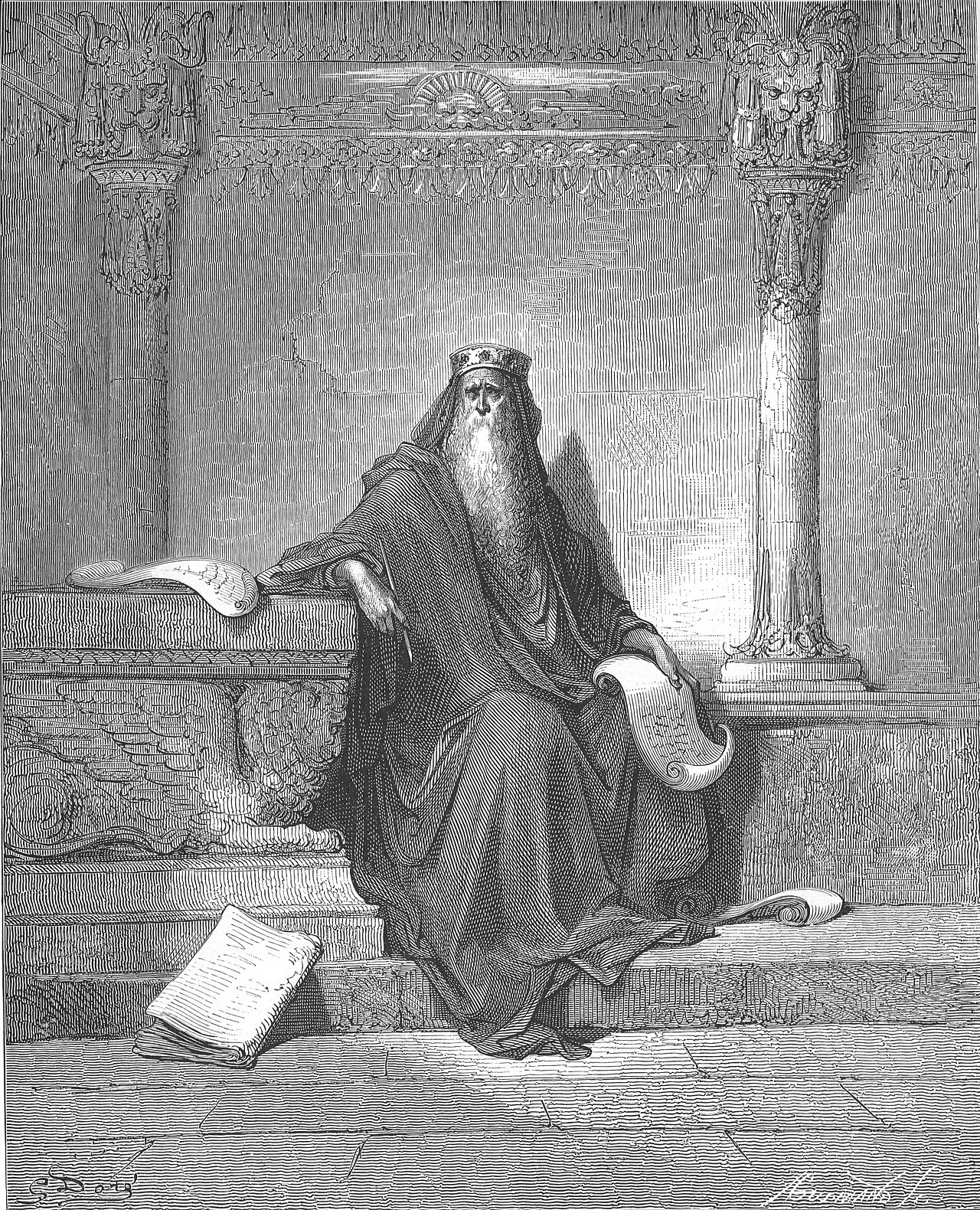
This page draws on Adam Clarke, Commentary on the Bible; Charles Spurgeon, The Metropolitan Tabernacle Pulpit, Sermon No. 3236: “The Gospel Cordial” (lightly modernized text, CCEL edition); Jamieson, Fausset & Brown, Commentary Critical and Explanatory on the Whole Bible; John Gill, Exposition of the Old Testament (1748-1763) and Matthew Henry, Commentary on the Whole Bible.