
Proverbs 31:11
in Proverbs 31The heart of her husband trusts in her, and he lacks nothing of value.
BSB
The same verse in ASV and KJV ▾
ASV
The heart of her husband trusteth in her, And he shall have no lack of gain.
KJV
The heart of her husband doth safely trust in her, so that he shall have no need of spoil.
⋯
This verse in Proverbs 31
Commentary
8 notes on this verseThis site's exposition
Who can find a virtuous woman
on Proverbs 31:10-13
Who can find a virtuous woman? for her price is far above rubies opens the poem the mother has been building toward, and the Hebrew text is an alphabet acrostic, twenty two verses for the twenty two letters, a structural fact the bench states rather than a coincidence of style. Her husband's heart safely trusts her, and she does him good and not evil all the days of her life, the poem's frame before a single deed is listed. The first labor named is textile work, seeking wool and flax and working willingly with her hands, willingly repeating the same idea the poem returns to, a heart that works rather than merely obeys.
The record, by era
The Church Fathers1 voice
"The heart of her husband is confident about her." He certainly is confident, and he has taught us to be confident too. He commissioned the church, you see, to the ends of the earth, among all nations, from sea to sea. If she was not going to persevere to the end, her husband's heart would not be confident about her. So she despoils the world, spread throughout it everywhere; on all sides she plunders trophies from the devil.
The Medieval Church1 voice
"The heart of her husband trusts in her," etc. The husband of the holy Church is her Lord and Redeemer, who also deigned to become her price. Whence the Apostle also says to the believers, "For I have betrothed you to one husband, to present …
The Puritans and the Awakening2 voices
3 Give not thy strength unto women, nor thy ways to that which destroyeth kings. 4 It is not for kings, O Lemuel, it is not for kings to drink wine; nor for princes strong drink: 5 Lest they drink, and forget the law, and pervert the judgment of any of the afflicted. 6 Give strong drink unto him that is ready to perish, and wine unto those that be of heavy hearts.
quarantine:scripture (2026-07-29) — verbatim-scripture
The heart of her husband doth safely trust in her,....
The Nineteenth Century1 voice
A commentator
Jamieson, Fausset & Brown1802–1910
Commentary Critical and Explanatory on the Whole Bible (1871)
proposed
In Hebrew the verses begin with the letters of the Hebrew alphabet in order (compare Introduction to Poetical Books). Who . . . woman--The question implies that such are rare, though not entirely wanting (compare Pr 18:22; 19:14). virtuous--literally, "of strength," that is, moral courage (compare Pr 12:4;
quarantine:debris (2026-07-29) — unbalanced-parens
2 more voices on this verse
The Nineteenth Century2 voices
The heart of her husband - 3. She is an unspotted wife. The heart of her husband doth safely trust in her - he knows she will take care that a proper provision is made for his household, and will not waste any thing. He has no need for spoil - he is not obliged to go out on predatory excursions, to provide for his family, at the expense of the neighboring tribes.
A commentator
Albert Barnes1798–1870
Notes, Explanatory and Practical, on the Old and New Testaments (1832-1869)
proposed
No need of spoil - Better, no lack of gain, lack of honest gain.
How the passage was read
What the Jewish commentators add
and he will lack no gain lit. no plunder, i.e., he will lack no good.
This section is reception history: how the passage was read and kept in the Jewish tradition. Where a reading parts from an essential of the Christian faith, the section says so at that point.
Texts and citation data: Sefaria; each excerpt follows its version’s licence. 5 further sources are cited on this chapter that carry no English text this site may quote or only restate the verse.
The words behind it
7 Hebrew wordsEvery Hebrew word of this verse in the order it stands, with what it means and the door to its own study. The last column counts the times a word stands in the whole Bible: the rarer the word, the more the places it appears belong together.
| Hebrew | Sound | Meaning | Word study | In the Bible |
|---|---|---|---|---|
| בָּ֣טַח | batach | it trusts | H982 → | 120 times |
| בָּ֭הּ | bah | in her | ||
| לֵ֣ב | lev | [the] heart of | H3820 → | 595 times |
| בַּעְלָ֑הּ | ba'lah | husband her | H1167 → | 84 times |
| וְ֝שָׁלָ֗ל | veshalal | and gain | H7998 → | 73 times |
| לֹ֣א | lo' | not | H3808 → | 5168 times |
| יֶחְסָֽר׃ | yechsar | he lacks | H2637 → |
בָּ֣טַחit trusts
batachH982 →120 times
בָּ֭הּin her
bah
לֵ֣ב[the] heart of
levH3820 →595 times
בַּעְלָ֑הּhusband her
ba'lahH1167 →84 times
וְ֝שָׁלָ֗לand gain
veshalalH7998 →73 times
לֹ֣אnot
lo'H3808 →5168 times
יֶחְסָֽר׃he lacks
yechsarH2637 →
A shaded row is a word that stands 400 times or fewer in the Bible.
Where this verse is studied
On this page
About Proverbs
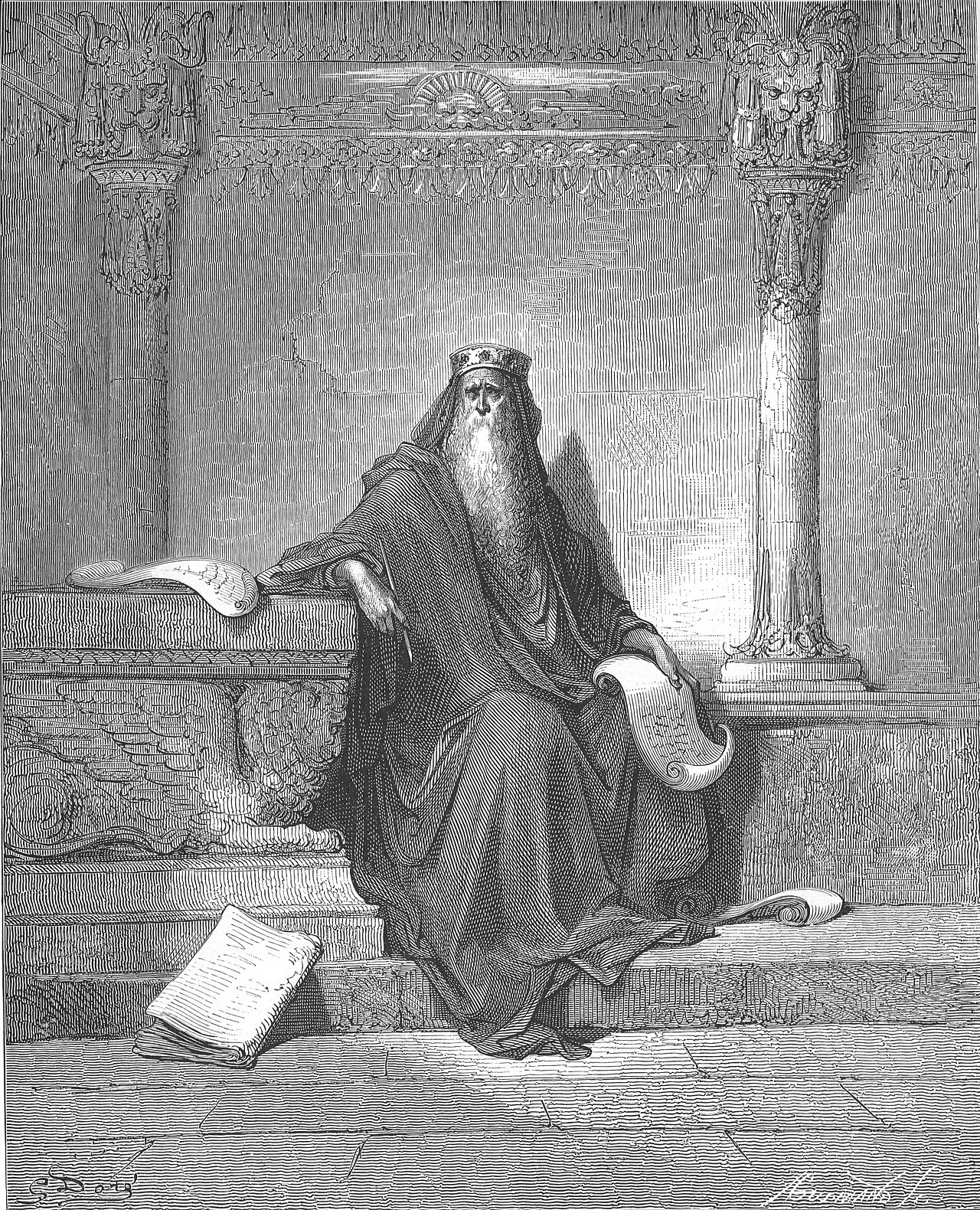
This page draws on 9 works. Open the list of works
This page draws on Adam Clarke, Commentary on the Bible; Albert Barnes, Notes, Explanatory and Practical, on the Old and New Testaments (1832-1869); Augustine of Hippo, SERMON 37:4-5; Bede, Commentary on Proverbs; Charles Bridges, An Exposition of the Book of Proverbs; Franz Delitzsch, Biblical Commentary on the Proverbs of Solomon; Jamieson, Fausset & Brown, Commentary Critical and Explanatory on the Whole Bible; John Gill, Exposition of the Old Testament (1748-1763) and Matthew Henry, Commentary on the Whole Bible.