
Nehemiah 3:30
in Nehemiah 3Next to him, Hananiah son of Shelemiah, as well as Hanun the sixth son of Zalaph, repaired another section. Next to them, Meshullam son of Berechiah made repairs opposite his own quarters.
BSB
The same verse in ASV and KJV ▾
ASV
After him repaired Hananiah the son of Shelemiah, and Hanun the sixth son of Zalaph, another portion. After him repaired Meshullam the son of Berechiah over against his chamber.
KJV
After him repaired Hananiah the son of Shelemiah, and Hanun the sixth son of Zalaph, another piece. After him repaired Meshullam the son of Berechiah over against his chamber.
⋯
This verse in Nehemiah 3
Commentary
7 notes on this verseWhen a general good work is to be done each should apply himself to that part of it that falls nearest to him and is within his reach. If every one will sweep before his own door, the street will be clean; if every one will mend one, we shall be all mended.
This site's exposition
From above the horse gate
on Nehemiah 3:28-32
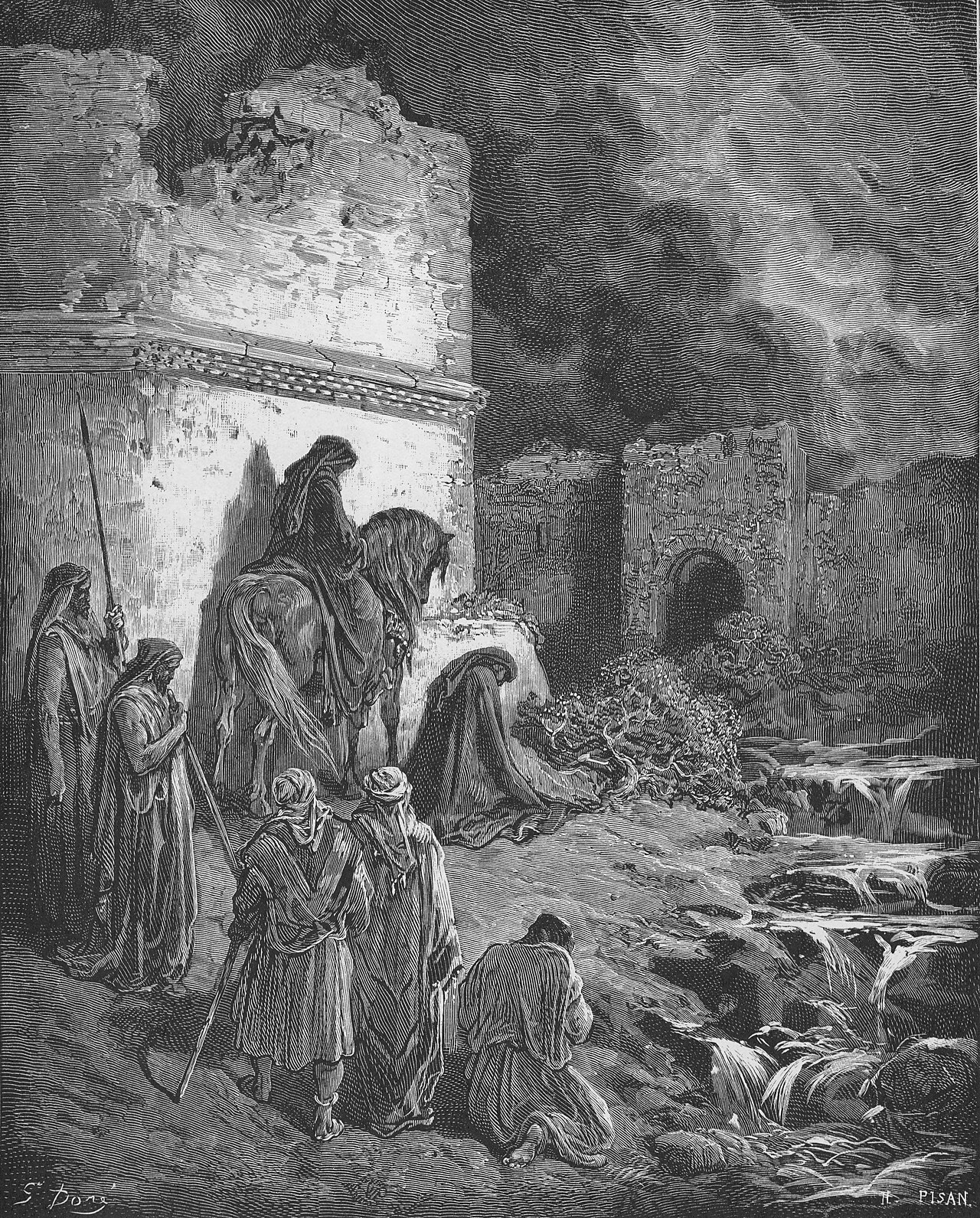
The priests repair every one over against his house, the keeper of the east gate takes his stretch, and the goldsmiths and the merchants carry the wall from the corner back to the sheep gate where verse 1 began: the loop closes, and the map is complete. Guilds and priesthood share one wall, and the last crew named is tradesmen finishing what the high priest started. The chapter that looks like a list is the book's argument in miniature, the whole city building, each at his own place, until the circuit meets itself.
The record, by era
The Puritans and the Awakening5 voices
In doing that which is good we need not stay to see our elders go before us; if they decline it, it does not therefore follow that we must. Thus the younger brother, if he be the better man, and does God and his generation better service, is indeed the better gentleman; those are most honourable that are most useful.
They did not think their callings excused them, nor plead that they could not leave their shops to attend the public business, knowing that what they lost would certainly be made up to them by the blessing of God upon their callings. Some ladies are spoken of as helping forward this work-- Shallum and his daughters (
quarantine:debris (2026-07-29) — unbalanced-parens
), and so they brought their work quite round the city. The Rebuilding of the Wall. 1 Then Eliashib the high priest rose up with his brethren the priests, and they builded the sheep gate; they sanctified it, and set up the doors of it; even unto the tower of Meah they sanctified it, unto the tower of Hananeel.
quarantine:debris,scripture (2026-07-29) — leading-punctuation+unbalanced-parens; scripture-overlap:82%@v1-3
The sixth son of Zalaph - It seems, his five elder brethren, laid not their hands to the work. But in doing that which is good, we need not stay to see our betters go before us.
After him repaired Hananiah the son of Shelemiah, and Hanun the sixth son of Zalaph, another piece,.... This last man had six sons; but only his youngest son wrought at this work, which is observed to his great commendation: after him repaired Shelemiah the son of Berechiah, over against his chamber; the same as in Neh 3:4 who having finished what he engaged in there, took his part where his chamber was, and repaired over against that.
The words behind it
18 Hebrew wordsEvery Hebrew word of this verse in the order it stands, with what it means and the door to its own study. The last column counts the times a word stands in the whole Bible: the rarer the word, the more the places it appears belong together.
| Hebrew | Sound | Meaning | Word study | In the Bible |
|---|---|---|---|---|
| אַחֲרָ֨יו | ʾachareiv | after him | H310 → | 715 times |
| הֶחֱזִ֜יק | hechezik | he repaired | H2388 → | 291 times |
| חֲנַנְיָ֣ה | chananyah | Hananiah | H2608 → | 29 times |
| בֶן־ | ven- | [the] son of | H1121 → | 4930 times |
| שֶׁלֶמְיָ֗ה | shelemyah | Shelemiah | H8018 → | |
| וְחָנ֧וּן | vechanun | and Hanun | H2586 → | |
| בֶּן־ | ben- | [the] son of | H1121 → | 4930 times |
| צָלָ֛ף | tzalaf | Zalaph | H6764 → | |
| הַשִּׁשִּׁ֖י | hashishi | <the> sixth | H8345 → | |
| מִדָּ֣ה | midah | a measured portion | H4060 → | 55 times |
| שֵׁנִ֑י ס | sheni | second | H8145 → | 156 times |
| אַחֲרָ֣יו | ʾacharav | after him | H310 → | 715 times |
| הֶחֱזִ֗יק | hechezik | he repaired | H2388 → | 291 times |
| מְשֻׁלָּם֙ | meshulam | Meshullam | H4918 → | 25 times |
| בֶּן־ | ben- | [the] son of | H1121 → | 4930 times |
| בֶּ֣רֶכְיָ֔ה | berekhyah | Berekiah | H1296 → | 11 times |
| נֶ֖גֶד | neged | before | H5048 → | 151 times |
| נִשְׁכָּתֽוֹ׃ ס | nishkato | room his | H5393 → | 3 times |
אַחֲרָ֨יוafter him
ʾachareivH310 →715 times
הֶחֱזִ֜יקhe repaired
hechezikH2388 →291 times
חֲנַנְיָ֣הHananiah
chananyahH2608 →29 times
בֶן־[the] son of
ven-H1121 →4930 times
שֶׁלֶמְיָ֗הShelemiah
shelemyahH8018 →
וְחָנ֧וּןand Hanun
vechanunH2586 →
בֶּן־[the] son of
ben-H1121 →4930 times
צָלָ֛ףZalaph
tzalafH6764 →
הַשִּׁשִּׁ֖י<the> sixth
hashishiH8345 →
מִדָּ֣הa measured portion
midahH4060 →55 times
שֵׁנִ֑י סsecond
sheniH8145 →156 times
אַחֲרָ֣יוafter him
ʾacharavH310 →715 times
הֶחֱזִ֗יקhe repaired
hechezikH2388 →291 times
מְשֻׁלָּם֙Meshullam
meshulamH4918 →25 times
בֶּן־[the] son of
ben-H1121 →4930 times
בֶּ֣רֶכְיָ֔הBerekiah
berekhyahH1296 →11 times
נֶ֖גֶדbefore
negedH5048 →151 times
נִשְׁכָּתֽוֹ׃ סroom his
nishkatoH5393 →3 times
A shaded row is a word that stands 400 times or fewer in the Bible.
Where this verse is studied
On this page
Studies1
About Nehemiah
This page draws on John Gill, Exposition of the Old Testament (1748-1763); John Wesley, Explanatory Notes upon the Old Testament; Keil, The Books of Ezra, Nehemiah, and Esther and Matthew Henry, Commentary on the Whole Bible.