
Nehemiah 3:2
in Nehemiah 3The men of Jericho built next to Eliashib, and Zaccur son of Imri built next to them.
BSB
The same verse in ASV and KJV ▾
ASV
And next unto him builded the men of Jericho. And next to them builded Zaccur the son of Imri.
KJV
And next unto him builded the men of Jericho. And next to them builded Zaccur the son of Imri.
⋯
This verse in Nehemiah 3
Commentary
4 notes on this verseA commentator
Albert Barnes1798–1870
Notes, Explanatory and Practical, on the Old and New Testaments (1832-1869)
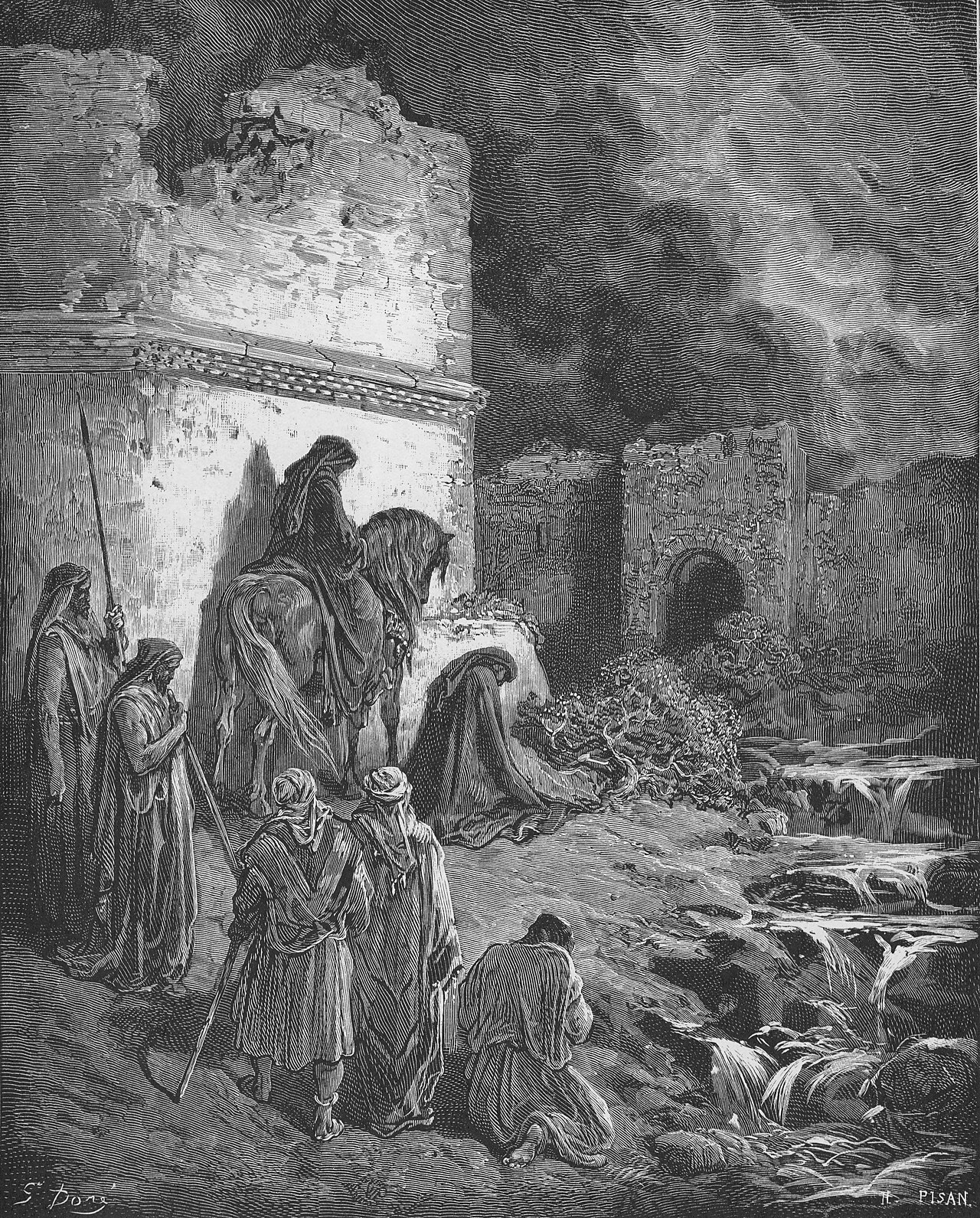
The people of each provincial town were set to work for the most part on the portion of the wall nearest their city. Thus, “the men of Jericho,” were employed at the northeast corner of Jerusalem.
This site's exposition
they builded the sheep gate
on Nehemiah 3:1-2
The high priest builds first, and the sheep gate he raises is the gate the offerings entered by, nearest the temple, the only stretch of the whole wall the chapter says was SANCTIFIED, and it says so twice. The circuit that begins here will close here at verse 32, so the chapter is a map of Jerusalem walked clockwise, and its first and last stone belong to worship. Leadership in this roll means a trowel in the high priest's hand.
The record, by era
The Puritans and the Awakening1 voice
And next unto him builded the men of Jericho,.... The posterity of those that formerly inhabited that city; these began where Eliashib and the priests ended, and went on from thence: and next to them; or rather "to him", the high priest: builded Zaccur the son of Imri; who probably was the chief of the men of Jericho.
The Nineteenth Century1 voice
A commentator
Jamieson, Fausset & Brown1802–1910
Commentary Critical and Explanatory on the Whole Bible (1871)
proposed
next unto him builded the men of Jericho, &c.--The wall was divided into portions, one of which was assigned respectively to each of the great families which had returned from the captivity. This distribution, by which the building was carried on in all parts simultaneously with great energy, was eminently favorable to despatch.
quarantine:debris (2026-07-29) — starts-lowercase
The words behind it
11 Hebrew wordsEvery Hebrew word of this verse in the order it stands, with what it means and the door to its own study. The last column counts the times a word stands in the whole Bible: the rarer the word, the more the places it appears belong together.
| Hebrew | Sound | Meaning | Word study | In the Bible |
|---|---|---|---|---|
| וְעַל־ | veal- | and on | H5921 → | 5755 times |
| יָד֥וֹ | yado | hand his | H3027 → | 1618 times |
| בָנ֖וּ | vanu | they built | H1129 → | 376 times |
| אַנְשֵׁ֣י | ʾanshei | [the] men of | H582 → | 566 times |
| יְרֵח֑וֹ ס | yerecho | Jericho | H3405 → | |
| וְעַל־ | veal- | and on | H5921 → | 5755 times |
| יָד֣וֹ | yado | hand his | H3027 → | 1618 times |
| בָנָ֔ה | vanah | he built | H1129 → | 376 times |
| זַכּ֖וּר | zakur | Zaccur | H2139 → | 10 times |
| בֶּן־ | ben- | [the] son of | H1121 → | 4930 times |
| אִמְרִֽי׃ ס | ʾimri | Imri | H566 → |
וְעַל־and on
veal-H5921 →5755 times
יָד֥וֹhand his
yadoH3027 →1618 times
בָנ֖וּthey built
vanuH1129 →376 times
אַנְשֵׁ֣י[the] men of
ʾansheiH582 →566 times
יְרֵח֑וֹ סJericho
yerechoH3405 →
וְעַל־and on
veal-H5921 →5755 times
יָד֣וֹhand his
yadoH3027 →1618 times
בָנָ֔הhe built
vanahH1129 →376 times
זַכּ֖וּרZaccur
zakurH2139 →10 times
בֶּן־[the] son of
ben-H1121 →4930 times
אִמְרִֽי׃ סImri
ʾimriH566 →
A shaded row is a word that stands 400 times or fewer in the Bible.
The walk
7 stopsEach card is a verse this one points to, and under it the verses that one points to in turn. Where several paths arrive at the same place, that place is listed first: the text keeps returning to it.
Through
Ezra 2:34the men of Jericho, 345;
it leads to
- 1 Kings 16:34
In Ahab’s days, Hiel the Bethelite rebuilt Jericho. At the cost of Abiram his firstborn he laid its foundation, and at the cost of Segub his youngest he set up its gates, according to…
- Nehemiah 7:36
the men of Jericho, 345;
- 2 Chronicles 28:15
Then the men who were designated by name arose, took charge of the captives, and provided from the plunder clothing for the naked. They clothed them, gave them sandals and food and drink, anointed…
- 1 Kings 16:34
Through
Nehemiah 10:12Zaccur, Sherebiah, Shebaniah,
it leads to
- Nehemiah 12:8
The Levites were Jeshua, Binnui, Kadmiel, Sherebiah, Judah, and Mattaniah, who, with his associates, led the songs of thanksgiving.
- Nehemiah 8:7
The Levites—Jeshua, Bani, Sherebiah, Jamin, Akkub, Shabbethai, Hodiah, Maaseiah, Kelita, Azariah, Jozabad, Hanan, and Pelaiah—instructed the people in the Law as they stood in their places.
- Nehemiah 9:4
And the Levites—Jeshua, Bani, Kadmiel, Shebaniah, Bunni, Sherebiah, Bani, and Chenani—stood on the raised platform and cried out in a loud voice to the LORD their God.
- Nehemiah 12:8
Through
Nehemiah 7:36the men of Jericho, 345;
it leads to
- Ezra 2:34
the men of Jericho, 345;
- Ezra 2:34
Where this verse is studied
On this page
Studies1
About Nehemiah
Who and where
1 name in this verse with a page on the site.
This page draws on Albert Barnes, Notes, Explanatory and Practical, on the Old and New Testaments (1832-1869); Jamieson, Fausset & Brown, Commentary Critical and Explanatory on the Whole Bible; John Gill, Exposition of the Old Testament (1748-1763); Keil, The Books of Ezra, Nehemiah, and Esther and W. F. Adeney, Ezra, Nehemiah and Esther (Expositor's Bible).