
Nehemiah 3:18
in Nehemiah 3Next to him, their countrymen made repairs under Binnui son of Henadad, ruler of the other half-district of Keilah.
BSB
The same verse in ASV and KJV ▾
ASV
After him repaired their brethren, Bavvai the son of Henadad, the ruler of half the district of Keilah.
KJV
After him repaired their brethren, Bavai the son of Henadad, the ruler of the half part of Keilah.
⋯
This verse in Nehemiah 3
Commentary
4 notes on this verseThis site's exposition
Nehemiah the son of Azbuk
on Nehemiah 3:16-27
A second Nehemiah, son of Azbuk, repairs to the place over against the sepulchres of David and the house of the mighty, the roll passing David's tombs and his guard-house in one clause. Through this stretch the record's quiet principle emerges and repeats: men repair over against their own houses, Levites, priests and Nethinims each by their dwelling, responsibility mapped to residence. The Tekoites appear a second time at verse 27, the commoners doubling the portion their nobles refused.
The record, by era
The Puritans and the Awakening3 voices
Perhaps the Persian government would not entrust any one with a strong city, but appointed two to be a watch upon each other. Here is a just reproach fastened upon the nobles of Tekoa, that they put not their necks to the work of their Lord (
quarantine:debris (2026-07-29) — unbalanced-parens
They did not think their callings excused them, nor plead that they could not leave their shops to attend the public business, knowing that what they lost would certainly be made up to them by the blessing of God upon their callings. Some ladies are spoken of as helping forward this work-- Shallum and his daughters (
quarantine:debris (2026-07-29) — unbalanced-parens
After him repaired their brethren,.... Either the brethren of the two before named particularly, or the Levites their brethren in general, as Jarchi: Bavai, the son of Henadad, the ruler of the half part of Keilah; the other half of that place.
The words behind it
10 Hebrew wordsEvery Hebrew word of this verse in the order it stands, with what it means and the door to its own study. The last column counts the times a word stands in the whole Bible: the rarer the word, the more the places it appears belong together.
| Hebrew | Sound | Meaning | Word study | In the Bible |
|---|---|---|---|---|
| אַחֲרָיו֙ | ʾacharav | after him | H310 → | 715 times |
| הֶחֱזִ֣יקוּ | hecheziku | they repaired | H2388 → | 291 times |
| אֲחֵיהֶ֔ם | ʾacheihem | brothers their | H251 → | 630 times |
| בַּוַּ֖י | bavai | Bavvai | H942 → | |
| בֶּן־ | ben- | [the] son of | H1121 → | 4930 times |
| חֵנָדָ֑ד | chenadad | Henadad | H2582 → | 4 times |
| שַׂ֕ר | sar | [the] official of | H8269 → | 421 times |
| חֲצִ֖י | chatzi | <the> half of | H2677 → | 125 times |
| פֶּ֥לֶךְ | pelekh | [the] district of | H6418 → | 10 times |
| קְעִילָֽה׃ ס | keilah | Keilah | H7084 → |
אַחֲרָיו֙after him
ʾacharavH310 →715 times
הֶחֱזִ֣יקוּthey repaired
hechezikuH2388 →291 times
אֲחֵיהֶ֔םbrothers their
ʾacheihemH251 →630 times
בַּוַּ֖יBavvai
bavaiH942 →
בֶּן־[the] son of
ben-H1121 →4930 times
חֵנָדָ֑דHenadad
chenadadH2582 →4 times
שַׂ֕ר[the] official of
sarH8269 →421 times
חֲצִ֖י<the> half of
chatziH2677 →125 times
פֶּ֥לֶךְ[the] district of
pelekhH6418 →10 times
קְעִילָֽה׃ סKeilah
keilahH7084 →
A shaded row is a word that stands 400 times or fewer in the Bible.
Where this verse is studied
On this page
Studies1
About Nehemiah
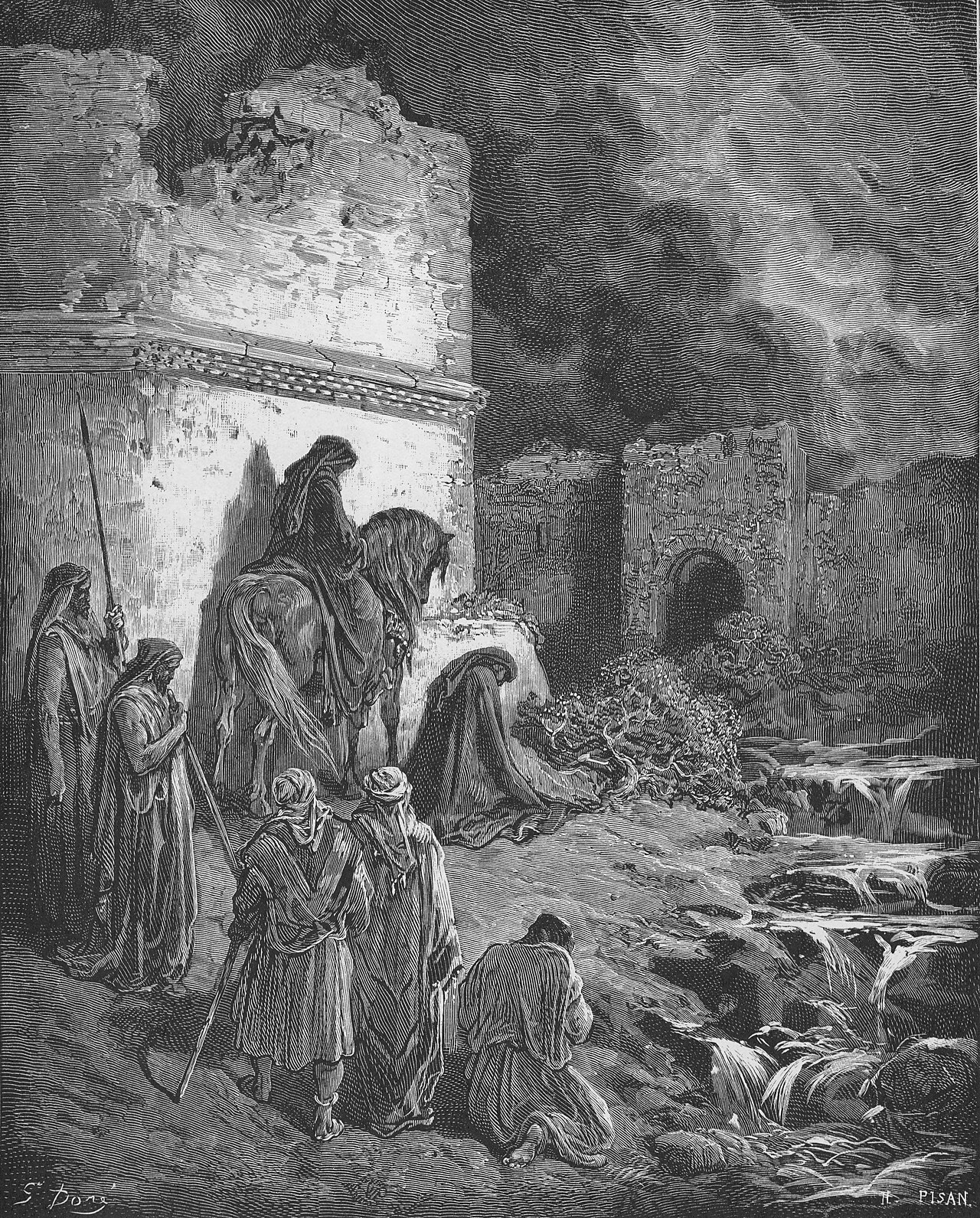
This page draws on John Gill, Exposition of the Old Testament; John Gill, Exposition of the Old Testament (1748-1763); Matthew Henry, Commentary on the Whole Bible and W. F. Adeney, Ezra, Nehemiah and Esther (Expositor's Bible).