
Nehemiah 2:3
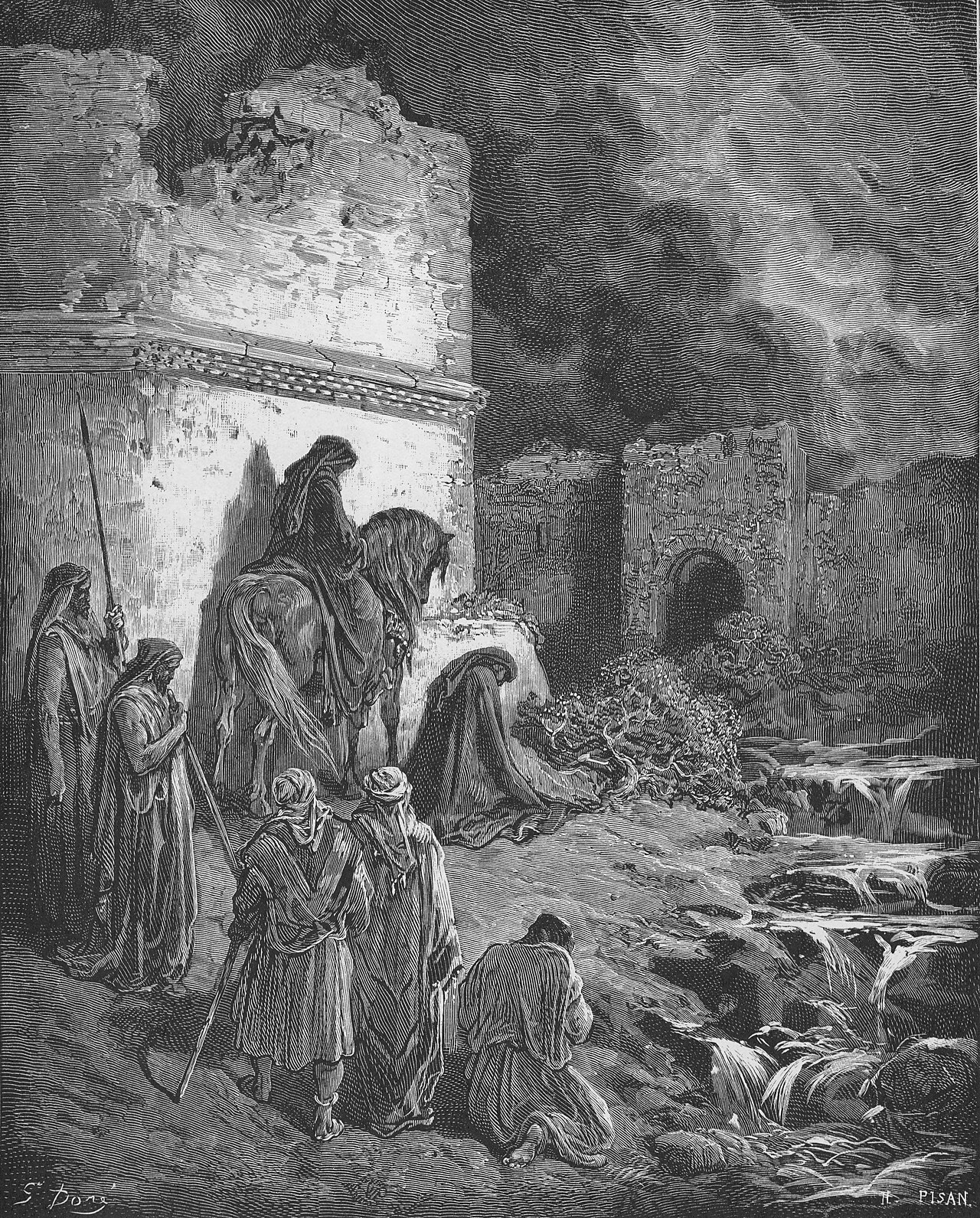
in Nehemiah 2and replied to the king, “May the king live forever! Why should I not be sad when the city where my fathers are buried lies in ruins, and its gates have been destroyed by fire?”
BSB
The same verse in ASV and KJV ▾
ASV
And I said unto the king, Let the king live for ever: why should not my countenance be sad, when the city, the place of my fathers’ sepulchres, lieth waste, and the gates thereof are consumed with fire?
KJV
And said unto the king, Let the king live for ever: why should not my countenance be sad, when the city, the place of my fathers’ sepulchres, lieth waste, and the gates thereof are consumed with fire?
⋯
This verse in Nehemiah 2
Commentary
2 notes on this verseA commentator
Albert Barnes1798–1870
Notes, Explanatory and Practical, on the Old and New Testaments (1832-1869)
The city ... of my fathers’ sepulchres - We may conclude from this that Nehemiah was of the tribe of Judah, as Eusebius and Jerome say that he was.
This site's exposition
the place of my fathers’ sepulchres
Nehemiah answers with a courtier's blessing and a mourner's honesty together: Let the king live for ever, then the true cause, the place of my fathers’ sepulchres, lieth waste, and the gates thereof are consumed with fire. Ancient peoples treated tombs as sacred ground, so naming the sepulchres reached the king where an appeal to politics alone could not. Grief for a ruined city, not personal want, is the reason Nehemiah gives, the same grief that drove the prayer of chapter one.
The words behind it
18 Hebrew wordsEvery Hebrew word of this verse in the order it stands, with what it means and the door to its own study. The last column counts the times a word stands in the whole Bible: the rarer the word, the more the places it appears belong together.
| Hebrew | Sound | Meaning | Word study | In the Bible |
|---|---|---|---|---|
| וָאֹמַ֣ר | vaomar | and I said | H559 → | 5305 times |
| לַמֶּ֔לֶךְ | lamelekh | to the king | H4428 → | 2525 times |
| הַמֶּ֖לֶךְ | hamelekh | the king | H4428 → | 2525 times |
| לְעוֹלָ֣ם | leolam | for ever | H5769 → | 438 times |
| יִחְיֶ֑ה | yichyeh | may he live | H2421 → | 282 times |
| מַדּ֜וּעַ | madua' | why? | H4069 → | 72 times |
| לֹא־ | lo'- | not | H3808 → | 5168 times |
| יֵרְע֣וּ | yereu | will they be sad | H7489 → | 107 times |
| פָנַ֗י | fanai | face my | H6440 → | 2123 times |
| אֲשֶׁ֨ר | ʾasher | that | H834 → | 5497 times |
| הָעִ֜יר | hair | the city | H5892 → | 1090 times |
| בֵּית־ | beit- | [the] house of | H1004 → | 2046 times |
| קִבְר֤וֹת | kivrot | [the] tombs of | H6913 → | 67 times |
| אֲבֹתַי֙ | ʾavotai | ancestors my | H1 → | 1212 times |
| חֲרֵבָ֔ה | charevah | [is] desolate | H2720 → | |
| וּשְׁעָרֶ֖יהָ | usheareiha | and gates its | H8179 → | 374 times |
| אֻכְּל֥וּ | ʾukelu | they have been consumed | H398 → | 810 times |
| בָאֵֽשׁ׃ ס | vaesh | by <the> fire | H784 → | 378 times |
וָאֹמַ֣רand I said
vaomarH559 →5305 times
לַמֶּ֔לֶךְto the king
lamelekhH4428 →2525 times
הַמֶּ֖לֶךְthe king
hamelekhH4428 →2525 times
לְעוֹלָ֣םfor ever
leolamH5769 →438 times
יִחְיֶ֑הmay he live
yichyehH2421 →282 times
מַדּ֜וּעַwhy?
madua'H4069 →72 times
לֹא־not
lo'-H3808 →5168 times
יֵרְע֣וּwill they be sad
yereuH7489 →107 times
פָנַ֗יface my
fanaiH6440 →2123 times
אֲשֶׁ֨רthat
ʾasherH834 →5497 times
הָעִ֜ירthe city
hairH5892 →1090 times
בֵּית־[the] house of
beit-H1004 →2046 times
קִבְר֤וֹת[the] tombs of
kivrotH6913 →67 times
אֲבֹתַי֙ancestors my
ʾavotaiH1 →1212 times
חֲרֵבָ֔ה[is] desolate
charevahH2720 →
וּשְׁעָרֶ֖יהָand gates its
usheareihaH8179 →374 times
אֻכְּל֥וּthey have been consumed
ʾukeluH398 →810 times
בָאֵֽשׁ׃ סby <the> fire
vaeshH784 →378 times
A shaded row is a word that stands 400 times or fewer in the Bible.
The walk
8 stopsEach card is a verse this one points to, and under it the verses that one points to in turn. Where several paths arrive at the same place, that place is listed first: the text keeps returning to it.
Through
Daniel 2:4Then the astrologers answered the king in Aramaic, “O king, may you live forever! Tell your servants the dream, and we will give the interpretation.”
it leads to
- Daniel 3:9
saying to King Nebuchadnezzar, “O king, may you live forever!
Reached by 3 separate paths from here.
- Daniel 5:10
Hearing the outcry of the king and his nobles, the queen entered the banquet hall. “O king, may you live forever!” she said. “Do not let your thoughts terrify you, or your face grow…
Reached by 2 separate paths from here.
- Ezra 4:7
And in the days of Artaxerxes king of Persia, Bishlam, Mithredath, Tabeel, and the rest of his associates wrote a letter to Artaxerxes. It was written in Aramaic and then translated.
- Daniel 3:9
Through
1 Kings 1:31Bathsheba bowed facedown in homage to the king and said, “May my lord King David live forever!”
it leads to
- Daniel 2:4
Then the astrologers answered the king in Aramaic, “O king, may you live forever! Tell your servants the dream, and we will give the interpretation.”
Reached by 2 separate paths from here.
- Daniel 2:4
Through
Nehemiah 1:3And they told me, “The remnant who survived the exile are there in the province, in great trouble and disgrace. The wall of Jerusalem is broken down, and its gates are burned with fire.”
it leads to
- Nehemiah 2:17
Then I said to them, “You see the trouble we are in. Jerusalem lies in ruins, and its gates have been burned down. Come, let us rebuild the wall of Jerusalem, so that we…
- 2 Kings 25:10
And the whole army of the Chaldeans under the captain of the guard broke down the walls around Jerusalem.
- Nehemiah 2:17
Through
Psalms 137:6May my tongue cling to the roof of my mouth if I do not remember you, if I do not exalt Jerusalem as my greatest joy!
it leads to
- Ezekiel 3:26
I will make your tongue stick to the roof of your mouth, and you will be silent and unable to rebuke them, though they are a rebellious house.
- Psalms 22:15
My strength is dried up like a potsherd, and my tongue sticks to the roof of my mouth. You lay me in the dust of death.
- Ezekiel 3:26
Where this verse is studied
On this page
Studies2
On this verse
On this chapter
About Nehemiah
This page draws on Adam Clarke, Commentary on the Bible; Albert Barnes, Notes, Explanatory and Practical, on the Old and New Testaments (1832-1869) and John Wesley, Explanatory Notes upon the Old Testament.