
Micah 1:8
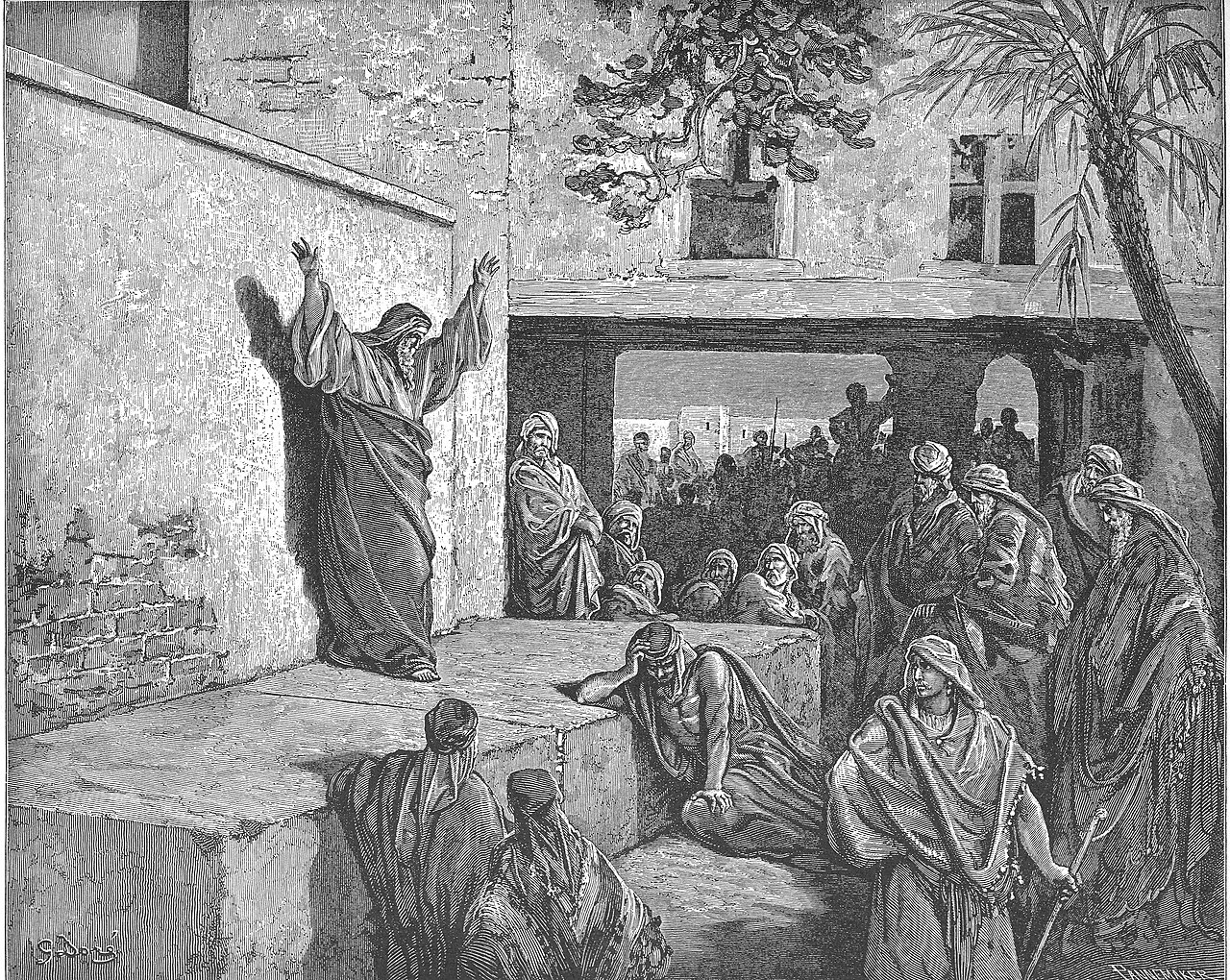
in Micah 1Because of this I will lament and wail; I will walk barefoot and naked. I will howl like a jackal and mourn like an ostrich.
BSB
The same verse in ASV and KJV ▾
ASV
For this will I lament and wail; I will go stripped and naked; I will make a wailing like the jackals, and a lamentation like the ostriches.
KJV
Therefore I will wail and howl, I will go stripped and naked: I will make a wailing like the dragons, and mourning as the owls.
⋯
This verse in Micah 1
Commentary
7 notes on this verseI will make a wailing like the dragons - Newcome translates: - I will make a wailing like the foxes, (or jackals), And mourning like the daughters of the ostrich. This beast, the jackal or shiagal, we have often met with in the prophets. Travellers inform us that its howlings by night are most lamentable; and as to the ostrich, it is remarkable for its fearful shrieking and agonizing groanings after night. Dr. Shaw says he has often heard them groan as if they were in the greatest agonies.
This site's exposition
I will wail and howl
on Micah 1:8-9
Micah steps into his own oracle as a mourner, stripped and naked, wailing like the dragons and the owls, the prophet enacting the grief he announces rather than merely predicting it. Verse 9 turns the wound from Samaria toward home: her wound is incurable, for it is come unto Judah, unto the gate of my people, even to Jerusalem, the disaster no longer someone else's. The commentators mark this as the hinge of the chapter, the north's fall now read as a warning already arriving at the south's own gate.
The record, by era
The Church Fathers1 voice
(Verse 6 onwards): And I will make Samaria a heap of stones in the field, when a vineyard is planted, and I will pour down her stones into the valley, and will lay bare her foundations. And all her carved images shall be beaten to pieces, and all her wages shall be burned with fire, and all her idols will I lay desolate: for she gathered it of the hire of an harlot, and they shall return to the hire of a harlot.
The Puritans and the Awakening2 voices
Therefore I will wail and howl, I will go stripped and naked,....
Two things the prophet here thus dolefully laments:-- 1. That Israel's case is desperate: Her wound is incurable; it is ruin without remedy; man cannot help her;
The Nineteenth Century2 voices
A commentator
Jamieson, Fausset & Brown1802–1910
Commentary Critical and Explanatory on the Whole Bible (1871)
Therefore I will wail--The prophet first shows how the coming judgment affects himself, in order that he might affect the minds of his countrymen similarly. stripped--that is, of shoes, or sandals, as the Septuagint translates. Otherwise "naked" would be a tautology. naked--"Naked" means divested of the upper garment (Isa 20:2).
A commentator
Albert Barnes1798–1870
Notes, Explanatory and Practical, on the Old and New Testaments (1832-1869)
proposed
Therefore I will - Therefore I would Wail - (properly, beat, that is, on the breast). And howl - “Let me alone,” he would say, “that I may vent my sorrow in all ways of expressing sorrow, beating on the breast and wailing, using all acts and sounds of grief.” It is as we would say, “Let me mourn on,” a mourning inexhaustible, because the woe too and the cause of grief was unceasing. The prophet becomes in words, probably in acts too, an image of his people, doing as they should do hereafter. He mourns, because and as they would have to mourn, bearing chastisement, bereft of all outward comeliness, an example also of repentance, since what he did were the chief outward tokens of mourning. I will (would) go stripped - despoiled . And naked - He explains the acts, that they represented no mere voluntary mourning. Not only would he, representing them, go bared of all garments of beauty, as we say “half-naked” but despoiled also, the proper term of those plundered and stripped by an enemy. He speaks of his doing, what we know that Isaiah did, by God’s command, representing in act what his people should thereafter do. : “Wouldest thou that I should weep, thou must thyself grieve the first.” Micah doubtless went about, not speaking only of grief, but grieving, in the habit of one mourning and bereft of all. He prolongs in these words the voice of wailing, choosing unaccustomed forms of words, to carry on the sound of grief. I will make a wailing like the dragons - (jackals). And mourning as the owls - (ostriches). The cry of both, as heard at night, is very piteous. Both are doleful creatures, dwelling in desert and lonely places. […]
The words behind it
13 Hebrew wordsEvery Hebrew word of this verse in the order it stands, with what it means and the door to its own study. The last column counts the times a word stands in the whole Bible: the rarer the word, the more the places it appears belong together.
| Hebrew | Sound | Meaning | Word study | In the Bible |
|---|---|---|---|---|
| עַל־ | ʾal- | on | H5921 → | 5755 times |
| זֹאת֙ | zot | this | H2063 → | 603 times |
| אֶסְפְּדָ֣ה | ʾespedah | I will lament | H5594 → | |
| וְאֵילִ֔ילָה | veeililah | and I will wail | H3213 → | |
| אֵילְכָ֥ה | ʾeilkhah | I will go | H1980 → | 1546 times |
| שׁוֹלָ֖ל | shilal | barefoot | H7758 → | |
| וְעָר֑וֹם | vearom | and naked | H6174 → | |
| אֶעֱשֶׂ֤ה | ʾeeseh | I will make | H6213 → | 2628 times |
| מִסְפֵּד֙ | misped | a lament | H4553 → | |
| כַּתַּנִּ֔ים | katanim | like <the> jackals | H8577 → | |
| וְאֵ֖בֶל | veevel | and a mourning | H60 → | |
| כִּבְנ֥וֹת | kivnot | like [the] daughters of | H1323 → | 588 times |
| יַעֲנָֽה׃ | yaanah | an ostrich | H3284 → |
עַל־on
ʾal-H5921 →5755 times
זֹאת֙this
zotH2063 →603 times
אֶסְפְּדָ֣הI will lament
ʾespedahH5594 →
וְאֵילִ֔ילָהand I will wail
veeililahH3213 →
אֵילְכָ֥הI will go
ʾeilkhahH1980 →1546 times
שׁוֹלָ֖לbarefoot
shilalH7758 →
וְעָר֑וֹםand naked
vearomH6174 →
אֶעֱשֶׂ֤הI will make
ʾeesehH6213 →2628 times
מִסְפֵּד֙a lament
mispedH4553 →
כַּתַּנִּ֔יםlike <the> jackals
katanimH8577 →
וְאֵ֖בֶלand a mourning
veevelH60 →
כִּבְנ֥וֹתlike [the] daughters of
kivnotH1323 →588 times
יַעֲנָֽה׃an ostrich
yaanahH3284 →
A shaded row is a word that stands 400 times or fewer in the Bible.
The walk
8 stopsEach card is a verse this one points to, and under it the verses that one points to in turn. Where several paths arrive at the same place, that place is listed first: the text keeps returning to it.
Through
Jeremiah 9:19For the sound of wailing is heard from Zion: ‘How devastated we are! How great is our shame! For we have abandoned the land because our dwellings have been torn down.’”
it leads to
- Jeremiah 4:13
Behold, he advances like the clouds, his chariots like the whirlwind. His horses are swifter than eagles. Woe to us, for we are ruined!
- Ezekiel 7:16–18
The survivors will escape and live in the mountains, moaning like doves of the valley, each for his own iniquity.
- Jeremiah 4:13
Through
Isaiah 22:4Therefore I said, “Turn away from me, let me weep bitterly! Do not try to console me over the destruction of the daughter of my people.”
it leads to
- Jeremiah 9:1
Oh, that my head were a spring of water, and my eyes a fountain of tears! I would weep day and night over the slain daughter of my people.
- Matthew 2:18
“A voice is heard in Ramah, weeping and great mourning, Rachel weeping for her children, and refusing to be comforted, because they are no more.”
- Jeremiah 13:17
But if you do not listen, I will weep in secret because of your pride. My eyes will overflow with tears, because the LORD’s flock has been taken captive.
- Jeremiah 31:15
This is what the LORD says: “A voice is heard in Ramah, mourning and great weeping, Rachel weeping for her children, and refusing to be comforted, because they are no more.”
- Psalms 77:2
In the day of trouble I sought the Lord; through the night my outstretched hands did not grow weary; my soul refused to be comforted.
- Jeremiah 9:1
Through
Job 30:29I have become a brother of jackals, a companion of ostriches.
it leads to
- Psalms 102:6
I am like a desert owl, like an owl among the ruins.
- Psalms 102:6
Where this verse is studied
On this page
Studies2
On this verse
On this chapter
About Micah
This page draws on Adam Clarke, Commentary on the Bible; Albert Barnes, Notes, Explanatory and Practical, on the Old and New Testaments (1832-1869); Edward Bouverie Pusey, The Minor Prophets: A Commentary; Jamieson, Fausset & Brown, Commentary Critical and Explanatory on the Whole Bible; Jerome, Commentary on Micah; John Gill, Exposition of the Old Testament (1748-1763) and Matthew Henry, Commentary on the Whole Bible.