
Jeremiah 18:14
in Jeremiah 18Does the snow of Lebanon ever leave its rocky slopes? Or do its cool waters flowing from a distance ever run dry?
BSB
The same verse in ASV and KJV ▾
ASV
Shall the snow of Lebanon fail from the rock of the field? or shall the cold waters that flow down from afar be dried up?
KJV
Will a man leave the snow of Lebanon which cometh from the rock of the field? or shall the cold flowing waters that come from another place be forsaken?
⋯
This verse in Jeremiah 18
Commentary
4 notes on this verse(Verse 14.) Will the snow of Lebanon's mountain fail from the rock of the field? Or can the rushing, cold waters be removed? Septuagint: Will the breasts fail from the rock, or the snow from Lebanon, or will the violently lifted water decline? It sounds like something similar to Virgil's (Eclogue I, 60 seq.) Therefore, the gentle deer will feed in the sky, and the naked fish will leave the straits on the shore, before her face glides in our breast. And in another place (Aeneid. I, 611 seqq.)
This site's exposition
Will a man leave the snow of Lebanon
on Jeremiah 18:14-17
Will a man leave the snow of Lebanon, or forsake the cold flowing waters, argues from nature's constancy against Israel's inconstancy, the mountains keep their snow and the rivers keep their course while my people hath forgotten me. Barnes reads the ancient paths of verse 15 as the patriarchal way already old in Jeremiah's day, abandoned for paths not cast up, tracks that lead nowhere because no one laid them. The scattering as with an east wind before the enemy in verse 17 recalls the desert wind that withers rather than refreshes, judgment pictured as the harshest weather the land knows.
The record, by era
The Puritans and the Awakening1 voice
Of Lebanon - Lebanon had rocks, and also fruitful valleys; snow fell upon these rocks, and upon a thaw ran down into the lower places. Reason teaches men not to forsake a greater good for a less, tho' that greater good was but a poor creature comfort, not to be compared with God.
The Nineteenth Century1 voice
A commentator
Jamieson, Fausset & Brown1802–1910
Commentary Critical and Explanatory on the Whole Bible (1871)
Lebanon means the "white mountain"; so called from the perpetual snow which covers that part called Hermon, stretching northeast of Palestine. that come from another place--that come from far, namely, from the distant lofty rocks of Lebanon.
How the passage was read
What the Jewish commentators add
Shall one abandon from rocks of the field the snow of Lebanon Shall a man who needs to drink abandon water that flows from the rock in the fields that comes from the snow of the Lebanon, which is clean?
1 more on this passage, in their own words ▾
For so have My people done, that they have forgotten Me and burnt incense to vanity.
This section is reception history: how the passage was read and kept in the Jewish tradition. Where a reading parts from an essential of the Christian faith, the section says so at that point.
Texts and citation data: Sefaria; each excerpt follows its version’s licence. 5 further sources are cited on this chapter that carry no English text this site may quote or only restate the verse.
The words behind it
11 Hebrew wordsEvery Hebrew word of this verse in the order it stands, with what it means and the door to its own study. The last column counts the times a word stands in the whole Bible: the rarer the word, the more the places it appears belong together.
| Hebrew | Sound | Meaning | Word study | In the Bible |
|---|---|---|---|---|
| הֲיַעֲזֹ֥ב | hayaazo | ¿ does it leave | H5800 → | 215 times |
| מִצּ֛וּר | mitzur | from [the] rock of | H6697 → | |
| שָׂדַ֖י | sadai | [the] field | H7704 → | 334 times |
| שֶׁ֣לֶג | sheleg | [the] snow of | H7950 → | |
| לְבָנ֑וֹן | levanon | Lebanon | H3844 → | 71 times |
| אִם־ | ʾim- | or? | H518 → | 1069 times |
| יִנָּתְשׁ֗וּ | yinateshu | are they plucked up | H5428 → | 21 times |
| מַ֛יִם | mayim | waters | H4325 → | 581 times |
| זָרִ֥ים | zarim | strange | H2114 → | 77 times |
| קָרִ֖ים | karim | cool | H7119 → | |
| נוֹזְלִֽים׃ | nozlim | flowing | H5140 → |
הֲיַעֲזֹ֥ב¿ does it leave
hayaazoH5800 →215 times
מִצּ֛וּרfrom [the] rock of
mitzurH6697 →
שָׂדַ֖י[the] field
sadaiH7704 →334 times
שֶׁ֣לֶג[the] snow of
shelegH7950 →
לְבָנ֑וֹןLebanon
levanonH3844 →71 times
אִם־or?
ʾim-H518 →1069 times
יִנָּתְשׁ֗וּare they plucked up
yinateshuH5428 →21 times
מַ֛יִםwaters
mayimH4325 →581 times
זָרִ֥יםstrange
zarimH2114 →77 times
קָרִ֖יםcool
karimH7119 →
נוֹזְלִֽים׃flowing
nozlimH5140 →
A shaded row is a word that stands 400 times or fewer in the Bible.
The walk
5 stopsEach card is a verse this one points to, and under it the verses that one points to in turn. Where several paths arrive at the same place, that place is listed first: the text keeps returning to it.
Through
John 6:68Simon Peter replied, “Lord, to whom would we go? You have the words of eternal life.
it leads to
- Psalms 73:25
Whom have I in heaven but You? And on earth I desire no one besides You.
- John 5:24
Truly, truly, I tell you, whoever hears My word and believes Him who sent Me has eternal life and will not come under judgment. Indeed, he has crossed over from death to life.
- 1 John 5:11–13
And this is that testimony: God has given us eternal life, and this life is in His Son.
- Acts 4:12
Salvation exists in no one else, for there is no other name under heaven given to men by which we must be saved.”
- John 6:63
The Spirit gives life; the flesh profits nothing. The words I have spoken to you are spirit and they are life.
- Psalms 73:25
Where this verse is studied
On this page
About Jeremiah
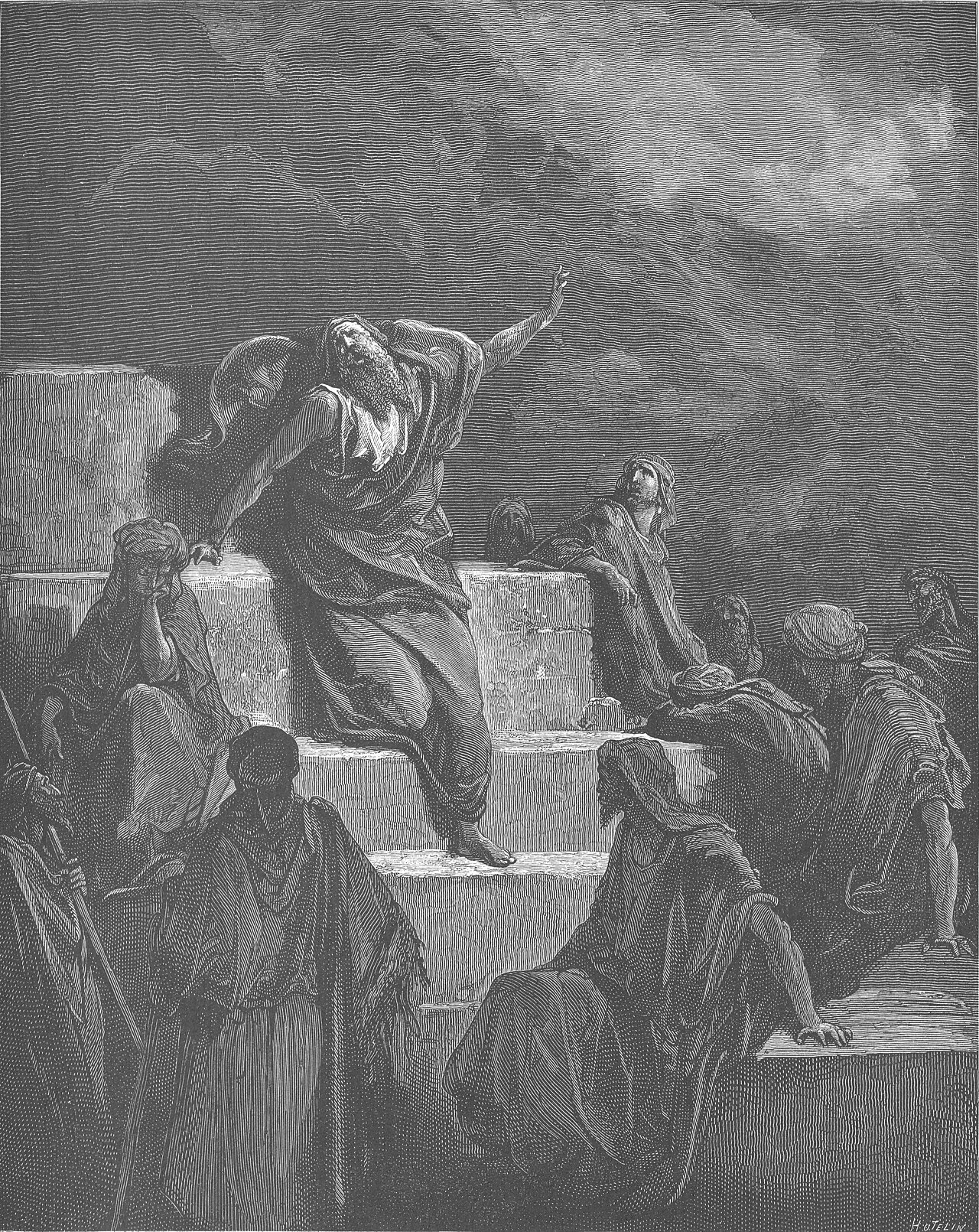
This page draws on Albert Barnes, Notes on the Old Testament; Carl Friedrich Keil, The Prophecies of Jeremiah; Jamieson, Fausset & Brown, Commentary Critical and Explanatory on the Whole Bible; Jerome, Commentary on Jeremiah and John Wesley, Explanatory Notes upon the Old Testament.