
Isaiah 64:6
in Isaiah 64Each of us has become like something unclean, and all our righteous acts are like filthy rags; we all wither like a leaf, and our iniquities carry us away like the wind.
BSB
The same verse in ASV and KJV ▾
ASV
For we are all become as one that is unclean, and all our righteousnesses are as a polluted garment: and we all do fade as a leaf; and our iniquities, like the wind, take us away.
KJV
But we are all as an unclean thing, and all our righteousnesses are as filthy rags; and we all do fade as a leaf; and our iniquities, like the wind, have taken us away.
⋯
This verse in Isaiah 64
Commentary
16 notes on this verseAs filthy rags - עדים iddim. Rab. Mosheh ben Maimon interpretatur עדים iddim, vestes quibus mulier se abstergit post congressum cum marito suo. Alii pannus menstruatus. Alii panni mulieris parientis. - And we ben made as unclene alle we: and as the cloth of the woman rooten blode flowing, all our rigtwisnesses. - Old MS. Bible. If preachers knew properly the meaning of this word, would they make such a liberal use of it in their public ministry? And why should any use a word, the meaning of which he does not understand?
This site's exposition
But we are all as an unclean thing
on Isaiah 64:6-7
The confession reaches its plainest statement: we are all as an unclean thing, and all our righteousnesses are as filthy rags, the good deeds themselves, not only the sins, named as unfit to stand before God, and we all do fade as a leaf, our iniquities like the wind carrying us away. The older writers read the filthy rags as ceremonially unclean cloth rather than mere dirt, a picture of something no washing restores by itself. Verse 7 names the deeper trouble beneath the confession, there is none that calleth upon thy name, that stirreth up himself to take hold of thee, prayerlessness itself named as part of the sin, and thou hast hid thy face from us as its consequence. Henry reads the whole unit as the pattern of true repentance, sin owned without excuse and without measuring one kind of sin against another.
The record, by era
The Church Fathers4 voices
And whatever righteousness we appear to have is compared to the rag of a sitting or menstruating woman. For which Theodotion put the Hebrew word Eddim, which Symmachus interpreted as κυουσῶν, that is, of those giving birth; Aquila as μαρτυριῶν, that is, of testimonies: when blood is approved in the first marital union of a virgin. And we have fallen away, he says, like leaves from trees, which are scattered by the blasts of the winds because of our iniquities. In this, it should be considered that the righteousness which is in the Law is called impurity in comparison to the purity of the Gospel. For what was once glorified is not glorified anymore because of the surpassing glory. Therefore, the apostle Paul, who had fulfilled everything according to the righteousness which is in the Law, says that he has considered all things as loss in order to gain Christ (Philippians III), and because of the surpassing knowledge of our Lord Jesus Christ, for whom he considers everything as worthless, so that he may gain Christ and be found in Him, not having his own righteousness which is from the Law, but the righteousness which comes from God through faith in Christ. For he is just who dies in his own righteousness (Eccles. 7), if after the truth of the Gospel he wishes to exercise legal shadows, and not to pursue what is justly just.
Finally, just as our goodness with regard to the goodness above becomes like evil, so our righteousness compared with divine righteousness is like menstrual rags. This is considered to be so by Isaiah the prophet: "All our righteousnesses are like menstrual rags." For although there is much of good works of the saints, nevertheless they are preoccupied with earthly endeavor and this holds them back and stops them from the contemplation of that higher good.
(Verse 6.) Behold, you are angry, and we have sinned; we have always been in them, and we shall be saved. And we have become like the unclean, all of us, like the soiled cloths of our entire righteousness. And we have fallen like leaves, and our iniquities have swept us away like the wind.
Some translators try to alter the meaning of this passage.… For it is not, they say, that the divine anger was the cause of their misdeeds, but that because they misbehaved, God was angry. For they are afraid lest God's anger be thought of as the effector of sins. I think it ought to be said that there is no condemning the divine anger, if those receiving it were insufficiently motivated to flee the attack of sin. As long as the Savior is pleased in us, let us flee sin and forcefully leave the filth of vices and with increase be crowned in spiritual success.… For God is the Lord of powers.… Just as the kind clemency from above shows us how to be strong and brave for the resistance of evil, by the same reason when we fall under divine wrath, it is necessary that we bow in servile fashion.
The Medieval Church1 voice
A commentator
Gregory the DialogistMorals on the Book of Job, Book 9.38 · Written before 604.
proposed
It is hence that Isaiah laments bitterly, saying, And we all do fade as a leaf; and our iniquities like the wind have taken us away. And there is none that calleth upon Thy Name, that stirreth up himself to take hold of Thee. Now any of the righteous may sometimes be able to resist the visitations of a present judgment, by the merits of a derived innocency, but they have no power by their own goodness to rid mankind of the woes of the death to come. Therefore let the holy man bethink himself whereunto the human race has run out, let him cast his eye on the woes of eternal death, which it is plain that human righteousness can never withstand, let him see how frowardly man has offended, let him see how severely the wrath of the Creator is directed against man, and let him call for the Mediator between God and man, God and Man in one, forasmuch as he beholds Him destined to come long after. ... For the Redeemer of Mankind, who was made the Mediator between God and Man through the flesh, because that He alone appeared righteous among men, and yet, even though without sin, was notwithstanding brought to the punishment of sin, did both convict man, that he might not sin, and withstand God, that He might not smite; He gave examples of innocency that He took upon Him the punishment due to wickedness.
9 more voices on this verse
The Medieval Church1 voice
And as to the imperfection of their good deeds: "and we are all become as one unclean, and all our justices," because they are wrapped up in other sins: "if I be washed, as it were, with snow waters, and my hands shall shine ever …
The Puritans and the Awakening4 voices
We have all by sin become not only obnoxious to God's justice, but odious to his holiness; for sin is that abominable thing which the Lord hates, and cannot endure to look upon. Even all our righteousnesses are as filthy rags.
Sinners are blasted, and then carried away, by the malignant and violent wind of their own iniquity; it withers them and then ruins them. God brought their troubles upon them by his wrath (
quarantine:debris (2026-07-29) — unbalanced-parens
Unclean - Formerly there were some that feared thee; but now we are all as one polluted mass, nothing of good left in us by reason of an universal degeneracy. And all - The very best of us all are no better than the uncleanest things.
But we are all as an unclean thing,....
The Nineteenth Century4 voices
A commentator
Jamieson, Fausset & Brown1802–1910
Commentary Critical and Explanatory on the Whole Bible (1871)
proposed
unclean thing--legally unclean, as a leper. True of Israel, everywhere now cut off by unbelief and by God's judgments from the congregation of the saints. righteousness--plural, "uncleanness" extended to every particular act of theirs, even to their prayers and praises.
quarantine:debris (2026-07-29) — starts-lowercase
IT is easy to commit sin but hard to confess it. Man will transgress without a tempter. But even when urged by the most earnest pleader, he will not acknowledge his guilt. If we could but bring men into such a state of heart that they felt themselves to be guilty, there would be hope for them. But this is one of the most hopeless signs concerning our race, that it is so hardened and so perverse, that even when sin stares it in the face, it still pleads innocence and proudly lifts up its head and challenges the accuser.
IT is easy to commit sin but hard to confess it. Man will transgress without a tempter. But even when urged by the most earnest pleader, he will not acknowledge his guilt. If we could but bring men into such a state of heart that they felt themselves to be guilty, there would be hope for them. But this is one of the most hopeless signs concerning our race, that it is so hardened and so perverse, that even when sin stares it in the face, it still pleads innocence and proudly lifts up its head and challenges the accuser. Transgressors always seek to escape from the painful and humiliating duty of acknowledging their offenses. Some seek to hide it both from themselves and others, silencing their own consciences and throwing dust in the eyes of their companions. As Achan, digging in the earth to hide the Babylonian garment and the wedge of gold, they forget that their sins will surely find them out. As the foolish ostrich, when pursued by the hunters, buries its head in the sand and when it cannot see its enemy thinks it has escaped—so these men take the fact that they are undiscovered by men, and are at peace with themselves, as a good omen. In reality, it is a sad sign of hardness and blindness of heart. Many pursue yet another course and make excuses for their offenses. They did do wrong, it is true, but then there is much to be said in extenuation. Like Aaron, they urge the clamors of the people, or they will have it that even Providence, itself, compelled them to sin. "I cast gold into the fire and there came out this calf," as if sin were an accident, and not a willful wickedness. As if disobedience to God were a sort of necessity of nature, and not a direct rebellion of the will against the Majesty of Heaven.
A commentator
Albert Barnes1798–1870
Notes, Explanatory and Practical, on the Old and New Testaments (1832-1869)
proposed
But we are all as an unclean thing - We are all polluted and defiled. The word used here (טמא ṭâmē'), means properly that which is polluted and defiled in a Levitical sense; that is, which was regarded as polluted and abominable by the law of Moses Lev 5:2; Deu 14:19, and may refer to animals, people, or things; also in a moral sense Job 14:4. The sense is, that they regarded themselves as wholly polluted and depraved. And all our righteousnesses - The plural form is used to denote the deeds which they had performed - meaning that pollution extended to every individual thing of the numerous acts which they had done. The sense is, that all their prayers, sacrifices, alms, praises, were mingled with pollution, and were worthy only of deep detestation and abhorrence. As filthy rags - ‘Like a garment of stated times’ (עדים ‛iddiym) - from the obsolete root עדד ‛âdad, “to number, to reckon, to determine,” e. g., time. No language could convey deeper abhorrenee of their deeds of righteousness than this reference - as it is undoubtedly - to the vestis menstruis polluta. ‘Non est ambigendum,’ says Vitringa, ‘quin vestis עדים ‛iddiym notet linteum aut pannum immundum ex immunditie legali, eundemque foedum aspectu; cu-jusmodi fuerit imprimis vestis, pannus, aut linteum feminae menstruo profluvio laborantis; verisimile est, id potissimum hae phrasi designari. Sic accepit earr Alexandrinus, vertens, ὡς ῥάκος ἀποκαθη μένης hōs rakos apokathē menēs - ut pannus sedentis; proprie: ut pannus mulieris languidae et desidentis ex menstruo παθήματι pathēmati ‘ (Lev 15:33; compare Lev 20:18; Lam 1:17). And we all do fade as a leaf - We are all withered away like the leaf of autumn. Our beauty is gone; our strength is fled (compare the notes at Isa 40:6-7; Isa 50:1-11:30). What a beautiful description this is of the state of man! […]
The words behind it
13 Hebrew wordsEvery Hebrew word of this verse in the order it stands, with what it means and the door to its own study. The last column counts the times a word stands in the whole Bible: the rarer the word, the more the places it appears belong together.
| Hebrew | Sound | Meaning | Word study | In the Bible |
|---|---|---|---|---|
| וַנְּהִ֤י | vanehi | and we have become | H1961 → | 3559 times |
| כַטָּמֵא֙ | khatame' | like <the> unclean [person] | H2931 → | 88 times |
| כֻּלָּ֔נוּ | kulanu | all of us | H3605 → | 5413 times |
| וּכְבֶ֥גֶד | ukheveged | and [are] like a garment of | H899 → | 217 times |
| עִדִּ֖ים | ʾidim | menstruation<s> | H5708 → | |
| כָּל־ | kol- | all | H3605 → | 5413 times |
| צִדְקֹתֵ֑ינוּ | tzidkoteinu | righteousness<es> our | H6666 → | 157 times |
| וַנָּ֤בֶל | vanavel | and we have withered | H5034 → | 25 times |
| כֶּֽעָלֶה֙ | kealeh | like <the> leafage | H5929 → | 18 times |
| כֻּלָּ֔נוּ | kulanu | all of us | H3605 → | 5413 times |
| וַעֲוֹנֵ֖נוּ | vaavonenu | and iniquities our | H5771 → | 233 times |
| כָּר֥וּחַ | karuach | like the wind | H7307 → | 378 times |
| יִשָּׂאֻֽנוּ׃ | yisaunu | they carry off us | H5375 → | 656 times |
וַנְּהִ֤יand we have become
vanehiH1961 →3559 times
כַטָּמֵא֙like <the> unclean [person]
khatame'H2931 →88 times
כֻּלָּ֔נוּall of us
kulanuH3605 →5413 times
וּכְבֶ֥גֶדand [are] like a garment of
ukhevegedH899 →217 times
עִדִּ֖יםmenstruation<s>
ʾidimH5708 →
כָּל־all
kol-H3605 →5413 times
צִדְקֹתֵ֑ינוּrighteousness<es> our
tzidkoteinuH6666 →157 times
וַנָּ֤בֶלand we have withered
vanavelH5034 →25 times
כֶּֽעָלֶה֙like <the> leafage
kealehH5929 →18 times
כֻּלָּ֔נוּall of us
kulanuH3605 →5413 times
וַעֲוֹנֵ֖נוּand iniquities our
vaavonenuH5771 →233 times
כָּר֥וּחַlike the wind
karuachH7307 →378 times
יִשָּׂאֻֽנוּ׃they carry off us
yisaunuH5375 →656 times
A shaded row is a word that stands 400 times or fewer in the Bible.
The walk
8 stopsEach card is a verse this one points to, and under it the verses that one points to in turn. Where several paths arrive at the same place, that place is listed first: the text keeps returning to it.
Through
Romans 7:18I know that nothing good lives in me, that is, in my flesh; for I have the desire to do what is good, but I cannot carry it out.
it leads to
- John 3:6
Flesh is born of flesh, but spirit is born of the Spirit.
- Psalms 51:5
Surely I was brought forth in iniquity; I was sinful when my mother conceived me.
- Galatians 5:17
For the flesh craves what is contrary to the Spirit, and the Spirit what is contrary to the flesh. They are opposed to each other, so that you do not do what you want.
- Psalms 119:115–117
Depart from me, you evildoers, that I may obey the commandments of my God.
- Romans 7:25
Thanks be to God, through Jesus Christ our Lord! So then, with my mind I serve the law of God, but with my flesh I serve the law of sin.
- John 3:6
Through
Romans 7:24What a wretched man I am! Who will rescue me from this body of death?
it leads to
- Romans 6:6
We know that our old self was crucified with Him so that the body of sin might be rendered powerless, that we should no longer be slaves to sin.
- 2 Timothy 4:18
And the Lord will rescue me from every evil action and bring me safely into His heavenly kingdom. To Him be the glory forever and ever. Amen.
- Titus 2:14
He gave Himself for us to redeem us from all lawlessness and to purify for Himself a people for His own possession, zealous for good deeds.
- Romans 6:6
Where this verse is studied
On this page
About Isaiah
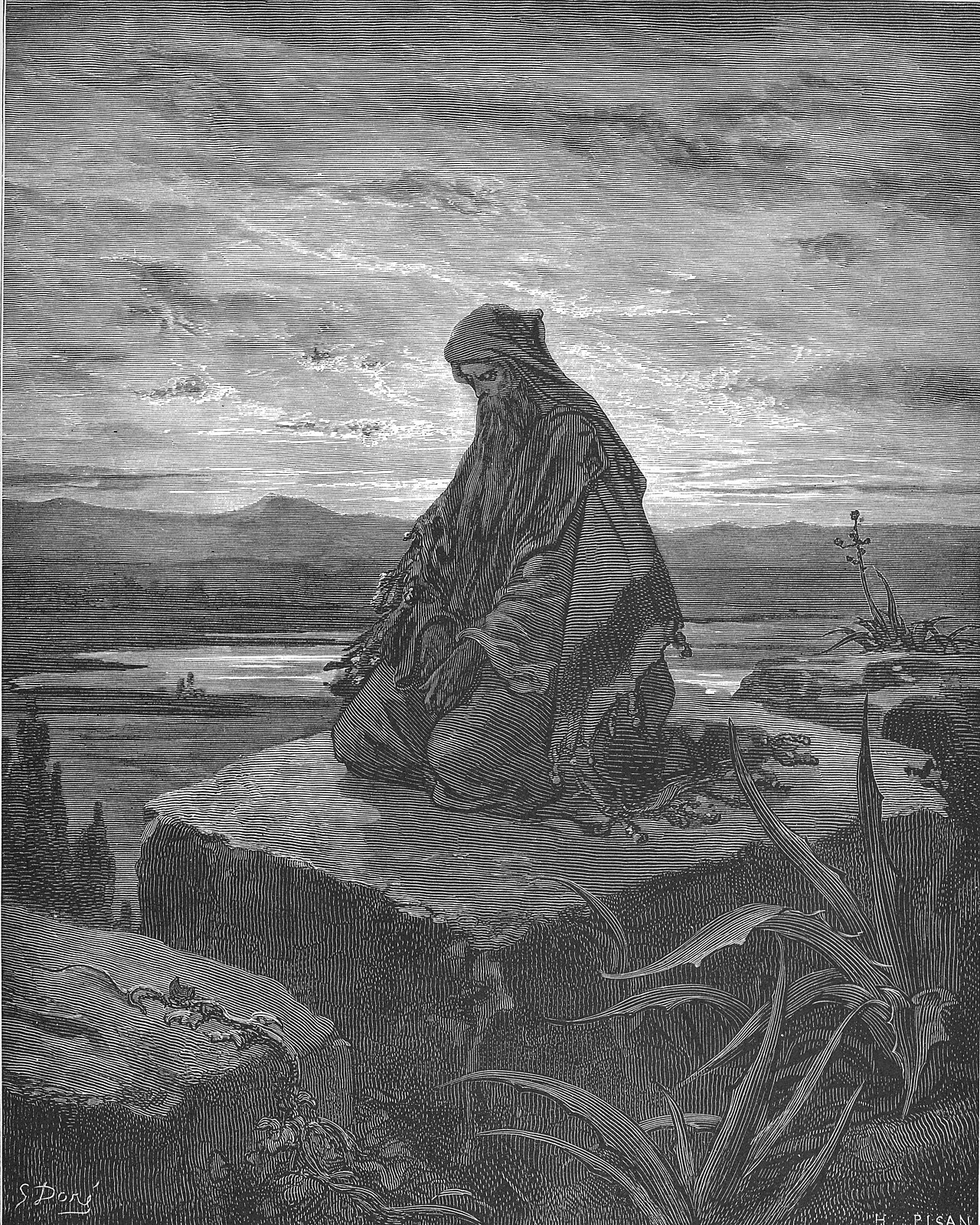
This page draws on 13 works. Open the list of works
This page draws on Adam Clarke, Commentary on the Bible; Albert Barnes, Notes, Explanatory and Practical, on the Old and New Testaments (1832-1869); Charles Spurgeon, The Metropolitan Tabernacle Pulpit, Sermon No. 437: “A Sight Of Self” (lightly modernized text, CCEL edition); Cyril of Alexandria, COMMENTARY ON ISAIAH 5:6.64:6-7; Gregory the Dialogist, Morals on the Book of Job, Book 9.38; Jamieson, Fausset & Brown, Commentary Critical and Explanatory on the Whole Bible; Jerome, Commentary on Isaiah; John Cassian, CONFERENCE 23:4; John Gill, Exposition of the Old Testament; John Gill, Exposition of the Old Testament (1748-1763); John Wesley, Explanatory Notes upon the Old Testament; Matthew Henry, Commentary on the Whole Bible and Thomas Aquinas, Commentary on Isaiah.