
Isaiah 38:17
in Isaiah 38Surely for my own welfare I had such great anguish; but Your love has delivered me from the pit of oblivion, for You have cast all my sins behind Your back.
BSB
The same verse in ASV and KJV ▾
ASV
Behold, it was for my peace that I had great bitterness: But thou hast in love to my soul delivered it from the pit of corruption; For thou hast cast all my sins behind thy back.
KJV
Behold, for peace I had great bitterness: but thou hast in love to my soul delivered it from the pit of corruption: for thou hast cast all my sins behind thy back.
⋯
This verse in Isaiah 38
Commentary
17 notes on this verseA commentator
Albert Barnes1798–1870
Notes, Explanatory and Practical, on the Old and New Testaments (1832-1869)
Behold, for peace - That is, instead of the health, happiness, and prosperity which I had enjoyed, and which I hope still to enjoy. I had great bitterness - Hebrew, ‘Bitterness to me, bitterness;’ an emphatic expression, denoting intense sorrow. But thou hast in love to my soul - Margin, ‘Loved my soul from the pit.’ The word which occurs here (חשׁקת châshaqtâ) denotes properly to join or fasten together; then to be attached to anyone; to be united tenderly; to embrace. Here it means that God had loved him, and had thus delivered his soul from death.
This site's exposition
cast all my sins behind Your back
The anguish is renamed as care: Your love has delivered me from the pit of oblivion. The line You have cast all my sins behind Your back puts guilt out of sight, one of the Old Testament's plainest pictures of removed guilt. The verse joins rescue from the pit and forgiveness in one sentence, and Micah 7:19 uses the same picture, You will cast out all our sins into the depths of the sea.
The record, by era
The Church Fathers2 voices
And thou hast resuscitated my breath, and having been comforted by thee I lived. For thou didst rescue my soul that it might not perish, and thou hast cast behind me all my sins; meaning: For by comforting me Thou didst resuscitate my breath and …
(Verse 17) Behold, in peace is my bitterest bitterness. But you have saved my soul from perishing: you have cast all my sins behind your back. But you have delivered my soul, so that it would not perish, either in this present life or in the future. You have cast all my sins behind me, so that I may not behold them in sadness, but rather contemplate your mercy.
The Medieval Church1 voice
And then he sets out: behold in peace, as if to say: in the people having peace from the Assyrians, bitterness, hangs over me: laughter shall be mingled with sorrow (Prov 14:13). Second, he recalls his liberation from punishment: but you have delivered my soul, …
The Puritans and the Awakening2 voices
Behold, for peace I had great bitterness,....
God's love is sufficient to bring a soul from the pit of corruption. This is applicable to our redemption by Christ; it was in love to our souls, our poor perishing souls, that he delivered them from the bottomless pit, snatched them as brands out of everlasting burnings.
10 more voices on this verse
The Nineteenth Century10 voices
HEZEKIAH HERE SPEAKS POSITIVELY on a matter concerning which he had not the remotest shadow of n doubt. He kind trusted his God, he had cast himself upon the merit of the promised Messiah, and as the result of that faith, assurance had been granted to him, and he now sings with unfaltering tongue, "Thou," even thou, O God, Most High and Most Just, "thou hast cast all my sins," great and innumerable though they be, thou hast east them all "behind thy back."
HEZEKIAH'S recovery is a notable encouragement to prayer. If ever there was a case in the world where it seemed impossible that prayer could be of any use, it was that of Hezekiah. It was perceivable by everybody around him that he was sick unto death. Why, then, think of prayer? The case was fatal. Would it not expose prayer to derision if such a matter were taken before the Mercy Seat? Moreover, God's own Word, spoken by His servant the Prophet, had been given—"Set your house in order, for you shall die, and not live."
A commentator
Jamieson, Fausset & Brown1802–1910
Commentary Critical and Explanatory on the Whole Bible (1871)
The prayer and thanksgiving song of Hezekiah is only given here, not in the parallel passages of Second Kings and Second Chronicles. Isa 38:9 is the heading or inscription.
A commentator
Jamieson, Fausset & Brown1802–1910
Commentary Critical and Explanatory on the Whole Bible (1871)
proposed
The second part of the song passes from prayer to thanksgiving at the prayer being heard. What shall I say?--the language of one at a loss for words to express his sense of the unexpected deliverance. both spoken . . . and . . . done it-- (Nu 23:19). Both promised and performed (1Th 5:24;
quarantine:debris (2026-07-29) — unbalanced-parens
A commentator
Jamieson, Fausset & Brown1802–1910
Commentary Critical and Explanatory on the Whole Bible (1871)
proposed
The "pit" is here simply death, in Hezekiah's sense; realized in its fulness only in reference to the soul's redemption from hell by Jesus Christ (Isa 61:1), who went down to the pit for that purpose Himself (Ps 88:4-6; "Sin" and sickness are connected (Ps 103:3; compare Isa 53:4, with Mt 8:17;
quarantine:debris (2026-07-29) — unbalanced-parens
HEZEKIAH HERE SPEAKS POSITIVELY on a matter concerning which he had not the remotest shadow of n doubt. He kind trusted his God, he had cast himself upon the merit of the promised Messiah, and as the result of that faith, assurance had been granted to him, and he now sings with unfaltering tongue, "Thou," even thou, O God, Most High and Most Just, "thou hast cast all my sins," great and innumerable though they be, thou hast east them all "behind thy back." Oh, what a joyous thing it is to have a ray of heavenly sunlight in the soul, and to hear the very voice of God as he walks in the garden of our souls in the cool of the day, saying to us, "Son thy sins which are many, are all forgiven thee." The whisper of that heavenly voice may raise our heart to bliss almost divine it confers a joy that is not to be squalled by all the corn and the wine, and all the pleasures which the riches and the-enjoyments of this world can afford. To have the divine kiss of acceptance to be robed in the best robe, to have the ring on the hand and the shoes on the feet to hear the heavenly music and dancing with which the returning prodigals are returned to their Father's house,—this, indeed, is a bliss worth worlds. My dear brethren, there are some who choose to dwell to a very large degree in their ministry upon such enjoyments as these, which concern the experience of the child of God; but I fear they make it the main object of their preaching, to advance a system of frames and feelings. On the other hand, there are other brethren who constantly insist upon the doctrine of salvation by faith, and by faith alone, but almost forget to testify to the experience which is the result of faith. Now, both of these men were, doubtless; but nevertheless, their error is founded upon a conscientious desire to advance the truth.
THE means used for the restoration of Hezekiah's body to health was a lump of figs laid as a plaster upon the boil, but the means used for the renewal of his soul from the disease of despondency was something equally effectual and far sweeter—what if I say that the Lord laid to the sore of Hezekiah's heart some of the leaves of the Tree of Life which are for the healing of the nations?
THE means used for the restoration of Hezekiah's body to health was a lump of figs laid as a plaster upon the boil, but the means used for the renewal of his soul from the disease of despondency was something equally effectual and far sweeter—what if I say that the Lord laid to the sore of Hezekiah's heart some of the leaves of the Tree of Life which are for the healing of the nations? The fact is that Hezekiah, under such a mass of troubles, had sunk very low in doubts, fears and dark forebodings until he almost despaired and, therefore, the Lord shed abroad in his heart a sense of Divine love— deep, true and mighty—and as Hezekiah's body recovered, so Hezekiah's spirits also rose. And instead of chattering like a crane, he began to sing the praises of the Host High. The remedy for his soul's sickness was love. His heart was fetched up from the grave of its despair by love—love was the hand of power that drew him up and love the cords by which he was lifted. Now, what was true of Hezekiah with regard to his sickness and depression is true in the fullest sense of all Believers. See, dear Brethren, where we lay by nature—in the grave of death. Yes, and more—in the pit of corruption. We were so destroyed by sin that we were like men who had rotted in a pit and were corrupt, for sin is a foul putrefaction of our nature and it has worked in us to the most dreadful degree. We are like the slain upon the battlefield, rotting with foul decay—obnoxious to God, corrupt and abominable. At this present moment, by Sovereign Grace, those of us who have believed in Jesus have been brought up out of the horrible pit. Our standing, now, is a blessed one, for our feet are upon the Rock of Ages—immutable promises and eternal purposes are now the bases of our confidence.
HEZEKIAH'S recovery is a notable encouragement to prayer. If ever there was a case in the world where it seemed impossible that prayer could be of any use, it was that of Hezekiah. It was perceivable by everybody around him that he was sick unto death. Why, then, think of prayer? The case was fatal. Would it not expose prayer to derision if such a matter were taken before the Mercy Seat? Moreover, God's own Word, spoken by His servant the Prophet, had been given—"Set your house in order, for you shall die, and not live." What could be the use of prayer after that? Might it not be regarded as an impertinent interference with the known will of the Lord? Yet, Brothers and Sisters, the proverb says that hunger breaks through stone walls—and so the desire to live, on the king's part—drove him to pray! Through all arguments and reasonings did Hezekiah's prayer break its way to the Throne of God. He turned his face to the wall in more than one sense on that occasion, for it seemed as if a wall stood in the front of him and shut out all hope of life. Yet he turned his face to it and prayed his way through it! Mark well his success. Fifteen years longer did he live in answer to his entreaties! Brothers and Sisters, pray if you are between the jaws of death and Hell! Pray, Brothers and Sisters, if all hope seems to be utterly slain! Yes, and if you can put your finger on passages of God's own Word which apparently condemn you, still pray! Whether your fears have contorted those threatening passages or not, though many of them frown upon you, still pray! Perish with your hands on the horn of the altar even if you must perish! Never believe your case to be utterly hopeless so long as you can plead with God! There can be no hurt come of your supplication, but good must come of it in some form or other.
For peace I had great bitterness “My anguish is changed into ease” - מר לי מר mar li mar, “mutata mthi est amaritudo.” Paronomasia; a figure which the prophet frequently admits. I do not always note it, because it cannot ever be preserved in the translation, and the sense seldom depends upon it. But here it perfectly clears up the great obscurity of the passage. See Lowth on the place. Thou hast rescued - חשכת chashachta, with כ caph, instead of ק koph; so the Septuagint and Vulgate; Houbigant. See Chappelow on Job 33:18. From perdition - משחת בלי mishshachath beli, ἱνα μη αποληται, Sept. ut non periret, “that it may not perish.” Vulg. Perhaps inverting the order of the words. See Houbigant. Thou hast in love to my soul - חשקת chashakta, “thou hast lovingly embraced” or kissed “my soul out of the pit of corruption.”
The words behind it
16 Hebrew wordsEvery Hebrew word of this verse in the order it stands, with what it means and the door to its own study. The last column counts the times a word stands in the whole Bible: the rarer the word, the more the places it appears belong together.
| Hebrew | Sound | Meaning | Word study | In the Bible |
|---|---|---|---|---|
| הִנֵּ֥ה | hineh | here! | H2009 → | 843 times |
| לְשָׁל֖וֹם | leshalom | for welfare | H7965 → | 236 times |
| מַר־ | mar- | it was bitter | H4843 → | 16 times |
| לִ֣י | li | to me | ||
| מָ֑ר | mar | bitterly | H4751 → | 37 times |
| וְאַתָּ֞ה | veatah | and you | H859 → | 1094 times |
| חָשַׁ֤קְתָּ | chashakta | you loved | H2836 → | |
| נַפְשִׁי֙ | nafshi | life my | H5315 → | 754 times |
| מִשַּׁ֣חַת | mishachat | from [the] pit of | H7845 → | |
| בְּלִ֔י | beli | destruction | H1097 → | 58 times |
| כִּ֥י | ki | for | H3588 → | 4482 times |
| הִשְׁלַ֛כְתָּ | hishlakhta | you threw away | H7993 → | 125 times |
| אַחֲרֵ֥י | ʾacharei | behind | H310 → | 715 times |
| גֵוְךָ֖ | gevekha | back your | H1460 → | 7 times |
| כָּל־ | kol- | all | H3605 → | 5413 times |
| חֲטָאָֽי׃ | chataai | sins my | H2399 → | 33 times |
הִנֵּ֥הhere!
hinehH2009 →843 times
לְשָׁל֖וֹםfor welfare
leshalomH7965 →236 times
מַר־it was bitter
mar-H4843 →16 times
לִ֣יto me
li
מָ֑רbitterly
marH4751 →37 times
וְאַתָּ֞הand you
veatahH859 →1094 times
חָשַׁ֤קְתָּyou loved
chashaktaH2836 →
נַפְשִׁי֙life my
nafshiH5315 →754 times
מִשַּׁ֣חַתfrom [the] pit of
mishachatH7845 →
בְּלִ֔יdestruction
beliH1097 →58 times
כִּ֥יfor
kiH3588 →4482 times
הִשְׁלַ֛כְתָּyou threw away
hishlakhtaH7993 →125 times
אַחֲרֵ֥יbehind
ʾachareiH310 →715 times
גֵוְךָ֖back your
gevekhaH1460 →7 times
כָּל־all
kol-H3605 →5413 times
חֲטָאָֽי׃sins my
chataaiH2399 →33 times
A shaded row is a word that stands 400 times or fewer in the Bible.
The walk
8 stopsEach card is a verse this one points to, and under it the verses that one points to in turn. Where several paths arrive at the same place, that place is listed first: the text keeps returning to it.
Through
Isaiah 43:25I, yes I, am He who blots out your transgressions for My own sake and remembers your sins no more.
it leads to
- Hebrews 8:12
For I will forgive their iniquities and will remember their sins no more.”
Reached by 2 separate paths from here.
- Micah 7:18–19
Who is a God like You, who pardons iniquity and passes over the transgression of the remnant of His inheritance—who does not retain His anger forever, because He delights in loving devotion?
- Hebrews 10:17
Then He adds: “Their sins and lawless acts I will remember no more.”
- Jeremiah 31:34
No longer will each man teach his neighbor or his brother, saying, ‘Know the LORD,’ because they will all know Me, from the least of them to the greatest, declares the LORD. For I…
- Isaiah 1:18
“Come now, let us reason together,” says the LORD. “Though your sins are like scarlet, they will be as white as snow; though they are as red as crimson, they will become like wool.
- Hebrews 8:12
Through
Jeremiah 31:34No longer will each man teach his neighbor or his brother, saying, ‘Know the LORD,’ because they will all know Me, from the least of them to the greatest, declares the LORD. For I…
it leads to
- Isaiah 43:25
I, yes I, am He who blots out your transgressions for My own sake and remembers your sins no more.
- Jeremiah 33:8
And I will cleanse them from all the iniquity they have committed against Me, and will forgive all their sins of rebellion against Me.
- Isaiah 54:13
Then all your sons will be taught by the LORD, and great will be their prosperity.
- Isaiah 43:25
Where this verse is studied
On this page
About Isaiah
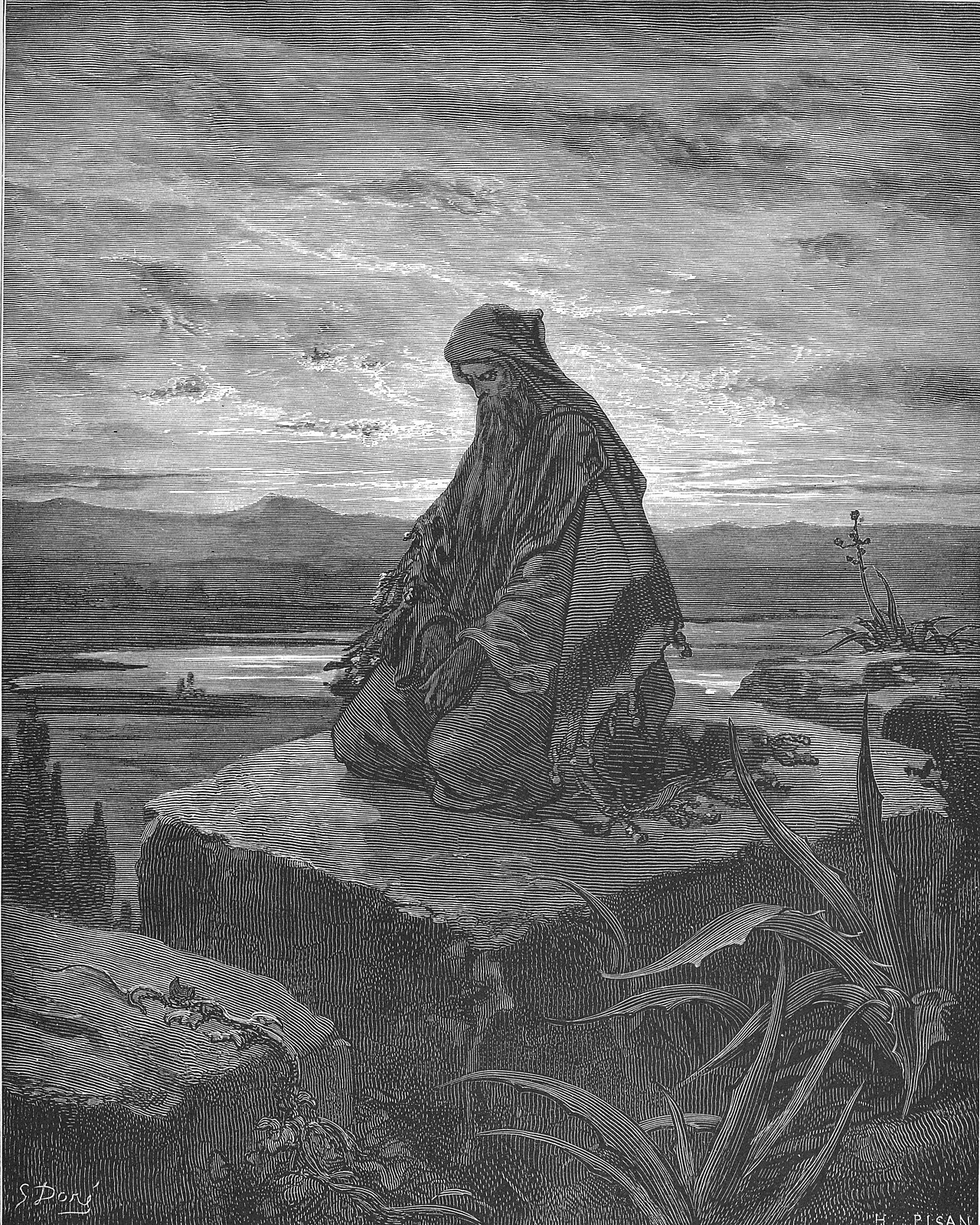
This page draws on 12 works. Open the list of works
This page draws on Adam Clarke, Commentary on the Bible; Albert Barnes, Notes, Explanatory and Practical, on the Old and New Testaments (1832-1869); Charles Spurgeon, The New Park Street Pulpit, Sermon No. 316: “A Sense of Pardoned Sin” (lightly modernized text, CCEL edition); Charles Spurgeon, The Metropolitan Tabernacle Pulpit, Sermon No. 1337: “Love's Medicines and Miracles” (lightly modernized text, CCEL edition); Charles Spurgeon, The Metropolitan Tabernacle Pulpit, Sermon No. 1110: “Miracles Of Love” (lightly modernized text, CCEL edition); Cosmas Indicopleustes, The Christian Topography, Book 8; Jamieson, Fausset & Brown, Commentary Critical and Explanatory on the Whole Bible; Jerome, Commentary on Isaiah; John Gill, Exposition of the Old Testament; John Gill, Exposition of the Old Testament (1748-1763); Matthew Henry, Commentary on the Whole Bible and Thomas Aquinas, Commentary on Isaiah.