
Genesis 7:23
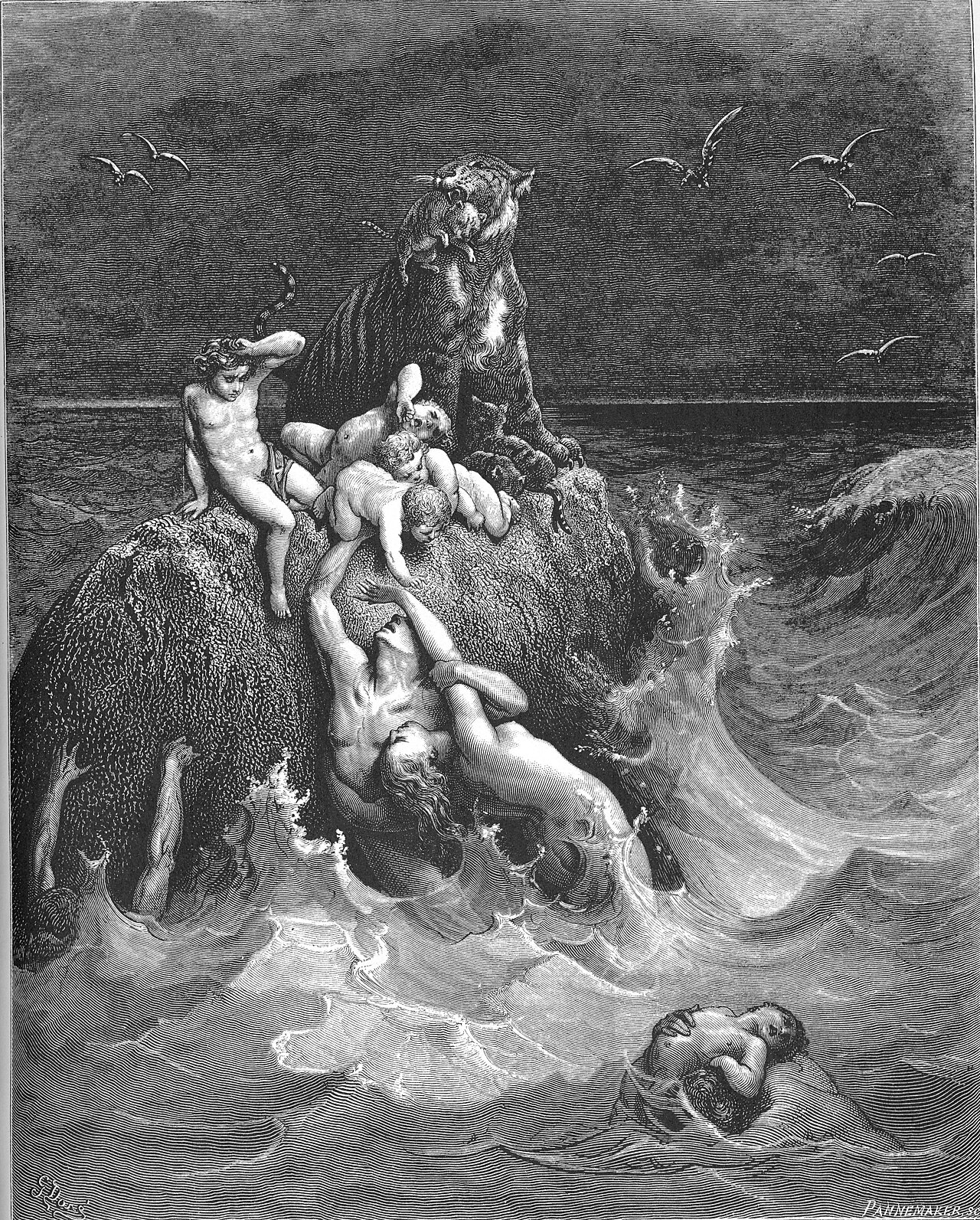
in Genesis 7And every living thing on the face of the earth was destroyed—man and livestock, crawling creatures and birds of the air; they were blotted out from the earth, and only Noah and those with him in the ark remained.
BSB
The same verse in ASV and KJV ▾
ASV
And every living thing was destroyed that was upon the face of the ground, both man, and cattle, and creeping things, and birds of the heavens; and they were destroyed from the earth: and Noah only was left, and they that were with him in the ark.
KJV
And every living substance was destroyed which was upon the face of the ground, both man, and cattle, and the creeping things, and the fowl of the heaven; and they were destroyed from the earth: and Noah only remained alive, and they that were with him in the ark.
⋯
This verse in Genesis 7
Commentary
9 notes on this verseBut he comforts himself with this, that he is in the way of duty and in the way of deliverance. And we are taught ( Jer. xlv. 4, 5 ) that when desolating judgments are abroad we must not seek great nor pleasant things to ourselves, but reckon it an unspeakable favour if we have our lives given us for a prey.
This site's exposition
every living thing that moved upon the earth
on Genesis 7:21-24
The dying is stated and never described. The single line of hope is that those in the ark remained. Jesus took these days as the picture of His own coming, that people ate and drank and married until the day Noah entered the ark, at Matthew 24:38 and 39. The water stands over the earth for 150 days.
This site's exposition
only Noah and those with him
Blotted out is the verb of 6:7, and 7:4 gives it as wipe from the face of the earth. The word for remained is the root of the Hebrew word for remnant, which the prophets use of the few who survive judgment. Matthew Henry counted a spared life a great favour.
The record, by era
The Medieval Church1 voice
We read in the story of holy Noah how he miraculously escaped the flood which destroyed the impious by being preserved with his household in the ark.
The Puritans and the Awakening4 voices
Herein his holiness and justice were greatly magnified; by this it appears that he hates sin, and is highly displeased with sinners, when even the inferior creatures, because they are the servants of man and part of his possession, and because they have been abused to be the servants of sin, are destroyed with him.
quarantine:duplicate (2026-07-29) — dup:2 scholars / 2 anchors
24, 25 ), and now it is not in my power to help you: God has shut the door, and I cannot open it." Thus it will be at the great day. Neither climbing high in an outward profession, nor claiming relation to good people, will bring men to heaven, Matt. vii. Those that are not found in Christ, the ark, are certainly undone, undone for ever; salvation itself cannot save them.
quarantine:debris (2026-07-29) — leading-citation-number+unbalanced-parens+odd-straight-quotes
And every living substance was destroyed which was upon the face of the ground,....
And every living substance was destroyed which was upon the face of the ground,....
1 more voice on this verse
The Puritans and the Awakening1 voice
But he comforts himself with this, that he is in the way of duty and in the way of deliverance. And we are taught ( Jer. xlv. 4, 5 ) that when desolating judgments are abroad we must not seek great nor pleasant things to ourselves, but reckon it an unspeakable favour if we have our lives given us for a prey.
The words behind it
25 Hebrew wordsEvery Hebrew word of this verse in the order it stands, with what it means and the door to its own study. The last column counts the times a word stands in the whole Bible: the rarer the word, the more the places it appears belong together.
| Hebrew | Sound | Meaning | Word study | In the Bible |
|---|---|---|---|---|
| וַיִּ֜מַח | vaiyimach | and he wiped out | H4229 → | 36 times |
| אֶֽת־ | ʾet- | <obj.> | H853 → | 10935 times |
| כָּל־ | kol- | all | H3605 → | 5413 times |
| הַיְק֣וּם׀ | haykum | the existence | H3351 → | |
| אֲשֶׁ֣ר׀ | ʾasher | which | H834 → | 5497 times |
| עַל־ | ʾal- | [was] on | H5921 → | 5755 times |
| פְּנֵ֣י | penei | [the] surface of | H6440 → | 2123 times |
| הָֽאֲדָמָ֗ה | haadamah | the ground | H127 → | 225 times |
| מֵאָדָ֤ם | meadam | from humankind | H120 → | 551 times |
| עַד־ | ʾad- | unto | H5704 → | 1261 times |
| בְּהֵמָה֙ | behemah | animal[s] | H929 → | 190 times |
| עַד־ | ʾad- | unto | H5704 → | 1261 times |
| רֶ֙מֶשׂ֙ | remes | creeping thing[s] | H7431 → | 17 times |
| וְעַד־ | vead- | and unto | H5704 → | 1261 times |
| ע֣וֹף | of | [the] bird[s] of | H5775 → | 71 times |
| הַשָּׁמַ֔יִם | hashamayim | the heavens | H8064 → | 421 times |
| וַיִּמָּח֖וּ | vaiyimachu | and they were wiped out | H4229 → | 36 times |
| מִן־ | min- | from | H4480 → | 1188 times |
| הָאָ֑רֶץ | haaretz | the earth | H776 → | 2504 times |
| וַיִשָּׁ֧אֶר | vayishaer | and he was left | H7604 → | 133 times |
| אַךְ־ | ʾakh- | only | H389 → | 161 times |
| נֹ֛חַ | noach | Noah | H5146 → | 46 times |
| וַֽאֲשֶׁ֥ר | vaasher | and which | H834 → | 5497 times |
| אִתּ֖וֹ | ʾito | [were] with him | H854 → | 929 times |
| בַּתֵּבָֽה׃ | batevah | in the ark | H8392 → | 28 times |
וַיִּ֜מַחand he wiped out
vaiyimachH4229 →36 times
אֶֽת־<obj.>
ʾet-H853 →10935 times
כָּל־all
kol-H3605 →5413 times
הַיְק֣וּם׀the existence
haykumH3351 →
אֲשֶׁ֣ר׀which
ʾasherH834 →5497 times
עַל־[was] on
ʾal-H5921 →5755 times
פְּנֵ֣י[the] surface of
peneiH6440 →2123 times
הָֽאֲדָמָ֗הthe ground
haadamahH127 →225 times
מֵאָדָ֤םfrom humankind
meadamH120 →551 times
עַד־unto
ʾad-H5704 →1261 times
בְּהֵמָה֙animal[s]
behemahH929 →190 times
עַד־unto
ʾad-H5704 →1261 times
רֶ֙מֶשׂ֙creeping thing[s]
remesH7431 →17 times
וְעַד־and unto
vead-H5704 →1261 times
ע֣וֹף[the] bird[s] of
ofH5775 →71 times
הַשָּׁמַ֔יִםthe heavens
hashamayimH8064 →421 times
וַיִּמָּח֖וּand they were wiped out
vaiyimachuH4229 →36 times
מִן־from
min-H4480 →1188 times
הָאָ֑רֶץthe earth
haaretzH776 →2504 times
וַיִשָּׁ֧אֶרand he was left
vayishaerH7604 →133 times
אַךְ־only
ʾakh-H389 →161 times
נֹ֛חַNoah
noachH5146 →46 times
וַֽאֲשֶׁ֥רand which
vaasherH834 →5497 times
אִתּ֖וֹ[were] with him
ʾitoH854 →929 times
בַּתֵּבָֽה׃in the ark
batevahH8392 →28 times
A shaded row is a word that stands 400 times or fewer in the Bible.
The walk
8 stopsEach card is a verse this one points to, and under it the verses that one points to in turn. Where several paths arrive at the same place, that place is listed first: the text keeps returning to it.
Through
1 Peter 3:20who disobeyed long ago when God waited patiently in the days of Noah while the ark was being built. In the ark a few people, only eight souls, were saved through water.
it leads to
- Hebrews 11:7
By faith Noah, when warned about things not yet seen, in godly fear built an ark to save his family. By faith he condemned the world and became heir of the righteousness that comes…
Reached by 2 separate paths from here.
- 2 Peter 2:5
if He did not spare the ancient world when He brought the flood on its ungodly people, but preserved Noah, a preacher of righteousness, among the eight;
Reached by 2 separate paths from here.
- Hebrews 11:7
Through
Hebrews 11:7By faith Noah, when warned about things not yet seen, in godly fear built an ark to save his family. By faith he condemned the world and became heir of the righteousness that comes…
it leads to
- Genesis 6:13
Then God said to Noah, “The end of all living creatures has come before Me, because through them the earth is full of violence. Now behold, I will destroy both them and the earth.
- 1 Peter 3:20
who disobeyed long ago when God waited patiently in the days of Noah while the ark was being built. In the ark a few people, only eight souls, were saved through water.
- Ezekiel 14:14
then even if these three men—Noah, Daniel, and Job—were in it, their righteousness could deliver only themselves, declares the Lord GOD.
- Luke 17:26
Just as it was in the days of Noah, so also will it be in the days of the Son of Man:
- Romans 4:13
For the promise to Abraham and his offspring that he would be heir of the world was not given through the law, but through the righteousness that comes by faith.
- Genesis 6:13
Through
2 Peter 2:5if He did not spare the ancient world when He brought the flood on its ungodly people, but preserved Noah, a preacher of righteousness, among the eight;
it leads to
- 2 Peter 3:6
through which the world of that time perished in the flood.
- 2 Peter 3:6
Where this verse is studied
On this page
Studies8
On this verse
On this chapter
About Genesis
Who and where
1 name in this verse with a page on the site.
This page draws on Bede, On the Tabernacle 2.7.69; John Calvin, Commentary on Genesis; John Gill, Exposition of the Old Testament (1748-1763) and Matthew Henry, Commentary on the Whole Bible.