
Ezekiel 5:14
in Ezekiel 5I will make you a ruin and a disgrace among the nations around you, in the sight of all who pass by.
BSB
The same verse in ASV and KJV ▾
ASV
Moreover I will make thee a desolation and a reproach among the nations that are round about thee, in the sight of all that pass by.
KJV
Moreover I will make thee waste, and a reproach among the nations that are round about thee, in the sight of all that pass by.
⋯
This verse in Ezekiel 5
Commentary
4 notes on this verse(Verse 14.) And I will make you a desert; and what follows: and a reproach to the nations that are around you, which is not found in the Septuagint: for which they added from their own, and your daughters in your vicinity. And again, according to both editions, in the sight of all passing by. However, it is beneficial for Jerusalem to be destroyed by all its vices, and to be brought to a desert, and to recognize its own sins, so that what should have been an example of virtues to other nations may be an example of miseries.
This site's exposition
Moreover I will make thee waste
on Ezekiel 5:14-15
Jerusalem's ruin is given a further purpose beyond her own punishment, to become a reproach and a taunt, an instruction and an astonishment to the nations round about who witness it. Wesley reads the four terms as a rising scale, from simple disgrace to a lesson other nations would draw on, the city's fall made a byword rather than a private tragedy. Jamieson, Fausset and Brown note the same city that refused to be an example of righteousness to the nations in verses six and seven becomes, against her will, an example of judgment instead. The verse closes with the Lord's own signature on the sentence, I the Lord have spoken it, the formula the book uses to mark a judgment as final.
The record, by era
The Puritans and the Awakening2 voices
Moreover I will make thee waste,.... That is, their land; which, being without inhabitants, lay untilled; and so became barren and unfruitful: and a reproach among the nations that are round about thee, in the sight of all that pass by; who, seeing it in this desolate condition, shall throw out their taunts and jeers upon it, as in Lam 2:15.
on Ezekiel 5:8-15
Commentary on Chapter V 1. Take - Thus foretel the mourning, reproach, and deformity that are coming, for all this is signified by shaving the head and beard. A third part - Described on the tile, chap. iv, 1, a type of what should be done in Jerusalem.
How the passage was read
What the Jewish commentators add
On the verses either side of this one
and I shall cause My fury against them to subside When I avenge Myself against them, My fury will subside, and My spirit will not oppress Me.
This section is reception history: how the passage was read and kept in the Jewish tradition. Where a reading parts from an essential of the Christian faith, the section says so at that point.
Texts and citation data: Sefaria; each excerpt follows its version’s licence. 7 further sources are cited on this chapter that carry no English text this site may quote or only restate the verse.
The words behind it
9 Hebrew wordsEvery Hebrew word of this verse in the order it stands, with what it means and the door to its own study. The last column counts the times a word stands in the whole Bible: the rarer the word, the more the places it appears belong together.
| Hebrew | Sound | Meaning | Word study | In the Bible |
|---|---|---|---|---|
| וְאֶתְּנֵךְ֙ | veetenekh | and I will make you | H5414 → | 2011 times |
| לְחָרְבָּ֣ה | lecharebah | into a ruin | H2723 → | 42 times |
| וּלְחֶרְפָּ֔ה | ulecherpah | and into a reproach | H2781 → | 73 times |
| בַּגּוֹיִ֖ם | bagoyim | among the nations | H1471 → | 561 times |
| אֲשֶׁ֣ר | ʾasher | which | H834 → | 5497 times |
| סְבִיבוֹתָ֑יִךְ | sevivotayikh | [are] around you | H5439 → | 336 times |
| לְעֵינֵ֖י | leeinei | to [the] eyes of | H5869 → | 887 times |
| כָּל־ | kol- | every | H3605 → | 5413 times |
| עוֹבֵֽר׃ | over | [one who] passes by | H5674 → | 556 times |
וְאֶתְּנֵךְ֙and I will make you
veetenekhH5414 →2011 times
לְחָרְבָּ֣הinto a ruin
lecharebahH2723 →42 times
וּלְחֶרְפָּ֔הand into a reproach
ulecherpahH2781 →73 times
בַּגּוֹיִ֖םamong the nations
bagoyimH1471 →561 times
אֲשֶׁ֣רwhich
ʾasherH834 →5497 times
סְבִיבוֹתָ֑יִךְ[are] around you
sevivotayikhH5439 →336 times
לְעֵינֵ֖יto [the] eyes of
leeineiH5869 →887 times
כָּל־every
kol-H3605 →5413 times
עוֹבֵֽר׃[one who] passes by
overH5674 →556 times
A shaded row is a word that stands 400 times or fewer in the Bible.
The walk
8 stopsEach card is a verse this one points to, and under it the verses that one points to in turn. Where several paths arrive at the same place, that place is listed first: the text keeps returning to it.
Through
Nehemiah 2:17Then I said to them, “You see the trouble we are in. Jerusalem lies in ruins, and its gates have been burned down. Come, let us rebuild the wall of Jerusalem, so that we…
it leads to
- Isaiah 35:3–4
Strengthen the limp hands and steady the feeble knees!
- Nehemiah 1:3
And they told me, “The remnant who survived the exile are there in the province, in great trouble and disgrace. The wall of Jerusalem is broken down, and its gates are burned with fire.”
- Lamentations 3:51
My eyes bring grief to my soul because of all the daughters of my city.
- Lamentations 3:45–46
You have made us scum and refuse among the nations.
- Psalms 79:4
We have become a reproach to our neighbors, a scorn and derision to those around us.
- Isaiah 35:3–4
Through
Ezekiel 22:4you are guilty of the blood you have shed, and you are defiled by the idols you have made. You have brought your days to a close and have come to the end of…
it leads to
- 2 Kings 21:16
Moreover, Manasseh shed so much innocent blood that he filled Jerusalem from end to end, in addition to the sin that he had caused Judah to commit, doing evil in the sight of the…
- Ezekiel 5:14–15
I will make you a ruin and a disgrace among the nations around you, in the sight of all who pass by.
- 2 Kings 21:16
Through
Lamentations 5:18because of Mount Zion, which lies desolate, patrolled by foxes.
it leads to
- Micah 3:12
Therefore, because of you, Zion will be plowed like a field, Jerusalem will become a heap of rubble, and the temple mount a wooded ridge.
- Micah 3:12
About Ezekiel
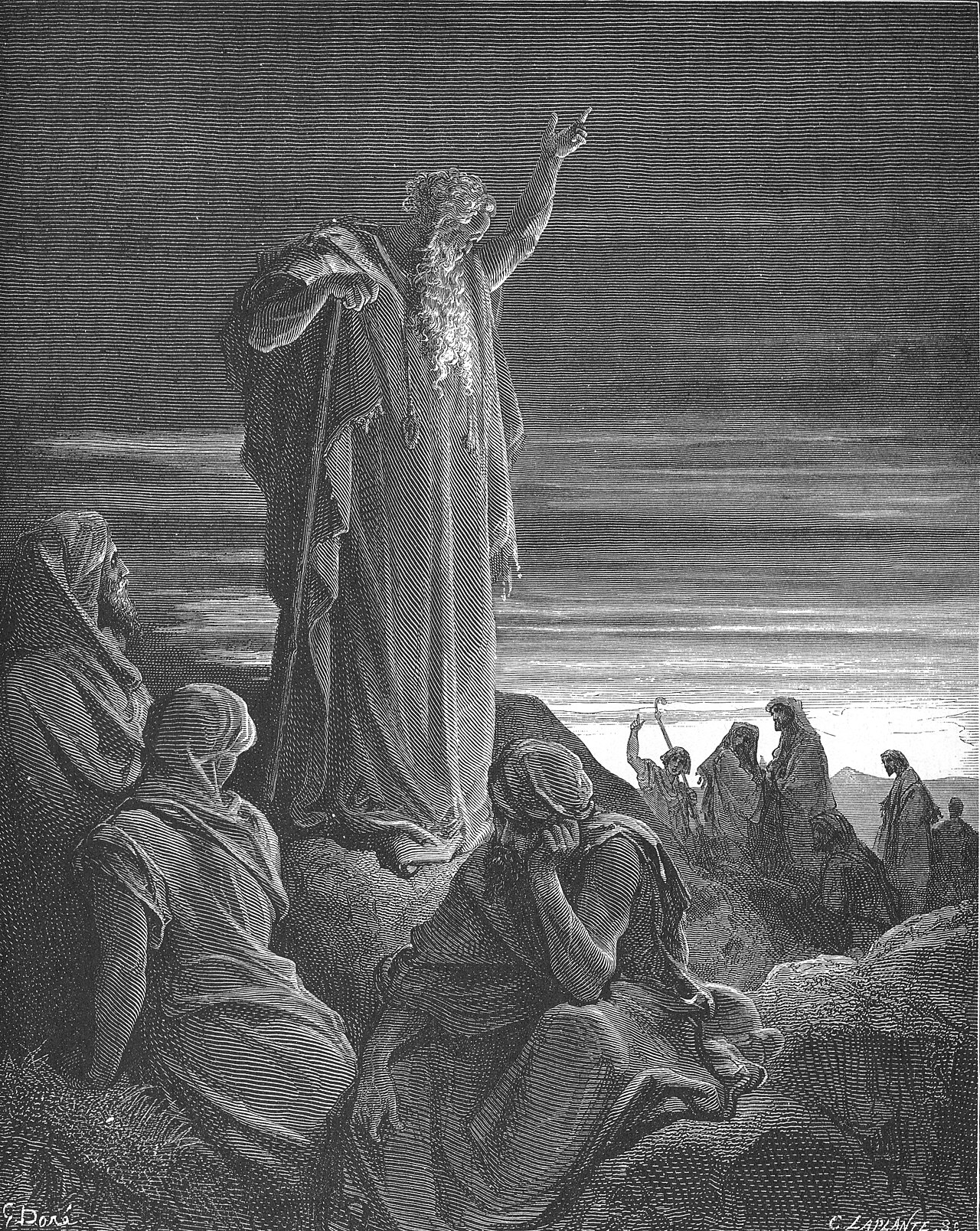
This page draws on Jamieson Fausset and Brown, Commentary Critical and Explanatory on the Whole Bible; Jerome, Commentary on Ezekiel; John Gill, Exposition of the Old Testament (1748-1763) and John Wesley, Explanatory Notes upon the Old Testament.