
Ezekiel 46:2
in Ezekiel 46The prince is to enter from the outside through the portico of the gateway and stand by the gatepost, while the priests sacrifice his burnt offerings and peace offerings. He is to bow in worship at the threshold of the gate and then depart, but the gate must not be shut until evening.
BSB
The same verse in ASV and KJV ▾
ASV
And the prince shall enter by the way of the porch of the gate without, and shall stand by the post of the gate; and the priests shall prepare his burnt-offering and his peace-offerings, and he shall worship at the threshold of the gate: then he shall go forth; but the gate shall not be shut until the evening.
KJV
And the prince shall enter by the way of the porch of that gate without, and shall stand by the post of the gate, and the priests shall prepare his burnt offering and his peace offerings, and he shall worship at the threshold of the gate: then he shall go forth; but the gate shall not be shut until the evening.
⋯
This verse in Ezekiel 46
Commentary
2 notes on this verseA commentator
Albert Barnes1798–1870
Notes, Explanatory and Practical, on the Old and New Testaments (1832-1869)
In the time of Solomon, priest, king, and people each took his due part in the temple-service. Of the later kings some forsook Yahweh for false gods, some encroached upon the prerogative of the priest. Now all should be set right. The prince occupies a position analogous to that of Solomon 2Ch 6:12-13, standing in front of the porch of the eastern gate of the inner court, and at the head of his people to lead their worship, while the priests are sacrificing before him.
This site's exposition
shall be shut the six working days
on Ezekiel 46:1-3
The inner court's east gate stays shut through the working week and opens only on the sabbath and the new moon, the calendar itself built into the architecture. The prince enters by the porch of that same gate and stands at its post while the priests prepare his offerings, worshipping at the threshold rather than passing through into the priestly ground beyond it, and the ordinary people worship at the gate's own door. Keil reads the arrangement as the vision keeping the prince a worshipper among worshippers, near the sanctuary but never inside the priesthood's own space.
How the passage was read
What the Jewish commentators add
On the verses either side of this one
The gate of the Inner Court that faces toward the east, etc. Our Rabbis learned in Tractate Middoth (4:2): The gate of the Heichal had two wickets, one in the south and one in the north.
This section is reception history: how the passage was read and kept in the Jewish tradition. Where a reading parts from an essential of the Christian faith, the section says so at that point.
Texts and citation data: Sefaria; each excerpt follows its version’s licence. 4 further sources are cited on this chapter that carry no English text this site may quote or only restate the verse.
The words behind it
26 Hebrew wordsEvery Hebrew word of this verse in the order it stands, with what it means and the door to its own study. The last column counts the times a word stands in the whole Bible: the rarer the word, the more the places it appears belong together.
| Hebrew | Sound | Meaning | Word study | In the Bible |
|---|---|---|---|---|
| וּבָ֣א | uva' | and he will go | H935 → | 2568 times |
| הַנָּשִׂ֡יא | hanasi' | the prince | H5387 → | 134 times |
| דֶּרֶךְ֩ | derekh | [the] way of | H1870 → | 707 times |
| אוּלָ֨ם | ʾulam | [the] porch of | H197 → | 34 times |
| הַשַּׁ֜עַר | hashaar | the gate | H8179 → | 374 times |
| מִח֗וּץ | michutz | from outside | H2351 → | 164 times |
| וְעָמַד֙ | veamad | and he will stand | H5975 → | 521 times |
| עַל־ | ʾal- | at | H5921 → | 5755 times |
| מְזוּזַ֣ת | mezuzat | [the] doorpost of | H4201 → | 19 times |
| הַשַּׁ֔עַר | hashaar | the gate | H8179 → | 374 times |
| וְעָשׂ֣וּ | veasu | and they will offer | H6213 → | 2628 times |
| הַכֹּהֲנִ֗ים | hakohanim | the priests | H3548 → | 750 times |
| אֶת־ | ʾet- | <obj.> | H853 → | 10935 times |
| עֽוֹלָתוֹ֙ | olato | burnt offering his | H5930 → | 287 times |
| וְאֶת־ | veet | and <obj.> | H853 → | 10935 times |
| שְׁלָמָ֔יו | shelamav | peace offerings his | H8002 → | 87 times |
| וְהִֽשְׁתַּחֲוָ֛ה | vehishtachavah | and he will bow down | H7812 → | 172 times |
| עַל־ | ʾal- | at | H5921 → | 5755 times |
| מִפְתַּ֥ן | miftan | [the] threshold of | H4670 → | 8 times |
| הַשַּׁ֖עַר | hashaar | the gate | H8179 → | 374 times |
| וְיָצָ֑א | veyatza' | and he will go out | H3318 → | 1067 times |
| וְהַשַּׁ֥עַר | vehashaar | and the gate | H8179 → | 374 times |
| לֹֽא־ | lo'- | not | H3808 → | 5168 times |
| יִסָּגֵ֖ר | yisager | it will be shut | H5462 → | 91 times |
| עַד־ | ʾad- | until | H5704 → | 1261 times |
| הָעָֽרֶב׃ | haarev | the evening | H6153 → | 134 times |
וּבָ֣אand he will go
uva'H935 →2568 times
הַנָּשִׂ֡יאthe prince
hanasi'H5387 →134 times
דֶּרֶךְ֩[the] way of
derekhH1870 →707 times
אוּלָ֨ם[the] porch of
ʾulamH197 →34 times
הַשַּׁ֜עַרthe gate
hashaarH8179 →374 times
מִח֗וּץfrom outside
michutzH2351 →164 times
וְעָמַד֙and he will stand
veamadH5975 →521 times
עַל־at
ʾal-H5921 →5755 times
מְזוּזַ֣ת[the] doorpost of
mezuzatH4201 →19 times
הַשַּׁ֔עַרthe gate
hashaarH8179 →374 times
וְעָשׂ֣וּand they will offer
veasuH6213 →2628 times
הַכֹּהֲנִ֗יםthe priests
hakohanimH3548 →750 times
אֶת־<obj.>
ʾet-H853 →10935 times
עֽוֹלָתוֹ֙burnt offering his
olatoH5930 →287 times
וְאֶת־and <obj.>
veetH853 →10935 times
שְׁלָמָ֔יוpeace offerings his
shelamavH8002 →87 times
וְהִֽשְׁתַּחֲוָ֛הand he will bow down
vehishtachavahH7812 →172 times
עַל־at
ʾal-H5921 →5755 times
מִפְתַּ֥ן[the] threshold of
miftanH4670 →8 times
הַשַּׁ֖עַרthe gate
hashaarH8179 →374 times
וְיָצָ֑אand he will go out
veyatza'H3318 →1067 times
וְהַשַּׁ֥עַרand the gate
vehashaarH8179 →374 times
לֹֽא־not
lo'-H3808 →5168 times
יִסָּגֵ֖רit will be shut
yisagerH5462 →91 times
עַד־until
ʾad-H5704 →1261 times
הָעָֽרֶב׃the evening
haarevH6153 →134 times
A shaded row is a word that stands 400 times or fewer in the Bible.
The walk
8 stopsEach card is a verse this one points to, and under it the verses that one points to in turn. Where several paths arrive at the same place, that place is listed first: the text keeps returning to it.
Through
Ezekiel 45:19And the priest is to take some of the blood from the sin offering and put it on the doorposts of the temple, on the four corners of the ledge of the altar, and…
it leads to
- Ezekiel 43:20
You are to take some of its blood and put it on the four horns of the altar, on the four corners of the ledge, and all around the rim; thus you will cleanse…
- Leviticus 16:18–20
Then he shall go out to the altar that is before the LORD and make atonement for it. He is to take some of the bull’s blood and some of the goat’s blood and…
- Ezekiel 43:20
Through
Ezekiel 44:3Only the prince himself may sit inside the gateway to eat in the presence of the LORD. He must enter by way of the portico of the gateway and go out the same way.”
it leads to
- Ezekiel 37:25
They will live in the land that I gave to My servant Jacob, where your fathers lived. They will live there forever with their children and grandchildren, and My servant David will be their…
- 1 Corinthians 10:18–33
Consider the people of Israel: Are not those who eat the sacrifices fellow partakers in the altar?
- Genesis 31:54
Then Jacob offered a sacrifice on the mountain and invited his relatives to eat a meal. And after they had eaten, they spent the night on the mountain.
- Ezekiel 34:24
I, the LORD, will be their God, and My servant David will be a prince among them. I, the LORD, have spoken.
- Ezekiel 46:8–10
When the prince enters, he shall go in through the portico of the gateway, and he shall go out the same way.
- Ezekiel 37:25
Through
2 Chronicles 29:29When the offerings were completed, the king and all those present with him bowed down and worshiped.
it leads to
- 2 Chronicles 20:18
Then Jehoshaphat bowed facedown, and all the people of Judah and Jerusalem fell down before the LORD to worship Him.
- 2 Chronicles 20:18
About Ezekiel
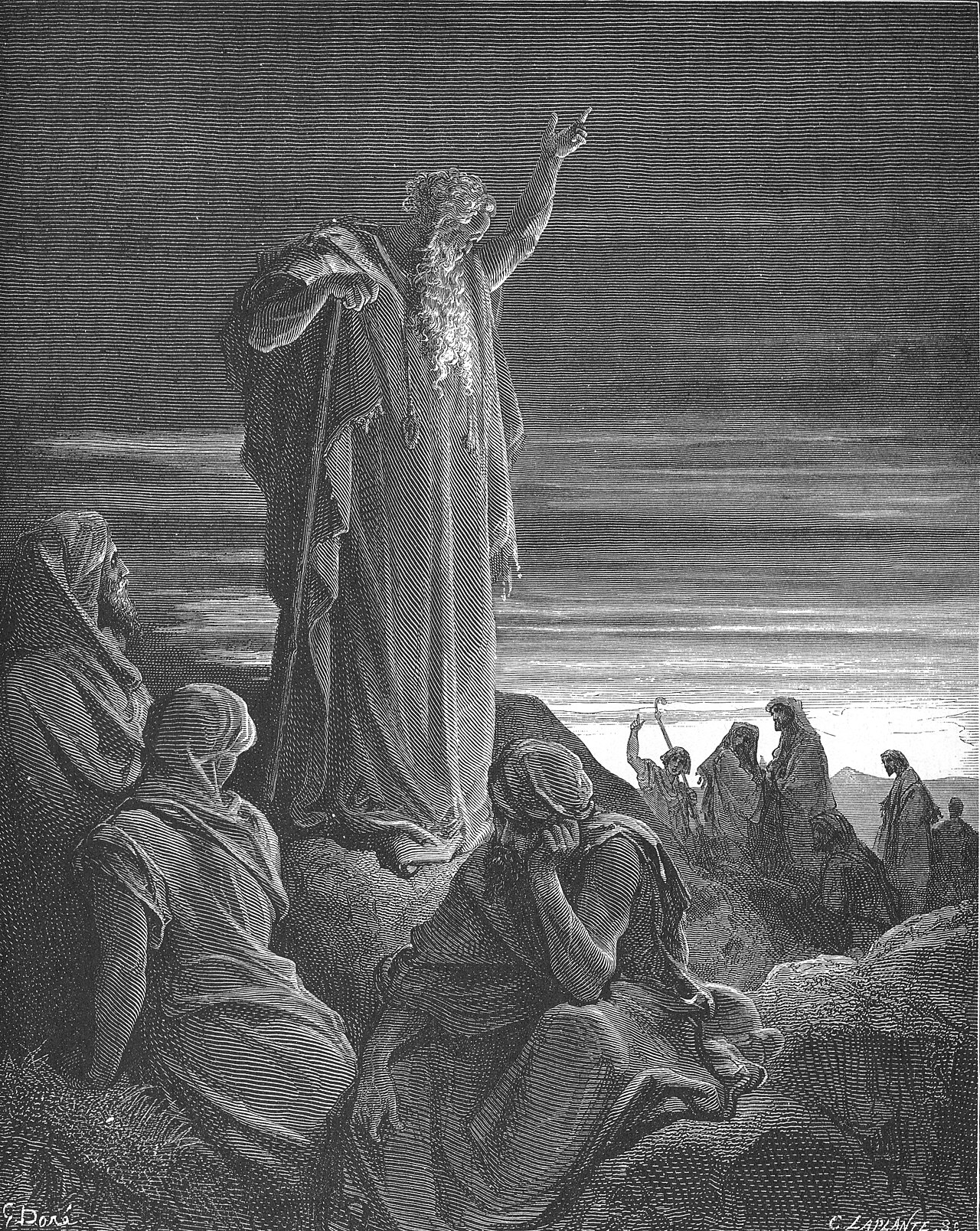
This page draws on Albert Barnes, Notes, Explanatory and Practical, on the Old and New Testaments (1832-1869); Carl Friedrich Keil, Biblical Commentary on the Prophecies of Ezekiel and Patrick Fairbairn, An Exposition of Ezekiel.