
Daniel 12:7
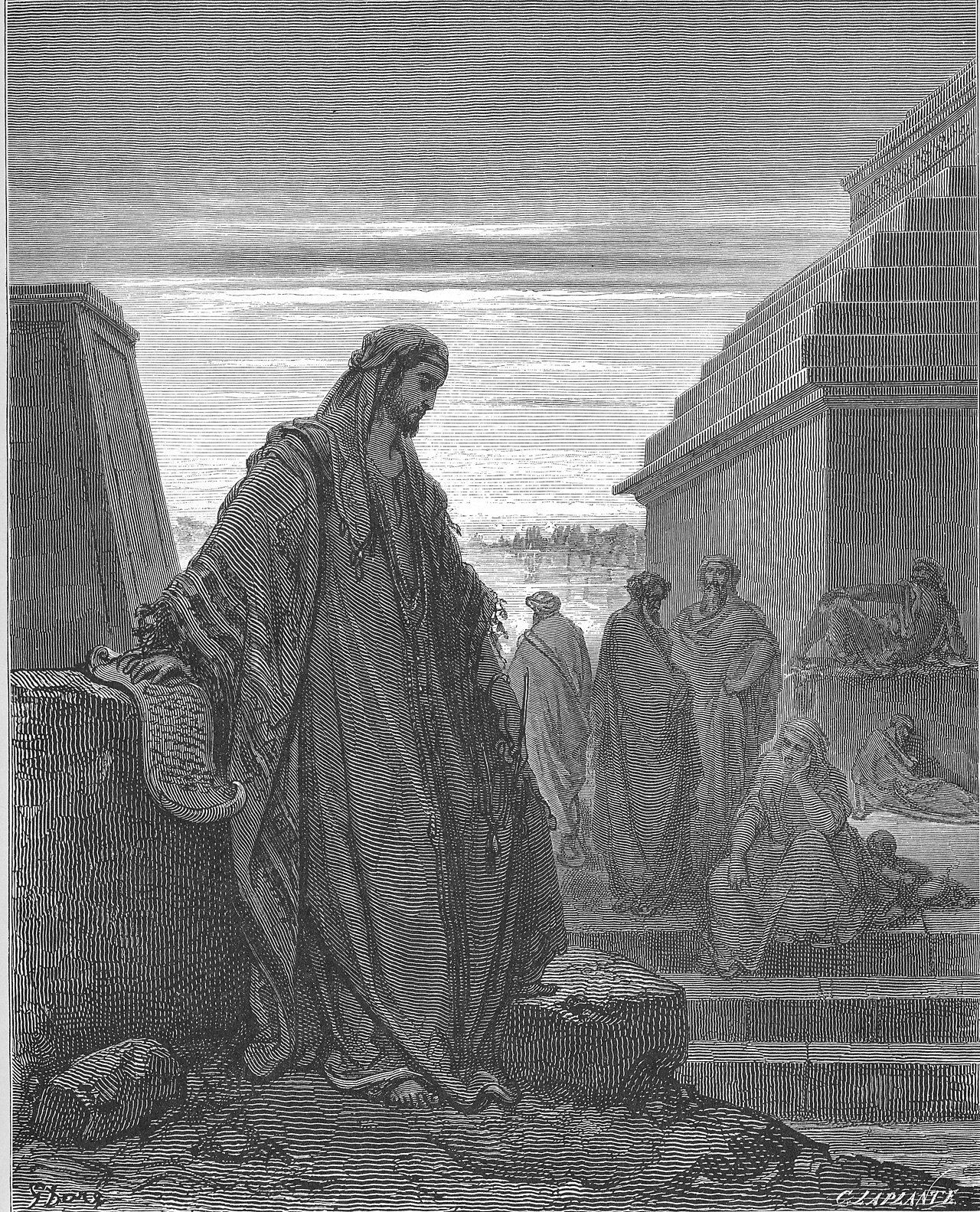
in Daniel 12And the man dressed in linen, who was above the waters of the river, raised his right hand and his left hand toward heaven, and I heard him swear by Him who lives forever, saying, “It will be for a time, and times, and half a time. When the power of the holy people has finally been shattered, all these things will be completed.”
BSB
The same verse in ASV and KJV ▾
ASV
And I heard the man clothed in linen, who was above the waters of the river, when he held up his right hand and his left hand unto heaven, and sware by him that liveth for ever that it shall be for a time, times, and a half; and when they have made an end of breaking in pieces the power of the holy people, all these things shall be finished.
KJV
And I heard the man clothed in linen, which was upon the waters of the river, when he held up his right hand and his left hand unto heaven, and sware by him that liveth for ever that it shall be for a time, times, and an half; and when he shall have accomplished to scatter the power of the holy people, all these things shall be finished.
⋯
This verse in Daniel 12
Commentary
14 notes on this verseVerse 7. "And I heard the man that was clothed in linen, that stood upon the waters of the river: when he had lifted up his right hand and his left hand to heaven and had sworn by Him that liveth forever, that it should be unto a time and times and half a time." Porphyry interprets a time and times and half a time to mean three and a half years; and we for our part do not deny that this accords with the idiom of Sacred Scripture.
This site's exposition
saw two others standing there
on Daniel 12:5-7
Daniel sees two others on opposite banks, and one asks the man in linen how long it will be until these wonders are fulfilled. He swears that it will be “for a time, and times, and half a time,” until the power of the holy people is shattered.
This site's exposition
a time, and times
Hippolytus and Augustine take the time, times and half a time as three and a half years under the Antichrist. Augustine says the Greek puts times in the dual. Jerome says Porphyry saw the same three and a half years, and allows that this fits the way Scripture speaks.
The record, by era
The Church Fathers5 voices
The word times may seem an indefinite plural in our language [Latin], but the Greek texts (and, so I am told, the Hebrew texts as well) show that "times" is written in the dual number and so means "two times."
The last of all persecutions, the antichrist's, is to go on for three and a half years.… Now the question, quite reasonably, presents itself: Should these three and a half years, brief as they are, be included in the thousand years of the devil's binding and the saints' reign with Christ, or are they outside the thousand and superadded to them?… We conclude that the reign of Christ with his saints will be longer than the devil's bonds and imprisonment, for, even when he is released, they will continue to reign with their King, the Son of God, for these three and a half years.
And so, after the dispersion of the Jews happens, the suffering of the people is consummated, in those days the Antichrist is near, then they shall know all these things. And so, O man, why do you still doubt at what was spoken, or how do you not believe what was spoken by the Lord, when his first advent has already occurred, and he who stood upon the water at that time and was seen by Daniel in the world, now is made famous and his passion is declared to all, and the dispersion has happened to the people of the Jews by the Romans? For when he says, "When the dispersion of the Jews is consummated they shall know all these things," [Daniel 12:7] then, when the Lord came to them and was not recognized by them, they were scattered into all the world, becoming exiles from their own land. And being attacked by enemies, they were banished from the city of Jerusalem, becoming a joy to all nations, so that the Gospel of the Lord may be preached in all the world and all time may be fulfilled and the end of the week may be encompassed and the two precursors of Christ may be dispatched and the abomination of desolation may be shown with them and the Judge of judges may be revealed from heaven and the resurrection of the saints and of all the world may occur and the eternal kingdom may be given to the saints and the unquenchable and sleepless fire of the impious may be inflamed.
Here we learn accurately that the one speaking at the time was not the Lord. For as the holy apostle says, "Since the Lord could not swear by anything greater than himself, he swore by himself, saying, 'as I live, says the Lord.' " And …
What and to whom did he swear? The Son swore to Father, saying that the Father lives forever and that they truly shall know all these things in a time and times and half of a time, when the dispersal of the Jews has been consummated. And so he stretched out his hands, and through this he displayed the passion. But when he says, "In a time and times and half of the time," [Daniel 12:7] he signaled that the things of the Antichrist are for three-and-a-half years. For he says a time is one year, but times are two years, and half of a time is half of one year. These are the one thousand two hundred ninety days which Daniel foretold.
6 more voices on this verse
The Puritans and the Awakening3 voices
Christ's public ministry continued three years and a half, during which time he endured the contradiction of sinners against himself, and lived in poverty and disgrace; and then when his power seemed to be quite scattered at his death, and his enemies triumphed over him, he obtained the most glorious victory and said, It is finished.
By him - By God the father, and by himself that liveth forever, to shew the eternal God only knew that decreed it, and would bring it to pass. And an half - That is, a year, two years and half a year.
And I heard the man clothed in linen, which was upon the waters of the river,....
The Nineteenth Century3 voices
A commentator
Jamieson, Fausset & Brown1802–1910
Commentary Critical and Explanatory on the Whole Bible (1871)
606, the very year that Phocas made the grant to the bishop of Rome, whence he assumed the title, The Universal Pastor; Antichrist thus setting both his feet on Christendom together, the one in the East, and the other in the West. Three and a half is the time of the world power, in which the earthly kingdoms rule over the heavenly [AUBERLEN].
Which was upon the waters - By this description, he was standing on the water. This is very similar to the description of the angel, Rev 10:5, Rev 10:6, and in the seventh verse there seems to be a reference to this prophecy “a time, times, and a half.” See the note on Dan 7:25 (note).
A commentator
Albert Barnes1798–1870
Notes, Explanatory and Practical, on the Old and New Testaments (1832-1869)
proposed
And I heard the man ... - That is, he replied to the question at once, and in a most solemn manner, as if he were communicating a great and momentous truth respecting the future. When he held up his right hand and his left hand unto heaven - Toward heaven; as if appealing to heaven for the sincerity and truth of what he was about to utter.
The words behind it
29 Hebrew wordsEvery Hebrew word of this verse in the order it stands, with what it means and the door to its own study. The last column counts the times a word stands in the whole Bible: the rarer the word, the more the places it appears belong together.
| Hebrew | Sound | Meaning | Word study | In the Bible |
|---|---|---|---|---|
| וָאֶשְׁמַ֞ע | vaeshma' | and I heard | H8085 → | 1159 times |
| אֶת־ | ʾet- | <obj.> | H853 → | 10935 times |
| הָאִ֣ישׁ׀ | haish | the man | H376 → | 1663 times |
| לְב֣וּשׁ | levush | <the> clothed of | H3847 → | 110 times |
| הַבַּדִּ֗ים | habadim | <the> linen<s> | H906 → | 23 times |
| אֲשֶׁ֣ר | ʾasher | who | H834 → | 5497 times |
| מִמַּעַל֮ | mimaal | [was] from above | H4605 → | |
| לְמֵימֵ֣י | lemeimei | <to> [the] water of | H4325 → | 581 times |
| הַיְאֹר֒ | hayor | the River | H2975 → | 65 times |
| וַיָּ֨רֶם | vaiyarem | and he raised | H7311 → | 190 times |
| יְמִינ֤וֹ | yemino | right [hand] his | H3225 → | |
| וּשְׂמֹאלוֹ֙ | usemolo | and left [hand] his | H8040 → | |
| אֶל־ | ʾel- | to | H413 → | 5510 times |
| הַשָּׁמַ֔יִם | hashamayim | the heavens | H8064 → | 421 times |
| וַיִּשָּׁבַ֖ע | vaiyishava' | and he swore | H7650 → | |
| בְּחֵ֣י | bechei | by [the] living one of | H2416 → | 498 times |
| הָעוֹלָ֑ם | haolam | <the> perpetuity | H5769 → | 438 times |
| כִּי֩ | ki | that | H3588 → | 4482 times |
| לְמוֹעֵ֨ד | lemoed | to a time | H4150 → | 223 times |
| מֽוֹעֲדִ֜ים | moadim | times | H4150 → | 223 times |
| וָחֵ֗צִי | vachetzi | and a half | H2677 → | |
| וּכְכַלּ֛וֹת | ukhekhalot | and just as finish | H3615 → | 208 times |
| נַפֵּ֥ץ | napetz | to smash | H5310 → | |
| יַד־ | yad- | [the] hand of | H3027 → | 1618 times |
| עַם־ | ʾam- | [the] people of | H5971 → | 1873 times |
| קֹ֖דֶשׁ | kodesh | holiness | H6944 → | 469 times |
| תִּכְלֶ֥ינָה | tikhleinah | they will be finished | H3615 → | 208 times |
| כָל־ | khol- | all | H3605 → | 5413 times |
| אֵֽלֶּה׃ | ʾeleh | these [things] | H428 → | 746 times |
וָאֶשְׁמַ֞עand I heard
vaeshma'H8085 →1159 times
אֶת־<obj.>
ʾet-H853 →10935 times
הָאִ֣ישׁ׀the man
haishH376 →1663 times
לְב֣וּשׁ<the> clothed of
levushH3847 →110 times
הַבַּדִּ֗ים<the> linen<s>
habadimH906 →23 times
אֲשֶׁ֣רwho
ʾasherH834 →5497 times
מִמַּעַל֮[was] from above
mimaalH4605 →
לְמֵימֵ֣י<to> [the] water of
lemeimeiH4325 →581 times
הַיְאֹר֒the River
hayorH2975 →65 times
וַיָּ֨רֶםand he raised
vaiyaremH7311 →190 times
יְמִינ֤וֹright [hand] his
yeminoH3225 →
וּשְׂמֹאלוֹ֙and left [hand] his
usemoloH8040 →
אֶל־to
ʾel-H413 →5510 times
הַשָּׁמַ֔יִםthe heavens
hashamayimH8064 →421 times
וַיִּשָּׁבַ֖עand he swore
vaiyishava'H7650 →
בְּחֵ֣יby [the] living one of
becheiH2416 →498 times
הָעוֹלָ֑ם<the> perpetuity
haolamH5769 →438 times
כִּי֩that
kiH3588 →4482 times
לְמוֹעֵ֨דto a time
lemoedH4150 →223 times
מֽוֹעֲדִ֜יםtimes
moadimH4150 →223 times
וָחֵ֗צִיand a half
vachetziH2677 →
וּכְכַלּ֛וֹתand just as finish
ukhekhalotH3615 →208 times
נַפֵּ֥ץto smash
napetzH5310 →
יַד־[the] hand of
yad-H3027 →1618 times
עַם־[the] people of
ʾam-H5971 →1873 times
קֹ֖דֶשׁholiness
kodeshH6944 →469 times
תִּכְלֶ֥ינָהthey will be finished
tikhleinahH3615 →208 times
כָל־all
khol-H3605 →5413 times
אֵֽלֶּה׃these [things]
ʾelehH428 →746 times
A shaded row is a word that stands 400 times or fewer in the Bible.
The walk
8 stopsEach card is a verse this one points to, and under it the verses that one points to in turn. Where several paths arrive at the same place, that place is listed first: the text keeps returning to it.
Through
Daniel 7:25He will speak out against the Most High and oppress the saints of the Most High, intending to change the appointed times and laws; and the saints will be given into his hand for…
it leads to
- Revelation 12:6
And the woman fled into the wilderness, where God had prepared a place for her to be nourished for 1,260 days.
Reached by 3 separate paths from here.
- Revelation 12:14
But the woman was given two wings of a great eagle to fly from the presence of the serpent to her place in the wilderness, where she was nourished for a time, and times,…
- 2 Thessalonians 2:4
He will oppose and exalt himself above every so-called god or object of worship. So he will seat himself in the temple of God, proclaiming himself to be God.
- Revelation 13:5–11
The beast was given a mouth to speak arrogant and blasphemous words, and authority to act for 42 months.
- Daniel 12:11–12
And from the time the daily sacrifice is abolished and the abomination of desolation set up, there will be 1,290 days.
- Revelation 12:6
Through
Revelation 13:5The beast was given a mouth to speak arrogant and blasphemous words, and authority to act for 42 months.
it leads to
- Daniel 7:25
He will speak out against the Most High and oppress the saints of the Most High, intending to change the appointed times and laws; and the saints will be given into his hand for…
Reached by 3 separate paths from here.
- Daniel 7:25
Through
Revelation 12:14But the woman was given two wings of a great eagle to fly from the presence of the serpent to her place in the wilderness, where she was nourished for a time, and times,…
it leads to
- Exodus 19:4
‘You have seen for yourselves what I did to Egypt, and how I carried you on eagles’ wings and brought you to Myself.
- Isaiah 40:31
But those who wait upon the LORD will renew their strength; they will mount up with wings like eagles; they will run and not grow weary, they will walk and not faint.
- Exodus 19:4
Where this verse is studied
On this page
About Daniel
This page draws on 14 works. Open the list of works
This page draws on Adam Clarke, Commentary on the Bible; Albert Barnes, Notes, Explanatory and Practical, on the Old and New Testaments (1832-1869); Augustine of Hippo, City of God 20.13; Augustine of Hippo, City of God 20.23; Carl Friedrich Keil, Biblical Commentary on the Book of Daniel; Hippolytus of Rome, Commentary on Daniel 4.56.6-8; Hippolytus of Rome, Commentary on Daniel 4.57.1-3; Jamieson, Fausset & Brown, Commentary Critical and Explanatory on the Whole Bible; Jerome, St. Jerome, Commentary on Daniel, CHAPTER TWELVE; John Calvin, Commentary on the Prophet Daniel; John Gill, Exposition of the Old Testament (1748-1763); John Wesley, Explanatory Notes upon the Old Testament; Matthew Henry, Commentary on the Whole Bible and Theodoret of Cyrus, COMMENTARY ON DANIEL 12:7.