
Amos 9:4
in Amos 9Though they are driven by their enemies into captivity, there I will command the sword to slay them. I will fix My eyes upon them for harm and not for good.”
BSB
The same verse in ASV and KJV ▾
ASV
And though they go into captivity before their enemies, thence will I command the sword, and it shall slay them: and I will set mine eyes upon them for evil, and not for good.
KJV
And though they go into captivity before their enemies, thence will I command the sword, and it shall slay them: and I will set mine eyes upon them for evil, and not for good.
⋯
This verse in Amos 9
Commentary
6 notes on this verseI will set mine eyes upon them for evil - I will use that very providence against them which before worked for their good. Should they look upward, they shall see nothing but the terrible lightning-like eye of a sin-avenging God.
This site's exposition
Though they dig into hell
on Amos 9:2-4
Four directions are named and each is closed: dig into hell and the Lord's hand reaches there, climb to heaven and he brings them down, hide in the top of Carmel and he searches them out, hide in the bottom of the sea and he commands the serpent to bite them, go into captivity and he commands the sword to follow. The bench reads the four-fold sweep as a deliberate answer to any hope of escape by height, depth, wilderness or exile, and I will set mine eyes upon them for evil, and not for good reverses the covenant blessing of eyes upon the land for good, the same divine attention now working the other way.
The record, by era
The Church Fathers1 voice
(Vers. 2 seqq.) If they descend to the depths, my hand will bring them up from there. And if they ascend to heaven, I will bring them down from there. And if they hide themselves on the top of Carmel, I will search and take them from there. And if they hide from my sight at the bottom of the sea, I will command the serpent to bite them. And if they go into captivity before their enemies, I will command the sword to kill them. I will set my eyes upon them for evil and not for good.
The Puritans and the Awakening2 voices
His eyes are in every place, are upon all men and upon all the ways of men, upon some for good, to show himself strong on their behalf, but upon others for evil, to take notice of their sins ( Job xiii. 27 ) and take all opportunities of punishing them for their sins.
And though they go into captivity before their enemies,....
The Nineteenth Century1 voice
A commentator
Albert Barnes1798–1870
Notes, Explanatory and Practical, on the Old and New Testaments (1832-1869)
proposed
Captivity - , at least, seemed safe. The horrors of war are over. Men enslave, but do not commonly destroy those whom they have once been at the pains to carry captive. Amos describes them in their misery, as “going” willingly, gladly, “into captivity before their enemies,” like a flock of sheep. Yet “thence” too, out of “the captivity,” God would command the sword, and it should slay them. So God had forewarned them by Moses, that captivity should be an occasion, not an end, of slaughter. “I will scatter you among the pagan, and will draw out a sword after you” Lev 26:33. “And among these nations shalt thou find no ease - and thy life shall hang in doubt before thee, and thou shalt fear day and night, and shalt have none assurance of thy life” Deu 28:65-66. The book of Esther shows how cheaply the life of a whole nation was held by Eastern conquerors; and the book of Tobit records, how habitually Jews were slain and cast out unburied (Tobit 1:17; 2:3). The account also that Sennacherib (Tobit 1:18) avenged the loss of his army, and “in his wrath killed many,” is altogether in the character of Assyrian conquerors. Unwittingly he fulfilled the command of God, “I will command the sword and it shall slay them.” I will set mine eyes upon them for evil - So David says, “The eyes of the Lord are over the righteous, and His ears are open to their prayers. The face of the Lord is against them that do evil, to root out the remembrance of them from off the earth” Psa 34:15-16. The Eye of God rests on each creature which He hath made, as entirely as if He had created it alone. Every moment is passed in His unvarying sight. But, as man “sets his eye” on man, watching him and with purpose of evil, so God’s Eye is felt to be on man in displeasure, when sorrow and calamity track him and overtake him, coming he knows not how in unlooked-for ways and strange events. […]
The words behind it
16 Hebrew wordsEvery Hebrew word of this verse in the order it stands, with what it means and the door to its own study. The last column counts the times a word stands in the whole Bible: the rarer the word, the more the places it appears belong together.
| Hebrew | Sound | Meaning | Word study | In the Bible |
|---|---|---|---|---|
| וְאִם־ | veim- | and if | H518 → | 1069 times |
| יֵלְכ֤וּ | yelekhu | they will go | H1980 → | 1546 times |
| בַשְּׁבִי֙ | vashevi | in <the> captivity | H7628 → | |
| לִפְנֵ֣י | lifnei | <to> before | H6440 → | 2123 times |
| אֹֽיבֵיהֶ֔ם | ʾveihem | enemies their | H341 → | |
| מִשָּׁ֛ם | misham | from there | H8033 → | 834 times |
| אֲצַוֶּ֥ה | ʾatzaveh | I will command | H6680 → | 494 times |
| אֶת־ | ʾet- | <obj.> | H853 → | 10935 times |
| הַחֶ֖רֶב | hacherev | the sword | H2719 → | 413 times |
| וַהֲרָגָ֑תַם | vaharagatam | and it will kill them | H2026 → | 167 times |
| וְשַׂמְתִּ֨י | vesamti | and I will set | H7760 → | 584 times |
| עֵינִ֧י | ʾeini | eye my | H5869 → | 887 times |
| עֲלֵיהֶ֛ם | ʾaleihem | on them | H5921 → | 5755 times |
| לְרָעָ֖ה | leraah | for evil | H7451 → | 662 times |
| וְלֹ֥א | velo' | and not | H3808 → | 5168 times |
| לְטוֹבָֽה׃ | letovah | for good | H2896 → | 538 times |
וְאִם־and if
veim-H518 →1069 times
יֵלְכ֤וּthey will go
yelekhuH1980 →1546 times
בַשְּׁבִי֙in <the> captivity
vasheviH7628 →
לִפְנֵ֣י<to> before
lifneiH6440 →2123 times
אֹֽיבֵיהֶ֔םenemies their
ʾveihemH341 →
מִשָּׁ֛םfrom there
mishamH8033 →834 times
אֲצַוֶּ֥הI will command
ʾatzavehH6680 →494 times
אֶת־<obj.>
ʾet-H853 →10935 times
הַחֶ֖רֶבthe sword
hacherevH2719 →413 times
וַהֲרָגָ֑תַםand it will kill them
vaharagatamH2026 →167 times
וְשַׂמְתִּ֨יand I will set
vesamtiH7760 →584 times
עֵינִ֧יeye my
ʾeiniH5869 →887 times
עֲלֵיהֶ֛םon them
ʾaleihemH5921 →5755 times
לְרָעָ֖הfor evil
leraahH7451 →662 times
וְלֹ֥אand not
velo'H3808 →5168 times
לְטוֹבָֽה׃for good
letovahH2896 →538 times
A shaded row is a word that stands 400 times or fewer in the Bible.
The walk
8 stopsEach card is a verse this one points to, and under it the verses that one points to in turn. Where several paths arrive at the same place, that place is listed first: the text keeps returning to it.
Through
Leviticus 17:10If anyone from the house of Israel or a foreigner living among them eats any blood, I will set My face against that person and cut him off from among his people.
it leads to
- Leviticus 26:17
And I will set My face against you, so that you will be defeated by your enemies. Those who hate you will rule over you, and you will flee when no one pursues you.
Reached by 2 separate paths from here.
- Leviticus 17:11
For the life of the flesh is in the blood, and I have given it to you to make atonement for your souls upon the altar; for it is the blood that makes atonement…
- Leviticus 3:17
This is a permanent statute for the generations to come, wherever you live: You must not eat any fat or any blood.”
- Deuteronomy 12:16
but you must not eat the blood; pour it on the ground like water.
- Deuteronomy 12:23
Only be sure not to eat the blood, because the blood is the life, and you must not eat the life with the meat.
- Leviticus 26:17
Through
Jeremiah 21:10For I have set My face against this city to bring disaster and not good, declares the LORD. It will be delivered into the hand of the king of Babylon, who will destroy it…
it leads to
- Jeremiah 44:11
Therefore this is what the LORD of Hosts, the God of Israel, says: I will set My face to bring disaster and to cut off all Judah.
- Jeremiah 44:27
I am watching over them for harm and not for good, and every man of Judah who is in the land of Egypt will meet his end by sword or famine, until they are…
- Jeremiah 44:11
Through
Leviticus 26:33But I will scatter you among the nations and will draw out a sword after you as your land becomes desolate and your cities are laid waste.
it leads to
- Zechariah 7:14
But I scattered them with a whirlwind among all the nations that they had not known, and the land was left desolate behind them so that no one could come or go. Thus they…
- Zechariah 7:14
Where this verse is studied
On this page
Studies2
On this verse
On this chapter
About Amos
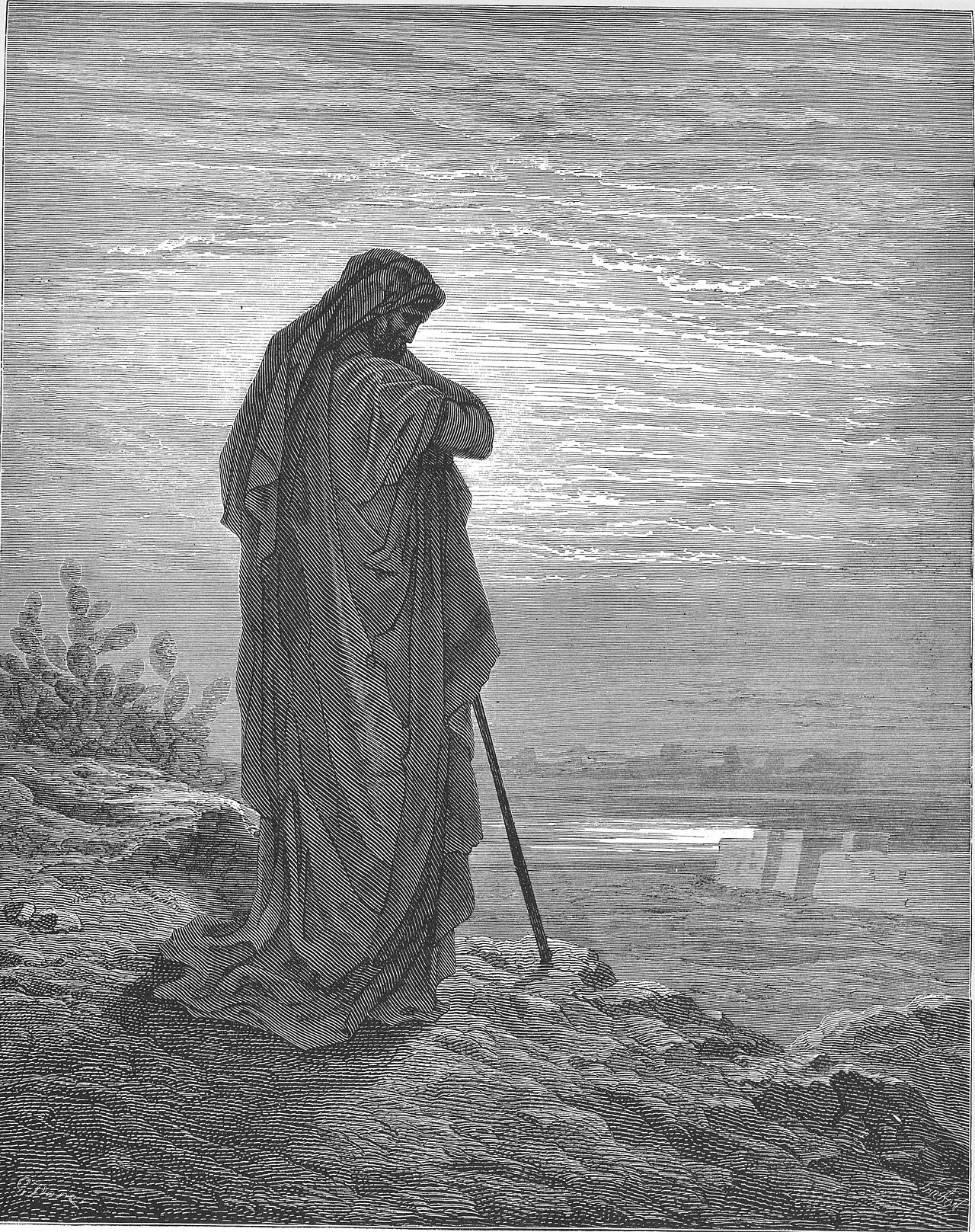
This page draws on Adam Clarke, Commentary on the Bible; Albert Barnes, Notes, Explanatory and Practical, on the Old and New Testaments (1832-1869); Edward Bouverie Pusey, The Minor Prophets: A Commentary; Jerome, Commentary on Amos; John Gill, Exposition of the Old Testament (1748-1763) and Matthew Henry, Commentary on the Whole Bible.