
Amos 4:10
in Amos 4“I sent plagues among you like those of Egypt; I killed your young men with the sword, along with your captured horses. I filled your nostrils with the stench of your camp, yet you did not return to Me,” declares the LORD.
BSB
The same verse in ASV and KJV ▾
ASV
I have sent among you the pestilence after the manner of Egypt: your young men have I slain with the sword, and have carried away your horses; and I have made the stench of your camp to come up even into your nostrils: yet have ye not returned unto me, saith Jehovah.
KJV
I have sent among you the pestilence after the manner of Egypt: your young men have I slain with the sword, and have taken away your horses; and I have made the stink of your camps to come up unto your nostrils: yet have ye not returned unto me, saith the Lord.
⋯
This verse in Amos 4
Commentary
9 notes on this verseI sent death upon you on the way of Egypt, I killed your young men with the captivity of your horses. And I made the stench of your camps go up into your nostrils, and you did not return to me, says the Lord. LXX: I sent death upon you on the way of Egypt, and I killed your young men with the captivity of your horses. And I led your camps in fire in my anger, and yet you did not return to me, says the Lord.
This site's exposition
blasting and mildew
on Amos 4:9-11
Blasting and mildew take the crop the drought spared, the pestilence after the manner of Egypt takes the young men, and the last discipline is named outright: I have overthrown some of you, as God overthrew Sodom and Gomorrah, the nation's own history turned into its own warning. The firebrand plucked out of the burning is read by the bench as a rescue too narrow to notice, a remnant spared from a judgment that reached the rest, and the refrain closes each plague exactly as before, yet have ye not returned unto me. Five disciplines in a row and not one turned the nation back.
The record, by era
The Puritans and the Awakening3 voices
The pestilence is God's messenger; this he sent among them, with directions whom to strike dead, and it was done. It was a pestilence after the manner of Egypt; deaths were scattered among them by the hand of a destroying angel at midnight.
I have sent among you the pestilence, after the manner of Egypt,....
They are invited yet at length to humble themselves before God, since it is impossible for them to make their part good against him,
The Nineteenth Century2 voices
I have sent - the pestilence - After the blasting and the mildew, the pestilence came; and it acted among them as one of the plagues of Egypt. Besides this, he had suffered their enemies to attack and prevail against them; alluding to the time in which the Syrians besieged Samaria, and reduced it to the most extreme necessity, when the head of an ass was sold for eighty pieces of silver, and the fourth part of a cab of dove’s dung for five; and mothers ate the flesh of their children that had died through hunger, 2Ki 6:
A commentator
Jamieson, Fausset & Brown1802–1910
Commentary Critical and Explanatory on the Whole Bible (1871)
I have given up your young men to be slain, and their horses to be taken by the foe (compare 2Ki 13:7). stink of your camps--that is, of your slain men (compare Isa 34:3; Joe 2:20). to come up unto your nostrils--The Hebrew is more emphatic, "to come up, and that unto your nostrils."
2 more voices on this verse
The Nineteenth Century2 voices
A commentator
Jamieson, Fausset & Brown1802–1910
Commentary Critical and Explanatory on the Whole Bible (1871)
proposed
Ho 7:10); the monotonous repetition of the same burden marking their pitiable obstinacy. cleanness of teeth--explained by the parallel, "want of bread." The famine alluded to is that mentioned in 2Ki 8:1 [GROTIUS]. Where there is no food to masticate, the teeth are free from uncleanness, but it is the cleanness of want.
quarantine:debris (2026-07-29) — unbalanced-parens
A commentator
Albert Barnes1798–1870
Notes, Explanatory and Practical, on the Old and New Testaments (1832-1869)
proposed
I have sent among you the pestilence after the manner of Egypt - that is, after the way in which God had dealt with Egypt . God had twice promised, when the memory of the plagues which He sent on Egypt was still fresh “if thou wilt diligently hearken to the voice of the Lord thy God - I will put none of the diseases upon thee which I have brought upon the Egyptians” Exo 15:26; Deu 7:15. Contrariwise, God had forewarned them in that same prophecy of Moses, that, if they disobeyed Him, “He will bring upon thee all the diseases of Egypt which thou was afraid of, and they shall cleave unto thee” (Deu 28:60, add Deu 28:27). Egypt was, at times, subject to great visitations of the plague ; it is said to be its birthplace . Palestine was by nature healthy. Hence, and on account of the terribleness of the scourge, God so often speaks of it, as of His own special sending. He had threatened in the law; “I will sold a pestilence upon you” Lev 26:25; “the Lord thy God will make the pestilence cleave unto you” Deu 28:21. Jeremiah says to the false prophet Hananiah; “The prophets that have been before me and before thee of old prophesied both against many countries and against great kingdoms, of war and of evil and of pestilence” Jer 28:8. Amos bears witness that those visitations came. Jeremiah Jer 14:12; Jer 29:17-18; Jer 34:17 and Ezekiel (Eze 5:12; Eze 6:11, etc.) prophesied them anew, together with the sword and with famine. Israel, having sinned like Egypt, was to be punished like Egypt. And have taken away your horses - Literally, as English margin. “with the captivity of your horses.” After famine, drought, locust, pestilence, followed that worst scourge of all, that through man. The possessions of the plain of Jezreel, so well suited for cavalry, probably induced israel to break in this respect the law of Moses. […]
How the passage was read
What the Jewish commentators add
after the manner of Egypt —Just as I sent upon you in the desert when you left Egypt.
1 more on this passage, in their own words ▾
like a brand Heb. כְּאוּד, tison in French, an ember; i.e, black and dark and burnt black.
This section is reception history: how the passage was read and kept in the Jewish tradition. Where a reading parts from an essential of the Christian faith, the section says so at that point.
Texts and citation data: Sefaria; each excerpt follows its version’s licence. 4 further sources are cited on this chapter that carry no English text this site may quote or only restate the verse.
The words behind it
20 Hebrew wordsEvery Hebrew word of this verse in the order it stands, with what it means and the door to its own study. The last column counts the times a word stands in the whole Bible: the rarer the word, the more the places it appears belong together.
| Hebrew | Sound | Meaning | Word study | In the Bible |
|---|---|---|---|---|
| שִׁלַּ֨חְתִּי | shilachti | I sent | H7971 → | 845 times |
| בָכֶ֥ם | vakhem | among you | ||
| דֶּ֙בֶר֙ | dever | pestilence | H1698 → | |
| בְּדֶ֣רֶךְ | bederekh | in [the] manner of | H1870 → | 707 times |
| מִצְרַ֔יִם | mitzrayim | Egypt | H4714 → | 641 times |
| הָרַ֤גְתִּי | haragti | I killed | H2026 → | 167 times |
| בַחֶ֙רֶב֙ | vacherev | by the sword | H2719 → | 413 times |
| בַּח֣וּרֵיכֶ֔ם | bachureikhem | young men your | H970 → | 44 times |
| עִ֖ם | ʾim | with | H5973 → | 1050 times |
| שְׁבִ֣י | shevi | [the] capture of | H7628 → | |
| סֽוּסֵיכֶ֑ם | suseikhem | horses your | H5483 → | 140 times |
| וָאַעֲלֶ֞ה | vaaaleh | and I caused to go up | H5927 → | 890 times |
| בְּאֹ֤שׁ | beosh | [the] stench of | H889 → | |
| מַחֲנֵיכֶם֙ | machaneikhem | camp your | H4264 → | |
| וּֽבְאַפְּכֶ֔ם | uveapekhem | <and> in nose your | H639 → | |
| וְלֹֽא־ | velo'- | and not | H3808 → | 5168 times |
| שַׁבְתֶּ֥ם | shavtem | you returned | H7725 → | 1056 times |
| עָדַ֖י | ʾadai | to me | H5704 → | 1261 times |
| נְאֻם־ | neum- | [the] utterance of | H5002 → | 376 times |
| יְהוָֽה׃ | yahweh | Yahweh | H3068 → | 6520 times |
שִׁלַּ֨חְתִּיI sent
shilachtiH7971 →845 times
בָכֶ֥םamong you
vakhem
דֶּ֙בֶר֙pestilence
deverH1698 →
בְּדֶ֣רֶךְin [the] manner of
bederekhH1870 →707 times
מִצְרַ֔יִםEgypt
mitzrayimH4714 →641 times
הָרַ֤גְתִּיI killed
haragtiH2026 →167 times
בַחֶ֙רֶב֙by the sword
vacherevH2719 →413 times
בַּח֣וּרֵיכֶ֔םyoung men your
bachureikhemH970 →44 times
עִ֖םwith
ʾimH5973 →1050 times
שְׁבִ֣י[the] capture of
sheviH7628 →
סֽוּסֵיכֶ֑םhorses your
suseikhemH5483 →140 times
וָאַעֲלֶ֞הand I caused to go up
vaaalehH5927 →890 times
בְּאֹ֤שׁ[the] stench of
beoshH889 →
מַחֲנֵיכֶם֙camp your
machaneikhemH4264 →
וּֽבְאַפְּכֶ֔ם<and> in nose your
uveapekhemH639 →
וְלֹֽא־and not
velo'-H3808 →5168 times
שַׁבְתֶּ֥םyou returned
shavtemH7725 →1056 times
עָדַ֖יto me
ʾadaiH5704 →1261 times
נְאֻם־[the] utterance of
neum-H5002 →376 times
יְהוָֽה׃Yahweh
yahwehH3068 →6520 times
A shaded row is a word that stands 400 times or fewer in the Bible.
The walk
8 stopsEach card is a verse this one points to, and under it the verses that one points to in turn. Where several paths arrive at the same place, that place is listed first: the text keeps returning to it.
Through
Joel 2:20The northern army I will drive away from you, banishing it to a barren and desolate land, its front ranks into the Eastern Sea, and its rear guard into the Western Sea. And its…
it leads to
- Zechariah 14:8
And on that day living water will flow out from Jerusalem, half of it toward the Eastern Sea and the other half toward the Western Sea, in summer and winter alike.
- Deuteronomy 11:24
Every place where the sole of your foot treads will be yours. Your territory will extend from the wilderness to Lebanon, and from the Euphrates River to the Western Sea.
- Isaiah 34:3
Their slain will be left unburied, and the stench of their corpses will rise; the mountains will flow with their blood.
- Zechariah 14:8
Through
Leviticus 26:25And I will bring a sword against you to execute the vengeance of the covenant. Though you withdraw into your cities, I will send a plague among you, and you will be delivered into…
it leads to
- Numbers 14:12
I will strike them with a plague and destroy them—and I will make you into a nation greater and mightier than they are.”
- Ezekiel 5:17
I will send famine and wild beasts against you, and they will leave you childless. Plague and bloodshed will sweep through you, and I will bring a sword against you. I, the LORD, have…
- Deuteronomy 28:21
The LORD will make the plague cling to you until He has exterminated you from the land that you are entering to possess.
- Ezekiel 14:17
Or if I bring a sword against that land and say, ‘Let a sword pass through it,’ so that I cut off from it both man and beast,
- Numbers 14:12
Through
2 Kings 13:7Jehoahaz had no army left, except fifty horsemen, ten chariots, and ten thousand foot soldiers, because the king of Aram had destroyed them and made them like the dust at threshing.
it leads to
- Amos 1:3
This is what the LORD says: “For three transgressions of Damascus, even four, I will not revoke My judgment, because they threshed Gilead with sledges of iron.
- Amos 1:3
About Amos
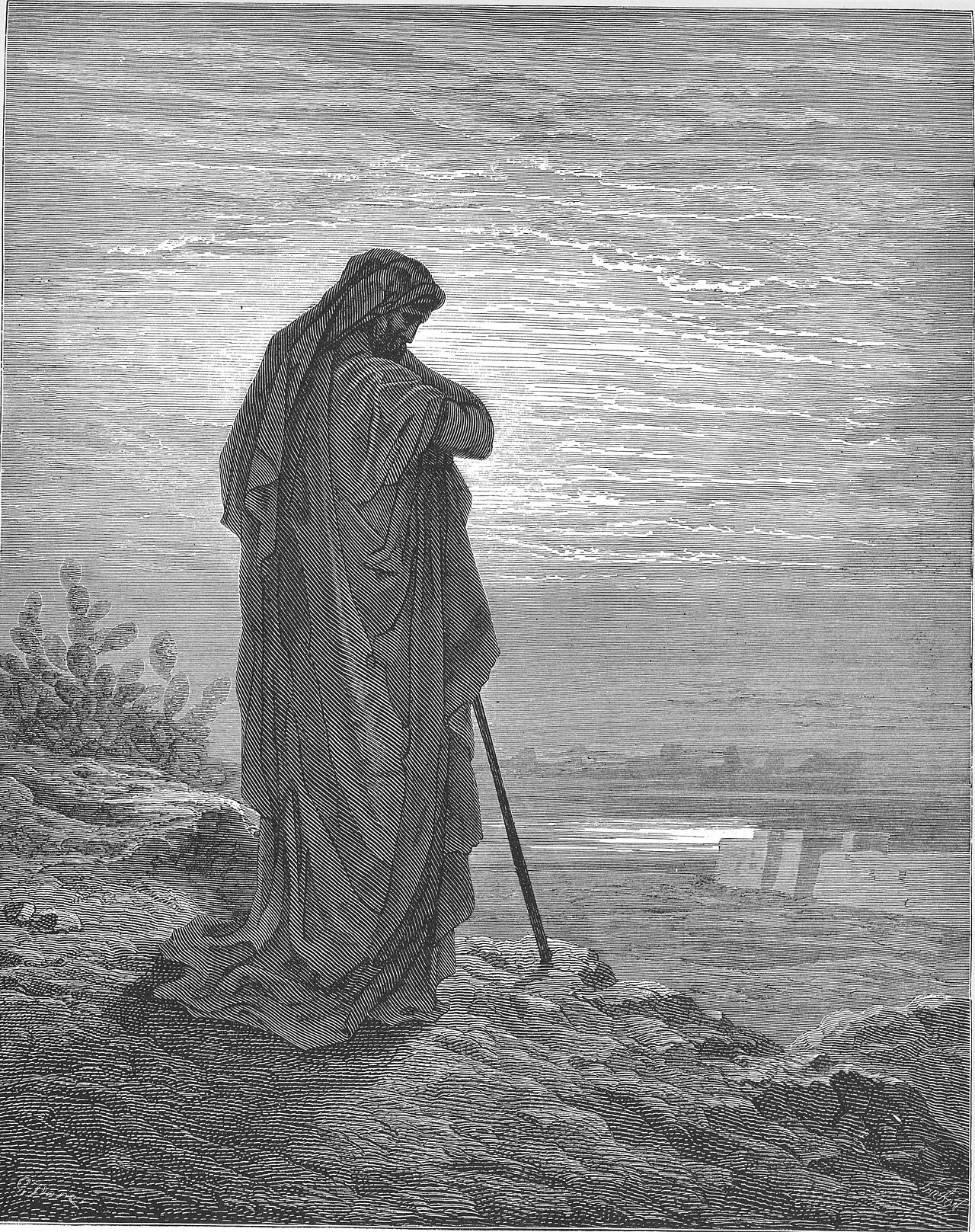
Who and where
1 name in this verse with a page on the site.
This page draws on Adam Clarke, Commentary on the Bible; Albert Barnes, Notes, Explanatory and Practical, on the Old and New Testaments (1832-1869); Jamieson, Fausset & Brown, Commentary Critical and Explanatory on the Whole Bible; Jerome, Commentary on Amos; John Gill, Exposition of the Old Testament (1748-1763); John Wesley, Explanatory Notes upon the Old Testament and Matthew Henry, Commentary on the Whole Bible.