
2 Kings 16:17
in 2 Kings 16King Ahaz also cut off the frames of the movable stands and removed the bronze basin from each of them. He took down the Sea from the bronze oxen that were under it and put it on a stone base.
BSB
The same verse in ASV and KJV ▾
ASV
And king Ahaz cut off the panels of the bases, and removed the laver from off them, and took down the sea from off the brazen oxen that were under it, and put it upon a pavement of stone.
KJV
And king Ahaz cut off the borders of the bases, and removed the laver from off them; and took down the sea from off the brasen oxen that were under it, and put it upon a pavement of stones.
⋯
This verse in 2 Kings 16
Commentary
5 notes on this verseI certainly do not think that he built [the altar] for the God of all things but just for certain of those who are falsely called gods. This is what the book of Chronicles points out. It reads, "In the time of his distress this …
This site's exposition
cut off the borders of the bases
on 2 Kings 16:17-18
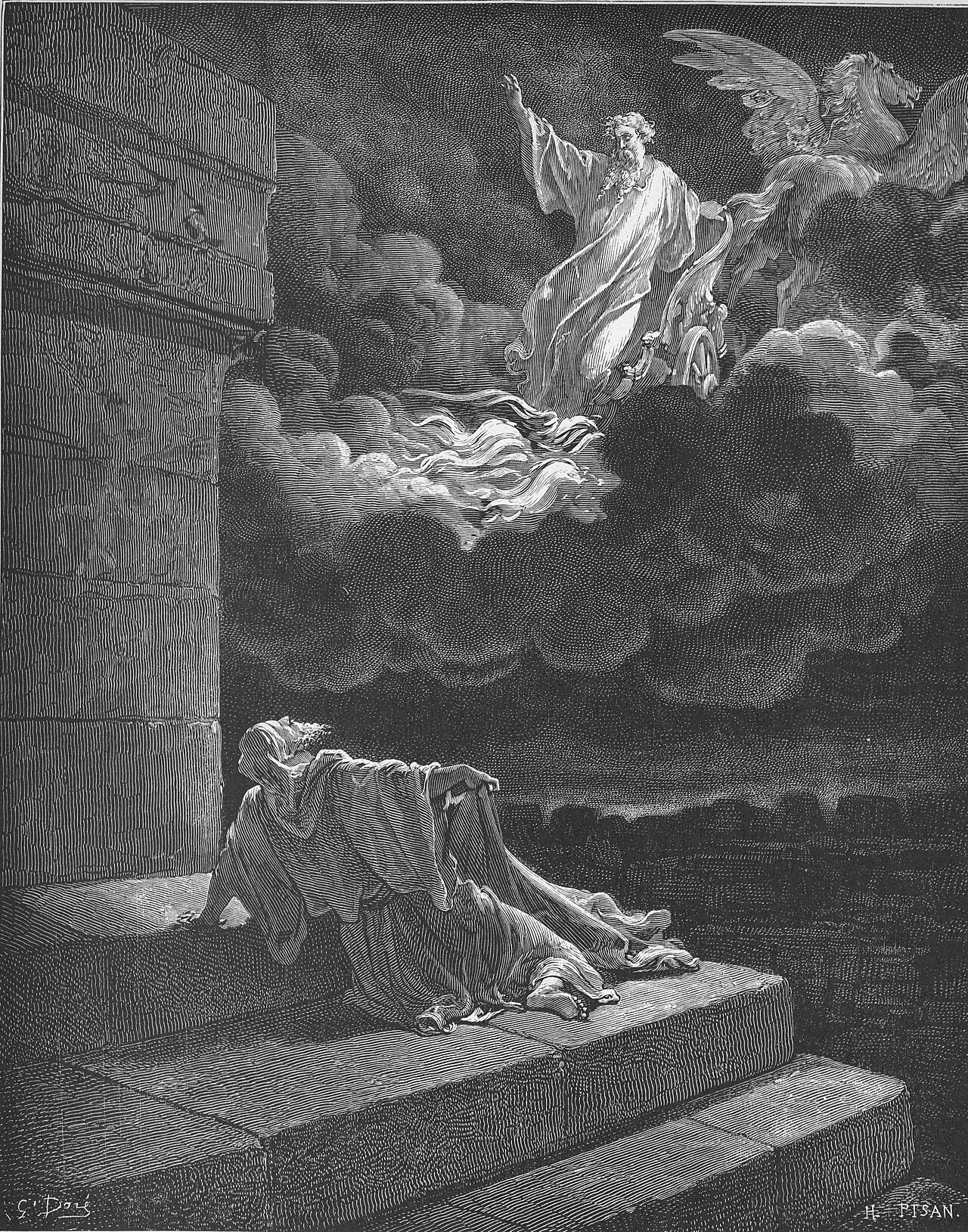
Ahaz cuts down the bases, removes the laver, and takes the great sea off the twelve brasen oxen Solomon set under it at 1 Ki 7:23-25, the same twelve-tribe signature standing behind Elijah's twelve stones at Carmel. Barnes reads the stripping as conversion to other uses rather than outright destruction, since the bases, oxen and sea are still standing to be inventoried when Jerusalem finally falls at 2 Ki 25:13-16. The covert built for the sabbath and the king's own entry are likewise altered, and the chapter states the reason plainly, for the king of Assyria, the price of a rescue bought partly with the temple's own furnishings.
The record, by era
The Puritans and the Awakening2 voices
These the priests used for washing; against them therefore he seems to have had a particular spite. It is one of the greatest prejudices that can be done to religion to obstruct the purifying of the priests, the Lord's ministers.
And King Ahaz cut off the borders of the bases, and removed the laver from off them,....
The Nineteenth Century1 voice
A commentator
Albert Barnes1798–1870
Notes, Explanatory and Practical, on the Old and New Testaments (1832-1869)
See the marginal references. The acts recorded here, were probably not mere wanton acts of mutilation, but steps in the conversion of these sacred objects to other uses, as to the ornamentation of a palace or of an idol temple. The bases, the oxen, and the sea were not destroyed - they remained at Jerusalem until its final capture Jer 52:17, Jer 52:20. Probably they were restored to their original uses by Hezekiah 2Ch 29:
How the passage was read
What the Jewish commentators add
On the verses either side of this one
The canopy for Shabbos. The roof of a tent made for shade, 13 Alternatively, a building in which the mishmar, i.e., the family of kohanim that had served during the week, would stay until after Shabbos. That too he removed.—Radak to sit under it in the [Temple] courtyard on Shabbos.
This section is reception history: how the passage was read and kept in the Jewish tradition. Where a reading parts from an essential of the Christian faith, the section says so at that point.
Texts and citation data: Sefaria; each excerpt follows its version’s licence. 4 further sources are cited on this chapter that carry no English text this site may quote or only restate the verse.
The words behind it
23 Hebrew wordsEvery Hebrew word of this verse in the order it stands, with what it means and the door to its own study. The last column counts the times a word stands in the whole Bible: the rarer the word, the more the places it appears belong together.
| Hebrew | Sound | Meaning | Word study | In the Bible |
|---|---|---|---|---|
| וַיְקַצֵּץ֩ | vaykatzetz | and he cut off | H7112 → | 14 times |
| הַמֶּ֨לֶךְ | hamelekh | the king | H4428 → | 2525 times |
| אָחָ֜ז | ʾachaz | Ahaz | H271 → | 42 times |
| אֶת־ | ʾet- | <obj.> | H853 → | 10935 times |
| הַמִּסְגְּר֣וֹת | hamisgerot | the rims of | H4526 → | |
| הַמְּכֹנ֗וֹת | hamekhonot | the stands | H4350 → | 24 times |
| וַיָּ֤סַר | vaiyasar | and he removed | H5493 → | 299 times |
| מֵֽעֲלֵיהֶם֙ | mealeihem | from on <the> them | H5921 → | 5755 times |
| אֶת | veet | <obj.> | H853 → | 10935 times |
| הַכִּיֹּ֔ר | hakiyor | the laver | H3595 → | |
| וְאֶת־ | veet | and <obj.> | H853 → | 10935 times |
| הַיָּ֣ם | haiyam | the sea | H3220 → | 396 times |
| הוֹרִ֔ד | horid | he took down | H3381 → | 381 times |
| מֵעַ֛ל | meal | from on | H5921 → | 5755 times |
| הַבָּקָ֥ר | habakar | the ox[en] | H1241 → | |
| הַנְּחֹ֖שֶׁת | hanechoshet | the bronze | H5178 → | 140 times |
| אֲשֶׁ֣ר | ʾasher | which | H834 → | 5497 times |
| תַּחְתֶּ֑יהָ | tachteiha | [were] under it | H8478 → | 505 times |
| וַיִּתֵּ֣ן | vaiyiten | and he put | H5414 → | 2011 times |
| אֹת֔וֹ | ʾoto | <obj.> it | H853 → | 10935 times |
| עַ֖ל | ʾal | on | H5921 → | 5755 times |
| מַרְצֶ֥פֶת | martzefet | a pavement of | H4837 → | |
| אֲבָנִֽים׃ | ʾavanim | stone<s> | H68 → | 273 times |
וַיְקַצֵּץ֩and he cut off
vaykatzetzH7112 →14 times
הַמֶּ֨לֶךְthe king
hamelekhH4428 →2525 times
אָחָ֜זAhaz
ʾachazH271 →42 times
אֶת־<obj.>
ʾet-H853 →10935 times
הַמִּסְגְּר֣וֹתthe rims of
hamisgerotH4526 →
הַמְּכֹנ֗וֹתthe stands
hamekhonotH4350 →24 times
וַיָּ֤סַרand he removed
vaiyasarH5493 →299 times
מֵֽעֲלֵיהֶם֙from on <the> them
mealeihemH5921 →5755 times
אֶת<obj.>
veetH853 →10935 times
הַכִּיֹּ֔רthe laver
hakiyorH3595 →
וְאֶת־and <obj.>
veetH853 →10935 times
הַיָּ֣םthe sea
haiyamH3220 →396 times
הוֹרִ֔דhe took down
horidH3381 →381 times
מֵעַ֛לfrom on
mealH5921 →5755 times
הַבָּקָ֥רthe ox[en]
habakarH1241 →
הַנְּחֹ֖שֶׁתthe bronze
hanechoshetH5178 →140 times
אֲשֶׁ֣רwhich
ʾasherH834 →5497 times
תַּחְתֶּ֑יהָ[were] under it
tachteihaH8478 →505 times
וַיִּתֵּ֣ןand he put
vaiyitenH5414 →2011 times
אֹת֔וֹ<obj.> it
ʾotoH853 →10935 times
עַ֖לon
ʾalH5921 →5755 times
מַרְצֶ֥פֶתa pavement of
martzefetH4837 →
אֲבָנִֽים׃stone<s>
ʾavanimH68 →273 times
A shaded row is a word that stands 400 times or fewer in the Bible.
The walk
8 stopsEach card is a verse this one points to, and under it the verses that one points to in turn. Where several paths arrive at the same place, that place is listed first: the text keeps returning to it.
Through
2 Chronicles 29:19Moreover, we have prepared and consecrated all the articles that King Ahaz in his unfaithfulness cast aside during his reign. They are now in front of the altar of the LORD.”
it leads to
- 2 Chronicles 28:24
Then Ahaz gathered up the articles of the house of God, cut them into pieces, shut the doors of the house of the LORD, and set up altars of his own on every street…
- 2 Chronicles 28:24
Through
Jeremiah 52:20As for the two pillars, the Sea, the twelve bronze bulls under it, and the movable stands that King Solomon had made for the house of the LORD, the weight of the bronze from…
it leads to
- 1 Kings 7:47
Solomon left all these articles unweighed, because there were so many. The weight of the bronze could not be determined.
- 2 Kings 25:16
As for the two pillars, the Sea, and the movable stands that Solomon had made for the house of the LORD, the weight of the bronze from all these articles was beyond measure.
- 2 Chronicles 4:18
Solomon made all these articles in such great abundance that the weight of the bronze could not be determined.
- 1 Kings 7:47
Through
2 Chronicles 28:24Then Ahaz gathered up the articles of the house of God, cut them into pieces, shut the doors of the house of the LORD, and set up altars of his own on every street…
it leads to
- 2 Chronicles 29:7
They also shut the doors of the portico and extinguished the lamps. They did not burn incense or present burnt offerings in the Holy Place of the God of Israel.
- 2 Kings 16:17–18
King Ahaz also cut off the frames of the movable stands and removed the bronze basin from each of them. He took down the Sea from the bronze oxen that were under it and…
- 2 Chronicles 33:3–5
For he rebuilt the high places that his father Hezekiah had torn down, and he raised up altars for the Baals and made Asherah poles. And he worshiped and served all the host of…
- 2 Chronicles 30:14
They proceeded to remove the altars in Jerusalem and to take away the incense altars and throw them into the Kidron Valley.
- 2 Chronicles 29:7
About 2 Kings
This page draws on Adam Clarke, Commentary on the Bible; Albert Barnes, Notes on the Old Testament; Albert Barnes, Notes, Explanatory and Practical, on the Old and New Testaments (1832-1869); John Gill, Exposition of the Old Testament (1748-1763); Matthew Henry, Commentary on the Whole Bible and Theodoret of Cyrus, QUESTION 48, ON 2 KINGS.