
2 Kings 11:6
in 2 Kings 11a third shall be at the gate of Sur, and a third at the gate behind the guards. You are to take turns guarding the temple—
BSB
The same verse in ASV and KJV ▾
ASV
and a third part shall be at the gate Sur; and a third part at the gate behind the guard: so shall ye keep the watch of the house, and be a barrier.
KJV
And a third part shall be at the gate of Sur; and a third part at the gate behind the guard: so shall ye keep the watch of the house, that it be not broken down.
⋯
This verse in 2 Kings 11
Commentary
5 notes on this verseThe guard - Either, 1. the king's guard. Or, 2. the guard of the temple; this gate was in the south-side. So, &c. - So you shall guard all the gates or entrances into the temple that neither Athaliah nor any of her soldiers may break in.
This site's exposition
made a covenant with them
on 2 Kings 11:4-6
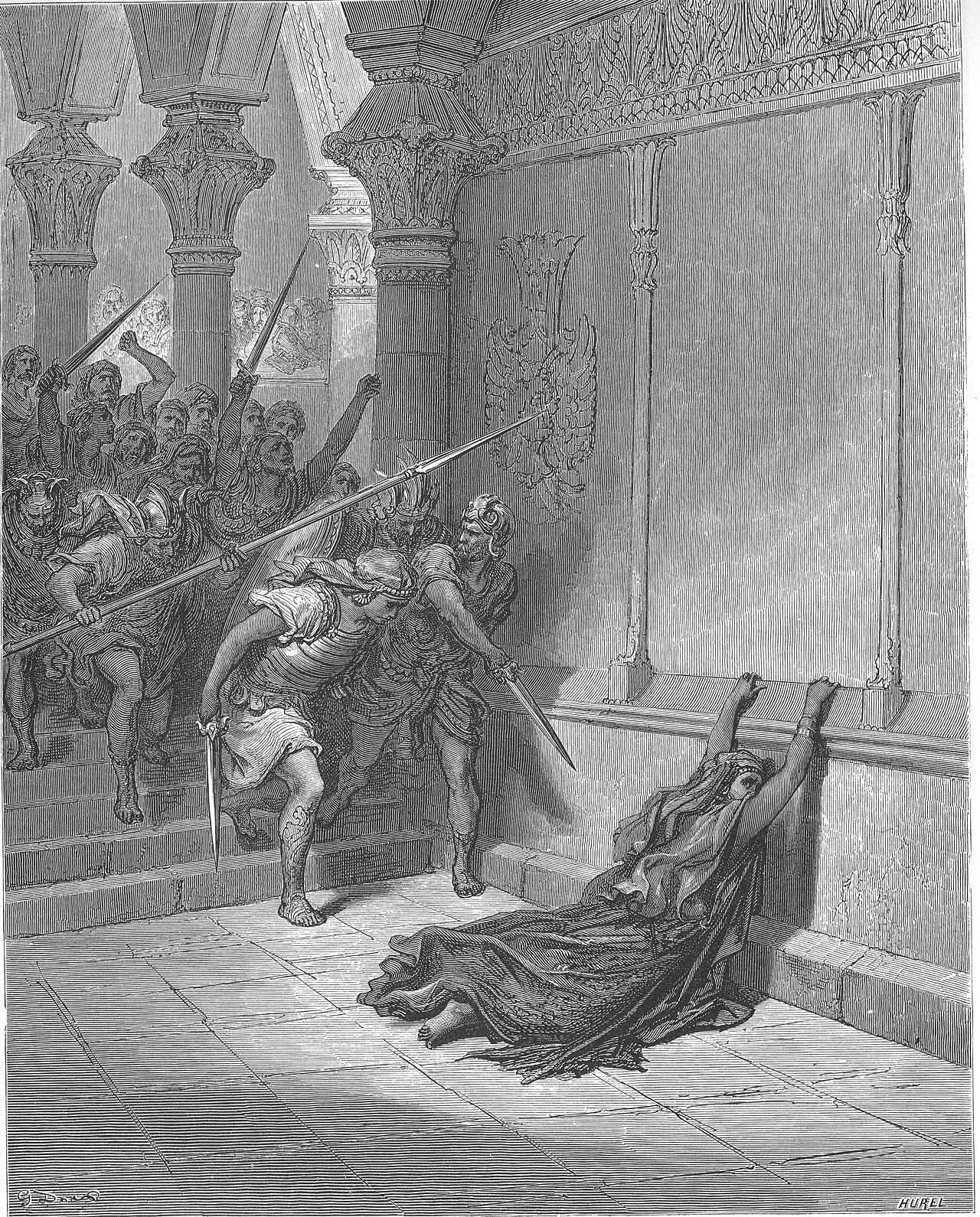
In the seventh year Jehoiada strikes at the one hour when the temple guard is doubled without raising suspicion, the sabbath change of watch, when the outgoing and the incoming courses are both present at once. He binds the captains by oath and shows them the hidden king's son before dividing the loyal guard three ways, a third at the king's house, a third at the gate of Sur, a third at the gate behind the guard, sealing every entrance before a sword is drawn. Barnes reads the sabbath doubling as ordinary priestly rotation turned to a plotter's use.
The record, by era
The Puritans and the Awakening3 voices
He was not so zealous for the projected revolution as to forget his religion. In times of the greatest hurry care must be taken, Ne detrimentum capiat ecclesia -- That the holy things of God be not trenched upon. It is observable that Jehoiada appointed to each his place as well as his work (
quarantine:debris (2026-07-29) — unbalanced-parens
), for good order contributes very much to the expediting and accomplishing of any great enterprise. Let every man know, and keep, and make good, his post, and then the work will be done quickly. When the guards were fixed, then the king was brought forth,
quarantine:debris (2026-07-29) — leading-punctuation+unbalanced-parens
And a third part shall be at the gate of Sur,....
The words behind it
12 Hebrew wordsEvery Hebrew word of this verse in the order it stands, with what it means and the door to its own study. The last column counts the times a word stands in the whole Bible: the rarer the word, the more the places it appears belong together.
| Hebrew | Sound | Meaning | Word study | In the Bible |
|---|---|---|---|---|
| וְהַשְּׁלִשִׁית֙ | vehashelishit | and the third [part] | H7992 → | 107 times |
| בְּשַׁ֣עַר | beshaar | [will be] at [the] gate of | H8179 → | 374 times |
| ס֔וּר | sur | Sur | H5495 → | |
| וְהַשְּׁלִשִׁ֥ית | vehashelishit | and the third [part] | H7992 → | 107 times |
| בַּשַּׁ֖עַר | bashaar | [will be] at the gate | H8179 → | 374 times |
| אַחַ֣ר | ʾachar | behind | H310 → | 715 times |
| הָרָצִ֑ים | haratzim | the runners | H7323 → | 103 times |
| וּשְׁמַרְתֶּ֛ם | ushemartem | and you will keep | H8104 → | 468 times |
| אֶת־ | ʾet- | <obj.> | H853 → | 10935 times |
| מִשְׁמֶ֥רֶת | mishmeret | [the] watch of | H4931 → | 78 times |
| הַבַּ֖יִת | habayit | the house | H1004 → | 2046 times |
| מַסָּֽח׃ | masach | by turns | H4535 → |
וְהַשְּׁלִשִׁית֙and the third [part]
vehashelishitH7992 →107 times
בְּשַׁ֣עַר[will be] at [the] gate of
beshaarH8179 →374 times
ס֔וּרSur
surH5495 →
וְהַשְּׁלִשִׁ֥יתand the third [part]
vehashelishitH7992 →107 times
בַּשַּׁ֖עַר[will be] at the gate
bashaarH8179 →374 times
אַחַ֣רbehind
ʾacharH310 →715 times
הָרָצִ֑יםthe runners
haratzimH7323 →103 times
וּשְׁמַרְתֶּ֛םand you will keep
ushemartemH8104 →468 times
אֶת־<obj.>
ʾet-H853 →10935 times
מִשְׁמֶ֥רֶת[the] watch of
mishmeretH4931 →78 times
הַבַּ֖יִתthe house
habayitH1004 →2046 times
מַסָּֽח׃by turns
masachH4535 →
A shaded row is a word that stands 400 times or fewer in the Bible.
About 2 Kings
This page draws on Adam Clarke, Commentary on the Bible; Albert Barnes, Notes on the Old Testament; John Gill, Exposition of the Old Testament (1748-1763); John Wesley, Explanatory Notes upon the Old Testament and Matthew Henry, Commentary on the Whole Bible.