
2 Chronicles 3:9
in 2 Chronicles 3The weight of the nails was fifty shekels of gold. He also overlaid the upper area with gold.
BSB
The same verse in ASV and KJV ▾
ASV
And the weight of the nails was fifty shekels of gold. And he overlaid the upper chambers with gold.
KJV
And the weight of the nails was fifty shekels of gold. And he overlaid the upper chambers with gold.
⋯
This verse in 2 Chronicles 3
Commentary
3 notes on this verseA commentator
Albert Barnes1798–1870
Notes, Explanatory and Practical, on the Old and New Testaments (1832-1869)
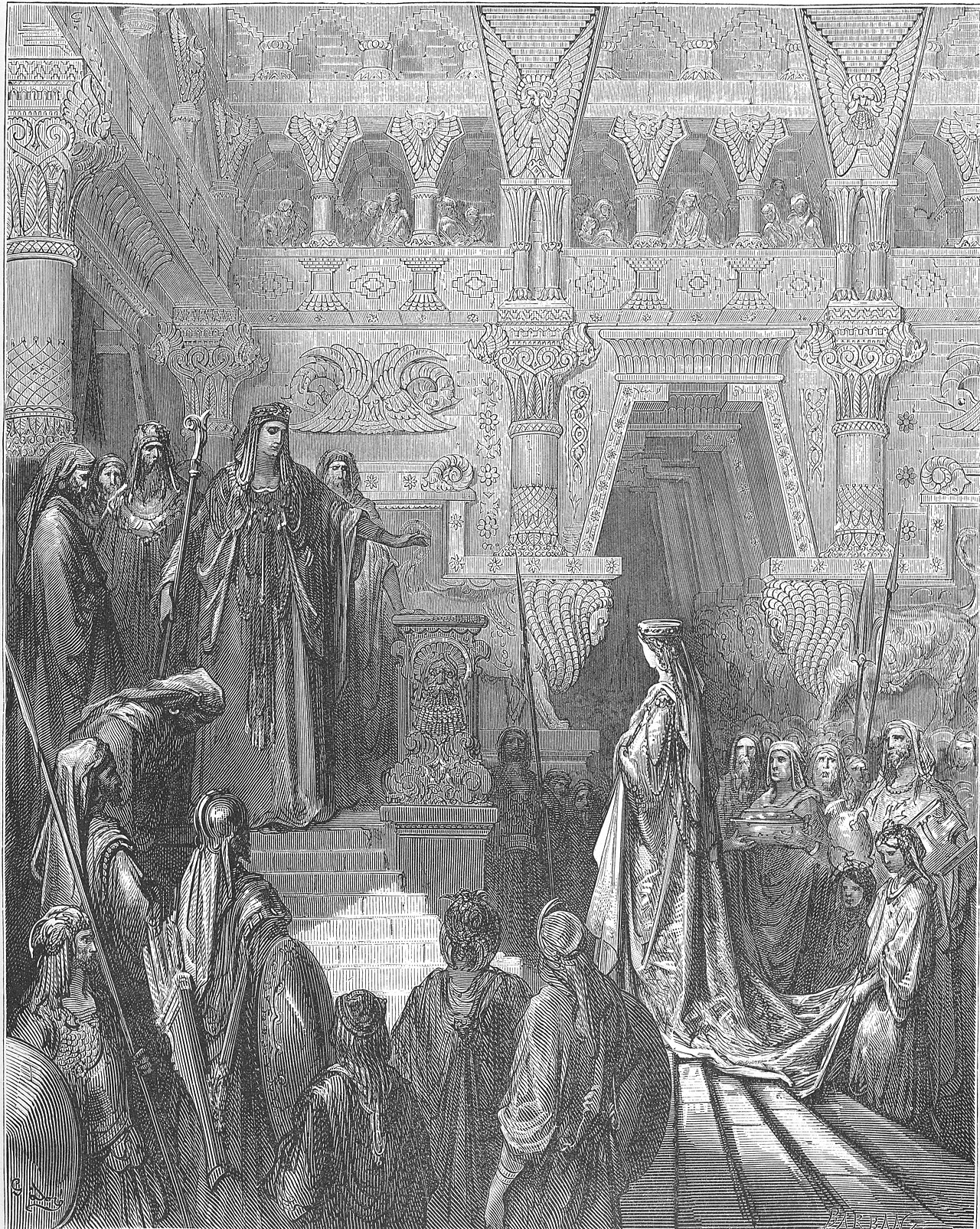
The upper chambers - Compare 1Ch 28:11. Their position is uncertain. Some place them above the holy of holies, which was ten cubits, or fifteen feet lower than the main building (compare 1Ki 6:2, 1Ki 6:20); others, accepting the height of the porch 120 cubits 2Ch 3:4, regard the “upper chambers” or “chamber” ὑπερῷον huperōon, Septuagint), as having been a lofty building erected over the entrance to the temple; others suggest that the chambers intended are simply the uppermost of the three sets of chambers which on three sides surrounded the temple (see 1Ki 6:5-10).
This site's exposition
he made the most holy house
on 2 Chronicles 3:8-9
Chronicles measures the holy of holies twice, in cubits matching the cube-shaped oracle Kings already describes, and then in weight, six hundred talents of gold for the room and fifty shekels for the nails alone. The book that will soon record the freewill offerings of 1 Chr 29 treats cost as testimony rather than excess, and these weights are Chronicles' own addition to the record. The upper chambers of verse nine are named and left unlocated, and the bench differs over whether they sat above the oracle or over the porch.
The record, by era
The Nineteenth Century1 voice
The weight of the nails was fifty shekels - Bolts must be here intended, as it should be preposterous to suppose nails of nearly two pounds’ weight. The supper chambers - Probably the ceiling is meant.
The words behind it
8 Hebrew wordsEvery Hebrew word of this verse in the order it stands, with what it means and the door to its own study. The last column counts the times a word stands in the whole Bible: the rarer the word, the more the places it appears belong together.
| Hebrew | Sound | Meaning | Word study | In the Bible |
|---|---|---|---|---|
| וּמִשְׁקָ֛ל | umishkal | and [the] weight | H4948 → | 49 times |
| לְמִסְמְר֥וֹת | lemismerot | of nails | H4548 → | |
| לִשְׁקָלִ֖ים | lishkalim | to shekels | H8255 → | |
| חֲמִשִּׁ֣ים | chamishim | fifty | H2572 → | 163 times |
| זָהָ֑ב | zahav | gold | H2091 → | 389 times |
| וְהָעֲלִיּ֖וֹת | vehaaliyot | and the upper rooms | H5944 → | |
| חִפָּ֥ה | chipah | he overlaid | H2645 → | 12 times |
| זָהָֽב׃ | zahav | gold | H2091 → | 389 times |
וּמִשְׁקָ֛לand [the] weight
umishkalH4948 →49 times
לְמִסְמְר֥וֹתof nails
lemismerotH4548 →
לִשְׁקָלִ֖יםto shekels
lishkalimH8255 →
חֲמִשִּׁ֣יםfifty
chamishimH2572 →163 times
זָהָ֑בgold
zahavH2091 →389 times
וְהָעֲלִיּ֖וֹתand the upper rooms
vehaaliyotH5944 →
חִפָּ֥הhe overlaid
chipahH2645 →12 times
זָהָֽב׃gold
zahavH2091 →389 times
A shaded row is a word that stands 400 times or fewer in the Bible.
The walk
5 stopsEach card is a verse this one points to, and under it the verses that one points to in turn. Where several paths arrive at the same place, that place is listed first: the text keeps returning to it.
Through
1 Chronicles 28:11Then David gave his son Solomon the plans for the portico of the temple, its buildings, storehouses, upper rooms, inner rooms, and the room for the mercy seat.
it leads to
- 1 Chronicles 28:19
“All this,” said David, “all the details of this plan, the LORD has made clear to me in writing by His hand upon me.”
- Exodus 25:40
See to it that you make everything according to the pattern shown you on the mountain.
- 1 Kings 6:3
The portico at the front of the main hall of the temple was twenty cubits long, extending across the width of the temple and projecting out ten cubits in front of the temple.
- Hebrews 8:5
The place where they serve is a copy and shadow of what is in heaven. This is why Moses was warned when he was about to build the tabernacle: “See to it that you…
- Exodus 25:17–22
And you are to construct a mercy seat of pure gold, two and a half cubits long and a cubit and a half wide.
- 1 Chronicles 28:19
Where this verse is studied
On this page
Studies2
On this verse
On this chapter
About 2 Chronicles
This page draws on Adam Clarke, Commentary on the Bible; Albert Barnes, Notes, Explanatory and Practical, on the Old and New Testaments (1832-1869); Albert Barnes, Notes on the Old Testament and Keil, The Books of the Chronicles.