
2 Thessalonians 1:2
in 2 Thessalonians 1Grace and peace to you from God our Father and the Lord Jesus Christ.
BSB
The same verse in ASV and KJV ▾
ASV
Grace to you and peace from God the Father and the Lord Jesus Christ.
KJV
Grace unto you, and peace, from God our Father and the Lord Jesus Christ.
⋯
This verse in 2 Thessalonians 1
Commentary
9 notes on this verseThis site's exposition
To the church of the Thessalonians
on 2 Thessalonians 1:1-2
Paul writes with Silvanus and Timotheus, the same team that opened the first letter. The church of the Thessalonians is addressed in God our Father and the Lord Jesus Christ, its identity fixed by union with both.
This site's exposition
Grace and peace to you
Paul joins grace, the Greek greeting, to peace, the Hebrew one. He names God our Father and the Lord Jesus Christ as the one source of both gifts, setting Jesus beside the Father as the giver. A church under pressure hears of peace from God before it hears of relief.
The record, by era
The Church Fathers3 voices
For while I say that similar things are written of the Son as of the Spirit, I am rather proceeding to the following point. My claim is not that because something is written of the Son, therefore it would appear to be reverently written of the Holy Spirit. Rather, I am contending against the argument that because the same is written of the Spirit, therefore the Son's honor is lessened because of the Spirit. For they say, Is it not written of God the Father?
The greater part of men do and devise all things with a view to ingratiate themselves with rulers, and with those who are greater than themselves; and they account it a great thing, and think themselves happy, if they can obtain that object. But if to obtain favor with men is so great an advantage, how great must it be to find favor with God? On this account he always thus prefaces his Epistle, and invokes this upon them, knowing that if this be granted, there will be nothing afterwards grievous, but whatever troubles there may be, all will be done away. And that you may learn this, Joseph was a slave a young man, inexperienced, unformed, and suddenly the direction of a house was committed to his hands, and he had to render an account to an Egyptian master. And you know how prone to anger and unforgiving that people is, and when authority and power is added, their rage is greater, being inflamed by power. And this too is manifest from what he did afterwards. For when the mistress made accusation, he bore with it. And yet it was not the part of those who held the garment, but of him who was stripped, to have suffered violence. For he ought to have said, If he had heard that thou didst raise thy voice, as thou sayest, he would have fled, and if he had been guilty, he would not have waited for the coming of his master. But nevertheless he took nothing of this sort into consideration, but unreasonably giving way altogether to anger, he cast him into prison. So thoughtless a person was he. And yet even from other things he might have conjectured the good disposition and the intelligence of the man. But nevertheless, because he was very unreasonable, he never considered any such thing. […]
This blessed man therefore saw how great is the grace of God, and on this account he invokes it upon them. And another thing also he effects, wishing to render them well-disposed to the remaining part of the Epistle; that, though he should reprove and rebuke them, they might not break away from him. For this reason he reminds them before all things of the grace of God, mollifying their hearts, that, even if there be affliction, being reminded of the grace by which they were saved from the greater evil, they may not despair at the less, but may thence derive consolation. As also elsewhere in an Epistle he has said, "For if, while we were enemies, we were reconciled to God through the death of His Son, much more, being reconciled, shall we be saved by His life."
The Medieval Church2 voices
Then he wishes goods for them, and first of all peace. For peace is the beginning of all the spiritual gifts. "By the grace of God I am what I am" (1 Cor 15:10). Similarly, he wishes for them the grace that is men's end. …
When God bestows grace upon someone, then nothing is unbearable for that person, but everything is easily endured and passes. This is why the Apostle Paul, knowing how great a blessing grace is in life, prayerfully wishes it for the Thessalonians. For if it is …
2 more voices on this verse
The Puritans and the Awakening2 voices
Grace be unto you, and peace,.... See Gill on Rom 1:7.
And great care should be taken lest, from an affectation of novelty in method and phrases, we advance new notions or doctrines, contrary to the principles of natural or revealed religion, upon which this church of the Thessalonians was built, as all true churches are; namely, in God our Father and the Lord Jesus Christ.
The words behind it
12 Greek wordsEvery Greek word of this verse in the order it stands, with what it means and the door to its own study. The last column counts the times a word stands in the whole Bible: the rarer the word, the more the places it appears belong together.
| Greek | Sound | Meaning | Word study | In the Bible |
|---|---|---|---|---|
| χάρις | charis | Grace | G5485 → | 153 times |
| ὑμῖν | humin | to you | G4771 → | 2973 times |
| καὶ | kai | and | G2532 → | 9120 times |
| εἰρήνη | eirene | peace | G1515 → | 91 times |
| ἀπὸ | apo | from | G575 → | 640 times |
| θεοῦ | theou | God | G2316 → | 1312 times |
| πατρὸς | patros | [the] Father | G3962 → | 410 times |
| ἡμῶν | hemon | of us | G3165 → | 1936 times |
| καὶ | kai | and | G2532 → | 9120 times |
| κυρίου | kuriou | [the] Lord | G2962 → | 711 times |
| Ἰησοῦ | iesou | Jesus | G2424 → | 908 times |
| Χριστοῦ.¶ | christou | Christ. | G5547 → | 523 times |
χάριςGrace
charisG5485 →153 times
ὑμῖνto you
huminG4771 →2973 times
καὶand
kaiG2532 →9120 times
εἰρήνηpeace
eireneG1515 →91 times
ἀπὸfrom
apoG575 →640 times
θεοῦGod
theouG2316 →1312 times
πατρὸς[the] Father
patrosG3962 →410 times
ἡμῶνof us
hemonG3165 →1936 times
καὶand
kaiG2532 →9120 times
κυρίου[the] Lord
kuriouG2962 →711 times
ἸησοῦJesus
iesouG2424 →908 times
Χριστοῦ.¶Christ.
christouG5547 →523 times
A shaded row is a word that stands 400 times or fewer in the Bible.
The walk
8 stopsEach card is a verse this one points to, and under it the verses that one points to in turn. Where several paths arrive at the same place, that place is listed first: the text keeps returning to it.
Through
1 Corinthians 1:8He will sustain you to the end, so that you will be blameless on the day of our Lord Jesus Christ.
it leads to
- 1 Thessalonians 5:23–24
Now may the God of peace Himself sanctify you completely, and may your entire spirit, soul, and body be kept blameless at the coming of our Lord Jesus Christ.
- 1 Thessalonians 3:13
so that He may establish your hearts in blamelessness and holiness before our God and Father at the coming of our Lord Jesus with all His saints. Amen.
- Colossians 1:22
But now He has reconciled you by Christ’s physical body through death to present you holy, unblemished, and blameless in His presence—
- Philippians 1:6
being confident of this, that He who began a good work in you will carry it on to completion until the day of Christ Jesus.
- Jude 1:24–25
Now to Him who is able to keep you from stumbling and to present you unblemished in His glorious presence, with great joy—
- 1 Thessalonians 5:23–24
Through
Romans 1:7To all in Rome who are loved by God and called to be saints: Grace and peace to you from God our Father and the Lord Jesus Christ.
it leads to
- Ephesians 1:2
Grace and peace to you from God our Father and the Lord Jesus Christ.
Reached by 2 separate paths from here.
- Colossians 1:2
To the saints and faithful brothers in Christ at Colossae: Grace and peace to you from God our Father.
- Jude 1:1–2
Jude, a servant of Jesus Christ and a brother of James, To those who are called, loved by God the Father, and kept in Jesus Christ:
- Ephesians 1:2
Where this verse is studied
On this page
Studies5
About 2 Thessalonians
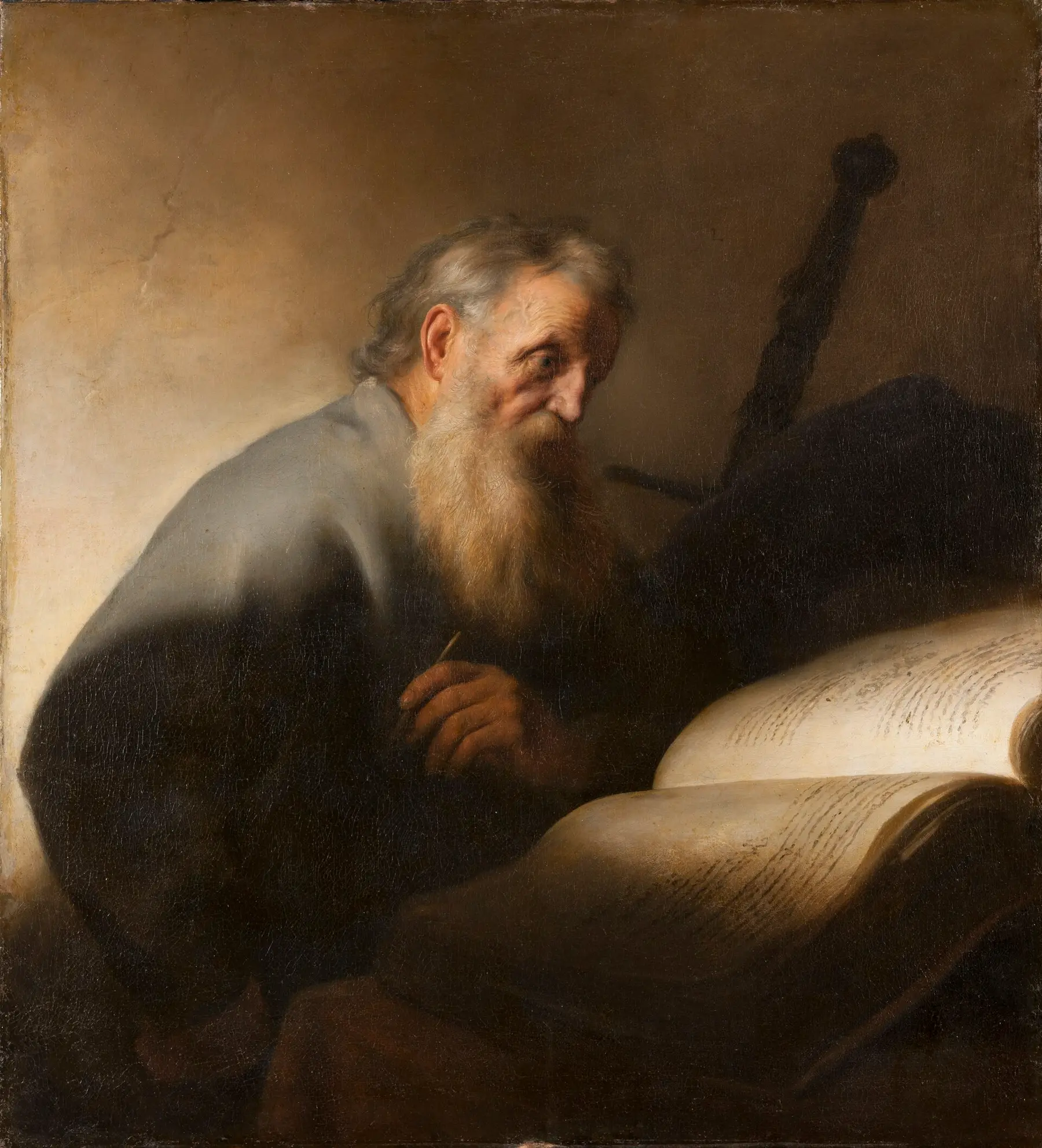
This page draws on Adam Clarke, Commentary on the Bible; Ambrose of Milan, On the Holy Spirit 2.8.75-76; John Chrysostom, Homily 2 on 2 Thessalonians; John Gill, Exposition of the New Testament (1746-1748); Matthew Henry, Commentary on the Whole Bible; Theophylact of Ohrid, Commentary on 2 Thessalonians and Thomas Aquinas, Commentary on 2 Thessalonians.