
1 Samuel 6:14
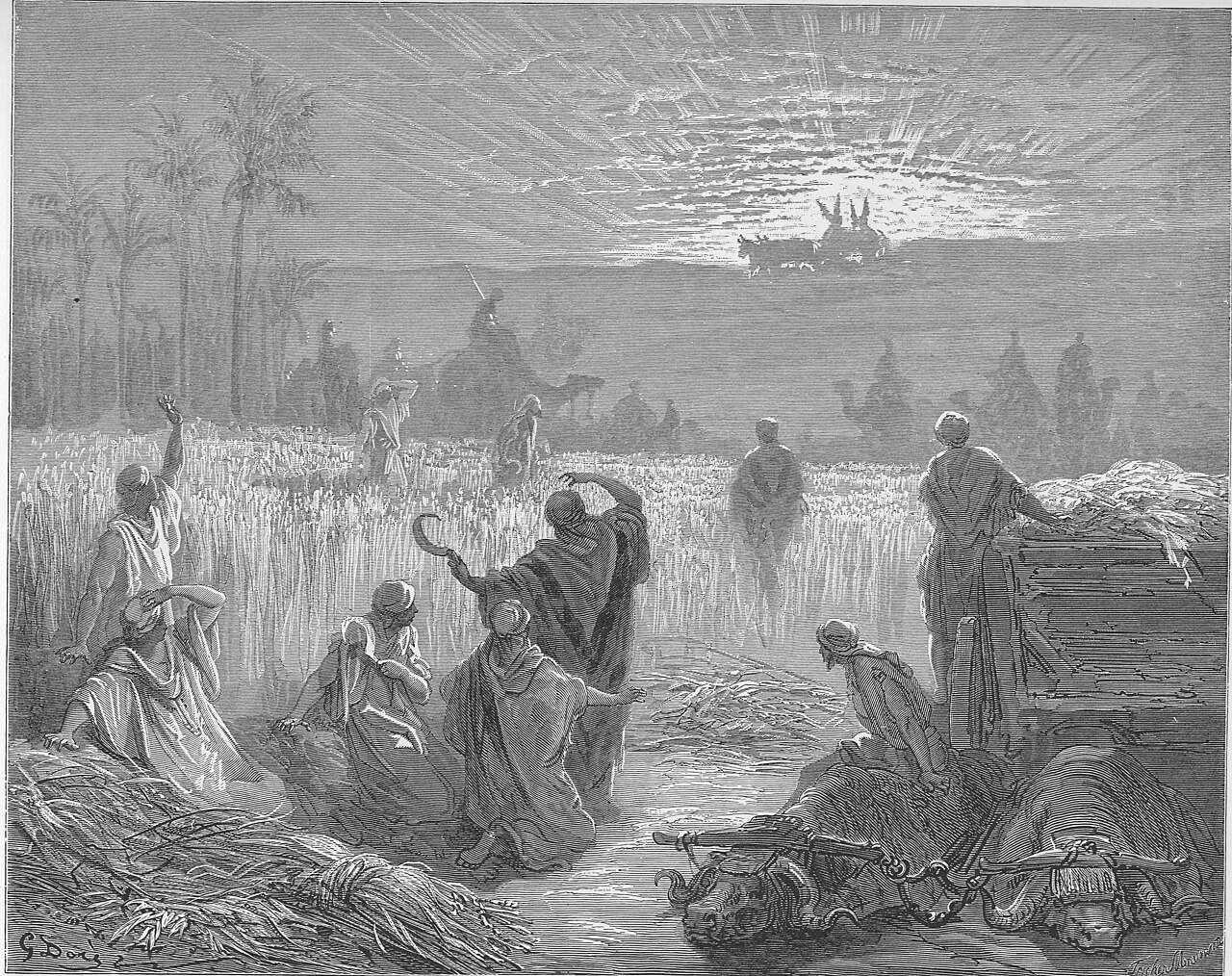
in 1 Samuel 6The cart came to the field of Joshua of Beth-shemesh and stopped there near a large rock. The people chopped up the cart and offered the cows as a burnt offering to the LORD.
BSB
The same verse in ASV and KJV ▾
ASV
And the cart came into the field of Joshua the Beth-shemite, and stood there, where there was a great stone: and they clave the wood of the cart, and offered up the kine for a burnt-offering unto Jehovah.
KJV
And the cart came into the field of Joshua, a Beth–shemite, and stood there, where there was a great stone: and they clave the wood of the cart, and offered the kine a burnt offering unto the Lord.
⋯
This verse in 1 Samuel 6
Commentary
10 notes on this verseYou are aware, then, that when the ark of the testimony was seized by the enemies of Ashdod, and a terrible and incurable malady had broken out among them, they resolved to place it on a cart to which they yoked cows that had recently calved, for the purpose of ascertaining by trial whether or not they had been plagued by God's power on account of the ark, and if God wished it to be taken back to the place from which it had been carried away.
This site's exposition
harvesting wheat in the valley
on 1 Samuel 6:13-14
The people of Beth-shemesh are “harvesting wheat in the valley” when the ark comes into view, and they are “overjoyed at the sight”. The cart stops at a large rock in Joshua's field, and they burn the cart and offer the cows, a departure from the law's ordinary altar that Henry reads as fitting while Shiloh lay empty. Nothing in their welcome yet hints at the judgment of verse 19.
This site's exposition
The cart came to the field of Joshua
The cart stops at a large rock, and Albert Barnes held that the people took the stop as a sign to sacrifice there. Adam Clarke noted that cart and cows, once used for the ark, could never return to common work, so the wood became fuel for the offering. Joshua appears nowhere else.
The record, by era
The Medieval Church3 voices
22. If Bethshemesh is interpreted as "house of the sun," the house of the sun is the heavenly city. Here Joshua the Bethshemite signifies the Redeemer of the human race not so much by type as by his very name and dignity. For Joshua is called "savior" in our language. And the Lord says of himself: "The Son of man came to seek and to save that which was lost" (Luke 19:10). Hence it is also that Joseph is promised in a dream through the angel: "He shall save his people from their sins" (Matt. 1:21).
And the cart came into the field of Joshua of Beth Shemesh, etc. And wherever the Church sees hearts bringing forth fruit for Jesus Christ, the Lord of eternal clarity and the inventor of perpetual light, it prepares to make a dwelling there, as if …
Now there was a great stone there, etc. There was in the field of the Church that exceptionally great stone, which was cut out of the mountain without hands and grew into a great mountain and filled the whole earth. And concerning which the Psalmist …
The Puritans and the Awakening1 voice
And the cart came into the field of Joshua, a Bethshemite,.... In that part of the valley where they were reaping wheat which belonged to him, whom we nowhere else read; whether a priest or Levite, which is not improbable, since this was a city of the Levites, or a common Israelite, is not certain: and stood there where there was a great stone; afterwards called the great stone of Abel, 1Sa 6:
The Nineteenth Century1 voice
They clave the wood of the cart - Both the cart and the cattle having been thus employed, could no longer be devoted to any secular services; therefore the cattle were sacrificed, and the cart was broken up for fuel to consume the sacrifice.
2 more voices on this verse
The Nineteenth Century2 voices
A commentator
Jamieson, Fausset & Brown1802–1910
Commentary Critical and Explanatory on the Whole Bible (1871)
proposed
22:19), these animals might properly be offered, as consecrated by God Himself; and though not beside the tabernacle, there were many instances of sacrifices offered by prophets and holy men on extraordinary occasions in other places.
quarantine:debris (2026-07-29) — unbalanced-parens
A commentator
Albert Barnes1798–1870
Notes, Explanatory and Practical, on the Old and New Testaments (1832-1869)
proposed
A great stone - (Compare Gen 28:18; Jdg 13:19). This great stone was probably used as an altar on this occasion, and the kine stopping at it of their own accord was understood by the Bethshemites as an intimation that they were to offer sacrifices on it to the Lord God of Israel, who had so wonderfully brought back the ark from its captivity. And they clave the wood of the cart ... - A similar expedient was resorted to by Araunah 2Sa 24:22, and by Elisha 1Ki 19:21.
How the passage was read
What the Jewish commentators add
On the verses either side of this one
And they rejoiced to see. They were going to see how it came alone, and out of their joy, they behaved with levity, for they did not gaze at it with awe and respect.
This section is reception history: how the passage was read and kept in the Jewish tradition. Where a reading parts from an essential of the Christian faith, the section says so at that point.
Texts and citation data: Sefaria; each excerpt follows its version’s licence. 7 further sources are cited on this chapter that carry no English text this site may quote or only restate the verse.
The words behind it
21 Hebrew wordsEvery Hebrew word of this verse in the order it stands, with what it means and the door to its own study. The last column counts the times a word stands in the whole Bible: the rarer the word, the more the places it appears belong together.
| Hebrew | Sound | Meaning | Word study | In the Bible |
|---|---|---|---|---|
| וְהָעֲגָלָ֡ה | vehaagalah | and the cart | H5699 → | 25 times |
| בָּ֠אָה | baah | it came | H935 → | 2568 times |
| אֶל־ | ʾel- | to | H413 → | 5510 times |
| שְׂדֵ֨ה | sedeh | [the] field of | H7704 → | 334 times |
| יְהוֹשֻׁ֤עַ | yehoshua' | Joshua | H3091 → | |
| בֵּֽית־ | beit- | [the] Beth | H1030 → | 4 times |
| הַשִּׁמְשִׁי֙ | hashimshi | <the> Shemeshite | H1030 → | 4 times |
| וַתַּעֲמֹ֣ד | vataamod | and it stopped | H5975 → | 521 times |
| שָׁ֔ם | sham | there | H8033 → | 834 times |
| וְשָׁ֖ם | vesham | and [was] there | H8033 → | 834 times |
| אֶ֣בֶן | ʾeven | a stone | H68 → | 273 times |
| גְּדוֹלָ֑ה | gedolah | large | H1419 → | 526 times |
| וַֽיְבַקְּעוּ֙ | vayvakeu | and they split | H1234 → | |
| אֶת־ | ʾet- | <obj.> | H853 → | 10935 times |
| עֲצֵ֣י | ʾatzei | [the] wood<s> of | H6086 → | |
| הָעֲגָלָ֔ה | haagalah | the cart | H5699 → | 25 times |
| וְאֶת־ | veet | and <obj.> | H853 → | 10935 times |
| הַ֨פָּר֔וֹת | haparot | the cows | H6510 → | 26 times |
| הֶעֱל֥וּ | heelu | they offered up | H5927 → | 890 times |
| עֹלָ֖ה | ʾolah | a burnt offering | H5930 → | 287 times |
| לַיהוָֽה׃ ס | layahweh | to Yahweh | H3068 → | 6520 times |
וְהָעֲגָלָ֡הand the cart
vehaagalahH5699 →25 times
בָּ֠אָהit came
baahH935 →2568 times
אֶל־to
ʾel-H413 →5510 times
שְׂדֵ֨ה[the] field of
sedehH7704 →334 times
יְהוֹשֻׁ֤עַJoshua
yehoshua'H3091 →
בֵּֽית־[the] Beth
beit-H1030 →4 times
הַשִּׁמְשִׁי֙<the> Shemeshite
hashimshiH1030 →4 times
וַתַּעֲמֹ֣דand it stopped
vataamodH5975 →521 times
שָׁ֔םthere
shamH8033 →834 times
וְשָׁ֖םand [was] there
veshamH8033 →834 times
אֶ֣בֶןa stone
ʾevenH68 →273 times
גְּדוֹלָ֑הlarge
gedolahH1419 →526 times
וַֽיְבַקְּעוּ֙and they split
vayvakeuH1234 →
אֶת־<obj.>
ʾet-H853 →10935 times
עֲצֵ֣י[the] wood<s> of
ʾatzeiH6086 →
הָעֲגָלָ֔הthe cart
haagalahH5699 →25 times
וְאֶת־and <obj.>
veetH853 →10935 times
הַ֨פָּר֔וֹתthe cows
haparotH6510 →26 times
הֶעֱל֥וּthey offered up
heeluH5927 →890 times
עֹלָ֖הa burnt offering
ʾolahH5930 →287 times
לַיהוָֽה׃ סto Yahweh
layahwehH3068 →6520 times
A shaded row is a word that stands 400 times or fewer in the Bible.
The walk
8 stopsEach card is a verse this one points to, and under it the verses that one points to in turn. Where several paths arrive at the same place, that place is listed first: the text keeps returning to it.
Through
1 Kings 19:21So Elisha turned back from him, took his pair of oxen, and slaughtered them. With the oxen’s equipment, he cooked the meat and gave it to the people, and they ate. Then he set…
it leads to
- 2 Samuel 24:22
Araunah said to David, “My lord the king may take whatever seems good and offer it up. Here are the oxen for a burnt offering and the threshing sledges and ox yokes for the…
- 2 Samuel 24:22
Through
2 Samuel 24:25And there he built an altar to the LORD and offered burnt offerings and peace offerings. Then the LORD answered the prayers on behalf of the land, and the plague upon Israel was halted.
it leads to
- 2 Samuel 21:14
And they buried the bones of Saul and his son Jonathan in Zela in the land of Benjamin, in the tomb of Saul’s father Kish. After they had done everything the king had commanded,…
- Lamentations 3:32–33
Even if He causes grief, He will show compassion according to His abundant loving devotion.
- 2 Samuel 24:14
David answered Gad, “I am deeply distressed. Please, let us fall into the hand of the LORD, for His mercies are great; but do not let me fall into the hands of men.”
- 1 Samuel 7:17
Then he would return to Ramah because his home was there, and there he judged Israel and built an altar to the LORD.
- Genesis 8:20
Then Noah built an altar to the LORD. And taking from every kind of clean animal and clean bird, he offered burnt offerings on the altar.
- 2 Samuel 21:14
Through
2 Samuel 24:22Araunah said to David, “My lord the king may take whatever seems good and offer it up. Here are the oxen for a burnt offering and the threshing sledges and ox yokes for the…
it leads to
- 1 Kings 19:21
So Elisha turned back from him, took his pair of oxen, and slaughtered them. With the oxen’s equipment, he cooked the meat and gave it to the people, and they ate. Then he set…
- 1 Kings 19:21
Through
Judges 21:4The next day the people got up early, built an altar there, and presented burnt offerings and peace offerings.
it leads to
- 2 Samuel 24:25
And there he built an altar to the LORD and offered burnt offerings and peace offerings. Then the LORD answered the prayers on behalf of the land, and the plague upon Israel was halted.
- 2 Samuel 24:25
Where this verse is studied
On this page
Studies1
About 1 Samuel
Who and where
1 name in this verse with a page on the site.
This page draws on 9 works. Open the list of works
This page draws on Adam Clarke, Commentary on the Bible; Albert Barnes, Notes, Explanatory and Practical, on the Old and New Testaments (1832-1869); Bede, Commentary on Samuel; Gregory the Dialogist, Commentary on 1 Kings, Book 3, Chapter 4; Jamieson, Fausset & Brown, Commentary Critical and Explanatory on the Whole Bible; John Gill, Exposition of the Old Testament; John Gill, Exposition of the Old Testament (1748-1763); Justin Martyr, Dialogue with Trypho, Chapter CXXXII and Matthew Henry, Commentary on the Whole Bible.