
1 Samuel 21:9
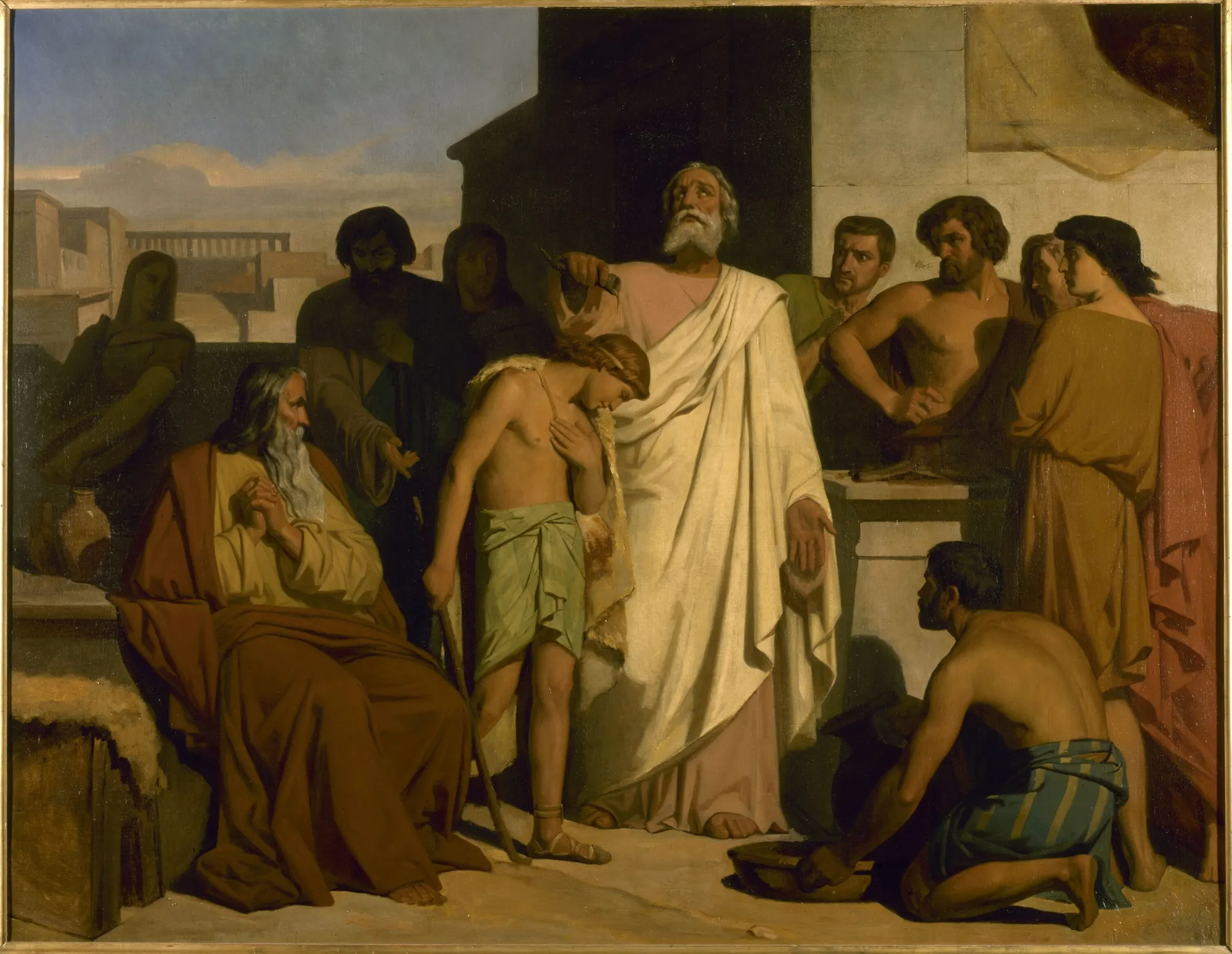
in 1 Samuel 21The priest replied, “The sword of Goliath the Philistine, whom you killed in the Valley of Elah, is here; it is wrapped in a cloth behind the ephod. If you want, you may take it. For there is no other but this one.” And David said, “There is none like it; give it to me.”
BSB
The same verse in ASV and KJV ▾
ASV
And the priest said, The sword of Goliath the Philistine, whom thou slewest in the vale of Elah, behold, it is here wrapped in a cloth behind the ephod: if thou wilt take that, take it; for there is no other save that here. And David said, There is none like that; give it me.
KJV
And the priest said, The sword of Goliath the Philistine, whom thou slewest in the valley of Elah, behold, it is here wrapped in a cloth behind the ephod: if thou wilt take that, take it: for there is no other save that here. And David said, There is none like that; give it me.
⋯
This verse in 1 Samuel 21
Commentary
11 notes on this verseA commentator
Albert Barnes1798–1870
Notes, Explanatory and Practical, on the Old and New Testaments (1832-1869)
Wrapped in a cloth behind the ephod - Rather, “in the cloak,” Goliath’s military cloak, which was part of the dedicated trophy. The ephod was naturally hung up where the high priest alone could get at it.
This site's exposition
Is there not a spear or sword on hand here
on 1 Samuel 21:8-9
David has come without weapons, by his cover story "because the king’s business was urgent," and asks for "a spear or sword" from the priest. The only sword at the sanctuary is Goliath’s, "wrapped in a cloth behind the ephod" since chapter 17. David answers, "There is none like it; give it to me," and the boy who fought with no sword takes up the giant’s.
This site's exposition
wrapped in a cloth behind the ephod
Barnes takes the cloth to be Goliath's military cloak, part of the trophy kept behind the ephod where only the high priest could reach it. Wesley adds that David was tall and strong enough to wield the giant's sword. Each look would remind him what God had done.
The record, by era
The Medieval Church1 voice
And the priest said: Behold the sword of Goliath the Philistine, etc. The apostles said to Christ, teachers seeking against the kingdom of the world: Behold men accustomed to battle for the devil with perverse doctrines for a long time, whom you have overcome in …
The Puritans and the Awakening3 voices
Note, What we devote to God's praise, and serve him with, is most likely to redound, one way or other, to our own comfort and benefit. Thus was David well furnished with arms and victuals; but it fell out very unhappily that there was one of Saul's servants then attending before the Lord, Doeg by name, that proved a base traitor both to David and Ahimelech.
Here it was laid up as a sacred monument of God's power and goodness. None like it - Because it not only served him for his use, for he was a strong and tall man, and one that could wield that sword, but was also a pledge of God's favour to him. Whenever be looked upon it, it would be a support to his faith, by reminding him of what God had already done.
And the priest said, the sword of Goliath the Philistine, whom thou slewest in the valley of Elah,....
The Nineteenth Century1 voice
A commentator
Jamieson, Fausset & Brown1802–1910
Commentary Critical and Explanatory on the Whole Bible (1871)
The giant's sword was deposited in that safe custody as a memorial of the divine goodness in delivering Israel. There is none like that--not only for its size and superior temper, but for its being a pledge of the divine favor to him, and a constant stimulus to his faith.
3 more voices on this verse
The Nineteenth Century3 voices
A commentator
Charles Spurgeon1834–1892
The Metropolitan Tabernacle Pulpit, Sermon No. 3122: “Craving the Best Things” (lightly modernized text, CCEL edition) · Written before 1892.
proposed
PERHAPS you remember the circumstances under which these words were spoken. David had been warned by Jonathan that Saul sought his life and, therefore, he left the court in a hurry and fled. He appears to have gone in such haste that he did not take proper provision with him—he did not even take his sword. Coming to Nob, where the priests dwelt, he received the sacred bread which had been offered to God as the showbread and he and the men with him ate thereof.
A commentator
Charles Spurgeon1834–1892
The Metropolitan Tabernacle Pulpit, Sermon No. 3122: “Craving the Best Things” (lightly modernized text, CCEL edition) · Written before 1892.
proposed
PERHAPS you remember the circumstances under which these words were spoken. David had been warned by Jonathan that Saul sought his life and, therefore, he left the court in a hurry and fled. He appears to have gone in such haste that he did not take proper provision with him—he did not even take his sword. Coming to Nob, where the priests dwelt, he received the sacred bread which had been offered to God as the showbread and he and the men with him ate thereof. And when he asked Ahimelech if he could furnish him with a weapon, he said there was no sword there save one, "the sword of Goliath, the Philistine, whom you slew in the valley of Elah. Behold, it is here wrapped in a cloth behind the ephod: if you will take that, take it: for there is no other save that here." And David said, "There is none like that; give it to me." I am not going to spiritualize my text. I want to do nothing unfair. Let me use it as a slogan. You will all allow that apt words may be employed at sundry times and in divers manners. I will simply say that as a general principle, the conviction of excellence leads us to desire possession. "There is none like that," is the conviction of excellence. "Give it to me"—there is the desire to possess. I shall illustrate this Truth of God in spiritual things upon some six or seven matters. I. Speak of "the sword of the Spirit, which is THE WORD OF GOD," and you may well say, "there is none like that." It is incomparable in its Authorship. We are persuaded that He who Inspired the Scriptures is none other than He who made the heavens and the earth, the God who cannot lie. All other books are but human at the best—let the authors be ever so refined—they cannot pretend to write as God writes. "There is none like that" for Authorship. Nor is there any like it for style.
The sword of Goliath - It has already been conjectured (see 1 Samuel 17:1-58) that the sword of Goliath was laid up as a trophy in the tabernacle.
The words behind it
31 Hebrew wordsEvery Hebrew word of this verse in the order it stands, with what it means and the door to its own study. The last column counts the times a word stands in the whole Bible: the rarer the word, the more the places it appears belong together.
| Hebrew | Sound | Meaning | Word study | In the Bible |
|---|---|---|---|---|
| וַיֹּ֣אמֶר | vaiyomer | and he said | H559 → | 5305 times |
| הַכֹּהֵ֗ן | hakohen | the priest | H3548 → | 750 times |
| חֶרֶב֩ | cherev | [the] sword of | H2719 → | 413 times |
| גָּלְיָ֨ת | galyat | Goliath | H1555 → | 6 times |
| הַפְּלִשְׁתִּ֜י | hapelishti | the Philistine | H6430 → | 287 times |
| אֲשֶׁר־ | ʾasher- | whom | H834 → | 5497 times |
| הִכִּ֣יתָ׀ | hikita | you struck down | H5221 → | 499 times |
| בְּעֵ֣מֶק | beemek | in [the] valley of | H6010 → | 69 times |
| הָאֵלָ֗ה | haelah | <the> Elah | H425 → | 16 times |
| הִנֵּה־ | hineh- | here! | H2009 → | 843 times |
| הִ֞יא | hi' | it | H1931 → | 1879 times |
| לוּטָ֣ה | lutah | [is] wrapped | H3874 → | |
| בַשִּׂמְלָה֮ | vasimlah | in the cloak | H8071 → | |
| אַחֲרֵ֣י | ʾacharei | behind | H310 → | 715 times |
| הָאֵפוֹד֒ | haefod | the ephod | H646 → | 49 times |
| אִם־ | ʾim- | if | H518 → | 1069 times |
| אֹתָ֤הּ | ʾotah | <obj.> it | H853 → | 10935 times |
| תִּֽקַּח־ | tikach- | you will take | H3947 → | 966 times |
| לְךָ֙ | lekha | for <the> yourself | ||
| קָ֔ח | kach | take [it] | H3947 → | 966 times |
| כִּ֣י | ki | for | H3588 → | 4482 times |
| אֵ֥ין | ʾein | there not | H369 → | 789 times |
| אַחֶ֛רֶת | ʾacheret | [is] another | H312 → | 166 times |
| זוּלָתָ֖הּ | zulatah | except it | H2108 → | |
| בָּזֶ֑ה | bazeh | in this [place] | H2088 → | 1180 times |
| וַיֹּ֧אמֶר | vaiyomer | and he said | H559 → | 5305 times |
| דָּוִ֛ד | david | David | H1732 → | 999 times |
| אֵ֥ין | ʾein | there not | H369 → | 789 times |
| כָּמ֖וֹהָ | kamoha | [is] like it | H3644 → | 143 times |
| תְּנֶ֥נָּה | tenenah | give it | H5414 → | 2011 times |
| לִּֽי׃ | li | to <the> me |
וַיֹּ֣אמֶרand he said
vaiyomerH559 →5305 times
הַכֹּהֵ֗ןthe priest
hakohenH3548 →750 times
חֶרֶב֩[the] sword of
cherevH2719 →413 times
גָּלְיָ֨תGoliath
galyatH1555 →6 times
הַפְּלִשְׁתִּ֜יthe Philistine
hapelishtiH6430 →287 times
אֲשֶׁר־whom
ʾasher-H834 →5497 times
הִכִּ֣יתָ׀you struck down
hikitaH5221 →499 times
בְּעֵ֣מֶקin [the] valley of
beemekH6010 →69 times
הָאֵלָ֗ה<the> Elah
haelahH425 →16 times
הִנֵּה־here!
hineh-H2009 →843 times
הִ֞יאit
hi'H1931 →1879 times
לוּטָ֣ה[is] wrapped
lutahH3874 →
בַשִּׂמְלָה֮in the cloak
vasimlahH8071 →
אַחֲרֵ֣יbehind
ʾachareiH310 →715 times
הָאֵפוֹד֒the ephod
haefodH646 →49 times
אִם־if
ʾim-H518 →1069 times
אֹתָ֤הּ<obj.> it
ʾotahH853 →10935 times
תִּֽקַּח־you will take
tikach-H3947 →966 times
לְךָ֙for <the> yourself
lekha
קָ֔חtake [it]
kachH3947 →966 times
כִּ֣יfor
kiH3588 →4482 times
אֵ֥יןthere not
ʾeinH369 →789 times
אַחֶ֛רֶת[is] another
ʾacheretH312 →166 times
זוּלָתָ֖הּexcept it
zulatahH2108 →
בָּזֶ֑הin this [place]
bazehH2088 →1180 times
וַיֹּ֧אמֶרand he said
vaiyomerH559 →5305 times
דָּוִ֛דDavid
davidH1732 →999 times
אֵ֥יןthere not
ʾeinH369 →789 times
כָּמ֖וֹהָ[is] like it
kamohaH3644 →143 times
תְּנֶ֥נָּהgive it
tenenahH5414 →2011 times
לִּֽי׃to <the> me
li
A shaded row is a word that stands 400 times or fewer in the Bible.
The walk
6 stopsEach card is a verse this one points to, and under it the verses that one points to in turn. Where several paths arrive at the same place, that place is listed first: the text keeps returning to it.
Through
1 Samuel 31:10They put his armor in the temple of the Ashtoreths and hung his body on the wall of Beth-shan.
it leads to
- Joshua 17:11
Within Issachar and Asher, Manasseh was assigned Beth-shean, Ibleam, Dor (that is, Naphath), Endor, Taanach, and Megiddo, each with their surrounding settlements.
- Judges 2:13
for they forsook Him and served Baal and the Ashtoreths.
- 1 Samuel 7:3
Then Samuel said to all the house of Israel, “If you are returning to the LORD with all your hearts, then rid yourselves of the foreign gods and Ashtoreths among you, prepare your hearts…
- Judges 1:27
At that time Manasseh failed to drive out the inhabitants of Beth-shean, Taanach, Dor, Ibleam, Megiddo, and their villages; for the Canaanites were determined to dwell in that land.
- 2 Samuel 21:12–14
he went and took the bones of Saul and his son Jonathan from the men of Jabesh-gilead, who had stolen them from the public square of Beth-shan where the Philistines had hung the bodies…
- Joshua 17:11
Through
1 Samuel 17:2Saul and the men of Israel assembled and camped in the Valley of Elah, arraying themselves for battle against the Philistines.
it leads to
- 1 Samuel 17:19
They are with Saul and all the men of Israel in the Valley of Elah, fighting against the Philistines.”
- 1 Samuel 17:19
Where this verse is studied
On this page
About 1 Samuel
Who and where
2 names in this verse with a page on the site.
- PersonUnited MonarchyDavidSecond king of united Israel, shepherd-turned-monarch, ancestor of the Messiah, and traditional author of many Psalms.
- PersonEarly monarchyGoliathThe Philistine champion of Gath who defied the armies of the living God for forty days — felled by a shepherd's sling stone and be…
This page draws on 9 works. Open the list of works
This page draws on Adam Clarke, Commentary on the Bible; Albert Barnes, Notes, Explanatory and Practical, on the Old and New Testaments (1832-1869); Bede, Commentary on Samuel; Charles Spurgeon, The Metropolitan Tabernacle Pulpit, Sermon No. 3122: “Craving the Best Things” (lightly modernized text, CCEL edition); Jamieson, Fausset & Brown, Commentary Critical and Explanatory on the Whole Bible; John Gill, Exposition of the Old Testament (1748-1763); John Wesley, Explanatory Notes upon the Old Testament; Keil and Delitzsch, Biblical Commentary on the Books of Samuel and Matthew Henry, Commentary on the Whole Bible.