
mannafest.faith
Lamentations

How Doth the City Sit Solitary

Lamentationschapter 1

22 verses · BSB505 cross-references outward · 347 inwardLamentations book hub →

Speaks with:Lamentations 1×8Lamentations 2×6Deuteronomy 28×2Deuteronomy 32×2Ezekiel 24×2Jeremiah 52×2

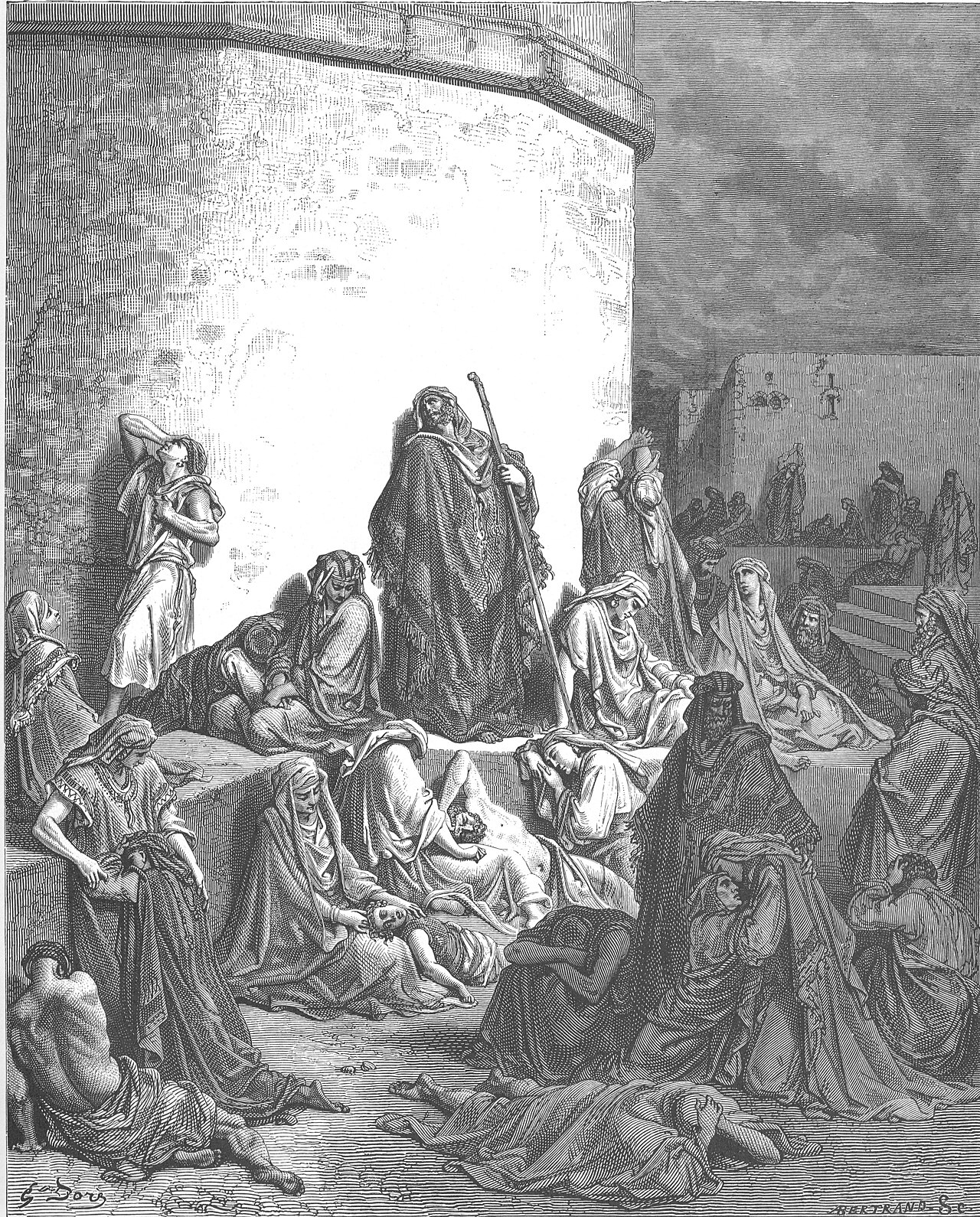
People Mourn over the Destruction of Jerusalem
People Mourn over the Destruction of Jerusalem — Gustave Doré, Doré's English Bible (1866) — public domain

Chapter summary

The first of five poems over the fallen city, and an alphabetic acrostic — twenty-two stanzas, one for each letter of the Hebrew alphabet, grief ordered from aleph to tav.

Read the rest, the context and the outline

The first of five poems over the fallen city, and an alphabetic acrostic — twenty-two stanzas, one for each letter of the Hebrew alphabet, grief ordered from aleph to tav. 'How doth the city sit solitary, that was full of people!' She that was great among the nations is become a widow, a forced laborer; she weeps sore in the night and her tears are on her cheeks, with none to comfort her among all her lovers. Judah's roads mourn because none come to the feasts. Halfway through, the city herself speaks and appeals to passers-by: 'Is it nothing to you, all ye that pass by?' (1:12) — and then confesses, 'Jehovah is righteous; for I have rebelled against his commandment.'

Drawn from Jamieson, Fausset & Brown, Commentary Critical and Explanatory, Matthew Henry, Complete Commentary, John Wesley, Notes on the Old Testament and John Calvin, Commentaries.

Context

Poetry · JeremiahLamentations overview

  • A. 1–11 How Doth the City Sit Solitary
  • B. 12–22 Is It Nothing to You, All Ye That Pass By?

The world behind this chapter

Lamentations 1
When
The months and years after Jerusalem fell · c. 586–580 BC
Where
The emptied streets and gates of Jerusalem, with the pilgrim roads standing silent
Who first heard it
Survivors gathering at the ruins on fast days to grieve together

The history

Each of the first four chapters of this book is an alphabet poem: twenty-two verses, one for each letter of the Hebrew alphabet, in order. That is a deliberate structure for grief that would otherwise have no shape — an A to Z of loss, and a way for people to learn it by heart and say it together.

The city is pictured as a widow sitting on the ground. Sitting in the dust, head covered, was the recognised posture of mourning, held for days while friends came and sat in silence. A widow in that society had no legal standing of her own and depended on the mercy of relatives, which is exactly the point of the image.

The most concrete detail is the roads. The roads to Zion mourn because none come to the appointed feasts. Three times a year the country emptied into Jerusalem for the pilgrim festivals; the highways would have been crowded with families walking up in company. Now they are empty and the gates are desolate.

Poems mourning a destroyed city were a known form in that part of the world — Mesopotamian scribes had composed laments over the fall of Ur and other cities centuries earlier, in which the city's goddess weeps over the ruin. This book uses the familiar form and changes the content: there is no capricious god here, only a city that says the LORD is in the right, for I have rebelled against his word.

What it meant to them

The survivors needed permission to grieve out loud and words that would not lie. This chapter gives both: the horror is fully stated, and so is the reason for it.

The refrain is loneliness rather than pain. She weeps bitterly in the night, and among all her lovers she has none to comfort her — those lovers being the allies Judah had courted for a century, none of whom came.

Sources cited

  • James B. Pritchard, ed., Ancient Near Eastern Texts Relating to the Old Testament
  • Roland de Vaux, Ancient Israel: Its Life and Institutions

Every work MannaFest builds on →