
2 Timothychapter 3
17 verses · Paul, by tradition · AD 66 or 67 · Paul's letters
All Scripture is God-breathed and is useful for instruction, for conviction, for correction, and for training in righteousness,
Introduction
Paul, by tradition, Paul's letters, 2 Timothy Overview.
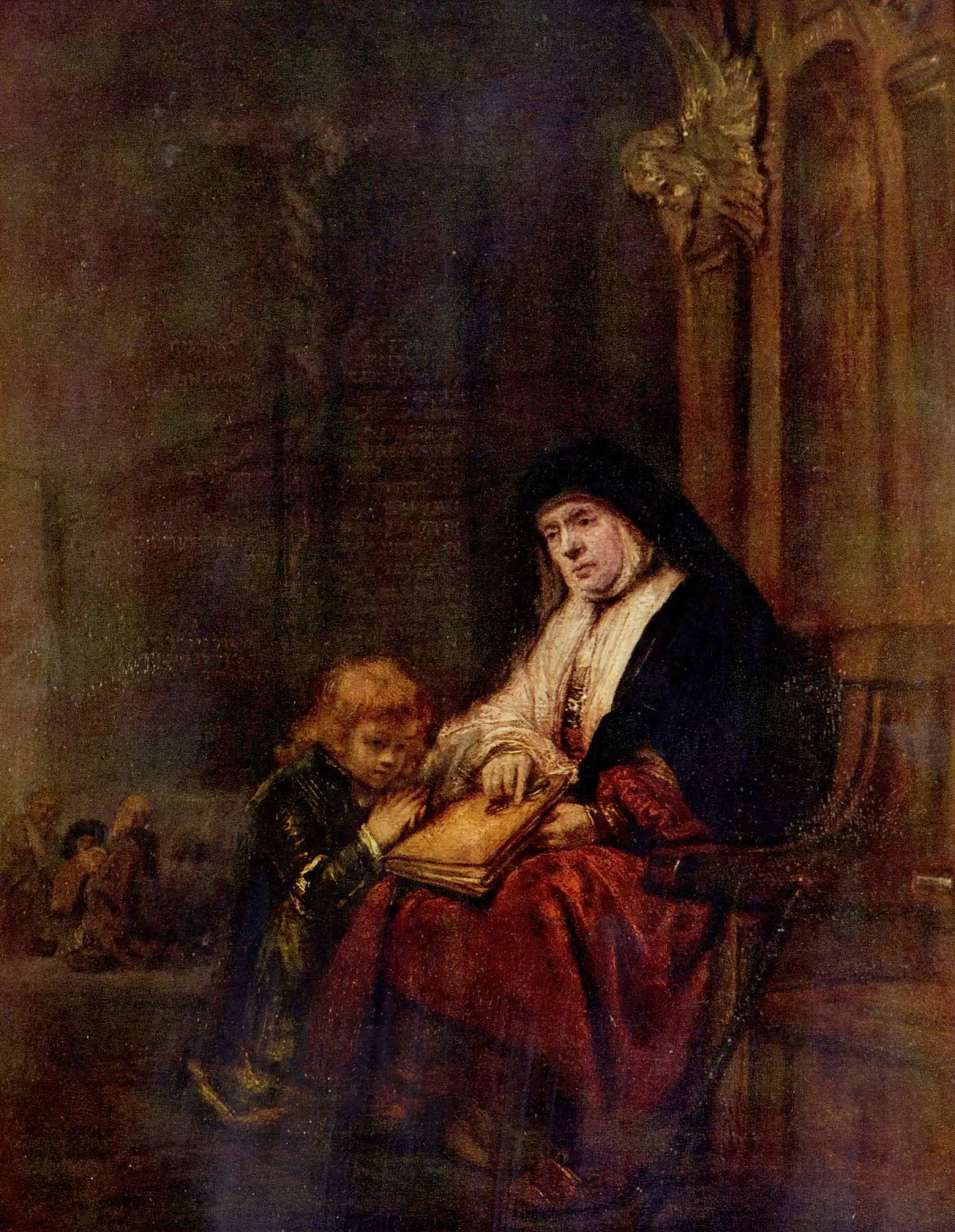
Paul wrote this chapter to warn a young leader about the kind of people he would meet in the church. Timothy had known the Scriptures since he was a small child, taught at home by his mother and grandmother. Now he faced teachers who looked religious and spread their ideas from house to house. The chapter moves from a dark list to a bright charge. Listen for the word lovers at the start and the end of the list. Listen too for what Paul sets against it, his own life and the Scriptures. Read it as a call to stay the course.
Context
- Who
- A church already seeing men work their way into households and take them over
- What
- Paul's warning about the character of the last days and his third charge to Timothy, to continue in what he learned from Paul and from the Scriptures.
- Where
- Written from prison in Rome to Timothy at Ephesus, whose home region of Lystra is named in verse 11.
- When
- About AD 66 or 67 on the traditional dating, in Paul's last imprisonment.
- Why
- To prepare Timothy for false teachers who kept the look of godliness, and to anchor him in the God-breathed Scriptures.
Historical context
The picture of teachers creeping into houses and capturing weak women is a picture of how house churches actually worked. Meetings happened in homes, the women of the household were present all day while the men were out at trade, and a persuasive visitor with religious credentials had access no stranger would get today.
Show the rest of the historical context, 3 more paragraphs
Jannes and Jambres are not named in Exodus. Jewish tradition supplied the names of Pharaoh's magicians, and they appear in Jewish writings of the period, including texts found among the Dead Sea Scrolls. Paul is using a tradition his readers knew, the point is the pattern of men who could copy the signs but not the truth.
'All Scripture' meant something physical. A congregation owned scrolls, not a book; a full set of the Hebrew Scriptures was a small library that cost more than most members earned in a year, copied by hand and read aloud in the meeting.
The word behind 'God-breathed' says the writings came out of God, and the four uses that follow, teaching, rebuking, correcting, training, describe a workshop, not a shelf.
Significance
For hearers who thought persecution meant something had gone wrong, verse 12 is flat: everyone who wants to live godly in Christ Jesus will be persecuted. It is the weather, not a verdict.
Show the rest of the significance, 1 more paragraph
And the safeguard offered is not a new revelation but the writings Timothy had known since childhood, taught to him at home before he ever met Paul.
The heads below are this chapter's scenes. The numbered points under each are its verses.
Perilous Times: A Form of Godliness Without Power
2 Timothy 3:1-5
terrible times will come: The list runs from lovers of themselves to lovers of pleasure rather than lovers of God, self-love first and God displaced last. Its summit is religious, having a form of godliness but denying its power.
2 Timothy 3:1
“In the last days - The time of the gospel dispensation, commencing at the time of our Lord's death, is peculiarly styled the last days. Grievous - Troublesome and dangerous.”
John Wesley · Explanatory Notes upon the New Testament (1755)evangelical
1 more voice on this verseWhat preachers and commentators have said about this verse, in their own words.
2 Timothy 3:1
“This know also - The “object” of this reference to the perilous times which were to occur, was evidently to show the necessity of using every precaution to preserve the purity of the church, from the fact that such sad scenes were to open upon it. The apostle had dwelt upon this subject in his First Epistle to Timothy 2 Tim. 4, but its importance leads him to advert to it again.”
lovers of themselves: Self-love heads the list. Oecumenius calls it the root from which love of money, boasting and pride grow. Augustine explains that every person loves himself, but the one who leaves God out of his life goes away even from himself.
2 Timothy 3:2
"And my doctrine is not Mine," saith the Lord, "but the Father's which sent me." And of those who steal He says: "But he that speaketh of himself, seeketh his own glory." Such are the Greeks, "lovers of their own selves, and boasters." Scripture, when it speaks of these as wise, does not brand those who are really wise, but those who are wise in appearance.
Clement of Alexandria · written before 215 · The Stromata Book 1patristic
1 more voice on this verse
2 Timothy 3:2
“For men shall be - The description in this and the following verses the Papists apply to the Protestants; the Protestants in their turn apply it to the Papists; Schoettgen to the Jews; and others to heretics in general. There have been both teachers and people in every age of the Church, and in every age of the world, to whom these words may be most legitimately applied.”
Adam Clarke · Commentary on the Bible (1810-1826)evangelical
unforgiving: Several of these words stand in Romans 1:31, where Paul describes the pagan world, as Albert Barnes notes. Jamieson, Fausset and Brown draw the point that the professing church will relapse into the vices of heathendom. Matthew Henry notes that slanderous renders diaboloi, devils.
2 Timothy 3:3
“Without natural affection - see the notes at Rom 1:31. Trucebreakers - The same word in Rom 1:31, is rendered “implacable;” see the notes at that verse. It properly means “without treaty;” that is, those who are averse to any treaty or compact. It may thus refer to those who are unwilling to enter into any agreement; that is, either those who are unwilling to be reconciled to others when there is a variance - implacable; or those who disregard treaties or agreements. In either case, this marks a very corrupt condition of society.”
2 more voices on this verse
2 Timothy 3:3
“They are truce-breakers, that make no conscience of the engagements they have laid themselves under. The times are perilous when men are false accusers one of another, diaboloi -- devils one to another, having no regard to the good name of others, or to the religious obligations of an oath, but thinking themselves at liberty to say and do what they please, Ps. xii.”
Matthew Henry · Commentary on the Whole Bible (1707-1721)puritan
2 Timothy 3:3
“The apostle also showed how much incontinency is to be dreaded by including it among the signs of apostasy, when he said, "In the last days shall come dangerous times. Men shall be lovers of themselves." Then, after enumerating several forms of iniquity, he adds, "slanderers, incontinent." Also, for selling his birthright for one portion of food, Esau was charged with incontinency as the greatest of evils. The first disobedience befell men as a consequence of incontinency.”
Basil of Caesarea · written before 379 · The Long Rules, Q.16.Rpatristic
lovers of pleasure rather than lovers of God: The list ends as it began, with love misdirected. Theophylact explains that where love of worldly pleasure rules, no room is left for desire of divine things. Ignatius of Antioch applied these words, early in the second century, to teachers who denied Christ's victory over death.
2 Timothy 3:4
“Traitors - Προδοται· From προ, before, and διδωμι, to deliver up. Those who deliver up to an enemy the person who has put his life in their hands; such as the Scots of 1648, who delivered up into the hands of his enemies their unfortunate countryman and king, Charles the First; a stain which no lapse of ages can wipe out. Heady - Προπετεις· From προ, forwards, and πιπτω, to fall; headstrong, precipitate, rash, inconsiderate. High-minded - Τετυφωμενοι· From τυφος, smoke; the frivolously aspiring; those who are full of themselves, and empty of all good.”
Adam Clarke · Commentary on the Bible (1810-1826)evangelical
a form of godliness: These people profess religion, Barnes notes. Augustine gives an example: Simon Magus was baptized and kept his evil mind, so he had the form of the sacrament without its power. The command to turn away shows, Jamieson, Fausset and Brown observe, that some such people were already in the church.
2 Timothy 3:5
“Having a form - An appearance of godliness, but not regarding, nay, even denying and blaspheming, the inward power and reality of it. Is not this eminently fulfilled at this day?”
John Wesley · Explanatory Notes upon the New Testament (1755)evangelical
2 more voices on this verse
2 Timothy 3:5
“Having a form of godliness - That is, they profess religion, or are in connection with the church. This shows that the apostle referred to some great corruption in the church; and there can be little doubt that he had his eye on the same great apostasy to which he refers in 2 Thes.”
2 Timothy 3:5
PAUL warns us of certain characters which will appear in the last times. It is a very terrible list. The like have appeared in other days but we are led by his warning to apprehend that they will appear in greater numbers in the last days than in any previous age. "Lovers of their own selves, covetous, boasters, proud, blasphemers, disobedient to parents, unthankful, unholy, without natural affection, trucebreakers, false accusers, incontinent, fierce, despisers of those that are good, traitors, heady, high-minded, lovers of pleasures more than lovers of God."
2 Timothy 3:6-7
worm their way into households: The method is infiltration, since they worm their way into households. Their prey is named with a diminutive, gunaikaria, vulnerable women of a particular sort, weighed down with sins and led astray by various passions.
2 Timothy 3:6
“For of this sort are they - He here refers to false teachers and their insinuating manners, practising upon weak women, who, seeing in them such a semblance of piety, entertain them with great eagerness, and at last become partakers with them in their impurities. Among the Jews there are remarkable cases of this kind on record, and not a few of them among the full fed monks of the Romish Church. But in what sect or party have not such teachers been occasionally found? yet neither Judaism, Protestantism, nor Roman Catholicism makes any provision for such men.”
Adam Clarke · Commentary on the Bible (1810-1826)evangelical
1 more voice on this verse
2 Timothy 3:6
“Some of his disciples, too, addicting themselves to the same practices, have deceived many silly women, and defiled them. They proclaim themselves as being "perfect," so that no one can be compared to them with respect to the immensity of their knowledge, nor even were you to mention Paul or Peter, or any other of the apostles. They assert that they themselves know more than all others, and that they alone have imbibed the greatness of the knowledge of that power which is unspeakable.”
Irenaeus · written before 202 · Against Heresies Book Ipatristic
always learning: Matthew Henry separates two kinds of learning. Every believer keeps growing in knowledge, but these chase each new notion and never reach a right understanding of the truth. Theophylact adds that their sins had dulled their reason.
2 Timothy 3:7
“Ever learning - That is, these “silly women;” for so the Greek demands. The idea is, that they seeM to be disciples. They put themselves wholly under the care of these professedly religious teachers, but they never acquire the true knowledge of the way of salvation. And never able to come to the knowledge of the truth - They may learn many things, but the true nature of religion they do not learn. There are many such persons in the world, who, whatever attention they may pay to religion, never understand its nature.”
3 more voices on this verse
2 Timothy 3:7
“In one sense we must all be ever learning, that is, growing in knowledge, following on to know the Lord, pressing forward; but these were sceptics, giddy and unstable, who were forward to imbibe every new notion, under pretence of advancement in knowledge, but never came to a right understanding of the truth as it is in Jesus.”
Matthew Henry · Commentary on the Whole Bible (1707-1721)puritan
2 Timothy 3:7
“Those, therefore, who desert the preaching of the Church, call in question the knowledge of the holy presbyters, not taking into consideration of how much greater consequence is a religious man, even in a private station, than a blasphemous and impudent sophist.”
Irenaeus · written before 202 · Against Heresies Book Vpatristic
2 Timothy 3:7
“Ever learning--some new point, for mere curiosity, to the disparagement of what they seemed to know before. the knowledge--Greek, "the perfect knowledge"; the only safeguard against further novelties.”
Jamieson, Fausset & Brown · Commentary Critical and Explanatory on the Whole Bible (1871)reformed
2 Timothy 3:8-9
as Jannes and Jambres: Jewish tradition, in the Targum of Jonathan on Exodus 7:11 and the Damascus Document, gives these names to Pharaoh's magicians, whom Exodus leaves unnamed. Paul uses them as common knowledge.
2 Timothy 3:8
“Now as Jannes and Jambres withstood Moses - This refers to the history of the Egyptian magicians, given in Exodus 7 (see on Exo 7:11 (note) and Exo 7:12 (note)), and particularly the concluding observations at the end of that chapter, (note) where several things are said concerning these two men. Men of corrupt minds - It appears as if the apostle were referring still to some Judaizing teachers who were perverting the Church with their doctrines, and loudly calling in question the authority and doctrine of the apostle.”
Adam Clarke · Commentary on the Bible (1810-1826)evangelical
3 more voices on this verse
2 Timothy 3:8
“Several ancient writers speak of Jannes and Jambres, as the chief of the Egyptian magicians. Men of corrupt minds - Impure notions and wicked inclinations. Void of judgment - Quite ignorant, as well as careless, of true, spiritual religion.”
John Wesley · Explanatory Notes upon the New Testament (1755)evangelical
2 Timothy 3:8
“So, too, that other species of magic which operates by miracles, emulous even in opposition to Moses, tried God's patience until the Gospel.”
Tertullian · written before 220 · On Idolatrypatristic
2 Timothy 3:8
“Now--Greek, "But"; it is no wonder there should be now such opponents to the truth, for their prototypes existed in ancient times [ALFORD]. Jambres--traditional names of the Egyptian magicians who resisted Moses (Ex 7:11, 22), derived from "the unwritten teaching of the Jews" [THEODORET].”
Jamieson, Fausset & Brown · Commentary Critical and Explanatory on the Whole Bible (1871)reformed
will not advance much further: At 2:16 Paul said such talk would lead to more ungodliness, and here he says it will not get far. Theophylact reconciles the two: false teachers keep inventing new errors, yet they will not prevail. Albert Barnes adds that their folly becomes plain in time.
2 Timothy 3:9
“But they shall proceed no further - There is a certain point beyond which they will not be allowed to go. Their folly will become manifest, and the world will understand it. The apostle does not say how far these false teachers would be allowed to go, but that they would not be suffered always to prosper and prevail. They might be plausible at first, and lead many astray; they might, by art and cunning, cover up the real character of their system; but there would be a fair development of it, and it would be seen to be folly.”
Everyone Who Lives Godly Will Be Persecuted
2 Timothy 3:10-12
You, however, have observed my teaching: The sufferings in Antioch, Iconium, and Lystra are the mission of Acts 13 and 14 through Timothy's home region. Then comes the rule, all who desire to live godly lives in Christ Jesus will be persecuted.
2 Timothy 3:10
“Thou hast fully known my doctrine - And having long had the opportunity of knowing me, the doctrine I preached, my conduct founded on these doctrines, the object I have in view by my preaching, my fidelity to God and to my trust, my long-suffering with those who walked disorderly, and opposed themselves to the truth, and did what they could to lessen my authority and render it suspected, my love to them and to the world in general, and my patience in all my adversities; thou art capable of judging between me and the false teachers, and canst easily…”
Adam Clarke · Commentary on the Bible (1810-1826)evangelical
Antioch, Iconium, and Lystra: These are the towns of Acts 13 and 14, and Antioch here is Antioch in Pisidia, as Albert Barnes notes. Matthew Henry observes that Paul names trials Timothy knew well, so he should not be surprised by his own. Theodoret reads the list as proof of God's help.
will be persecuted: Paul widens his own story into a rule for every believer. Matthew Henry notes that the measure varies with the time, more in some ages than in others, while the rule holds. Augustine adds that when enemies outside stop raging, the scandalous lives of those inside still wound the devout.
2 Timothy 3:12
“In another place the apostle says, "And all those who will live godly lives in Christ Jesus will suffer persecution." Then, to help prevent people from renouncing godliness when they are persecuted, he urges them to cling to the faith. "You, therefore, continue in the things you have learned and been assured of." Just as brothers become strongly knit together when one helps another, so faith and godliness, coming from the same family, cohere together. A person who gives his attention to one of the two is strengthened by the other.”
Athanasius of Alexandria · written before 373 · Festal Letters 9patristic
2 more voices on this verse
2 Timothy 3:12
All that will live godly - So opposite to the spirit and practice of the world is the whole of Christianity, that he who gives himself entirely up to God, making the Holy Scriptures the rule of his words and actions, will be less or more reviled and persecuted. “If religion gives no quarter to vice, the vicious will give no quarter to religion and its professors.”
Adam Clarke · Commentary on the Bible (1810-1826)evangelical
2 Timothy 3:12
“In Christ - Out of Christ there is no godliness. Shall suffer persecution - More or less. Either the truth of scripture fails, or those that think they are religious, and are not persecuted, in some shape or other, on that very account, deceive themselves.”
John Wesley · Explanatory Notes upon the New Testament (1755)evangelical
2 Timothy 3:13-14
go from bad to worse: Evil men and imposters go from bad to worse, imposters rendering goetes, the enchanter's word. Timothy is to continue in the things you have learned and firmly believed, since you know from whom you have learned them. The oldest manuscripts make whom plural, reaching past Paul to Lois and Eunice.
2 Timothy 3:13
“But evil men and seducers shall wax worse and worse - That is, it is the character of such men to do this; they may be expected to do it. This is the general law of depravity - that if men are not converted, they are always growing worse, and sinking deeper into iniquity. Their progress will be certain, though it may be gradual, since “nemo repente turpissimus.” The connection here is this: that Timothy was not to expect that he would be exempt from persecution 2Ti 3:12, by any change for the better in the wicked men referred to.”
1 more voice on this verse
2 Timothy 3:13
“Not contradictory to that verse: there the diffusion of the evil was spoken of; here its intensity [ALFORD]. deceiving, and being deceived--He who has once begun to deceive others, is the less easily able to recover himself from error, and the more easily embraces in turn the errors of others [BENGEL].”
Jamieson, Fausset & Brown · Commentary Critical and Explanatory on the Whole Bible (1871)reformed
From Childhood You Have Known the Sacred Writings
from whom you have learned them: Continue answers the drift of the impostors in verse 13. Albert Barnes notes that Timothy learned these truths as a child and was confirmed in them by Paul. Adam Clarke warns that no one, however well taught, is beyond the reach of falling away.
2 Timothy 3:14
“Read the divine Scriptures constantly. Never, indeed, let the sacred volume be out of your hand. Learn what you have to teach.… Do not let your deeds belie your words, lest when you speak in church someone may mentally reply, "Why do you not practice what you preach?" He is a fine and dainty master who, with his stomach full, reads us a homily on fasting. Let the robber accuse others of covetousness if he will. The mind and mouth of a priest of Christ should be at one.”
Jerome · written before 420 · LETTERS 52.7patristic
1 more voice on this verse
2 Timothy 3:14
“Then are we Christ's disciples indeed, John viii. We should not be any more children, tossed to and fro, and carried about with every wind of doctrine, by the sleight of men and cunning craftiness, whereby they lie in wait to deceive, Eph. iv. Be not carried about with divers and strange doctrines; for it is a good thing that the heart be established with grace, Heb. xiii.”
Matthew Henry · Commentary on the Whole Bible (1707-1721)puritan
From infancy you have known the Holy Scriptures: Infancy renders brephos, and Timothy has known the Holy Scriptures, hiera grammata, the synagogue's sacred writings taught by the mother and grandmother whom 1:5 names. They are able to make you wise for salvation through faith in Christ Jesus. The Old Testament saves by leading to the Messiah it promised.
2 Timothy 3:15
“Wise also in extending it to others. through faith--as the instrument of this wisdom. Each knows divine things only as far as his own experience in himself extends. He who has not faith, has not wisdom or salvation. which is in--that is, rests on Christ Jesus.”
Jamieson, Fausset & Brown · Commentary Critical and Explanatory on the Whole Bible (1871)reformed
3 more voices on this verse
2 Timothy 3:15
“These only were extant when Timothy was an infant. Which are able to make thee wise unto salvation, through faith in the Messiah that was to come. How much more are the Old and New Testament together able, in God's hand, to make us more abundantly wise unto salvation!”
John Wesley · Explanatory Notes upon the New Testament (1755)evangelical
2 Timothy 3:15
“And that from a child thou hast known the holy Scriptures,.... And therefore must know that the doctrines he had learned were agreeable to them; and so is another reason why he should continue in them. The Jews very early learned their children the holy Scripture. Philo the Jew says (w), εκ πρωτης ηλικιας "from their very infancy"; a phrase pretty much the same with this here used. It is a maxim with the Jews (x), that when a child was five years of age, it was proper to teach him the Scriptures.”
2 Timothy 3:15
“And that from a child thou hast known the holy Scriptures - That is, the Old Testament; for the New Testament was not then written; see the notes at Joh 5:39. The mother of Timothy was a pious Hebrewess, and regarded it as one of the duties of her religion to train her son in the careful knowledge of the word of God. This was regarded by the Hebrews as an important duty of religion, and there is reason to believe that it was commonly faithfully performed. The Jewish writings abound with lessons on this subject.”
2 Timothy 3:16-17
All Scripture is God-breathed: God-breathed renders theopneustos, the strongest statement of inspiration in the Bible. Scripture is useful for instruction, for conviction, for correction, and for training in righteousness, so that the man of God may be complete, artios.
2 Timothy 3:16
“Hence it is so profitable for doctrine, for instruction of the ignorant, for the reproof or conviction of them that are in error or sin, for the correction or amendment of whatever is amiss, and for instructing or training up the children of God in all righteousness.”
John Wesley · Explanatory Notes upon the New Testament (1755)evangelical
2 more voices on this verse
2 Timothy 3:16
“All Scripture is given by inspiration of God - This sentence is not well translated; the original πασα γραφη θεοκνευστος ωφιλιμος προς διδασκαλιαν, κ. τ. λ. should be rendered: Every writing Divinely inspired is profitable for doctrine, etc. The particle και, and, is omitted by almost all the versions and many of the fathers, and certainly does not agree well with the text.”
Adam Clarke · Commentary on the Bible (1810-1826)evangelical
2 Timothy 3:16
“But since Enoch in the same Scripture has preached likewise concerning the Lord, nothing at all must be rejected by us which pertains to us; and we read that "every Scripture suitable for edification is divinely inspired. By the Jews it may now seem to have been rejected for that (very) reason, just like all the other (portions) nearly which tell of Christ.”
Tertullian · written before 220 · On the Apparel of Women Book Ipatristic
fully equipped for every good work: Adam Clarke explains the word complete from arithmetic, a whole number to which nothing needs to be added. John Wesley and Jamieson, Fausset and Brown apply the man of God to any believer approved by God, minister or layman. Scripture is the equipment.
2 Timothy 3:17
Here is why meditation on the law is necessary, my beloved, along with an uninterrupted conversion with virtue: "that the saint may lack nothing but be perfect to every good work." For by these things comes the promise of eternal life, as Paul wrote to Timothy, calling constant meditation exercise, and saying, "Exercise yourself unto godliness."
Athanasius of Alexandria · written before 373 · Festal Letters 11.7patristic
2 more voices on this verse
2 Timothy 3:17
“That the man of God may be perfect - The object is not merely to convince and to convert him; it is to furnish all the instruction needful for his entire perfection. The idea here is, not that any one is absolutely perfect, but that the Scriptures have laid down the way which leads to perfection, and that, if any one were perfect, he would find in the Scriptures all the instruction which he needed in those circumstances.”
2 Timothy 3:17
“That the man of God - He that is united to and approved of God. May be perfect - Blameless himself, and throughly furnished - By the scripture, either to teach, reprove, correct, or train up others.”
John Wesley · Explanatory Notes upon the New Testament (1755)evangelical
How this psalm is built
The form: A warning with a list of vices in verses 1 to 9, then a charge to continue, grounded in Paul's example and in the Scriptures, in verses 10 to 17, as page classes it.
The patterns in this chapter
| Device | What it does | Where to see it |
|---|---|---|
| A list framed by love | Verses 2 to 4 give eighteen marks in the Berean text. The list opens with lovers of themselves and lovers of money and closes with pleasure loved above God, so the word lovers stands twice at each end. Adam Clarke holds that the list fits teachers and people in every age of the church.Adam Clarke, Commentary on the Bible, on 2 Timothy 3:2. | 2 Timothy 3:2, 2 Timothy 3:3, 2 Timothy 3:4 |
| But you | Twice the chapter turns from the false teachers to Timothy. Verse 10 begins You, however, and verse 14 begins But as for you, and 4:5 turns the same way with But you. Each time Paul sets Timothy against the drift he has just described. Jamieson, Fausset and Brown note that verse 14 resumes the thread begun at verse 10.Jamieson, Fausset and Brown, Commentary Critical and Explanatory on the Whole Bible, on 2 Timothy 3:14. | 2 Timothy 3:10, 2 Timothy 3:14, 2 Timothy 4:5 |
| Four uses of Scripture | Verse 16 names four uses of the God-breathed Scripture: instruction, conviction, correction and training in righteousness. Verse 17 gives the aim, that the man of God be complete and fully equipped. Adam Clarke explains the word complete from arithmetic, a whole number to which nothing needs to be added.Adam Clarke, Commentary on the Bible, on 2 Timothy 3:17. | 2 Timothy 3:16, 2 Timothy 3:17 |
How the chapter is built
5 more paragraphs on the patterns
The chapter opens with a list of eighteen marks of people in the last days, framed by the word lovers at both ends and closed by a form of godliness without its power. Verses 6 to 9 describe the false teachers and compare them with Jannes and Jambres. Verses 10 to 13 turn to Paul's own life and sufferings, and verses 14 to 17 to the Scriptures Timothy has known from childhood. The site's book page names this chapter's charge Continue, the third of four.
The debated reading: all Scripture is God-breathed
The grammar of verse 16 can be read two ways. Most translations read it as a statement about all Scripture, that it is God-breathed and useful, and the Berean text follows them. Others read it as a statement that every God-breathed Scripture is useful too. The site's published exposition of verses 16 and 17 notes that the doctrine of inspiration stands on either reading. The site's study page All Scripture Is God-Breathed sets out the positions on what the word claims, with their holders.
Where the chapter reaches
Jannes and Jambres reach back to Pharaoh's court in Exodus 7, where the magicians copied the signs of Moses and then failed. The persecutions of verse 11 reach back to Acts 13 and 14. The Scriptures of verse 15 are the Old Testament Timothy learned as a child, which lead a person to salvation through faith in Christ.
Keep studying
Studies8
People and groups1
Places1
Sources for this chapter
The summary
Jamieson, Fausset & Brown, Commentary Critical and Explanatory; John Calvin, Commentaries; John Wesley, Explanatory Notes Upon the New Testament and Matthew Henry, Complete Commentary.
The form and classifications
Albert Barnes, Notes, Explanatory and Practical, on 2 Timothy 3:5; Jamieson, Fausset and Brown, Commentary Critical and Explanatory on the Whole Bible, on 2 Timothy 3:2 and This site's 2 Timothy book page, src/components/book/guides/2-timothy/Book2TimothyGuide.tsx, the CHARGES table, the entry for chapter 3, "Continue in what you have learned", 3:10 to 17.
The exposition
Adam Clarke, Commentary on the Bible; Albert Barnes; Augustine of Hippo; Ignatius of Antioch, Epistle of Ignatius to the Magnesians; Jamieson, Fausset & Brown, Commentary Critical and Explanatory on the Whole Bible; John Gill, Exposition of the New Testament; John Wesley, Explanatory Notes upon the New Testament; Matthew Henry, Commentary on the Whole Bible; Oecumenius, COMMENTARY ON 2 TIMOTHY; Theodoret of Cyrus, INTERPRETATION OF THE SECOND LETTER TO TIMOTHY and Theophylact of Ohrid, Commentary on 2 Timothy.