
1 Corinthianschapter 11
34 verses · Paul · AD 54 or 55 · Paul's letters
Now I commend you for remembering me in everything and for maintaining the traditions, just as I passed them on to you.
Introduction
Paul, Paul's letters, 1 Corinthians Overview.
Paul wrote this chapter from Ephesus to a church he had planted in a Roman colony of traders, freedmen and slaves. The believers met in houses, and the customs of the house and the street came in with them. Here he turns from the food of idols to the church's own gatherings. He praises what they keep and then corrects what has gone wrong when they meet. Listen for how often he appeals to what was handed down, and for the one meal he will not let them treat as their own. Read it as a lesson in how a church worships together.
Context
- Who
- A congregation of rich and poor members eating together in a wealthy member's house.
- What
- Paul's instructions on head coverings when men and women pray and prophesy, and his correction of the divided meal at which the Corinthians ate the Lord's Supper.
- Where
- Written from Ephesus to the church at Corinth, which met in the houses of its members in the Roman colony on the isthmus of Greece.
- When
- About AD 54 or 55, near the end of Paul's stay of some three years at Ephesus, before the Pentecost he names at 16:8.
- Why
- To keep the order he had taught in the church's worship and to stop a meal that shamed the poor and profaned the Lord's body and blood.
Historical context
Head covering in the first century was about honour and social signalling, and the details varied by city and class. In Roman religious practice men of rank covered their heads when sacrificing; among Jews and in much of the Greek East a respectable married woman covered hers in public. An uncovered woman in an assembly could be read as making a statement about her marriage or her availability, whatever she intended.
Show the rest of the historical context, 3 more paragraphs
Paul argues from creation and from custom together, and finally appeals to the practice of the churches. Notably, he assumes throughout that women pray and prophesy in the gathering; the question is how, not whether.
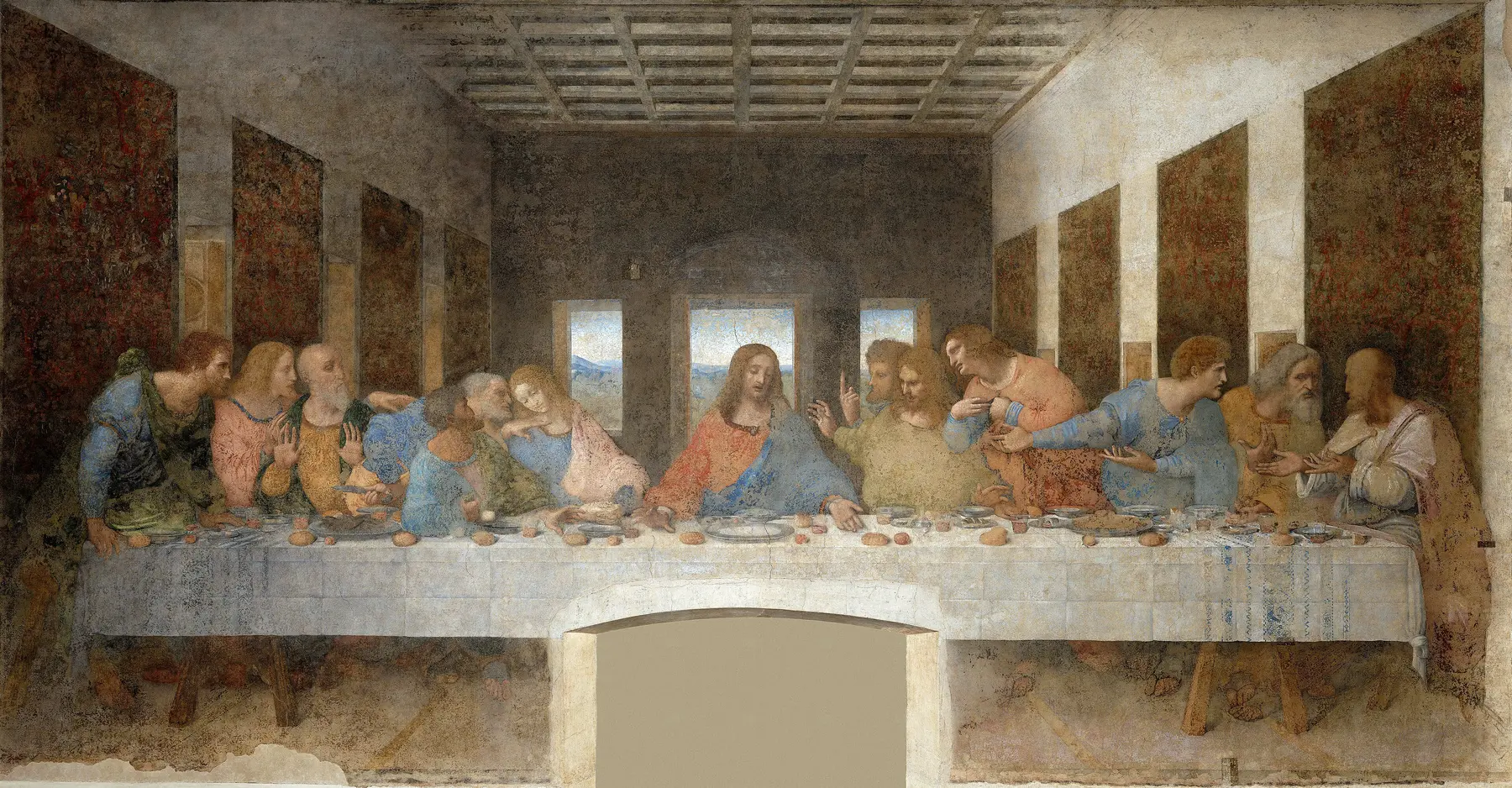
The Lord's Supper was a full meal, held in a house. A well-off Roman home had a small formal dining room, the triclinium, holding perhaps nine reclining guests, and a larger open atrium for everyone else. Hosts routinely served better food and wine to the honoured few and lesser fare to the rest, a custom Roman writers themselves complained about.
Add to that the working poor and slaves arriving late, after the free were already eating, and you get exactly what Paul describes: one goes hungry while another gets drunk.
Significance
The first hearers were told that their supper was not the Lord's Supper at all. Humiliating those who have nothing while eating a meal that proclaims the Lord's death was a contradiction serious enough that Paul links it to sickness and death among them.
Show the rest of the significance, 1 more paragraph
The remedy is simple and social: wait for one another, and eat at home if you are only there to feed yourself. Discerning the body meant recognizing the poor believer across the room as part of it.
The heads below are this chapter's scenes. The numbered points under each are its verses.
Head, Covering, and the Order of Glory
1 Corinthians 11:1-2
You are to imitate me: Paul offers his conduct as a pattern only because it follows Christ's: imitate me, just as I imitate Christ. The traditions, paradoseis, are teachings handed down by apostolic authority, commended here before Paul corrects two areas where they were not kept.
1 Corinthians 11:1
“Be ye followers of me - Imitate my example in the matter now under discussion. As I deny myself; as I seek to give no offence to anyone; as I endeavor not to alarm the prejudices of others, but in all things to seek their salvation, so do you. This verse belongs to the previous chapter, and should not have been separated from it. It is the close of the discussion there. Even as I also am of Christ - I make Christ my example.”
2 more voices on this verseWhat preachers and commentators have said about this verse, in their own words.
1 Corinthians 11:1
“Let us, therefore, maintain so much the more carefully this doctrine of Paul -- that we are to follow men, provided they take Christ as their grand model, (prototupon,) that the examples of the saints may not tend to lead us away from Christ, but rather to direct us to him.”
John Calvin · Commentaries (1554)reformed
1 Corinthians 11:1
“He encourages neither implicit faith nor obedience. He would be followed himself no further than he followed Christ. Christ's pattern is a copy without a blot; so is no man's else.”
Matthew Henry · Commentary on the Whole Bible (1707-1721)puritan
maintaining the traditions: The word for traditions is paradoseis, teaching handed on from one teacher to the next. Paul uses the matching verb of passing on at 11:23 and 15:3, for the Lord's Supper and for the gospel itself. The praise here is sincere.
1 Corinthians 11:2
“That ye remember me in all things - It appears that the apostle had previously given them a variety of directions relative to the matters mentioned here; that some had paid strict attention to them, and that others had not; and that contentions and divisions were the consequences, which he here reproves and endeavors to rectify.”
Adam Clarke · Commentary on the Bible (1810-1826)evangelical
1 more voice on this verse
1 Corinthians 11:2
“For as a man's dress or gesture has in some cases the effect of disfiguring, and in others of adorning him, so all actions are set off to advantage by decorum, and are vitiated by the want of it. Much, therefore, depends upon decorum (to prepon,) and that not merely for securing for our actions gracefulness and beauty, but also to accustom our minds to propriety.”
John Calvin · Commentaries (1554)reformed
the head of every man: Before any practice, the verse sets out a chain of headship, kephale, ending in the head of Christ is God. The Son and the Father give the pattern, an eternal order in the Godhead among persons equal in being.
1 Corinthians 11:3
“I would have you know - He does not seem to have given them any order before concerning this. The head of every man - Particularly every believer. Is Christ, and the head of Christ is God - Christ, as he is Mediator, acts in all things subordinately to his Father.”
John Wesley · Explanatory Notes upon the New Testament (1755)evangelical
2 more voices on this verse
1 Corinthians 11:3
“This is a warning that no one ought to rely on oneself. She who was made as a helper needs the protection of the stronger. In this sense "the head of the woman is the man." Yet while he believed that he would have the assistance of his wife, he fell because of her. Hence no one ought to entrust himself lightly to another unless he has first put that person's virtue to the test. Neither should he claim for himself in the role of protector one whom he believes is lesser to his strength.”
Ambrose of Milan · written before 397 · On Paradise, 4.24patristic
1 Corinthians 11:3
“If she was made out of the man, and for the man, and made to be the glory of the man, she should do nothing, especially in public, that looks like a wish of having this order inverted. Another reason against this conduct is that the man is the image and glory of God, the representative of that glorious dominion and headship which God has over the world.”
Matthew Henry · Commentary on the Whole Bible (1707-1721)puritan
1 Corinthians 11:4-6
Every man who prays or: The words every woman who prays or prophesies assume that women, like men, speak under inspiration in the assembly, and only the manner is regulated. Most have read her head uncovered as lacking the customary veil, a sign at Corinth of a husband's or father's protection.
1 Corinthians 11:4
“With his head - And face. Covered - Either with a veil or with long hair. Dishonoureth his head - St. Paul seems to mean, As in these eastern nations veiling the head is a badge of subjection, so a man who prays or prophesies with a veil on his head, reflects a dishonour on Christ, whose representative he is.”
John Wesley · Explanatory Notes upon the New Testament (1755)evangelical
2 more voices on this verse
1 Corinthians 11:4
“Praying, or prophesying - Any person who engages in public acts in the worship of God, whether prayer, singing, or exhortation: for we learn, from the apostle himself, that προφητευειν, to prophesy, signifies to speak unto men to edification, exhortation, and comfort, 1Co 14:3. And this comprehends all that we understand by exhortation, or even preaching.”
Adam Clarke · Commentary on the Bible (1810-1826)evangelical
1 Corinthians 11:4
“Why, then, ought not man to wear the covering in token of his subjection to Christ, as the woman wears it in token of her subjection to man? "Because Christ is not seen: the man is seen; so the covering of him who is under Christ is not seen; of her who is under the man, is seen" [BENGEL].”
Jamieson, Fausset & Brown · Commentary Critical and Explanatory on the Whole Bible (1871)reformed
with her head uncovered: Paul assumes that a woman prays and prophesies in the church, yet 14:34 asks women to keep silent in the churches. Calvin and Hodge hold that Paul corrects the uncovered head here and forbids the speaking itself in chapter 14.
1 Corinthians 11:5
“But every woman that prayeth or prophesieth,.... Not that a woman was allowed to pray publicly in the congregation, and much less to preach or explain the word, for these things were not permitted them: see 1Co 14:34 but it designs any woman that joins in public worship with the minister in prayer, and attends on the hearing of the word preached, or sings the praises of God with the congregation, as we have seen, the word prophesying signifies, with her head uncovered.”
4 more voices on this verse
1 Corinthians 11:5
“For they who allow to virgins immunity from head-covering, appear to rest on this; that the apostle has not defined "virgins" by name, but "women," as "to be veiled; "nor the sex generally, so as to say "females," but a class of the sex, by saying "women: "for if he had named the sex by saying "females," he would have made his limit absolute for every woman; but while he names one class of the sex, he separates another class by being silent.”
Tertullian · written before 220 · On Prayerpatristic
1 Corinthians 11:5
“But every woman that prayeth or prophesieth - In the Old Testament prophetesses are not unfrequently mentioned. Thus, Miriam is mentioned Exo 15:20; Deborah Jdg 4:4; Huldah 2Ki 22:14; Noadiah Neh 6:14. So also in the New Testament Anna is mentioned as a prophetess; Luk 2:36. That there were females in the early Christian church who corresponded to those known among the Jews in some measure as endowed with the inspiration of the Holy Spirit, cannot be doubted.”
1 Corinthians 11:5
“But every woman - Who, under an immediate impulse of the Spirit, (for then only was a woman suffered to speak in the church,) prays or prophesies without a veil on her face, as it were disclaims subjection, and reflects dishonour on man, her head. For it is the same, in effect, as if she cut her hair short, and wore it in the distinguishing form of the men.”
John Wesley · Explanatory Notes upon the New Testament (1755)evangelical
1 Corinthians 11:5
“Or, though she might not preach even by inspiration (because teaching is the business of a superior), yet she might pray or utter hymns by inspiration, even in the public assembly. She did not show any affectation of superiority over the man by such acts of public worship. It is plain the apostle does not in this place prohibit the thing, but reprehend the manner of doing it.”
Matthew Henry · Commentary on the Whole Bible (1707-1721)puritan
have her hair cut off: Paul reasons from a shame the Corinthians already felt: the same logic that removes the covering would have her hair cut off or shaved. The Greek names two degrees of that disgrace, keiro for hair cut with shears and xurao for a head shaved with a razor.
1 Corinthians 11:6
“Therefore if a woman is not covered - If she will throw off the badge of subjection, let her appear with her hair cut like a man's. But if it be shameful far a woman to appear thus in public, especially in a religious assembly, let her, for the same reason, keep on her veil.”
John Wesley · Explanatory Notes upon the New Testament (1755)evangelical
2 more voices on this verse
1 Corinthians 11:6
“If they are so weak in their hearing as not to be able to hear through a covering, I pity them. Let them know that the whole head constitutes "the woman." Its limits and boundaries reach as far as the place where the robe begins. The region of the veil is co-extensive with the space covered by the hair when unbound; in order that the necks too may be encircled. For it is they which must be subjected, for the sake of which "power" ought to be "had on the head:" the veil is their yoke.”
Tertullian · written before 220 · On the Veiling of Virginspatristic
1 Corinthians 11:6
A woman would not like to be "shorn" or (what is worse) "shaven"; but if she chooses to be uncovered (unveiled) in front, let her be so also behind, that is, "shorn." a shame--an unbecoming thing (compare 1Co 11:13-15). Thus the shaving of nuns is "a shame."
Jamieson, Fausset & Brown · Commentary Critical and Explanatory on the Whole Bible (1871)reformed
1 Corinthians 11:7-9
A man ought not to: Paul grounds the practice in Genesis 1:27 and 2:18-23, both sexes bearing God's image within a created order that shapes worship's form. The stated reason is creation itself, woman from man and woman for man, with her equal standing kept, as verse 11 states.
1 Corinthians 11:7
“For a man indeed ought not to cover his head,.... The Ethiopic version adds, "whilst he prays"; which is a proper interpretation of the words, though a wrong version; for the apostle's meaning is not, that a man should not have his head covered at any time, but whilst he is in public worship, praying, prophesying, or singing of psalms: the reason is, forasmuch as he is the image and glory of God.”
2 more voices on this verse
1 Corinthians 11:7
"Express image," Greek, "the impress." The Divine Son is not merely "like" God, He is God of God, "being of one substance (essence) with the Father." [Nicene Creed]. woman . . . glory of . . . man--He does not say, also, "the image of the man." For the sexes differ: moreover, the woman is created in the image of God, as well as the man (Ge 1:26, 27).
Jamieson, Fausset & Brown · Commentary Critical and Explanatory on the Whole Bible (1871)reformed
1 Corinthians 11:7
“A man indeed ought not to veil his head, because he is the image of God - In the dominion he bears over the creation, representing the supreme dominion of God, which is his glory. But the woman is only matter of glory to the man, who has a becoming dominion over her.”
John Wesley · Explanatory Notes upon the New Testament (1755)evangelical
woman from man: Paul points to Genesis 2:21-23, where God created the first woman from a rib taken from the man, so that she came from his side. Adam names her ishshah, from ish, the Hebrew for man. Verse 12 answers this line with its mirror image, man born of woman.
1 Corinthians 11:8
“For, the man is not of the woman - Bishop Pearce translates ου γαρ εστιν ανηρ εκ γυναικος, αλλα γυνη εξ ανδρος, thus: “For the man doth not Belong to the woman, but the woman to the man.” And vindicates this sense of εκ, by its use in 1Co 12:15. If the foot shall say, ουκ ειμι εκ του σωματος, I am not of the body, i.e. I do not belong to the body.”
Adam Clarke · Commentary on the Bible (1810-1826)evangelical
1 more voice on this verse
1 Corinthians 11:8
“The woman was made by God mediately through the man, who was, as it were, a veil or medium placed between her and God, and therefore, should wear the veil or head-covering in public worship, in acknowledgement of this subordination to man in the order of creation.”
Jamieson, Fausset & Brown · Commentary Critical and Explanatory on the Whole Bible (1871)reformed
woman for man: Paul moves from the woman's origin to her purpose, drawing on Genesis 2:18, where God makes a helper suited to the man. Matthew Henry notes on that chapter that she was taken from the man's side, to be equal with him and near his heart.
1 Corinthians 11:9
“Neither was the man created for the woman ... - This is a simple statement of what is expressed in Genesis. The woman was made for the comfort and happiness of the man. Not to be a slave, but a help-meet; not to be the minister of his pleasures, but to be his aid and comforter in life; not to be regarded as of inferior nature and rank, but to be his friend, to divide his sorrows, and to multiply and extend his joys; yet still to be in a station subordinate to him.”
2 more voices on this verse
1 Corinthians 11:9
“Since then he is the image of the Creator (for He, when looking on Christ His Word, who was to become man, said, "Let us make man in our own image, after our likeness" ), how can I possibly have another head but Him whose image I am?”
Tertullian · written before 220 · Against Marcion Book Vpatristic
1 Corinthians 11:9
“Just as the Church, the bride, is made for Christ; and yet in both the natural and the spiritual creations, the bride, while made for the bridegroom, in fulfilling that end, attains her own true "glory," and brings "shame" and "dishonor" on herself by any departure from it (1Co 11:4, 6).”
Jamieson, Fausset & Brown · Commentary Critical and Explanatory on the Whole Bible (1871)reformed
sign of authority on her head: In a sign of authority on her head, the word is exousia, usually taken as the covering itself, marking the authority under which she prays. One reading of because of the angels has them as witnesses of worship, honored by an order rightly kept.
1 Corinthians 11:10
“For this cause ought the woman to have power on her head because of the angels - There are few portions in the sacred writings that have given rise to such a variety of conjectures and explanations, and are less understood, than this verse, and 1Co 15:29. Our translators were puzzled with it; and have inserted here one of the largest marginal readings found any where in their work; but this is only on the words power on her head, which they interpret thus: that is, a covering, in sign that she is under the power of her husband.”
Adam Clarke · Commentary on the Bible (1810-1826)evangelical
1 more voice on this verse
1 Corinthians 11:10
“Others say because of the good angels. Jews and Christians have had an opinion that these ministering spirits are many of them present in their assemblies. Their presence should restrain Christians from all indecencies in the worship of God.”
Matthew Henry · Commentary on the Whole Bible (1707-1721)puritan
1 Corinthians 11:11-12
In the Lord, however, woman: Paul balances creation's order at once: in the Lord, woman is not independent of man, nor is man independent of woman. Since Adam, every man is born of woman, so the derivation runs both ways, and everything comes from God.
1 Corinthians 11:11
“Yet neither sex is insulated and independent of the other in the Christian life [ALFORD]. The one needs the other in the sexual relation; and in respect to Christ ("in the Lord"), the man and the woman together (for neither can be dispensed with) realize the ideal of redeemed humanity represented by the bride, the Church.”
Jamieson, Fausset & Brown · Commentary Critical and Explanatory on the Whole Bible (1871)reformed
2 more voices on this verse
1 Corinthians 11:11
“Nevertheless in the Lord Jesus, there is neither male nor female - Neither is excluded; neither is preferred before the other in his kingdom.”
John Wesley · Explanatory Notes upon the New Testament (1755)evangelical
1 Corinthians 11:11
“Nevertheless - Lest the man should assume to himself too much superiority, and lest he should regard the woman as made solely for his pleasure, and should treat her as in all respects inferior, and withhold the respect that is due to her.”
man is born of woman: Paul sets the first woman's origin from Adam beside every later man's birth from a mother. The closing clause, everything comes from God, echoes 8:6, where all things come from the one God the Father. Both sexes trace their existence to him.
1 Corinthians 11:12
“For as the woman is of the man - For as the woman was first formed out of the side of man, man has ever since been formed out of the womb of the woman; but they, as all other created things, are of God.”
Adam Clarke · Commentary on the Bible (1810-1826)evangelical
1 Corinthians 11:13-15
Judge for yourselves: Is it: Judge for yourselves appeals to the Corinthians' own sense of what is proper, as at 10:15. Nature, physis, is the settled custom of nearly every culture Paul knew.
1 Corinthians 11:13
“Judge of yourselves - For what need of more arguments if so plain a case? Is it decent for a woman to pray to God - The Most High, with that bold and undaunted air which she must have, when, contrary to universal custom, she appears in public with her head uncovered?”
John Wesley · Explanatory Notes upon the New Testament (1755)evangelical
1 more voice on this verse
1 Corinthians 11:13
“Judge in yourselves - Or, “Judge among yourselves.” I appeal to you. I appeal to your natural sense of what is proper and right. Paul had used various arguments to show them the impropriety of their females speaking unveiled in public. He now appeals to their natural sense of what was decent and right, according to established and acknowledged customs and habits. Is it comely ... - Is it decent, or becoming? The Grecian women, except their priestesses, were accustomed to appear in public with a veil - Doddridge.”
nature itself teach you: Calvin reads nature here as the custom settled by common consent among the Greeks of Paul's day. Men in other ages, he adds, wore long hair freely. The Nazirite of Numbers 6:5 let the hair of his head grow long as the sign of his vow.
1 Corinthians 11:14
“The fact that nature has provided woman, and not man, with long hair, proves that man was designed to be uncovered, and woman covered. The Nazarite, however, wore long hair lawfully, as being part of a vow sanctioned by God (Nu 6:5).”
Jamieson, Fausset & Brown · Commentary Critical and Explanatory on the Whole Bible (1871)reformed
1 more voice on this verse
1 Corinthians 11:14
“One act is becoming to a man, another to a woman.… How unsightly it is for a man to act like a woman!”
Ambrose of Milan · written before 397 · LETTER 78patristic
long hair is given to her as a covering: The word here is peribolaion, a mantle thrown around the body, different from the verb for covering the head in verses 5 to 7. Her hair is nature's own mantle.
1 Corinthians 11:15
“It is a glory unto her - It is an ornament, and adorning. The same instinctive promptings of nature which make it proper for a man to wear short hair, make it proper that the woman should suffer hers to grow long. For a covering - Margin, “veil.” It is given to her as a sort of natural veil, and to indicate the propriety of her wearing a veil.”
1 more voice on this verse
1 Corinthians 11:15
“But additions of other people's hair are entirely to be rejected, and it is a most sacrilegious thing for spurious hair to shade the head, covering the skull with dead locks. For on whom does the presbyter lay his hand? Whom does he bless? Not the woman decked out, but another's hair, and through them another head. And if "the man is head of the woman, and God of the man," how is it not impious that they should fall into double sins?”
Clement of Alexandria · written before 215 · The Instructor Book 3patristic
If anyone is inclined to: Paul closes with the practice of the churches: we have no other practice, nor do the churches of God. That appeal is itself evidence in the long debate over how far the instruction binds every culture.
1 Corinthians 11:16
“But if any man seem to be contentious - Ει δε τις δοκει φιλονεικος ειναι· If any person sets himself up as a wrangler - puts himself forward as a defender of such points, that a woman may pray or teach with her head uncovered, and that a man may, without reproach, have long hair; let him know that we have no such custom as either, nor are they sanctioned by any of the Churches of God, whether among the Jews or the Gentiles.”
Adam Clarke · Commentary on the Bible (1810-1826)evangelical
3 more voices on this verse
1 Corinthians 11:16
“It was the common usage of the churches for women to appear in public assemblies, and join in public worship, veiled; and it was manifestly decent that they should do so.”
Matthew Henry · Commentary on the Whole Bible (1707-1721)puritan
1 Corinthians 11:16
“The former explanation is best, as the Jews are not referred to in the context: but he often refers to himself and his fellow apostles, by the expression, "we--us" (1Co 4:9, 10). no such custom--as that of women praying uncovered. Not as CHRYSOSTOM, "that of being contentious." The Greek term implies a usage, rather than a mental habit (Joh 18:39).”
Jamieson, Fausset & Brown · Commentary Critical and Explanatory on the Whole Bible (1871)reformed
1 Corinthians 11:16
“And in all things merely indifferent the custom of each place was of sufficient weight to determine prudent and peaceable men. Yet even this cannot overrule a scrupulous conscience, which really doubts whether the thing be indifferent or no. But those who are referred to here by the apostle were contentious, not conscientious, persons.”
John Wesley · Explanatory Notes upon the New Testament (1755)evangelical
You Come Together and It Makes You Worse
1 Corinthians 11:17-19
In the following instructions I: The commendation of verse 2 is withdrawn, and the sharper tone signals a real abuse. The word in there are divisions among you, schismata, opened the letter at 1:10 and returns at the Lord's Supper.
1 Corinthians 11:17
“Now in this that I declare - In this that I am about to state to you; to wit, your conduct in regard to the Lord’s Supper. Why this subject is introduced here is not very apparent. The connection may be this. In the subjects immediately preceding he had seen much to commend, and he was desirous of commending them as far as it could be done. In 1Co 11:2 of this chapter he commends them in general for their regard to the ordinances which he had appointed when he was with them.”
there are divisions among you: Paul writes of the brothers coming together as a church, the gathering where divisions do the most harm. Chrysostom reads Paul's partial belief of the report as charity, leaving room for the innocent and time for the guilty to repent. Paul believes the report only in part.
1 Corinthians 11:18
“There be divisions among you - They had σχισματα, schisms, among them: the old parties were kept up, even in the place where they assembled to eat the Lord’s Supper. The Paulians, the Kephites, and the Apollonians, continued to be distinct parties; and ate their meals separately, even in the same house.”
Adam Clarke · Commentary on the Bible (1810-1826)evangelical
to show which of you are approved: Approved is dokimoi, a word used of metal or coin tested and found genuine. Paul's must echoes Jesus in Matthew 18:7, where stumbling blocks are bound to come in a fallen world. Division sifts a church.
1 Corinthians 11:19
“Hence heresies not only have frequently been originated, but continue to be so; while the perverted mind has no peace-while a discordant faithlessness does not maintain unity. But the Lord permits and suffers these things to be, while the choice of one's own liberty remains, so that while the discrimination of truth is testing our hearts and our minds, the sound faith of those that are approved may shine forth with manifest light.”
Cyprian · written before 258 · Treatise I On the Unity of the Churchpatristic
2 more voices on this verse
1 Corinthians 11:19
“For there must be also heresies among you.... This is a reason why he was ready to believe there might be something of truth in the report he had received of the divisions among them; for if there were heresies, false doctrines, and bad principles, among them, such as were subversive of the fundamentals of Christianity, as the denial of the resurrection of the dead, &c. it was no wonder that there were schisms and factions among them, since heresies generally issue in them.”
1 Corinthians 11:19
“For, adds he, there must be heresies also; not only quarrels, but factions, and perhaps such corrupt opinions as strike at the foundation of Christianity, and all sound religion. Note, No marvel there should be breaches of Christian love in the churches, when such offences will come as shall make shipwreck of faith and a good conscience.”
Matthew Henry · Commentary on the Whole Bible (1707-1721)puritan
1 Corinthians 11:20-22
it is not the Lord’s Supper: The meal, most likely the agape feast that held the bread and cup, had lost its shape. The wealthier went ahead with their own food, and while one remains hungry, another gets drunk.
1 Corinthians 11:20
“This is not to eat the Lord’s Supper - They did not come together to eat the Lord’s Supper exclusively, which they should have done, and not have made it a part of an ordinary meal.”
Adam Clarke · Commentary on the Bible (1810-1826)evangelical
1 more voice on this verse
1 Corinthians 11:20
“They might as well have staid away. Thus to eat the outward elements was not to eat Christ's body. Note, There is a careless and irregular eating of the Lord's supper which is as none at all; it will turn to no account, but to increase guilt.”
Matthew Henry · Commentary on the Whole Bible (1707-1721)puritan
goes ahead without sharing his meal: Goes ahead is prolambano, eating one's meal first. Chrysostom describes the custom behind it: richer members brought food and drink to share with the poor at a common supper. At Corinth the rich ate and got drunk while the poor remained hungry.
1 Corinthians 11:21
“For in eating what ye call the Lord's supper, instead of all partaking of one bread, each person brings his own supper, and eats it without staying for the rest. And hereby the poor, who cannot provide for themselves, have nothing; while the rich eat and drink to the full just as the heathens use to do at the feasts on their sacrifices.”
John Wesley · Explanatory Notes upon the New Testament (1755)evangelical
2 more voices on this verse
1 Corinthians 11:21
The apostle, checking those who transgress in their conduct at entertainments, says: "For every one taketh beforehand in eating his own supper; and one is hungry, and another drunken. Have ye not houses to eat and to drink in? Or despise ye the church of God, and shame those who have not?"
Clement of Alexandria · written before 215 · The Instructor Book 2patristic
1 Corinthians 11:21
“This was profaning a sacred institution, and corrupting a divine ordinance, to the last degree. What was appointed to feed the soul was employed to feed their lusts and passions.”
Matthew Henry · Commentary on the Whole Bible (1707-1721)puritan
humiliate those who have nothing?: Paul's four questions press the charge home. To despise the church of God is to shame His own household, and those who have nothing are its poorest members. His refusal to praise answers the praise of verse 2 and the rebuke of verse 17.
1 Corinthians 11:22
“Have ye not houses to eat and drink your common meals in? or do ye despise the church of God - Of which the poor are both the larger and the better part.”
John Wesley · Explanatory Notes upon the New Testament (1755)evangelical
2 more voices on this verse
1 Corinthians 11:22
“Have ye not houses to eat and to drink in? - They should have taken their ordinary meal at home, and have come together in the church to celebrate the Lord’s Supper.”
Adam Clarke · Commentary on the Bible (1810-1826)evangelical
1 Corinthians 11:22
“Note, Common meals may be managed after a common manner, but religious feasts should be attended religiously. Note, also, It is a heinous evil, and severely to be censured, for Christians to treat their fellow-christians with contempt and insolence, but especially at the Lord's table. This is doing what they can to pour contempt on divine ordinances.”
Matthew Henry · Commentary on the Whole Bible (1707-1721)puritan
The Night He Was Betrayed: What Paul Handed Down
1 Corinthians 11:23-25
For I received from the: Paul's account of the Last Supper is its earliest written record, older than the Gospels, and its verb for passing on recurs at 15:3. The command do this in remembrance of Me uses anamnesis, an active calling to mind.
1 Corinthians 11:23
“Of the author--our Lord Jesus Christ. The king of the church only has power to institute sacraments. The time of the institution: It was the very night wherein he was betrayed; just as he was entering on his sufferings which are therein to be commemorated.”
Matthew Henry · Commentary on the Whole Bible (1707-1721)puritan
3 more voices on this verse
1 Corinthians 11:23
“In like manner, when treating of the gospel, we have proved from the sacrament of the bread and the cup the verity of the Lord's body and blood in opposition to Marcion's phantom; whilst throughout almost the whole of my work it has been contended that all mention of judicial attributes points conclusively to the Creator as to a God who judges.”
Tertullian · written before 220 · Against Marcion Book Vpatristic
1 Corinthians 11:23
“WE have no respect whatever for the ordinances of men in religion. Anything that is only invented by churches, or councils, is nothing whatever to us. We know of two ordinances instituted by the Lord Jesus Christ—the Baptism of Believers and the Lord's Supper. And we utterly abhor and reject all pretended "sacraments" of every kind. And because we observe these two ordinances, and these two, only, we are the more concerned that they should be properly used and duly understood, and that they should minister to the edification of those who participate in them.”
Charles Spurgeon · written before 1892 · The Metropolitan Tabernacle Pulpit, Sermon No. 2638: “The Right Observance of the Lord's Supper” (lightly modernized text, CCEL edition)Particular Baptist
1 Corinthians 11:23
“For I have received of the Lord,.... The apostle observes unto them the rule, use, and end of the Lord's supper; his view in it is, to correct the disorders among them, and to bring them to a strict regard to the rule which had such a divine authority stamped upon it; and to observe to them, that in that supper all equally ate and drank; and that the end of it was not a paschal commemoration, but a remembrance of Christ, and a declaration of his sufferings and death.”
Given thanks is eucharisteo, the verb behind the later name for the Lord's Supper, the Eucharist. The Berean follows the oldest manuscripts with My body, which is for you, where the King James adds broken from later copies. He broke the bread, yet none of His bones was broken.
1 Corinthians 11:24
“Do you want to know why it is consecrated with heavenly words? Receive the words. The priest says: 'Make this offering written, ratified, reasonable, acceptable, which is the figure of the body and blood of our Lord Jesus Christ. Who, on the day before he suffered, took bread into his holy hands, looked up to you, holy Father almighty, eternal God, giving thanks, he blessed it, broke it, and gave it to his apostles and disciples, saying: Take and eat all of you from this; for this is my body which will be broken for many.'”
Ambrose of Milan · written before 397 · On the Sacraments, Book 4, Chapter 5patristic
4 more voices on this verse
1 Corinthians 11:24
“This do in remembrance of me - The papists believe the apostles were not ordained priests before these words. Si quis dixerit, illis verbis, hoc facite in meam commemorationem, Christum non instituisse apostolos sacerdotes, anathema sit: “If any one shall say that in these words, ‘This do in remembrance of me,’ Christ did not ordain his apostles priests, let him be accursed.” Conc. Trid. Sess. 22. Conc. 2. And he that does believe such an absurdity, on such a ground, is contemptible.”
Adam Clarke · Commentary on the Bible (1810-1826)evangelical
1 Corinthians 11:24
“This is my body, which is broken for you - That is, this broken bread is the sign of my body, which is even now to be pierced and wounded for your iniquities.”
John Wesley · Explanatory Notes upon the New Testament (1755)evangelical
1 Corinthians 11:24
“IT SEEMS, then, that Christians may forget Christ. The text implies the possibility of forgetfulness concerning him whom gratitude and affection should constrain them to remember. There could be no need for this loving exhortation, if there were not a fearful supposition that our memories might prove treacherous, and our remembrance superficial in its character, or changing in its nature. Nor is this a bare supposition: it is, alas, too well confirmed in our experience, not as a possibility, but as a lamentable fact.”
1 Corinthians 11:24
“The cup is put for what was in it, without once specifying what the liquor was, in the words of the institution. [2.] The things signified by these outward signs; they are Christ's body and blood, his body broken, his blood shed, together with all the benefits which flow from his death and sacrifice: it is the New Testament in his blood.”
Matthew Henry · Commentary on the Whole Bible (1707-1721)puritan
After supper places this cup at the close of the Passover meal, the cup Paul called the cup of blessing at 10:16. New covenant reaches back to Jeremiah 31:31, and blood of the covenant to Exodus 24:8, where Moses sprinkled the people. The promise is sealed in Jesus' own blood.
1 Corinthians 11:25
“Paul twice records it (1Co 11:24 and here) as suiting his purpose. The old sacrifices brought sins continually to remembrance (Heb 10:1, 3). The Lord's Supper brings to remembrance Christ and His sacrifice once for all for the full and final remission of sins.”
Jamieson, Fausset & Brown · Commentary Critical and Explanatory on the Whole Bible (1871)reformed
2 more voices on this verse
1 Corinthians 11:25
“After supper - Therefore ye ought not to confound this with a common meal. Do this in remembrance of me - The ancient sacrifices were in remembrance of sin: this sacrifice, once offered, is still represented in remembrance of the remission of sins.”
John Wesley · Explanatory Notes upon the New Testament (1755)evangelical
1 Corinthians 11:25
“After the same manner - In like manner; likewise. With the same circumstances, and ceremonies, and designs. The purpose was the same. When he had supped - That is, all this occurred after the observance of the usual paschal supper. It could not, therefore, be a part of it, nor could it have been designed to be a festival or feast merely. The apostle introduces this evidently in order to show them that it could not be, as they seemed to have supposed, an occasion of feasting.”
For as often as you: The Supper looks back to a finished death and forward to a return, until He comes. In you proclaim the Lord’s death, the verb is kataggello, the letter's word for gospel preaching, so the meal itself preaches that death.
1 Corinthians 11:26
“IT seems to me that the Lord's Supper should be received by us often. When the Apostle says, in our text, "As often as you eat this bread, and drink this cup," and our Lord said, in instituting the ordinance, "This do you, as often as you drink it, in remembrance of Me," I will not say that their words absolutely teach that we should frequently come to the Communion Table, but I do think they give us a hint that if we act rightly, we shall often observe this Supper of the Lord.”
Charles Spurgeon · written before 1892 · The Metropolitan Tabernacle Pulpit, Sermon No. 2942: “The Objective of the Lord's Supper” (lightly modernized text, CCEL edition)Particular Baptist
2 more voices on this verse
1 Corinthians 11:26
“Therefore, whenever you receive, what does the Apostle say to you? Whenever we receive, we proclaim the death of the Lord. If we proclaim his death, we proclaim the forgiveness of sins. Whenever his blood is poured out, it is poured out for the forgiveness of sins; I must always receive it, so that my sins are always forgiven. As I always sin, I must always have the medicine.”
Ambrose of Milan · written before 397 · On the Sacraments, Book 4, Chapter 6patristic
1 Corinthians 11:26
“Ye do show the Lord’s death - As in the passover they showed forth the bondage they had been in, and the redemption they had received from it; so in the eucharist they showed forth the sacrificial death of Christ, and the redemption from sin derived from it.”
Adam Clarke · Commentary on the Bible (1810-1826)evangelical
Examine Yourself Before You Eat
1 Corinthians 11:27-29
Therefore, whoever eats the bread: Eating in an unworthy manner means eating amid the divisions just named, a fault of manner. Without recognizing the body renders diakrino and carries forward the body thread of 10:17: the failure is to recognize the church, Christ's members.
1 Corinthians 11:27
“Therefore, in the end of the verse, he says, not "body or blood," but "body and blood." Any who takes the bread without the wine, or the wine without the bread, "unworthily" communicates, and so "is guilty of Christ's body and blood"; for he disobeys Christ's express command to partake of both.”
Jamieson, Fausset & Brown · Commentary Critical and Explanatory on the Whole Bible (1871)reformed
2 more voices on this verse
1 Corinthians 11:27
“They act as if they counted the blood of the covenant, wherewith they are sanctified, an unholy thing, Heb. x. They profane the institution, and in a manner crucify their Saviour over again. Instead of being cleansed by his blood, they are guilty of his blood.”
Matthew Henry · Commentary on the Whole Bible (1707-1721)puritan
1 Corinthians 11:27
“Moreover, beloved brethren, a new kind of devastation has appeared; and, as if the storm of persecution had raged too little, there has been added to the heap, under the title of mercy, a deceiving mischief and a fair-seeming calamity. Contrary to the vigour of the Gospel, contrary to the law of the Lord and God, by the temerity of some, communion is relaxed to heedless persons,-a vain and false peace, dangerous to those who grant it, and likely to avail nothing to those who receive it.”
Cyprian · written before 258 · Treatise III. On the Lapsedpatristic
Each one must examine himself: Examine is dokimazo, the verb for testing metal, from the same root as approved in verse 19. Each believer must examine himself, and the outcome Paul expects is that he then eats the bread and drinks the cup. Self-examination leads to the table.
1 Corinthians 11:28
“Such self-examination is necessary to a right attendance at this holy ordinance. Note, Those who, through weakness of understanding, cannot try themselves, are by no means fit to eat of this bread and drink of this cup; nor those who, upon a fair trial, have just ground to charge themselves with impenitency, unbelief, and alienation from the life of God.”
Matthew Henry · Commentary on the Whole Bible (1707-1721)puritan
2 more voices on this verse
1 Corinthians 11:28
“Let a man examine himself - Let him try whether he has proper faith in the Lord Jesus; and whether he discerns the Lord’s body; and whether he duly considers that the bread and wine point out the crucified body and spilt blood of Christ.”
Adam Clarke · Commentary on the Bible (1810-1826)evangelical
1 Corinthians 11:28
“IT can never be too clearly understood that spiritual ordinances are only for spiritual persons. Baptism and the Lord's Supper belong to Believers and to none but Believers. It is an evil thing for any church to give either the one or the other of those two ordinances to those who are destitute of "repentance toward God, and faith toward our Lord Jesus Christ." There would have been no necessity for Paul to say, "Let a man examine himself," if the Lord's Table were free to all.”
Charles Spurgeon · written before 1892 · The Metropolitan Tabernacle Pulpit, Sermon No. 2699: “Examination Before Communion” (lightly modernized text, CCEL edition)Particular Baptist
without recognizing the body: Judgment here is krima, a sentence from the Lord, and verse 32 calls it discipline, distinct from the condemnation of the world. Barnes and Wesley read it as judgment in this life. The King James word damnation has frightened many away from the bread and the cup.
1 Corinthians 11:29
“For he that eateth ... - In order to excite them to a deeper reverence for this ordinance, and to a more solemn mode of observing it, Paul in this verse states another consequence of partaking of it in an improper and irreverent manner; compare 1Co 11:27. Eateth and drinketh damnation - This is evidently a figurative expression, meaning that by eating and drinking improperly he incurs condemnation; which is here expressed by eating and drinking condemnation itself. The word “damnation” we now apply, in common language, exclusively to the future and final punishment of the wicked in hell.”
3 more voices on this verse
1 Corinthians 11:29
“For he that eateth and drinketh so unworthily as those Corinthians did, eateth and drinketh judgment to himself - Temporal judgments of various kinds, ver. 30.”
John Wesley · Explanatory Notes upon the New Testament (1755)evangelical
1 Corinthians 11:29
“The right translation is "judgment." The judgment is described (1Co 11:30-32) as temporal. not discerning--not duty judging: not distinguishing in judgment (so the Greek: the sin and its punishment thus being marked as corresponding) from common food, the sacramental pledges of the Lord's body.”
Jamieson, Fausset & Brown · Commentary Critical and Explanatory on the Whole Bible (1871)reformed
1 Corinthians 11:29
“They provoke God, and are likely to bring down punishment on themselves. No doubt but they incur great guilt, and so render themselves liable to damnation, to spiritual judgments and eternal misery. Every sin is in its own nature damning; and therefore surely so heinous a sin as profaning such a holy ordinance is so.”
Matthew Henry · Commentary on the Whole Bible (1707-1721)puritan
1 Corinthians 11:30-32
That is why many among: Actual illness and death follow the abuse at the table: many are weak and sick, and a number of you have fallen asleep. Such judgment corrects for restoration, so that we will not be condemned with the world.
1 Corinthians 11:30
“For this cause - That they partook of this sacred ordinance without discerning the Lord’s body; many are weak and sickly: it is hard to say whether these words refer to the consequences of their own intemperance or to some extraordinary disorders inflicted immediately by God himself. That there were disorders of the most reprehensible kind among these people at this sacred supper, the preceding verses sufficiently point out; and after such excesses, many might be weak and sickly among them, and many might sleep, i.e. die; for continual experience shows us that many fall victims to their own intemperance.”
Adam Clarke · Commentary on the Bible (1810-1826)evangelical
judged ourselves properly: Paul plays on one Greek root across these verses. Judged ourselves translates diakrino, the same verb rendered recognizing in verse 29, and come under judgment translates krino. Believers who discern rightly at the table escape the Lord's corrective hand.
1 Corinthians 11:31
“For if we would judge ourselves - If we would examine ourselves, 1Co 11:28; if we would exercise a strict scrutiny over our hearts and feelings, and conduct, and come to the Lord’s Table with a proper spirit, we should escape the condemnation to which they are exposed who observe it in an improper manner. If we would exercise proper “severity” and “honesty” in determining our own character and fitness for the ordinance, we should not expose ourselves to the divine displeasure. We should not be judged - We should not be exposed to the expression of God’s disapprobation.”
1 more voice on this verse
1 Corinthians 11:31
“For if we would judge ourselves,.... Examine, try, and prove ourselves as above directed, before we eat and drink; or condemn ourselves, by confessing, acknowledging, and mourning over sin, and by repentance for it; or separate ourselves from the company of profane sinners, come out from among them, and touch not their unclean things; or join with them in their unfruitful works of darkness: we should not be judged; by the Lord; he would not inflict these diseases, sicknesses, and death.”
being disciplined: Disciplined is paideuo, the training a father gives a son. Hebrews 12:5-11 develops the same thought from Proverbs 3:11-12. Its purpose is to keep believers from being condemned with the world.
1 Corinthians 11:32
"Being judged by the Lord," says the apostle, "we are chastened, that we may not be condemned with the world." For the prophet had said before, "Chastening, the Lord hath chastised me, but hath not given me over unto death."
Clement of Alexandria · written before 215 · The Stromata Book 1patristic
2 more voices on this verse
1 Corinthians 11:32
“But when we are judged - This is added, evidently, to console those who had been afflicted on account of their improper manner of observing the Lord’s Supper. The sense is, that though they were thus afflicted by God; though he had manifested his displeasure at the manner in which they had observed the ordinance, yet the divine judgment in the case was not inexorable.”
1 Corinthians 11:32
“Now divine chastening is a sign of divine love: Whom the Lord loveth he chasteneth ( Heb. xii. 6 ), especially with so merciful a purpose, to prevent their final condemnation. In the midst of judgment, God remembers mercy: he frequently punishes those whom he tenderly loves.”
Matthew Henry · Commentary on the Whole Bible (1707-1721)puritan
1 Corinthians 11:33-34
when you come together to: The remedy answers the abuse directly: when you come together to eat, wait for one another, rich and poor alike. If anyone is hungry, he should eat at home, keeping the common meal free of the display of inequality that drew Paul's rebuke.
1 Corinthians 11:33
“When ye come together to eat - Professedly to eat the Lord’s Supper. Tarry one for another - Do not be guilty of disorder, intemperance, and gluttony; see the note at 1Co 11:21. Doddridge understands this of the feast that he supposes to have preceded the Lord’s Supper. But the more obvious interpretation is, to refer it to the Lord’s Supper itself; and to enjoin perfect order, respect, and sobriety. The idea is, that the table was common for the rich and the poor; and that the rich should claim no priority or precedence over the poor.”
1 more voice on this verse
1 Corinthians 11:33
“Christians may keep Sabbaths, hear sermons, attend at sacraments, and only aggravate guilt, and bring on a heavier doom. O! let all look to it that they do not come together at any time to God's worship, and all the while provoke him, and bring down vengeance on themselves. Holy things are to be used in a holy manner, or else they are profaned.”
Matthew Henry · Commentary on the Whole Bible (1707-1721)puritan
he should eat at home: Eating at home settles hunger before the gathering, so the Lord's table serves its own purpose. Judgment here refers back to the discipline of verses 29 to 32. Paul holds the remaining matters over until his visit, which 2 Corinthians later shows was delayed.
1 Corinthians 11:34
“And if any man hunger - Let him not come to the house of God to eat an ordinary meal, let him eat at home - take that in his own house which is necessary for the support of his body before he comes to that sacred repast, where he should have the feeding of his soul alone in view.”
Adam Clarke · Commentary on the Bible (1810-1826)evangelical
How this psalm is built
The form: Two corrections of the church's gatherings, the first on the covering of the head in prayer and prophecy (verses 2 to 16), the second on the Lord's Supper (verses 17 to 34), as Hodge classes it.
The patterns in this chapter
| Device | What it does | Where to see it |
|---|---|---|
| Praise given and praise withheld | Verse 2 opens with Now I commend you, and verse 17 turns with I have no praise to offer. Verse 22 asks Shall I praise you for this? and answers No, I will not! The two halves of the chapter hang on the same verb, so the reader hears where the church held and where it failed.The chapter's text counted from the store, The Berean Standard Bible text of 1 Corinthians 11:2, 11:17 and 11:22 (translation id 3). | 1 Corinthians 11:2, 1 Corinthians 11:17, 1 Corinthians 11:22 |
| Received and passed on | Paul says at verse 23 that he received from the Lord what he also passed on, the same pair of verbs he uses for the gospel at 15:3. The words of the Supper that follow are the oldest written record of them, set down before any of the four Gospels was written.Charles Hodge, An Exposition of the First Epistle to the Corinthians, on 1 Corinthians 11:23. | 1 Corinthians 11:23, 1 Corinthians 15:3 |
| The ordered heads | Verse 3 sets out three pairs, Christ the head of every man, the man the head of the woman, and God the head of Christ. The argument of verses 4 to 16 rests on that sequence and returns to it through the word head, used both of the body's head and of the one set over another.John Chrysostom, Homilies on First Corinthians, on 1 Corinthians 11:3. | 1 Corinthians 11:3, 1 Corinthians 11:4, 1 Corinthians 11:5 |
The debated reading: the covering of the head
5 more paragraphs on the patterns
Verses 4 to 16 say that a man who prays or prophesies with his head covered dishonours his head, and a woman who does so uncovered dishonours hers. John Chrysostom reads the covering as the sign of the woman's subjection, kept in the church's worship (Homilies on First Corinthians, on 1 Corinthians 11:5). Tertullian presses the rule on virgins as well as wives in a whole treatise (On the Veiling of Virgins). Charles Hodge holds that the principle of order is permanent while the particular sign belonged to the custom of that place and time (An Exposition of the First Epistle to the Corinthians, on 1 Corinthians 11:16).
The debated reading: because of the angels
Verse 10 gives the angels as a reason and does not explain it. John Calvin reads the angels as present in the church's worship and offended by its disorder (Commentary on the Epistles of Paul the Apostle to the Corinthians, on 1 Corinthians 11:10). Other readers take them as the church's messengers or ministers, a reading Hodge sets out and declines (An Exposition of the First Epistle to the Corinthians, on 1 Corinthians 11:10).
What the chapter hands forward
Verse 17 opens the long section on the church's gatherings that runs to 14:40. The divisions of verse 18 recall the factions of 1:10 to 12, and the body of verse 29 prepares for the body of Christ in chapter 12.
Keep studying
Studies6
Sources for this chapter
The summary
Jamieson, Fausset & Brown, Commentary Critical and Explanatory; John Calvin, Commentaries; John Wesley, Explanatory Notes Upon the New Testament and Matthew Henry, Complete Commentary.
The context
C. F. Keil, The Prophecies of Jeremiah and John Calvin, Commentary on Jeremiah and Lamentations.
The form and classifications
Charles Hodge, An Exposition of the First Epistle to the Corinthians, on 1 Corinthians 11:2 and 11:17 and Frederic Godet, Commentary on First Corinthians, on 1 Corinthians 11:2.
The exposition
Adam Clarke, Commentary on the Bible; Albert Barnes, Notes, Explanatory and Practical, on the First Epistle to the Corinthians; Charles Hodge, An Exposition of the First Epistle to the Corinthians; Frederic Godet, Commentary on First Corinthians; Jamieson, Fausset & Brown, Commentary Critical and Explanatory on the Whole Bible; John Calvin, Commentary on the Epistles of Paul the Apostle to the Corinthians; John Chrysostom, Homilies on First Corinthians; John Gill, Exposition of the New Testament; John Wesley, Explanatory Notes upon the New Testament and Matthew Henry, Commentary on the Whole Bible.