
Study
The featured studies
The studies in The Sermon, Teaching by Teaching, sorted by the kind of thing each one teaches.
Summary
The Sermon, Teaching by Teaching holds 22 of the site's 1112 featured studies, in 2 of the ten kinds.
- 21 studies ask what one passage says, line by line.
- 1 study asks why Christians read the same texts differently.
The studies by kind
Passages and psalms
These studies take a chapter, a song or a single teaching and read it line by line. Each stays inside one passage and follows its own movement.
21 studies, 1 as cards, 20 in the register
The register: 20 more studies of this kind
- Anger and Murder of the HeartThis page traces the first of Jesus's six antitheses, tracking the sixth commandment from the hand back to the heart, through a rising ladder of judgment, council, and Gehenna.
- Ask, Seek, KnockA crescendo-stair visual and the underlying Greek grammar show why these three verbs describe an ongoing posture, not a single request.
- Do Not WorryAn observatory exhibit lays out the argument from the greater in specimen form, and the page clears up the KJV's take no thought phrase and shows this is a command against anxiety, not against work or planning.
- Fasting, What Jesus TaughtMatthew 6:16-18 closes the Sermon's triad of hidden righteousness, giving, prayer, and fasting, and this page walks the passage through the church's public-domain voices from Wesley to the Didache.
- Giving in SecretMatthew 6:1-4 assumes giving and corrects only its audience, and this page walks the passage through a reward ledger, the commercial term behind 'have their reward,' and nine public-domain voices.
- Judge NotThe page works through Matthew 7:1-5 verse by verse, then draws the beam and the mote at the scale the text intends and answers the most common misreading of the passage.
- Known by Their FruitThis page studies Matthew 7:15-20, where Jesus gives one test for false prophets: not their claims but their fruit over time.
- Love Your EnemiesThis page walks the sixth and last of the Sermon on the Mount's 'you have heard, but I say' teachings, where Jesus commands active love toward hostile people rather than mere non-retaliation.
- Lust and Adultery of the HeartThis page studies Matthew 5:27-30, where Jesus traces the seventh commandment to the deliberate look, then reads the eye and hand sayings that follow as the church has read them for two thousand years: pointed hyperbole, not a call to self-harm.
- Oaths. Let Your Yes Be YesThis page walks Matthew 5:33-37 verse by verse, names the four forbidden oaths, and quotes the church's own commentary across sixteen centuries.
- Pearls Before SwineThis page explains what the dogs-and-pigs picture meant as a ritual category in Jewish life, not an ethnic slur, and traces the same discernment through Matthew 10, Acts 13, Proverbs 9, and 2 Peter 2.
- Praying in SecretThis page walks Matthew 6:5-8 verse by verse, then corrects a common misreading that treats the passage as a ban on praying in public.
- Salt and LightThis page walks Matthew 5:13-16 through what salt and light meant in Jesus's world, then follows the two ways each fails: salt losing its taste, light getting hidden.
- The Eye as the Lamp of the BodyThis page reads Matthew 6:22-23 in its placement between two teachings on money, then holds two readings together: the Hebrew idiom of the generous eye and the grasping eye, and the older reading of the eye as the window of the soul.
- The Golden RuleThis page unpacks Matthew 7:12 through six verses that spell out what the rule looks like in practice, then compares it with Hillel's earlier, negative version of the same idea.
- The Narrow GateThe page walks Matthew 7:13-14 through the artwork history, the word 'strait' versus 'straight,' and two readings of the gate held together rather than opposed.
- The Two BuildersThis page closes the Sermon on the Mount series with Matthew 7:24-27, showing that the wise and foolish builders differ by one word alone: hearing followed by doing, or hearing without it.
- Treasure in HeavenThis page walks Matthew 6:19-21 through the church's own readings of earthly loss, heavenly deposit, and where the heart follows, then traces the same claim through Paul, Luke, and James.
- Turn the Other CheekThis page walks Matthew 5:38-42 through the Torah's own limit on retaliation, the five scenes of Jesus's command that go past it, and the commentators who have read each phrase for two thousand years.
- Two Masters and Mammon
Questions Christians answer differently. Each study sets out the texts both sides read, the positions with their holders, and where this site's tradition lands.
1 studies, 0 as cards, 1 in the register
The register: 1 studies of this kind
Keep studying
On this page
People and groups1
The text itself3
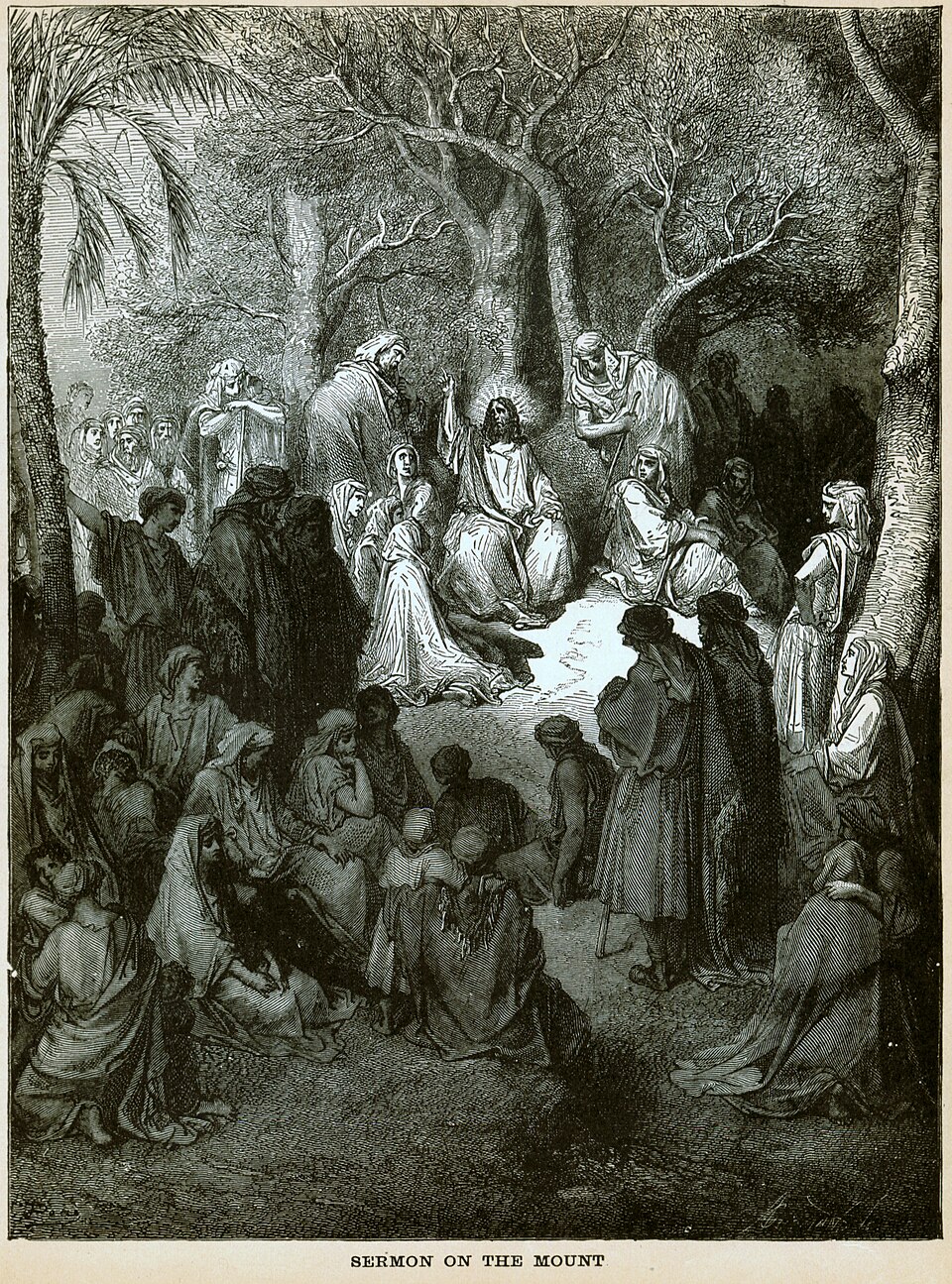
The roster is the site’s own build manifest, so no study can be missing from it. A study leads its kind when it carries a line of its own and more of the other studies link to it; a register row with no line of its own borrows the first sentence of the study’s own summary. The pictures are public domain: engravings by Gustave Doré from Doré’s English Bible(1866), and paintings held at Wikimedia Commons. Each is named in full on the study’s own page.