
Bombay to the settlements of 1908 · Story · Featured Study
The Army in India and the World
The Salvation Army's mission to India gave up European dress and food, and it later took up the Criminal Tribes.
Lieutenant Norman played his cornet in a Bombay procession, and the magistrate fined him twenty rupees and the drunk who shared his cell one.
- Where
- Bombay, Ceylon, Gorakhpur, Aligarh
- Who
- Frederick Booth-Tucker, William Booth, Arnolis Weerasooriya, Sir James Ferguson
- When
- From 19 September 1882
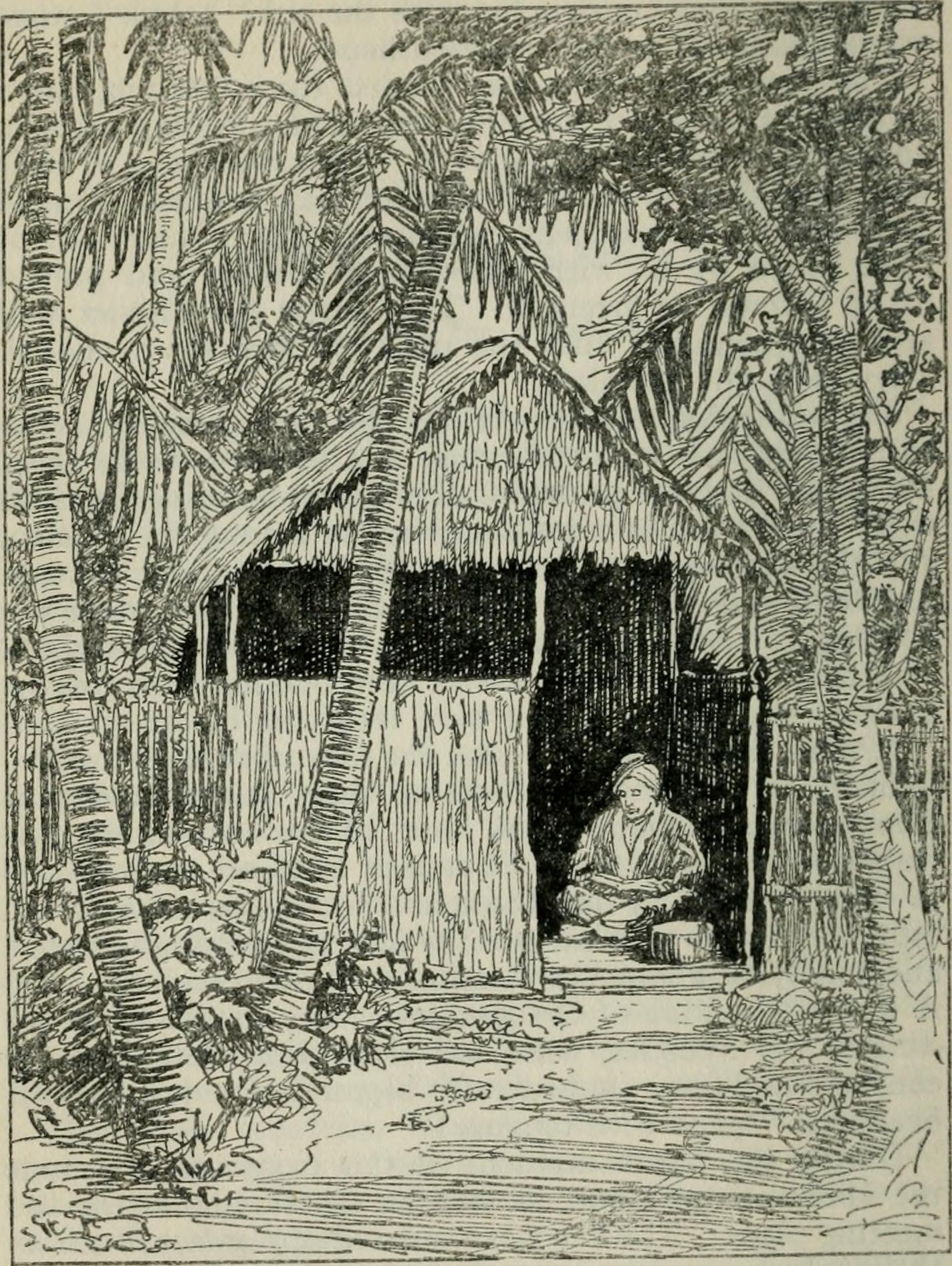
Unknown artist, Sketch of the Headquarters in Moratuwa, Ceylon, about 1923. Public domain.
To the weak I became weak, to win the weak. I have become all things to all people so that by all possible means I might save some.
Summary
The Army's mission in India began with four officers at Bombay. It took Indian dress, food and names. From 1908 it ran settlements for the tribes that British India classed as criminal. The Army's own page, read in October 2026, gives work in 134 countries, with no year for the count.
- Nearly every detail of the Indian story rests on Tucker's own book, written about forty years later.
- Booth himself first visited India in 1891, nine years after the landing, by Railton's table.
- Tucker reckoned that 290 of India's 320 million people lived in villages.
The Texts Behind the Dress
Tucker headed his chapter on the fakir's life with 1 Corinthians 9:22, and he and Strahan reached for two other verses.
This study asks how far the Army's first officers in India went to live as Indians, and what they did among the tribes the government classed as criminal. It gives the stages of the mission's dress in the order Tucker sets them, the fight with the Bombay police over processions and the Army's spread abroad in Railton's table. It also gives the settlements, the words of Booth and Tucker, and the questions raised about whom the mission reached and what the settlements were.
Jesus replied, “Foxes have dens and birds of the air have nests, but the Son of Man has no place to lay His head.”
Tucker recalled these words of Jesus when he wrote of the mission taking up the life of a fakir, a religious beggar of India.
Matthew 8:20BSB
But as they stretched him out to strap him down, Paul said to the centurion standing there, “Is it lawful for you to flog a Roman citizen without a trial?”
J. Strahan, her biographer, says that Booth's eldest daughter raised Paul's question in a new form in Switzerland.
Acts 22:25BSB
From Boots to Bare Feet
Tucker sets out the stages himself and dates only a few of them.
The later stages moved away from the first uniform and toward the village.
| Stage | What changed | The date in Tucker's book |
|---|---|---|
| The first uniform | A long white jacket and scarf, ordinary trousers, European boots and a turban for the men, and white saris for the women | Called the original uniform, with no date |
| Indian shoes | Stockings kept at first and then given up | No date |
| Bare feet | Tucker's first barefoot march, in Bombay | No date for the march, and named in a diary entry printed under April 1885 |
| Food, begging and trees | Indian food, begging, and living under trees | Named in the same diary entry |
| Indian names | One officer changed his name, and the rest followed him | First announced in The Indian War Cry of 1 June 1885 |
| Sandals | Sandals of good leather became part of the uniform | No date, called a later stage |
| The red jacket | A red jacket over the fakir-coloured turban, dhoti and shoulder-cloth, or over the sari | No date, and later than the first parties |
Tucker states the rule first, that the officers should "adopt Indian costume and customs", and he admits their notions on arrival were "very vague".
The precedent his book gives is Beschi, an earlier missionary who in the Tamil country "adopted a native name and dress".
From Apollo Bandar to the Villages
Bombay's police stopped the Army's marches for seven months, and Tucker went to prison before a magistrate acquitted his people.
Frederick Tucker, afterwards Booth-Tucker, was an official of the Indian Civil Service in the Punjab when he read a copy of The War Cry and took it to describe what India needed. He went to England to see the Army for himself and resigned in 1881.
He landed at Apollo Bandar in Bombay on 19 September 1882 with Captain Bullard, Lieutenant Norman and Miss Thompson, from the steamer Ancona. The Indian Witness reported that they prayed in the boat and marched singing to their headquarters at Khetwady.
The police allowed the next day's procession on condition that it played no music, and the Army broke the condition. Tucker says the crowd on the Esplanade was "estimated to number twenty thousand persons".
Sir James Ferguson, the Governor of Bombay, then had the police take away the flag and forbid singing on the march. Tucker asked to see him and was refused, and he decided to challenge the order by disobeying it.
The police officer who bought their goods1 paragraph
For disobeying the order a magistrate fined the officers 100 rupees, and when they refused to pay he ordered their belongings sold. The police officer in charge of the sale bought the goods for 100 rupees himself and gave them back.
The protest at Calcutta1 paragraph
Keshab Chandar Sen, the leader of the Brahmo Somaj, telegraphed that a full meeting in the Calcutta Town Hall had condemned the authorities. It adopted a memorial to the Viceroy asking for religious neutrality and equal protection for all.
Six officers were arrested on 20 October under section 151 of the Indian Penal Code, which punished joining an assembly of five or more likely to disturb the peace. On 18 February 1883 the police arrested twenty-two more.
At the trial that followed the Commissioner of Police said the prosecutions came under direct orders from the Government of Bombay. The prosecutor withdrew the charges against fourteen of the nineteen accused, on the ground that they had acted under Tucker's orders.
On 8 March the magistrate gave Tucker, "the head and fount of the whole offending", a month's simple imprisonment. Three others refused their fines and went to prison for a week. Tucker's chapter on it is headed Prisoner No. 331, and he came out at seven in the morning on 8 April.
Three days later ten more were arrested. The Commissioner of Police asked Tucker to state his own terms, and Tucker undertook only that the Army would not sing in the strictly Muslim quarter while danger lasted. The magistrate acquitted them on that agreement, and Tucker says the right to march with music was never challenged again.
Tucker then turned to the countryside. The officers travelled third class, and Tucker writes of "begging my food from door to door".
He reached Ceylon on 1 January 1885, where Arnolis Weerasooriya, a young Singhalese of a leading family, had gone ahead of him. At Moratuwa, some fifteen miles south of Colombo, friends put up a palm-leaf hall for four or five hundred people, and the officers slept on its benches with a tambourine for a pillow.
The Army in the World
George Scott Railton's life of Booth prints a table of the Army's spread, and India stands in its first row.
Railton's table names new countries in fourteen of the years from 1880 to 1908.
| Years | Where the work was extended |
|---|---|
| 1880 to 1883 | The United States and Australia in 1880, France in 1881, Switzerland, Canada, Sweden and India in 1882, and South Africa and New Zealand in 1883 |
| 1886 to 1888 | Germany in 1886, Holland, Denmark and Zululand in 1887, and Norway, Argentine, Finland and Belgium in 1888 |
| 1891 to 1896 | Italy and Uruguay in 1891, the West Indies in 1892, Java in 1894, Japan and British Guiana in 1895, and Malta in 1896 |
| 1904 to 1908 | Panama in 1904 and Korea in 1908 |
Opposition met the Army elsewhere too. The Grand Council of Neuchatel in Switzerland voted to suppress it in June, in a year Strahan does not print and his chapter points to as 1883. Booth's eldest daughter, known as the Marechale, disobeyed and spent twelve days in the jail at Neuchatel.
The Settlements from 1908
The government offered the Army tribes and buildings, and the police supplied the settlers.
Tucker wrote of whole clans and families "devoted from the cradle to the grave to a life of crime". That premise of hereditary crime governs his chapter on the Criminal Tribes.
In 1908 Mr. Tweedy, the Commissioner of Rohilkhand, heard the Army at Bareilly and asked whether it could take up reform among the tribes. Sir John Hewett, the Lieutenant-Governor, proposed an experiment with one tribe.
At Gorakhpur the government offered some 300 Doms, whom the police locked at night in a walled enclosure. It gave the Army police lines for them and soon afterwards a vacant jail.
At the fort of Aligarh, with its wall and moat, the police brought in sixteen women and thirty-one children, their men being in jail. The officer in charge reported that they wailed for four days, escaped through the moat at night by a bamboo ladder and were brought back.
Hewett's resolution, as Tucker prints it, called the settlements "the most gratifying feature" of the year among the tribes. Tucker's table, as he wrote, counts 7,840 settlers.
How the Key Verse Was Taught
Four writers, from the third century to the eighteenth, ask how far Paul's accommodation went.
Tertullian (died 220)
Against Marcion Book IV
A treatise of the third century uses the verse to explain why Peter seemed to change his company.
“They seemed to be changing their company from respect of persons. And yet as Paul himself ‘became all things to all men,’ that he might gain all, it was possible that Peter also might have betaken himself to the same plan of practising somewhat different from what he taught.”
on 1 Corinthians 9:22Patristic
Ambrose of Milan (died 397)
Letter 37 (To Simplician)
A letter of the fourth century traces Paul's way of life back to Christ taking the nature of a slave.
“He who did not think it robbery to be equal with God took the nature of a slave. He became all things to all men to bring salvation to all. Paul, an imitator of him, lived as if outside the law while remaining accountable to the law. He spent his life for the advantage of those he wished to win. He willingly became weak for the weak in order to strengthen them. He ran the race to overtake them.”
on 1 Corinthians 9:22Patristic
John Chrysostom (died 407)
Homily on 1 Corinthians 22
A homily of the same century reads "by all means" as burning zeal, which labours for all and expects to save some.
“‘To the weak became I weak, that I might gain the weak:’ in this part coming to their case, with a view to which also all these things have been spoken. However, those were much greater things, but this more to the purpose; whence also he hath placed it after them. Indeed he did the same thing likewise in his Epistle to the Romans, when he was finding fault about meats; and so in many other places.”
on 1 Corinthians 9:22Patristic
The rest2 more paragraphs
Next, not to waste time by naming all severally, he saith, "I am become all things to all men, that I may by all means save some."
Seest thou how far it is carried? "I am become all things to all men," not expecting, however, to save all, but that I may save though it be but a few. And so great care and service have I undergone, as one naturally would who was about saving all, far however from hoping to gain all: which was truly magnanimous and a proof of burning zeal. Since likewise the sower sowed every where, and saved not all the seed, notwithstanding he did his part. And having mentioned the fewness of those who are saved, again, adding, "by all means," he consoled those to whom this was a grief. For though it be not possible that all the seed should be saved, nevertheless it cannot be that all should perish. Wherefore he said, "by all means," because one so ardently zealous must certainly have some success.
Matthew Henry (1662 to 1714)
Commentary on the Whole Bible
A commentary of the eighteenth century sets the line at what would sin against God.
“He denied himself for their sakes, that he might insinuate into their affections, and gain their souls. In short, he became all things to all men, that he might by all means (all lawful means) gain some. He would not sin against God to save the soul of his neighbour, but he would very cheerfully and readily deny himself.”
on 1 Corinthians 9:22Puritan
In Their Own Words
Booth's letter to his officers and Frederick Booth-Tucker's own words, as his book of about 1923 prints them.
William Booth (1829 to 1912)
Letter of 27 August 1886, printed in Muktifauj, pages xvi to xvii
To the Indians you must be Indians
“In order to conquer you must stoop, becoming with the Apostle all things to all men, in order that you may win them to your Master. This must mean, if anything at all, that to the Indians you must be Indians.”
Methodist
About this saying1 paragraph
Booth's letter of 27 August 1886 gave the officers their rule of life, and Tucker prints it at the front of his book.
William Booth
Letter of 27 August 1886, printed in Muktifauj, page xviii
Go to the Indian as a brother
“Go to the Indian as a brother, which indeed you are, and show the love which none can doubt you feel. Go to him, eat and drink and dress and live by his side.”
Methodist
About this saying1 paragraph
The letter of 1886 goes on to say how an officer was to gain the people's confidence.
Frederick Booth-Tucker (1853 to 1929)
Muktifauj, or Forty Years with the Salvation Army in India and Ceylon, page 74
The Salvation clock
“When we came to India we put our Salvation clock half an hour faster than the other religious clocks in India by adopting native dress. This was not fast enough to suit us, and so we soon put on another half-hour by adopting the fakir costume. This was still too slow, so we put on another half-hour by going barefooted. Too slow still, so we went in for Indian food. Not fast enough yet, so we started begging and living under trees, and then began to twist the hands of our clock to see if we couldn't get another half-hour extra. English shirts were next discarded, and nothing but a light cloth kept for the shoulders.”
Salvation Army
About this saying1 paragraph
Tucker's diary of 1885 counts the stages as hours on a clock.
Get into their skins
The saying1 paragraph
Attributed to William Booth in Tucker's book of about 1923, which gives "Get into their skins" as the summary of his instructions to his representatives in India.
Whom It Reached, and What the Settlements Were
Tucker claims a wide effect for the mission, and R. J. Tolen reads the settlements differently from him.
Whom did the mission set out to reach?1 paragraph
Booth's letter set the mission on India's "non-Christian populations" and gave them "by far the strongest claims".
Did the Army set off the Mass Movements?1 paragraph
Tucker claims that other missions, "catching the same forward spirit" from the Army, saw the movement among large numbers of people that came to be called the Mass Movements. That is a movement's claim about itself.
Were the settlements reform or discipline?1 paragraph
Tucker and Hewett's resolution call the settlements reform, and Tucker says tribes grew eager to come. The settlements worked under colonial criminal tribes law, and R. J. Tolen's article of 1991, as later books summarise it, reads them as discipline.
Books to Read Next
Muktifauj
F. Booth Tucker · about 1923
Tucker tells the mission's story from the landing to the settlements.
Read Muktifauj free at the Internet ArchiveThe Authoritative Life of General William Booth
G. S. Railton · 1912
Railton gives the Army's table of important events, year by year.
Read Railton free at the Internet ArchiveThe Marechale
J. Strahan · 1921
Strahan wrote the life of Booth's eldest daughter.
Read Strahan free at the Internet ArchiveWhat the Mission Left
Later parties of officers brought rules for health, uniform, food and pay, and Tucker calls that a modification of the fakir lines.
Sources
Scripture is the Berean Standard Bible.
- The Holy Bible, Berean Standard Bible (read 2026)
- F. Booth Tucker, Muktifauj, or Forty Years with the Salvation Army in India and Ceylon (London: Marshall Brothers), dated by the book itself to 1923 or after, against the catalogue's 1900.
- G. S. Railton, The Authoritative Life of General William Booth (1912), the chapter India and Devotees and the table of important events.
- F. A. Mackenzie, Booth-Tucker: Sadhu and Saint (1930), the Cheltenham College record.
- J. Strahan, The Marechale (1921)
- The Salvation Army International Headquarters, Global presence.
- R. J. Tolen, "Colonizing and Transforming the Criminal Tribesman: The Salvation Army in British India", American Ethnologist 18:1 (1991), pages 106 to 125.
Keep Studying
People and groups6
Values1
Trials of life1