
Zechariah 12:4
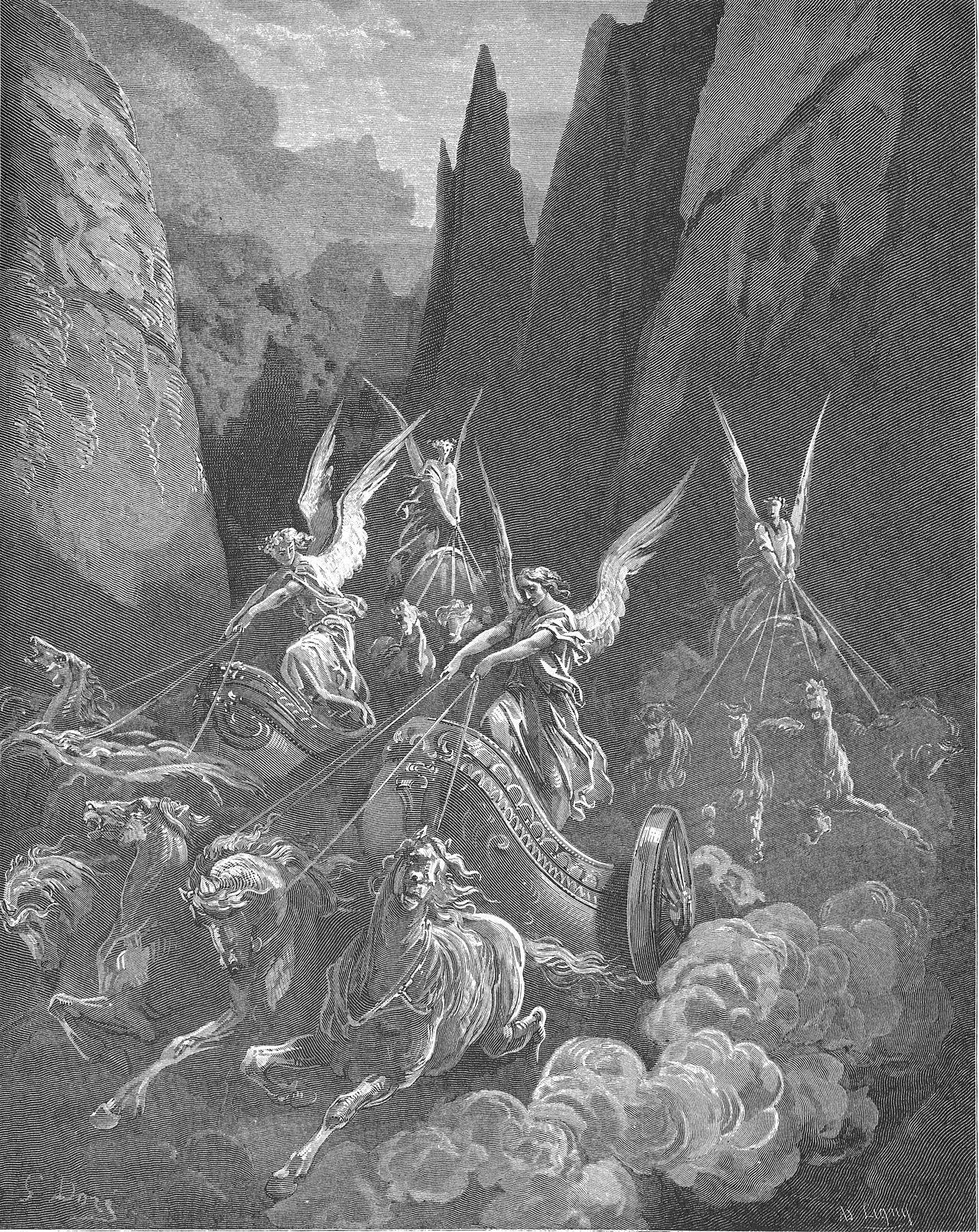
in Zechariah 12On that day, declares the LORD, I will strike every horse with panic, and every rider with madness. I will keep a watchful eye on the house of Judah, but I will strike with blindness all the horses of the nations.
BSB
The same verse in ASV and KJV ▾
ASV
In that day, saith Jehovah, I will smite every horse with terror, and his rider with madness; and I will open mine eyes upon the house of Judah, and will smite every horse of the peoples with blindness.
KJV
In that day, saith the Lord, I will smite every horse with astonishment, and his rider with madness: and I will open mine eyes upon the house of Judah, and will smite every horse of the people with blindness.
⋯
This verse in Zechariah 12
Commentary
8 notes on this verseI will smite every horse - Some apply this to the wars of the Maccabees with the Syrians; but it is more likely to be a prophecy not yet accomplished. The terms are too strong for such petty and evanescent victories as those of the Maccabees.
This site's exposition
smite every horse with astonishment
on Zechariah 12:4-6
The Lord promises to smite every horse of the besieging nations with astonishment and its rider with madness, striking the cavalry blind while keeping his own eyes open upon the house of Judah. Judah's governors become in that day like a hearth of fire in the wood and a torch in a sheaf, devouring the surrounding peoples on the right hand and the left, and Jerusalem is inhabited again in her own place. Gill and Barnes read the reversal, panic falling on the strong horses of the nations while the weak governors of Judah turn to fire, as the pattern the whole chapter repeats, human strength undone and human weakness armed.
The record, by era
The Church Fathers1 voice
(Vers. 4.) On that day, says the Lord, I will strike every horse with dismay, and its rider with madness; but upon the house of Judah I will open my eyes, and all the horses of the peoples I will strike with blindness. LXX: On that day, says the Lord Almighty, I will strike every horse with astonishment, and its rider with madness; but upon the house of Judah I will open my eyes, and all the horses of the peoples I will strike with blindness.
The Puritans and the Awakening3 voices
I will open mine eyes - I will watch over my people for good. This eye of God open upon his people, is his wise, powerful, gracious providence for them.
The church's infantry shall be too hard for the enemy's cavalry; and those who were upbraided with trusting in horses shall be baffled by those who were forbidden to multiply horses. It is promised that Jerusalem shall be re-peopled and replenished (
quarantine:debris (2026-07-29) — unbalanced-parens
In that day, saith the Lord, I will smite every horse with astonishment, and his rider with madness,....
The Nineteenth Century1 voice
A commentator
Jamieson, Fausset & Brown1802–1910
Commentary Critical and Explanatory on the Whole Bible (1871)
I will smite . . . horse--The arm of attack especially formidable to Judah, who was unprovided with cavalry. So in the overthrow of Pharaoh (Ex 15:19, 21). open mine eyes upon . . .
1 more voice on this verse
The Nineteenth Century1 voice
A commentator
Albert Barnes1798–1870
Notes, Explanatory and Practical, on the Old and New Testaments (1832-1869)
proposed
In that day, saith the Lord, I will smite every horse with astonishment, stupefying - Zechariah revives the words concentrated by Moses, to express the stupefaction at their ills, which God would accumulate upon His people, if they perseveringly rebelled against Him. Each expresses the intensity of the visitation. “The horse and his rider” Deut. 27:28 had, through Moses’ song at the Red Sea, become the emblem of worldly power, overthrown. That song opens; “I will sing unto the Lord; for He hath triumphed gloriously: the horse and his rider hath He cast into the sea” Exo 15:1. The scared cavalry throws into confusion the ranks, of which it was the boast and strength. And on the house of Judah I will open My eyes - In pity and love and guidance, as the Psalmist says, “I will counsel, with Mine eye upon thee” Psa 32:8, in contrast with “the blindness” with which God would smite the powers arrayed against them.
The words behind it
21 Hebrew wordsEvery Hebrew word of this verse in the order it stands, with what it means and the door to its own study. The last column counts the times a word stands in the whole Bible: the rarer the word, the more the places it appears belong together.
| Hebrew | Sound | Meaning | Word study | In the Bible |
|---|---|---|---|---|
| בַּיּ֨וֹם | baiyom | on the day | H3117 → | 2304 times |
| הַה֜וּא | hahu' | <the> that | H1931 → | 1879 times |
| נְאֻם־ | neum- | [the] utterance of | H5002 → | 376 times |
| יְהוָ֗ה | yahweh | Yahweh | H3068 → | 6520 times |
| אַכֶּ֤ה | ʾakeh | I will strike | H5221 → | 499 times |
| כָל־ | khol- | every | H3605 → | 5413 times |
| סוּס֙ | sus | horse | H5483 → | 140 times |
| בַּתִּמָּה֔וֹן | batimahon | with <the> bewilderment | H8541 → | |
| וְרֹכְב֖וֹ | verokhevo | and rider its | H7392 → | 78 times |
| בַּשִּׁגָּע֑וֹן | bashigaon | with <the> madness | H7697 → | |
| וְעַל־ | veal- | and over | H5921 → | 5755 times |
| בֵּ֤ית | beit | [the] house of | H1004 → | 2046 times |
| יְהוּדָה֙ | yehudah | Judah | H3063 → | 819 times |
| אֶפְקַ֣ח | ʾefkach | I will open | H6491 → | |
| אֶת־ | ʾet- | <obj.> | H853 → | 10935 times |
| עֵינַ֔י | ʾeinai | eyes my | H5869 → | 887 times |
| וְכֹל֙ | vekhol | and every | H3605 → | 5413 times |
| ס֣וּס | sus | <the> horse of | H5483 → | 140 times |
| הָֽעַמִּ֔ים | haamim | the peoples | H5971 → | 1873 times |
| אַכֶּ֖ה | ʾakeh | I will strike | H5221 → | 499 times |
| בַּֽעִוָּרֽוֹן׃ | baivaron | with <the> blindness | H5788 → |
בַּיּ֨וֹםon the day
baiyomH3117 →2304 times
הַה֜וּא<the> that
hahu'H1931 →1879 times
נְאֻם־[the] utterance of
neum-H5002 →376 times
יְהוָ֗הYahweh
yahwehH3068 →6520 times
אַכֶּ֤הI will strike
ʾakehH5221 →499 times
כָל־every
khol-H3605 →5413 times
סוּס֙horse
susH5483 →140 times
בַּתִּמָּה֔וֹןwith <the> bewilderment
batimahonH8541 →
וְרֹכְב֖וֹand rider its
verokhevoH7392 →78 times
בַּשִּׁגָּע֑וֹןwith <the> madness
bashigaonH7697 →
וְעַל־and over
veal-H5921 →5755 times
בֵּ֤ית[the] house of
beitH1004 →2046 times
יְהוּדָה֙Judah
yehudahH3063 →819 times
אֶפְקַ֣חI will open
ʾefkachH6491 →
אֶת־<obj.>
ʾet-H853 →10935 times
עֵינַ֔יeyes my
ʾeinaiH5869 →887 times
וְכֹל֙and every
vekholH3605 →5413 times
ס֣וּס<the> horse of
susH5483 →140 times
הָֽעַמִּ֔יםthe peoples
haamimH5971 →1873 times
אַכֶּ֖הI will strike
ʾakehH5221 →499 times
בַּֽעִוָּרֽוֹן׃with <the> blindness
baivaronH5788 →
A shaded row is a word that stands 400 times or fewer in the Bible.
The walk
8 stopsEach card is a verse this one points to, and under it the verses that one points to in turn. Where several paths arrive at the same place, that place is listed first: the text keeps returning to it.
Through
Acts 17:30Although God overlooked the ignorance of earlier times, He now commands all people everywhere to repent.
it leads to
- Acts 14:16
In past generations, He let all nations go their own way.
- Titus 2:11–12
For the grace of God has appeared, bringing salvation to everyone.
- Luke 24:47
and in His name repentance and forgiveness of sins will be proclaimed to all nations, beginning in Jerusalem.
- Romans 3:25
God presented Him as the atoning sacrifice through faith in His blood, in order to demonstrate His righteousness, because in His forbearance He had passed over the sins committed beforehand.
- Ephesians 4:17–32
So I tell you this, and insist on it in the Lord, that you must no longer walk as the Gentiles do, in the futility of their thinking.
- Acts 14:16
Through
Zechariah 12:3On that day, when all the nations of the earth gather against her, I will make Jerusalem a heavy stone for all the peoples; all who would heave it away will be severely injured.
it leads to
- Matthew 21:44
He who falls on this stone will be broken to pieces, but he on whom it falls will be crushed.”
- Zechariah 14:2–4
For I will gather all the nations for battle against Jerusalem, and the city will be captured, the houses looted, and the women ravished. Half of the city will go into exile, but the…
- Daniel 2:34–35
As you watched, a stone was cut out, but not by human hands. It struck the statue on its feet of iron and clay, and crushed them.
- Matthew 21:44
Where this verse is studied
About Zechariah
Who and where
1 name in this verse with a page on the site.
This page draws on 9 works. Open the list of works
This page draws on Adam Clarke, Commentary on the Bible; Albert Barnes, Notes on the Old Testament; Albert Barnes, Notes, Explanatory and Practical, on the Old and New Testaments (1832-1869); Jamieson, Fausset & Brown, Commentary Critical and Explanatory on the Whole Bible; Jerome, Commentary on Zechariah; John Gill, Exposition of the Old Testament; John Gill, Exposition of the Old Testament (1748-1763); John Wesley, Explanatory Notes upon the Old Testament and Matthew Henry, Commentary on the Whole Bible.