
Zechariah 1:20
in Zechariah 1Then the LORD showed me four craftsmen.
BSB
The same verse in ASV and KJV ▾
ASV
And Jehovah showed me four smiths.
KJV
And the Lord shewed me four carpenters.
⋯
This verse in Zechariah 1
Commentary
8 notes on this verseAnd the Lord showed me four carpenters. To saw and cut in pieces the four horns; or rather "four blacksmiths" (y); these horns were horns of iron; so the word is rendered a "smith" in 1Sa 13:19 and indeed it signifies both a worker in wood and a worker in iron; and who are sometimes distinguished by what they work in, whether wood or iron; see Isa 44:
This site's exposition
behold four horns
on Zechariah 1:18-21
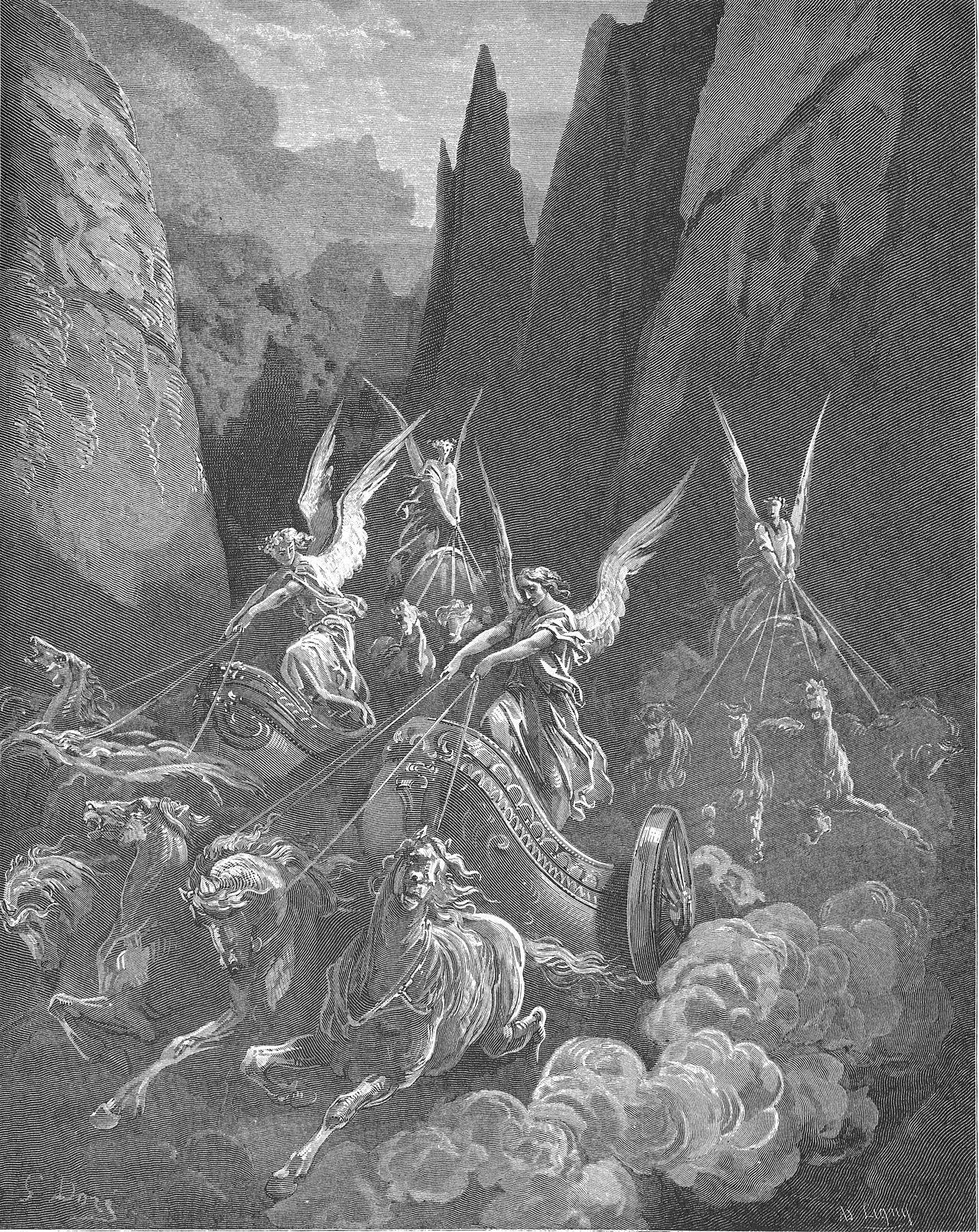
The second vision answers the first with a change of image: four horns, the power to gore and scatter, which have scattered Judah, Israel and Jerusalem so that no man did lift up his head. The bench names the readings on which four are meant, some hearing the four world powers later named in Daniel, others the regional enemies nearer Zechariah's own day, and settles on no single identification. Against the horns the Lord shows four carpenters, or smiths, raised up to fray them, to cast out the horns of the Gentiles, a craftsman's tool matched to every weapon lifted against Zion, so that no power that scatters outlasts the hand that answers it.
The record, by era
The Puritans and the Awakening2 voices
With an eye of sense we see the power of the enemies of the church; look which way we will, the world shows us that. But it is with an eye of faith that we see it safe, notwithstanding; it is the Lord that shows us that, as he opened the eyes of the prophet's servant to see the angelic guards round about his master, 2 Kings vi.
Before he came to visions and revelations, and delivered his prophetic discourses, he preached that which was plain and practical; for it is best to begin with that. Before he published the promises of mercy, he published calls to repentance, for thus the way of the Lord must be prepared. Law must be first preached, and then gospel.
The Nineteenth Century3 voices
Four carpenters - Four other powers, who should defeat the powers intended by the horns. These are the same as the four chariots mentioned Zec 6:1-3, Zec 6:6, Zec 6:7. The first was Nabopolassar, father of Nebuchadnezzar, who overturned the empire of the Assyrians. The second was Cyrus, who destroyed the empire of the Chaldeans. The third was Alexander the Great, who destroyed the empire of the Persians. And the fourth was Ptolemy, who rendered himself master of Egypt. Some of these had already been cast down; the rest were to follow.
A commentator
Jamieson, Fausset & Brown1802–1910
Commentary Critical and Explanatory on the Whole Bible (1871)
proposed
four carpenters--or "artificers." The several instrumentalities employed, or to be employed, in crushing the "Gentile" powers which "scattered" Judah, are hereby referred to. For every one of the four horns there was a cleaving "artificer" to beat it down.
quarantine:debris (2026-07-29) — starts-lowercase
Therefore thus says the Lord; I am returned to Jerusalem with mercies: My house shall be built in it, says the Lord of Hosts and a line shall be stretched forth upon Jerusalem. Cry yet, saying, Thus says the Lord of hosts: My cities through prosperity shall yet be spread abroad. And the Lord shall yet comfort Zion and shall yet choose Jerusalem. Then lifted I up my eyes and sa w and behold four horns. And I said unto the angel that talked with me, What are these?
1 more voice on this verse
The Nineteenth Century1 voice
Therefore thus says the Lord; I am returned to Jerusalem with mercies: My house shall be built in it, says the Lord of Hosts and a line shall be stretched forth upon Jerusalem. Cry yet, saying, Thus says the Lord of hosts: My cities through prosperity shall yet be spread abroad. And the Lord shall yet comfort Zion and shall yet choose Jerusalem. Then lifted I up my eyes and sa w and behold four horns. And I said unto the angel that talked with me, What are these? And he answered me, These are the horns which have scattered Judah, Israel and Jerusalem. And the Lord showed me four carpenters. Then said I, What come these to do? And He spoke, saying, These are the horns which have scattered Judah, so that no man did lift up his head: but these are come to scatter them, to cast out the horns of the Gentiles, which lifted up their horn over the land of Judah to scatter it." Zechariah 1:8-21. THIS is a somewhat dark and mysterious passage. And if we should ask many a reader, "Do you understand what you are reading?" he would be compelled to reply as did the Ethiopian eunuch, "How can I, except some man should guide me?" Although there are some portions of the Word of God which are hard to be understood—by far the greater portion of Scriptures which are at first perplexing—will open up if we will carefully peruse them and prayerfully ask the illumination of God's Holy Spirit. We should seek to know all of God's Word which can be known. You will perceive that the Prophet Zechariah himself was not content with beholding the two visions described in this passage, but had to ask, in the ninth verse, "O my Lord, what are these?" And then, again, in the nineteenth verse, "What are these?" Nor did he cease his enquiries! In the twenty-first verse he says, "What come these to do?" If the seer of the vision asked for an interpretation, much more may you and I.
The words behind it
4 Hebrew wordsEvery Hebrew word of this verse in the order it stands, with what it means and the door to its own study. The last column counts the times a word stands in the whole Bible: the rarer the word, the more the places it appears belong together.
| Hebrew | Sound | Meaning | Word study | In the Bible |
|---|---|---|---|---|
| וַיַּרְאֵ֣נִי | vaiyareni | and he showed me | H7200 → | 1300 times |
| יְהוָ֔ה | yahweh | Yahweh | H3068 → | 6520 times |
| אַרְבָּעָ֖ה | ʾarbaah | four | H702 → | 318 times |
| חָרָשִֽׁים׃ | charashim | craftsmen | H2796 → |
וַיַּרְאֵ֣נִיand he showed me
vaiyareniH7200 →1300 times
יְהוָ֔הYahweh
yahwehH3068 →6520 times
אַרְבָּעָ֖הfour
ʾarbaahH702 →318 times
חָרָשִֽׁים׃craftsmen
charashimH2796 →
A shaded row is a word that stands 400 times or fewer in the Bible.
The walk
5 stopsEach card is a verse this one points to, and under it the verses that one points to in turn. Where several paths arrive at the same place, that place is listed first: the text keeps returning to it.
Through
Obadiah 1:21The deliverers will ascend Mount Zion to rule over the mountains of Esau. And the kingdom will belong to the LORD.
it leads to
- Zechariah 14:9
On that day the LORD will become King over all the earth—the LORD alone, and His name alone.
- James 5:20
consider this: Whoever turns a sinner from the error of his way will save his soul from death and cover over a multitude of sins.
- Revelation 11:15
Then the seventh angel sounded his trumpet, and loud voices called out in heaven: “The kingdom of the world has become the kingdom of our Lord and of His Christ, and He will reign…
- Daniel 7:27
Then the sovereignty, dominion, and greatness of the kingdoms under all of heaven will be given to the people, the saints of the Most High. His kingdom will be an everlasting kingdom, and all…
- 1 Timothy 4:16
Pay close attention to your life and to your teaching. Persevere in these things, for by so doing you will save both yourself and those who hear you.
- Zechariah 14:9
Where this verse is studied
On this page
Studies3
On this verse
On this chapter
About Zechariah
This page draws on Adam Clarke, Commentary on the Bible; Albert Barnes, Notes on the Old Testament; Charles Spurgeon, The Metropolitan Tabernacle Pulpit, Sermon No. 598: “Two Visions” (lightly modernized text, CCEL edition); Jamieson Fausset and Brown, Commentary Critical and Explanatory on the Whole Bible; Jamieson, Fausset & Brown, Commentary Critical and Explanatory on the Whole Bible; John Gill, Exposition of the Old Testament (1748-1763) and Matthew Henry, Commentary on the Whole Bible.