
Zechariah 1:13
in Zechariah 1So the LORD spoke kind and comforting words to the angel who was speaking with me.
BSB
The same verse in ASV and KJV ▾
ASV
And Jehovah answered the angel that talked with me with good words, even comfortable words.
KJV
And the Lord answered the angel that talked with me with good words and comfortable words.
⋯
This verse in Zechariah 1
Commentary
9 notes on this verseAnd the Lord answered the angel that talked with me,.... See Zec 1:9 what was the effect of Christ's intercession for the people of the Jews, was communicated to a ministering angel, and by him to the Prophet Zechariah: with good words, and comfortable words; such as would be for the good and comfort of God's people, as follows; see Isa 40:1.
This site's exposition
Upon the four and twentieth day
on Zechariah 1:7-13
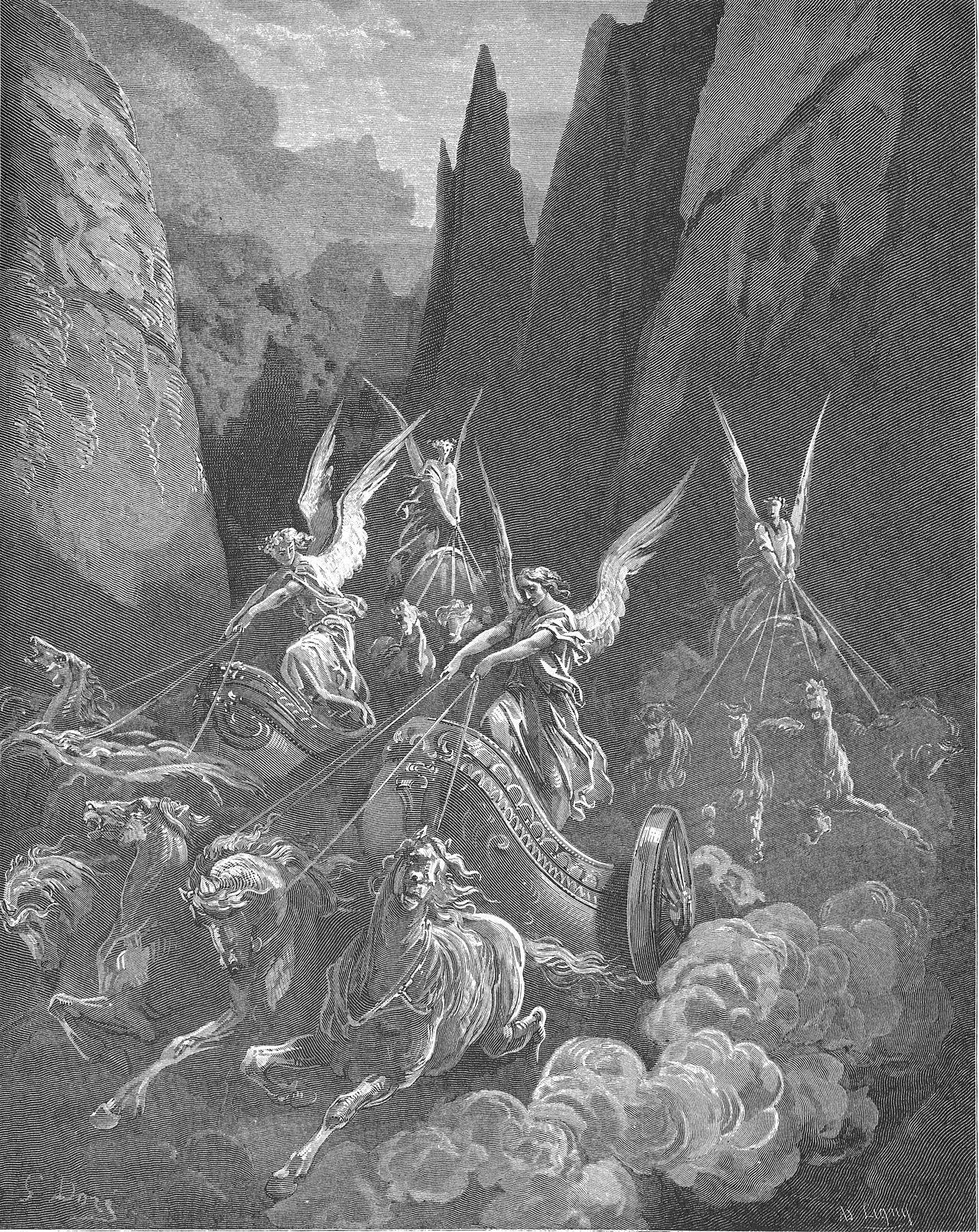
Three months later, on the twenty-fourth of Shebat, the first of eight night visions opens: a rider on a red horse among the myrtle trees in a ravine, with red, speckled and white horses behind him, patrol-angels who have walked to and fro through the earth and report that all the earth sitteth still, and is at rest. The report is the vision's irony, the Persian world at ease while Jerusalem and the cities of Judah lie under the Lord's own indignation these threescore and ten years, the seventy years of Jeremiah's prophecy apparently expired without the promised restoration arriving in full. The angel of the Lord himself intercedes, how long wilt thou not have mercy, and the Lord answers with good words and comfortable words, the vision's crisis resolved before it is explained to the prophet.
The record, by era
The Church Fathers1 voice
(Verse 8 and following) I saw during the night: and behold, a man riding on a red horse, and he stood among the myrtle trees that were in the ravine, and behind him there were red, sorrel, and white horses. And I said, 'What are these, my lord?' And the angel who was speaking with me said to me, 'I will show you what these are.' And the man who was standing among the myrtle trees answered and said, 'These are the ones whom the Lord has sent to go throughout the earth.'
The Puritans and the Awakening1 voice
Thus all the good words and comfortable words of the gospel we receive from Jesus Christ, as he received them from the Father, in answer to the prayer of his blood, and his ministers are appointed to preach them to all the world. Now that God would speak comfortably to Jerusalem, Zechariah is the voice of one crying in the wilderness, Prepare you the way of the Lord.
The Nineteenth Century3 voices
A commentator
Jamieson, Fausset & Brown1802–1910
Commentary Critical and Explanatory on the Whole Bible (1871)
proposed
the Lord--JEHOVAH, called "the angel of the Lord (Jehovah)" (Zec 1:12). good words and comfortable words--literally, "words, consolations." The subject of these consolatory words is stated in Zec 1:14, &c.; the promise of full re-establishment, Jer 29:10, 11 (compare Isa 57:18;
quarantine:debris (2026-07-29) — starts-lowercase+unbalanced-parens
Therefore thus says the Lord; I am returned to Jerusalem with mercies: My house shall be built in it, says the Lord of Hosts and a line shall be stretched forth upon Jerusalem. Cry yet, saying, Thus says the Lord of hosts: My cities through prosperity shall yet be spread abroad. And the Lord shall yet comfort Zion and shall yet choose Jerusalem. Then lifted I up my eyes and sa w and behold four horns. And I said unto the angel that talked with me, What are these?
Therefore thus says the Lord; I am returned to Jerusalem with mercies: My house shall be built in it, says the Lord of Hosts and a line shall be stretched forth upon Jerusalem. Cry yet, saying, Thus says the Lord of hosts: My cities through prosperity shall yet be spread abroad. And the Lord shall yet comfort Zion and shall yet choose Jerusalem. Then lifted I up my eyes and sa w and behold four horns. And I said unto the angel that talked with me, What are these? And he answered me, These are the horns which have scattered Judah, Israel and Jerusalem. And the Lord showed me four carpenters. Then said I, What come these to do? And He spoke, saying, These are the horns which have scattered Judah, so that no man did lift up his head: but these are come to scatter them, to cast out the horns of the Gentiles, which lifted up their horn over the land of Judah to scatter it." Zechariah 1:8-21. THIS is a somewhat dark and mysterious passage. And if we should ask many a reader, "Do you understand what you are reading?" he would be compelled to reply as did the Ethiopian eunuch, "How can I, except some man should guide me?" Although there are some portions of the Word of God which are hard to be understood—by far the greater portion of Scriptures which are at first perplexing—will open up if we will carefully peruse them and prayerfully ask the illumination of God's Holy Spirit. We should seek to know all of God's Word which can be known. You will perceive that the Prophet Zechariah himself was not content with beholding the two visions described in this passage, but had to ask, in the ninth verse, "O my Lord, what are these?" And then, again, in the nineteenth verse, "What are these?" Nor did he cease his enquiries! In the twenty-first verse he says, "What come these to do?" If the seer of the vision asked for an interpretation, much more may you and I.
2 more voices on this verse
The Nineteenth Century2 voices
The Lord answered the angel - And the angel told the prophet that the answer was gracious and comfortable. This answer is given in the next verse.
A commentator
Albert Barnes1798–1870
Notes, Explanatory and Practical, on the Old and New Testaments (1832-1869)
proposed
And the Lord answered the angel that talked with me - Either directly, at the intercession of the angel of the Lord, or mediately through an answer first given to him, and by him communicated to the subordinate angel. Neither is expressed.
How the passage was read
What the Jewish commentators add
And the Lord answered the angel who was speaking to me, good words Not that the prophet heard what He answered [the angel], but from what the angel said to him, “Proclaim, saying, ‘I am jealous etc.,’” I know that He answered him good words.
2 more on this passage, in their own words ▾
And the angel of the Lord replied The angel that was speaking to me.
I am jealous for Jerusalem I am exacting the retribution [for] the cause of Jerusalem from those who oppress her.
This section is reception history: how the passage was read and kept in the Jewish tradition. Where a reading parts from an essential of the Christian faith, the section says so at that point.
Texts and citation data: Sefaria; each excerpt follows its version’s licence. 3 further sources are cited on this chapter that carry no English text this site may quote or only restate the verse.
The words behind it
10 Hebrew wordsEvery Hebrew word of this verse in the order it stands, with what it means and the door to its own study. The last column counts the times a word stands in the whole Bible: the rarer the word, the more the places it appears belong together.
| Hebrew | Sound | Meaning | Word study | In the Bible |
|---|---|---|---|---|
| וַיַּ֣עַן | vaiyaan | and he answered | H6030 → | 331 times |
| יְהוָ֗ה | yahweh | Yahweh | H3068 → | 6520 times |
| אֶת־ | ʾet- | <obj.> | H853 → | 10935 times |
| הַמַּלְאָ֛ךְ | hamalakh | the angel | H4397 → | 213 times |
| הַדֹּבֵ֥ר | hadover | who was speaking | H1696 → | 1141 times |
| בִּ֖י | bi | with <the> me | ||
| דְּבָרִ֣ים | devarim | words | H1697 → | 1440 times |
| טוֹבִ֑ים | tovim | good | H2896 → | 538 times |
| דְּבָרִ֖ים | devarim | words | H1697 → | 1440 times |
| נִחֻמִֽים׃ | nichumim | comfort<s> | H5150 → |
וַיַּ֣עַןand he answered
vaiyaanH6030 →331 times
יְהוָ֗הYahweh
yahwehH3068 →6520 times
אֶת־<obj.>
ʾet-H853 →10935 times
הַמַּלְאָ֛ךְthe angel
hamalakhH4397 →213 times
הַדֹּבֵ֥רwho was speaking
hadoverH1696 →1141 times
בִּ֖יwith <the> me
bi
דְּבָרִ֣יםwords
devarimH1697 →1440 times
טוֹבִ֑יםgood
tovimH2896 →538 times
דְּבָרִ֖יםwords
devarimH1697 →1440 times
נִחֻמִֽים׃comfort<s>
nichumimH5150 →
A shaded row is a word that stands 400 times or fewer in the Bible.
The walk
5 stopsEach card is a verse this one points to, and under it the verses that one points to in turn. Where several paths arrive at the same place, that place is listed first: the text keeps returning to it.
Through
Jeremiah 29:10For this is what the LORD says: “When Babylon’s seventy years are complete, I will attend to you and confirm My promise to restore you to this place.
it leads to
- Daniel 9:2
in the first year of his reign, I, Daniel, understood from the sacred books, according to the word of the LORD to Jeremiah the prophet, that the desolation of Jerusalem would last seventy years.
- Jeremiah 24:6–7
I will keep My eyes on them for good and will return them to this land. I will build them up and not tear them down; I will plant them and not uproot them.
- Zechariah 7:5
“Ask all the people of the land and the priests, ‘When you fasted and mourned in the fifth and seventh months for these seventy years, was it really for Me that you fasted?
- Jeremiah 25:12
But when seventy years are complete, I will punish the king of Babylon and that nation, the land of the Chaldeans, for their guilt, declares the LORD, and I will make it an everlasting…
- Jeremiah 32:42–44
For this is what the LORD says: Just as I have brought all this great disaster on this people, so I will bring on them all the good I have promised them.
- Daniel 9:2
Where this verse is studied
On this page
Studies3
On this verse
On this chapter
About Zechariah
This page draws on 9 works. Open the list of works
This page draws on Adam Clarke, Commentary on the Bible; Albert Barnes, Notes, Explanatory and Practical, on the Old and New Testaments (1832-1869); Carl Friedrich Keil, The Twelve Minor Prophets; Charles Spurgeon, The Metropolitan Tabernacle Pulpit, Sermon No. 598: “Two Visions” (lightly modernized text, CCEL edition); Edward Bouverie Pusey, The Minor Prophets: A Commentary; Jamieson, Fausset & Brown, Commentary Critical and Explanatory on the Whole Bible; Jerome, Commentary on Zechariah; John Gill, Exposition of the Old Testament (1748-1763) and Matthew Henry, Commentary on the Whole Bible.