
Psalms 8:2
in Psalms 8From the mouths of children and infants You have ordained praise on account of Your adversaries, to silence the enemy and avenger.
BSB
The same verse in ASV and KJV ▾
ASV
Out of the mouth of babes and sucklings hast thou established strength, Because of thine adversaries, That thou mightest still the enemy and the avenger.
KJV
Out of the mouth of babes and sucklings hast thou ordained strength because of thine enemies, that thou mightest still the enemy and the avenger.
⋯
This verse in Psalms 8
Commentary
16 notes on this verseDavid composed the eighth psalm with reference to Christ, speaking of his divine nature in the first verses of it, as the Lord Christ himself also testifies of it in the Gospel, when they strewed his way with branches and praised him with shouts of …
This site's exposition
From the mouths of children and infants
God ordains praise from the mouths of children and infants, and that praise silences the enemy and avenger. Jesus quotes this verse at Matthew 21:16, when children shouted in the temple courts and the chief priests objected. The praise is founded on the weakest voices there are.
The record, by era
The Church Fathers2 voices
The meaning is this: you are worthy of praise not only from those who are perfect who know you fully, but you are proclaimed with the mouths of beginners in the faith and little children.… The psalmist professes that even infants proclaim God. By this …
"Out of the mouth of babes and sucklings Thou hast made perfect praise, because of Thine enemies" [Psalm 8:2]. I cannot take babes and sucklings to be any other than those to whom the Apostle says, "As unto babes in Christ I have given you milk to drink, not meat." [1 Corinthians 3:1-2] Who were meant by those who went before the Lord praising Him, of whom the Lord Himself used this testimony, when He answered the Jews who bade Him rebuke them, "Have ye not read, out of the mouth of babes and sucklings Thou hast made perfect praise?" [Matthew 21:16] Now with good reason He says not, Thou hast made, but, "Thou hast made perfect praise." For there are in the Churches also those who now no more drink milk, but eat meat: whom the same Apostle points out, saying, "We speak wisdom among them that are perfect;" [1 Corinthians 2:6] but not by those only are the Churches perfected; for if there were only these, little consideration would be had of the human race. But consideration is had, when they too, who are not as yet capable of the knowledge of things spiritual and eternal, are nourished by the faith of the temporal history, which for our salvation after the Patriarchs and Prophets was administered by the most excellent Power and Wisdom of God, even in the Sacrament of the assumed Manhood, in which there is salvation for every one that believeth; to the end that moved by Its authority each one may obey Its precepts, whereby being purified and "rooted and grounded in love," he may be able to run with Saints, no more now a child in milk, but a young man in meat, "to comprehend the breadth, the length, the height, and depth, to know also the surpassing knowledge of the love of Christ." [Ephesians 3:17-19]
The Medieval Church1 voice
Then when he says "Out of the mouths," he shows that it is most manifest. And first he shows the manifestation. Second, the reason for it, at "For I shall see." That it is manifest he proves, because that is manifest which is implanted in …
The Puritans and the Awakening2 voices
Out of the mouths of babes and sucklings,.... Not literally such, though the Jewish writers (e) generally so understand it; as do some Christian interpreters, who explain it of the wonderful formation, nourishment, and growth of infants; and of the marvellous care of God in providing the breast for them; in filling it with milk, and teaching them to suck; which, being observed by men, occasion praise to God, to the confusion of atheists and infidels. But this is no other than what is common to brute creatures: rather the words are to be understood in a figurative sense.
Such are very unfit to grapple with an enemy: and therefore when such persons conquer the most powerful and malicious enemies, it must needs confound them, and advance the glory of God: as indeed it did, when such mean persons as the apostles, and disciples of Christ, maintained and propagated the gospel, in spite of all the wit, power, and rage of their enemies.
9 more voices on this verse
The Puritans and the Awakening2 voices
, compared with Matt. xxi. 16 ) and the honour put upon the children of men by him, both in his humiliation, when he was made a little lower then the angels, and in his exaltation, when he was crowned with glory and honour.
quarantine:debris (2026-07-29) — leading-punctuation+unbalanced-parens
4 ), and these such as have been babes and sucklings; nay, sometimes he is pleased to serve his own purposes by the ministry of such as are still, in wisdom and strength, little better than babes and sucklings. In the kingdom of grace, the kingdom of the Messiah. It is here foretold that by the apostles, who were looked upon but as babes, unlearned and ignorant men ( Acts iv.
quarantine:debris (2026-07-29) — leading-citation-number
The Nineteenth Century7 voices
Out of the mouth of babes and sucklings - We have seen how our Lord applied this passage to the Jewish children, who, seeing his miracles, cried out in the temple, “Hosanna to the Son of David!” Mat 21:
A commentator
Jamieson, Fausset & Brown1802–1910
Commentary Critical and Explanatory on the Whole Bible (1871)
proposed
The allusion to the magnificence of the visible heavens is introduced for the purpose of illustrating God's condescension, who, though the mighty Creator of these glorious worlds of light, makes man the object of regard and recipient of favor.
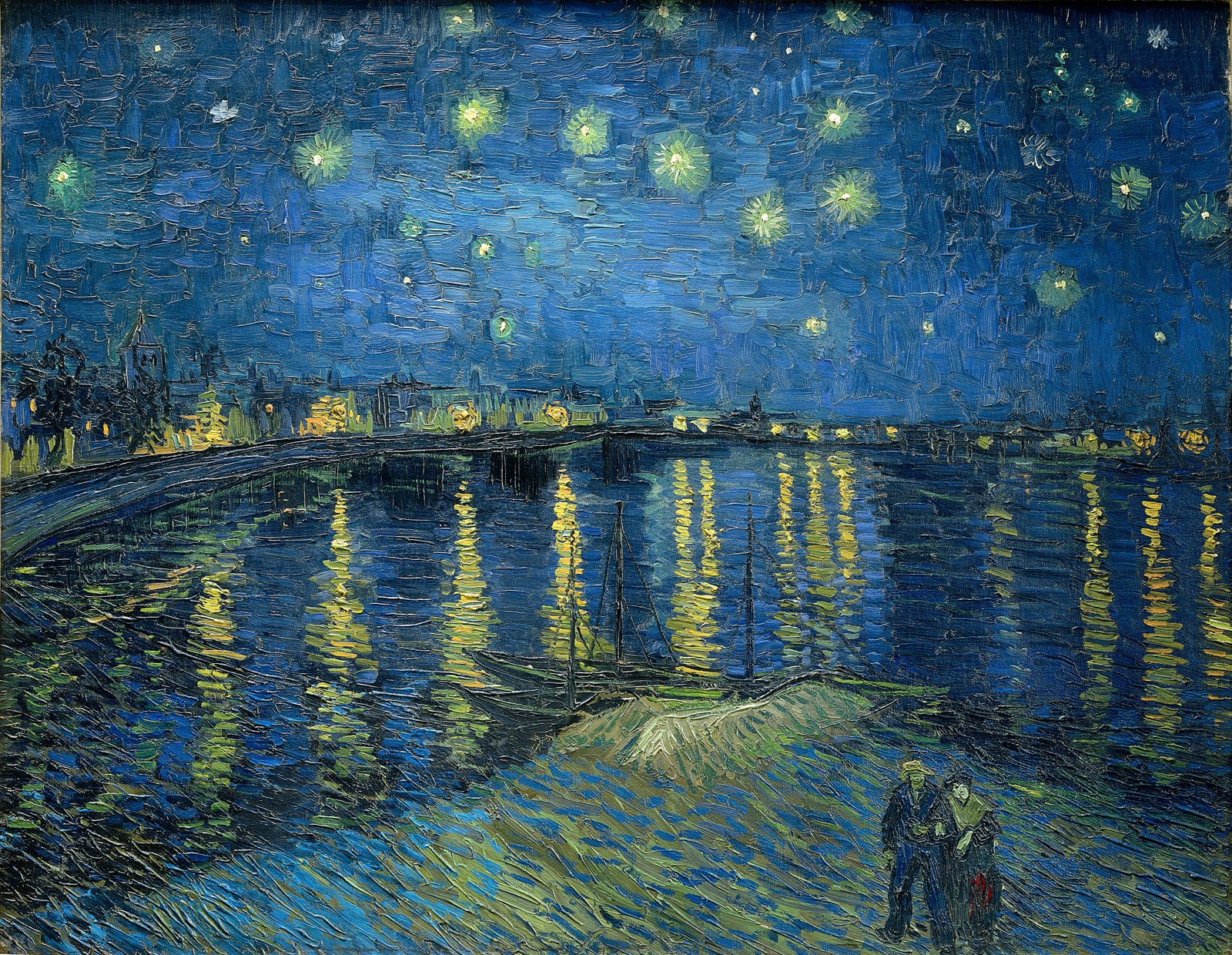
THIS Psalm sings of the grandeur of God as seen in creation. Who has not been impressed with the sight of the starry sky and the moon walking in her brightness? Truly, God is great! Who can stand at night and gaze upward to yonder distant worlds without saying, "O Lord, our Lord, how excellent is Your name in all the earth! You have set Your Glory above the heavens." The Psalm with equal vigor treats of the condescension of God which is all the better seen when we have a view of His greatness and Glory. It is not for us to stoop—we are so low already. We sometimes use the word, condescension, in reference to man, but worms were never raised so high above their meaner fellow worms as to be capable of real condescension—that belongs to God alone. "When I consider Your heavens, the work of Your fingers, the moon and the stars, which You have ordained, what is man, that You are mindful of him? And the son of man, that You visit him?" Because of this Divine condescension great honor is put upon man by God and the Psalm sings of it, telling of the exaltation of man who, in his original, was made a little lower than the angels, but by God's gentleness has been made great and crowned with glory and honor. Hence the inspired poet sings of the Glory of God in man, for he never thinks of extolling man. He only means to say that God is glorious on account of the great things which He has done in and for such a poor creature as man is.
THIS Psalm sings of the grandeur of God as seen in creation. Who has not been impressed with the sight of the starry sky and the moon walking in her brightness? Truly, God is great! Who can stand at night and gaze upward to yonder distant worlds without saying, "O Lord, our Lord, how excellent is Your name in all the earth! You have set Your Glory above the heavens." The Psalm with equal vigor treats of the condescension of God which is all the better seen when we have a view of His greatness and Glory.
Nor only in the heavens above is the Lord seen, but the earth beneath is telling forth his majesty. In the sky, the massive orbs, rolling in their stupendous grandeur, are witnesses of his power in great things, while here below, the lisping utterances of babes are the manifestations of his strength in little ones. How often will children tell us of a God whom we have forgotten! How doth their simple prattle refute those learned fools who deny the being of God!
Nor only in the heavens above is the Lord seen, but the earth beneath is telling forth his majesty. In the sky, the massive orbs, rolling in their stupendous grandeur, are witnesses of his power in great things, while here below, the lisping utterances of babes are the manifestations of his strength in little ones. How often will children tell us of a God whom we have forgotten! How doth their simple prattle refute those learned fools who deny the being of God! Many men have been made to hold their tongues, while sucklings have borne witness to the glory of the God of heaven. It is singular how clearly the history of the church expounds this verse. Did not the children cry "Hosannah!" in the temple, when proud Pharisees were silent and contemptuous? and did not the Saviour quote these very words as a justification of their infantile cries? Early church history records many amazing instances of the testimony of children for the truth of God, but perhaps more modern instances will be the most interesting. Fox tells us, in the Book of Martyrs, that when Mr. Lawrence was burnt in Colchester, he was carried to the fire in a chair, because through the cruelty of the Papists, he could not stand upright, several young children came about the fire, and cried as well as they could speak, "Lord, strengthen thy servant, and keep thy promise." God answered their prayer, for Mr. Lawrence died as firmly and calmly as any one could wish to breathe his last. When one of the Popish chaplains told Mr. Wishart, the great Scotch martyr, that he had a devil in him, a child that stood by cried out, "A devil cannot speak such words as yonder man speaketh." One more instance is still nearer to our time.
A commentator
Albert Barnes1798–1870
Notes, Explanatory and Practical, on the Old and New Testaments (1832-1869)
proposed
Out of the mouth - This passage is quoted by the Saviour in Mat 21:16, to vindicate the conduct of the children in the temple crying, “Hosanna to the Son of David,” against the objections of the Pharisees and Scribes, and is perhaps alluded to by him in Mat 11:25. It is not affirmed, however, in either place, that it had an original reference to the times of the Messiah, or that it was meant, as used by the psalmist, to denote that children would be employed in the praise of God. The language sufficiently expressed the idea which the Saviour meant to convey; and the princip e or great truth involved in the psalm was applicable to the use which he made of it. The language would, perhaps, most naturally denote that infant children would give utterance to the praises of God, as the word “mouth” is used; but still it is not quite certain that the psalmist meant to convey that idea. It is probable, as we shall see, that he meant to say, God had conferred great honor on men - men so humble and weak that they might be compared to infants - by making them the means of overthrowing his enemies, thus showing the greatness of the divine condescension. Babes - The word used here - עולל ‛ôlêl - means properly a boy or child, and is usually connected with the word rendered sucklings, Jer 44:7; Lam 2:11. It is applied to a boy playing in the streets, Jer 6:11; Jer 9:21; asking for bread, Lam 4:4,; carried away captive, Lam 1:5; borne in the arms, Lam 2:20; and once to an unborn infant, Job 3:16. […]
How the passage was read
What the Jewish commentators add
how mighty is Your name more than the strength of the measure of the earthlings. The earthlings did not deserve that You should cause Your Shechinah to rest among them.
2 more on this passage, in their own words ▾
the gittith A musical instrument that came from Gath, where craftsmen were found to make it (Machbereth Menachem p. 60). But our Sages said (Mid.
Out of the mouth of babes and sucklings You have established strength You caused Your Shechinah to rest in the Temple, and You decreed that we thank You.
This section is reception history: how the passage was read and kept in the Jewish tradition. Where a reading parts from an essential of the Christian faith, the section says so at that point.
Texts and citation data: Sefaria; each excerpt follows its version’s licence. 2 further sources are cited on this chapter that carry no English text this site may quote or only restate the verse.
The words behind it
10 Hebrew wordsEvery Hebrew word of this verse in the order it stands, with what it means and the door to its own study. The last column counts the times a word stands in the whole Bible: the rarer the word, the more the places it appears belong together.
| Hebrew | Sound | Meaning | Word study | In the Bible |
|---|---|---|---|---|
| מִפִּ֤י | mipi | from [the] mouth of | H6310 → | 498 times |
| עֽוֹלְלִ֨ים׀ | ʾolim | children | H5768 → | 20 times |
| וְֽיֹנְקִים֮ | veyonekim | and suckling-children | H3243 → | |
| יִסַּ֪דְתָּ֫ | yisadta | you have established | H3245 → | 43 times |
| עֹ֥ז | ʾoz | strength | H5797 → | 92 times |
| לְמַ֥עַן | lemaan | on account of | H4616 → | 272 times |
| צוֹרְרֶ֑יךָ | tzoreikha | opposers your | H6887 → | 54 times |
| לְהַשְׁבִּ֥ית | lehashbit | to put an end to | H7673 → | 71 times |
| א֝וֹיֵ֗ב | ʾoyev | an enemy | H341 → | 282 times |
| וּמִתְנַקֵּֽם׃ | umitnakem | and an avenger | H5358 → | 35 times |
מִפִּ֤יfrom [the] mouth of
mipiH6310 →498 times
עֽוֹלְלִ֨ים׀children
ʾolimH5768 →20 times
וְֽיֹנְקִים֮and suckling-children
veyonekimH3243 →
יִסַּ֪דְתָּ֫you have established
yisadtaH3245 →43 times
עֹ֥זstrength
ʾozH5797 →92 times
לְמַ֥עַןon account of
lemaanH4616 →272 times
צוֹרְרֶ֑יךָopposers your
tzoreikhaH6887 →54 times
לְהַשְׁבִּ֥יתto put an end to
lehashbitH7673 →71 times
א֝וֹיֵ֗בan enemy
ʾoyevH341 →282 times
וּמִתְנַקֵּֽם׃and an avenger
umitnakemH5358 →35 times
A shaded row is a word that stands 400 times or fewer in the Bible.
The walk
8 stopsEach card is a verse this one points to, and under it the verses that one points to in turn. Where several paths arrive at the same place, that place is listed first: the text keeps returning to it.
Through
Isaiah 40:31But those who wait upon the LORD will renew their strength; they will mount up with wings like eagles; they will run and not grow weary, they will walk and not faint.
it leads to
- Lamentations 3:25–26
The LORD is good to those who wait for Him, to the soul who seeks Him.
- 2 Corinthians 4:16
Therefore we do not lose heart. Though our outer self is wasting away, yet our inner self is being renewed day by day.
- Psalms 27:13–14
Still I am certain to see the goodness of the LORD in the land of the living.
- Psalms 103:5
who satisfies you with good things, so that your youth is renewed like the eagle’s.
- 2 Corinthians 12:9–10
But He said to me, “My grace is sufficient for you, for My power is perfected in weakness.” Therefore I will boast all the more gladly in my weaknesses, so that the power of…
- Lamentations 3:25–26
Through
Psalms 46:10“Be still and know that I am God; I will be exalted among the nations, I will be exalted over the earth.”
it leads to
- Psalms 100:3
Know that the LORD is God. It is He who made us, and we are His; we are His people, and the sheep of His pasture.
- Habakkuk 2:20
But the LORD is in His holy temple; let all the earth be silent before Him.
- Ezekiel 38:23
I will magnify and sanctify Myself, and will reveal Myself in the sight of many nations. Then they will know that I am the LORD.
- Psalms 100:3
Where this verse is studied
On this page
About Psalms
This page draws on 13 works. Open the list of works
This page draws on Adam Clarke, Commentary on the Bible; Albert Barnes, Notes on the Book of Psalms; Albert Barnes, Notes, Explanatory and Practical, on the Old and New Testaments (1832-1869); Augustine of Hippo, On the Psalms; Cassiodorus, EXPLANATION OF THE PSALMS 8:3; Charles Spurgeon, The Metropolitan Tabernacle Pulpit, Sermon No. 1545: “God Glorified By Children's Mouths” (lightly modernized text, CCEL edition); Charles Spurgeon, The Treasury of David, Vol. 1; Cosmas Indicopleustes, The Christian Topography, Book 5; Jamieson, Fausset & Brown, Commentary Critical and Explanatory on the Whole Bible; John Gill, Exposition of the Old Testament (1748-1763); John Wesley, Explanatory Notes upon the Old Testament; Matthew Henry, Commentary on the Whole Bible and Thomas Aquinas, Exposition on the Psalms of David.